Showing posts with label War. Show all posts

Monday, March 02, 2026

Media Review: How a Unilateral Strike on Iran Threatens the Foundations of Global Order

    Monday, March 02, 2026   No comments

In the predawn darkness of late February 2026, the world watched as two allied powers crossed a threshold from which there may be no return. The United States and Israel launched a coordinated military assault on Iran, targeting not merely military installations but the very heart of its political leadership. Supreme Leader Ayatollah Ali Khamenei was killed. Dozens of senior officials perished. A school in southern Iran was struck, claiming the lives of children. And with that single act of force, the fragile architecture of international law—built painstakingly in the ashes of two world wars—began to crack.

This was not a defensive action. It was not a response to an imminent attack. By the admission of Pentagon officials themselves, there was no intelligence suggesting Iran was preparing to strike first. There were no smoking guns, no intercepted orders, no imminent threat that satisfied even the most permissive interpretations of self-defense under international law. What there was, instead, was a decision: a choice to act unilaterally, to bypass the United Nations, to abandon ongoing diplomacy, and to assert through force what could not be achieved through law.

The consequences of that choice ripple far beyond the Middle East. They strike at the heart of global economic stability and the security structures that have, however imperfectly, prevented great-power war for eight decades.

The Economic Precipice

The Strait of Hormuz is not merely a geographic feature; it is an artery of the global economy. Roughly twenty percent of the world's oil supply passes through its narrow waters. When Iran signals that US bases in the region will remain targets unless removed, and when retaliatory strikes already echo across Gulf states, the market does not hesitate. Oil prices surge. Shipping insurers recalculate risk. Supply chains tremble.

But the economic vulnerability runs deeper. The attack has shattered confidence in the predictability of international relations. Investors do not fear conflict alone; they fear the arbitrariness of conflict. When the world's most powerful military alliance demonstrates that it will act without legal authorization, without transparent evidence, and without regard for diplomatic process, the foundation of long-term planning erodes. Contracts become riskier. Capital becomes cautious. The delicate machinery of global trade, which depends on stable rules and predictable behavior, begins to seize.

Consider the ripple effects: European economies still recovering from energy shocks now face renewed uncertainty. Asian manufacturing hubs dependent on Middle Eastern energy confront potential disruption. Emerging markets, already strained by debt and inflation, brace for capital flight. This is not speculation; it is the logical consequence of replacing law with might. When force becomes the first resort rather than the last, every nation must prepare for a world where power, not principle, dictates outcomes.

The Collapse of Security Architecture

The United Nations Charter was designed precisely to prevent what has now occurred: unilateral wars of choice justified by self-defined threats. Its prohibition on the use of force, except in self-defense against an actual armed attack or with Security Council authorization, was not an idealistic aspiration. It was a hard-learned lesson from centuries of catastrophic war.

By acting outside this framework, the US and Israel have not merely violated a treaty; they have undermined the very logic of collective security. If powerful states can decide for themselves what constitutes a threat, when diplomacy has failed, and when force is justified, then the Charter becomes optional—a suggestion for the weak, a constraint to be ignored by the strong.

The precedent is perilous. What prevents other nuclear-armed powers from adopting the same logic? What stops regional rivals from citing this attack as justification for their own preventive strikes? The non-proliferation regime, already strained, faces existential doubt: if diplomatic engagement can be aborted by military action at any moment, why would any state relinquish its deterrent capabilities?

Even alliances are fracturing. Spain has refused to allow its bases to be used for further attacks. France has called for Security Council debate. Oman, which mediated talks, has condemned the abandonment of diplomacy. This is not mere disagreement; it is a recognition that the attack threatens the cohesion of the very partnerships that underpin global security. When allies begin to distance themselves from unilateral aggression, the foundation of collective defense weakens.

The Sovereignty Double Standard: A Self-Condemnation in Plain Sight

Nowhere is the incoherence of the attackers' position more starkly revealed than in their response to Iran's retaliation. Hours after Iranian forces struck back against military assets and logistics centers used in the initial assault, the United States issued a joint statement with Bahrain, Jordan, Kuwait, Qatar, Saudi Arabia, and the United Arab Emirates. The declaration denounced Iran's actions in unequivocal terms: "These unjustified strikes targeted sovereign territory, endangered civilian populations, and damaged civilian infrastructure."

The statement is remarkable not for what it says, but for what it omits. There is no mention of Iran's sovereignty. No acknowledgment that the strikes Iran retaliated against were launched against its territory, its leadership, and its civilian infrastructure. No reference to the school hit in southern Iran, or to the assassination of a leader of state during ongoing diplomatic talks. The principle of sovereignty—so fiercely invoked when convenient—is silently abandoned when it protects the vulnerable rather than the powerful.

This is not diplomacy. It is not law. It is a performative contradiction that reasonable observers recognize for what it is: a self-condemnation. To attack a sovereign nation without authorization, then invoke that same sovereignty to condemn the victim's response, is not a coherent legal position. It is an admission that the rules apply only in one direction. It reveals a worldview in which sovereignty is not a universal right, but a privilege granted selectively by those with the power to enforce their preferences.

The danger of this double standard extends far beyond rhetoric. It erodes the foundational doctrine of non-aggression that has, however imperfectly, served as a brake on endless war. That doctrine holds that peace is not the absence of conflict among the powerful, but the presence of equal protection under law for all nations. When that principle is fractured—when aggression is legitimized for some and criminalized for others—the entire edifice of international order begins to tilt.

The Rhetoric of Supremacy

Perhaps the most dangerous element of this crisis is not the bombs themselves, but the language used to justify them. "We did not start this war," declared a senior US official, moments before adding, "We set the terms of this war from start to finish." This is not contradiction; it is doctrine. It is the assertion that the United States reserves the right to define reality—to decide when a conflict begins, who is an aggressor, and what constitutes legitimate self-defense—regardless of evidence, international consensus, or the sovereignty of others.

This rhetoric reveals a deeper assumption: that certain lives matter less than others. When Iranian officials are targeted and killed, it is framed as necessary counterterrorism. When Iranian civilians die, including children in a school strike, it is regrettable but incidental. When Iran retaliates against military bases, it is condemned as indiscriminate escalation. The asymmetry is not accidental; it is ideological. It treats the sovereignty and security of non-Western nations as inherently subordinate to the strategic preferences of imperial powers.

Such thinking is not new. It is the character of empires throughout history: the belief that their interests are universal, their actions inherently legitimate, and their victims collateral to a greater good. But in a world of nuclear weapons, interconnected economies, and rising multipolarity, this arrogance is not merely morally bankrupt—it is existentially dangerous.

Law or Chaos?

Iran has made its position clear: US bases in the region will remain targets unless removed. Retaliation will continue. The cycle of violence is accelerating, not because diplomacy failed, but because it was deliberately abandoned. Every missile launched, every base struck, every civilian casualty deepens the crisis and narrows the space for de-escalation.

The international community now faces a stark choice. It can accept the normalization of unilateral preventive war, allowing might to supersede law and setting a precedent that will inevitably be used against weaker states—and eventually, against the powerful themselves. Or it can reaffirm the principles that have, however imperfectly, maintained a measure of order: that sovereignty matters, that evidence must precede action, that diplomacy must be exhausted, and that the use of force requires collective legitimacy.

The double standard exposed in the wake of Iran's retaliation is not a minor diplomatic inconsistency. It is a reminder that the principle of non-aggression cannot be a selective doctrine. Peace cannot be secured by granting some nations the right to attack while denying others the right to defend. If sovereignty is to mean anything, it must mean the same thing for Tehran as it does for Washington, for Riyadh as for Ramallah.

The stakes could not be higher. This is not merely a regional conflict. It is a test of whether the post-1945 international system can survive the actions of those who helped create it. If the rules apply only when convenient to the powerful, they are not rules. They are suggestions. And a world governed by suggestions, rather than law, is a world where every dispute becomes a potential catalyst for catastrophe.

The attack on Iran was more than a military operation. It was a statement: that some nations believe they stand above the law. The question now is whether the rest of the world will accept that premise—or whether it will defend the fragile, essential idea that no state, however powerful, is entitled to wage war by its own decree. 

Sunday, March 17, 2024

US admin: US will not support invasion of Rafah without protecting civilians; Netanyahu vows to defy allies; UN it will be "a disaster beyond imagination"

    Sunday, March 17, 2024   No comments

If Western governments did not want a massacre in Rafah, they should not have supported a ground invasion of Gaza in the first place. The conditions in Rafah are not any different from the conditions of Gaza Strip in general: millions of people crammed in a small piece of land, isolated from the rest of the world; no one can leave or enter.

Western governments did not have to see the killing and wounding of 110,000 people and the destruction of 80% of the homes in parts of Gaza now under the control of occupation forces to realize that a ground invasion of Rafah will be catastrophic... "a disaster beyond imagination", to quote UN medics.

There is only one sure way to stop the attack on Rafah: stop the war through a UNSC resolution; something the US government prevented all other members of the UNSC from stopping the killing every time a resolution for a cease fire was put for a vote--three times thus far.

So when US National Security Council spokesman draws a red line against the invasion of Rafah, the last urban area in Gaza Strip still untouched by the US provided weapons of home destruction and killing, many would be skeptical. 

US National Security Council spokesman John Kirby confirmed that Washington will not support any major military operation in Rafah in the Gaza Strip without an implementable plan that guarantees the care of 1.5 million refugees there.

Kirby explained that America has concerns about some Israeli military operations and how they are launched, saying that his country needs to ensure that civilians are protected.

 On the other hand, Kirby said that Washington did not see any evidence that the Islamic Resistance Movement (Hamas) stole humanitarian aid in the Strip.

 Netanyahu has reaffirmed his determination to launch an offensive in Rafah, defying international criticism.

 The city is crammed with some 1.5 million Palestinians from other parts of Gaza seeking refuge.

 His comments come as the German chancellor, on a Middle East trip, restated his opposition to the plan.

 But Mr Netanyahu said "no international pressure will stop Israel" from achieving all of its war aims.

 "If we stop the war now before achieving all of its goals, the meaning is that Israel had lost the war and we will not allow this," Mr Netanyahu told a meeting of his cabinet.

 He said Israel must be able to continue its war, with the aims of eliminating Hamas, releasing all hostages and ensuring Gaza "no longer pose a threat".

 "To do this, we will also operate in Rafah."

 Mr Netanyahu said the offensive in city at the southern tip of the Gaza Strip "will happen" and will take "several weeks".

 He also lashed out at his critics, saying to them: "Is your memory so short?


Wednesday, December 13, 2023

By a margin of 80% (for) to 5% (against), the United Nations General Assembly adopts a resolution calling for an immediate ceasefire in the Gaza Strip

    Wednesday, December 13, 2023   No comments

The United Nations General Assembly adopted an immediate ceasefire resolution in the Gaza Strip, which has been subjected to Israeli aggression for more than 65 days.


The draft resolution calling for a ceasefire in the Gaza Strip, which was voted on in the Assembly, received 153 votes, while 10 countries opposed it, and 23 countries abstained from voting.

Following the vote, the Palestinian presidency welcomed the United Nations’ call for a ceasefire, urging the countries that voted in favor of the resolution to “compel the Israeli occupation to implement it.” The representative of occupied Palestine to the United Nations, Riyad Mansour, said that the UN resolution on Gaza is “historic.”

Mansour announced that the General Assembly would vote on the draft resolution that was dropped by the United States of America in the UN Security Council, last Friday.

In an interview with reporters in New York, Mansour indicated that countries that oppose the draft resolution are proposing amendments to it, including “condemning the Hamas movement and labeling it a terrorist,” stressing that “the Arab and Islamic group will reject these amendments together.”

The representative of the United States of America, which vetoed a UNSC resolution calling for an end to the violence last week, Linda Greenfield, indicated that the humanitarian situation in the Strip is “dire, as civilians need everything, and must be protected under international law.”

Greenfield expressed her country's readiness to "resume humanitarian truces," and issued a "promise" to "bring more aid into Gaza," welcoming the occupation's decision to "open the Kerem Shalom crossing," and noting that "Israel must avoid mass killing of civilians,"

But at the same time, Greenfield  affirmed “continuing American support for Israel’s security,” considering that “Hamas remaining a neighbor of Israel is unacceptable,” in a position consistent with the positions of the occupation in its war against the Gaza Strip.


Monday, December 11, 2023

The irreparable damage to Western civilization due to its complicity in war crimes and crimes against humanity

    Monday, December 11, 2023   No comments

The rapid descent in credibility of the Western civilization in the eyes of the people of the Global South is as fast as the speed of bombs and rockets dropped on the people of Gaza that killed more children in the shortest time than in any other war. 

For those who have been already skeptical of the genuineness of the Western values of human life and human dignity, this trend is not a major event worthy of reflection. 


However, when individuals who have been steeped in Western lifestyle and who were mesmerized by Western glitter are now speaking out loud about Western decadence and moral bankruptcy, that should worry the Western elite. 

This sentiment is beautifully rendered by an artist, Omar Rammal, Omar Rammal, Director and Cinematographer:


In my eyes, things are no longer the way they were before, I no longer love talking their language, or watch their movies and cinematic productions or songs or even follow their famous people..

I am no longer seduced by their calm countries for visiting them and roaming their streets.. I no longer desire their fast food .. 

Nor their drinks.. 

I no longer want to pay attention to their problems and conflicts..

I do not want to have an relation with them in any shape or form..

In my eyes, now, they are all the same.. 

Their hearts are like stone or more cruel than stone.. 

They are the ones who look at me and at those like me as subhuman.

They do not deserve from us all this courtesy, attention, and emulation.. I, now, belong to my people, those who are of me and that is it.


Why are many people abandoning the narrative of the shining city on the hill, the home of the decent society, you might ask. Because no reasonable decent human being would consider the killing of mothers and their children, turning an entire city into a graveyard for children in the name of self-defense a decent soceity; no reasonable decent human being would consider a society that allows a government to commit this cruelty or to support and shield another government to exact this supremacy-driven revenge in its name is a decent society.  


Sunday, December 10, 2023

Media review: US, Israel isolated in the world, face internal and external pressure to stop the killing

    Sunday, December 10, 2023   No comments

Le Monde: Israel has transformed the right of self-defense into the right to destroy everything

Le Monde newspaper said that the isolated United States, by rejecting the draft United Nations Security Council resolution in favor of an “immediate humanitarian ceasefire” on December 8, guaranteed the continuation of the punishment imposed by Israel on an entire people, so that the horrific routine in Gaza continues, with more Of dead, wounded and devastated with no hope of seeing the end.

The newspaper pointed out in an editorial that the right to self-defense has become the right to destroy everything, since Israeli Defense Minister Yoav Galant announced that Israel is facing “human animals” and that it will “act on this basis.”

The results of the strategy aimed at eliminating the Islamic Resistance Movement (Hamas) have now turned, according to the newspaper, into death everywhere, hospitals being bombed, destitution and starvation for hundreds of thousands of people.


In her editorial, which she chose as the title: “Israel Lost in the Gaza Massacre,” she said that the Palestinians are being driven like cattle by Israeli orders from one part of the Gaza Strip to another, and the cries of the heads of the United Nations agencies who, despite Israeli disdain, are making impressive efforts, even if they resonate in Void.


Le Monde believed that this unprecedented massacre is not justified because the results obtained so far are still far from the declared goal of eliminating Hamas, noting that Israel’s loss in this war is not a surprise, because it is a reflection of its deviation before October 7. The first, since it tore itself apart on the basis of its social contract instead of the law, in light of the attacks of the extremist movement that has been ravaging it for more than half a century, especially since the United States does not protect Israel from itself.


The newspaper concluded by justifying the US representative at the United Nations for their use of veto power against the ceasefire, saying that such a truce “will sow the seeds of a future war,” asking whether Washington believes that the continued bombings supplied by Israel to fall on Gaza without protecting civilians could result in Other than the hatred that does not extinguish on this bloody land?


Media Part: Israel seeks to kill journalists so that they do not document its crimes


The Media Part website said that the head of the Palestinian Journalists Union, Nasser Abu Bakr, spoke in Paris about the importance of the work of his fellow journalists in informing the world about the situation in the Gaza Strip, and described the hell they live in and the danger to which they expose themselves in order to overcome the media siege that Israel imposes on them. It is committing its information crime in Gaza.


The French website explained - in a report written by Younes Abzouz - that Nasser Abu Bakr, who is on a European tour to alert international public opinion to the tragic situation that journalists are experiencing in Gaza and the West Bank, stated that “Gaza had 200 journalists before October 7, and today There are almost none of them, as 63 journalists and media workers were killed, 56 of them in Gaza.


“He is regularly threatened with death and arrest, and receives anonymous calls and messages,” said photo reporter Moataz Azaizeh, who documents every day on Instagram the horrific lives of civilians trapped in Gaza, just as Palestinian journalists working in the West Bank are threatened by settlers and members of the Israeli security forces.


Biden's arming of Israel provokes violent reactions due to the high casualties in Gaza


The Washington Post revealed that the administration of US President Joe Biden is facing increasing pressure due to its supply of powerful weapons to Israel, with the death toll rising in the Gaza Strip and raising questions about whether the United States is making more efforts to ensure the safety of civilians, as the main military supporter of Tel Aviv. .


Human rights groups, along with a growing bloc within Biden's Democratic Party, are intensifying their work to scrutinize arms flows to Israel, which have included tens of thousands of bombs since the Hamas attack on October 7.

The Israeli newspaper Haaretz reported on Sunday that the time remaining for the battle in Khan Yunis is shortening and the fighting is becoming more critical and complex.

The time remaining for the battle in Khan Yunis is shortening, and the fighting has become more critical and complex


The newspaper said that the Israeli "army" is finding it difficult to advance in areas of the incursion into the Gaza Strip.


The newspaper pointed out that "there is a tension between the goals of the war and the time allocated to achieve them."


She added that the Israeli divisions are now fighting three battles at the same time, and in each of them they face stronger resistance than in the past.


According to the newspaper, “The Israeli army hopes to end most of its operations in the northern Gaza Strip within a week, but after that the battle in Khan Yunis will become more critical.”


These developments, according to the newspaper, “make the fighting in the coming weeks more complex.”


She said, "It is better not to be drawn into the atmosphere in the television studios, in some of which chants of victory have already been heard in recent days."


She stressed that "the Israeli army does not have a complete intelligence picture of the locations where Hamas hides prisoners, and there is no doubt that the continuation of the fighting puts their lives in danger."


Earlier today, Yedioth Ahronoth newspaper published on its front page a report under the title, “The fighting is difficult and slow, and it will take a long time for the Israeli army to accomplish its tasks.”


In this context, the Israeli Channel 7 said that estimates in Israel are that the war will continue at high intensity for at least two months.


They also estimate in "Israel", according to the Israeli media, which quoted sources, that "there will be attempts to advance additional deals to liberate prisoners in the near future."


Yesterday, Israeli media confirmed that the death toll from the Israeli occupation army had risen to 102 since the beginning of the ground incursion into the Gaza Strip.

Israeli media reported on Sunday that the heat in the arenas in Yemen and Iraq poses a real dilemma for the United States of America.


The Israeli newspaper "Haaretz" expressed its fear of the Yemeni threats, saying that "the Yemeni threat to prevent any ship from heading to Israel has been raised to the level of a strategic threat."


The Israeli newspaper confirmed that "these threats may ignite an international military confrontation in the Red Sea."


She added that the American and Israeli presence in the Red Sea appears to be “not succeeding in deterring them,” noting that “the matter may require a major show of force in the near future.”


The Israeli newspaper quoted "Reuters" and "Bloomberg" as saying, "Saudi Arabia is now pressuring the administration in Washington to exercise restraint in its responses to Yemen, in order to allow the completion of the peace agreement between Saudi Arabia and the Yemenis."


Another Saudi fear, according to Haaretz, is that “an American attack on the Yemenis may harm relations between Riyadh and Tehran, at a time when the two countries are slowly restoring relations after resuming them last March.”

From Saudi Arabia's al-sharq alawsat:

The Western political culture, which many of us have had the opportunity to live and enjoy its good deeds, is not at all as ideal as we thought out of our admiration - and sometimes - our fascination with it. If under normal circumstances it appears civilized, sophisticated, and tolerant. When problems become severe and hostility escalates, it strips off all the garments of civilization, sophistication, and tolerance. This is exactly what we see today, not only in the atrocities committed against civilians, hospitals, schools, and places of worship in the occupied Palestinian territories, but also appears shocking and shocking in the government’s restrictions on freedom of expression in American universities and the British media, and the blackmail of the advertising boycott practiced shamelessly in order to... Gagging mouths and stifling voices of objection.


Friday, September 22, 2023

Seymour Hersh: Ukrainian armed forces have already called off the attack after weeks of heavy losses and Zelensky and Biden are not interested in putting an end to the “massacre”

    Friday, September 22, 2023   No comments

Pulitzer Prize-winning American journalist Seymour Hersh stated that the Ukrainian army effectively stopped the attack after weeks of heavy losses.

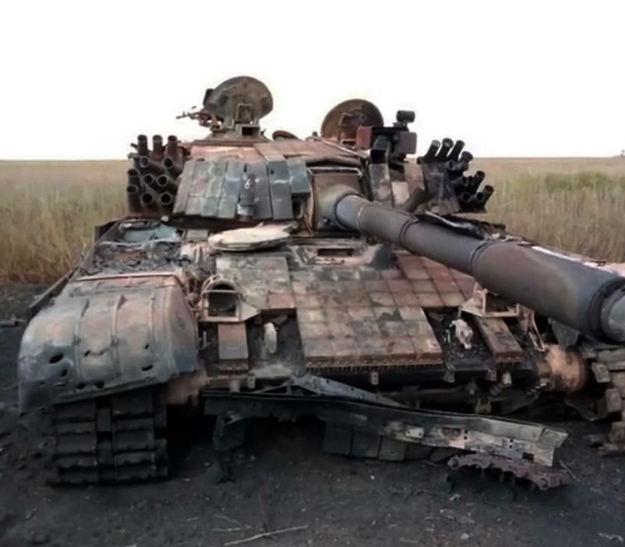
“After several weeks of heavy losses and minimal progress, as well as horrific losses in tanks and armored vehicles, the main units of the Ukrainian army, without announcing it, effectively called off the attack,” Hersh quoted an official with access to the intelligence as saying.

Hersh quotes an unnamed American intelligence officer: “The truth is that if the Ukrainian army is ordered to continue the offensive, the army will rebel. “The soldiers don’t want to die anymore, but this doesn’t fit with the nonsense written by the White House under US President Joe Biden.”

Hersh also reported that Vladimir Zelensky insists on continuing the conflict with Russia, and there is no talk in Kiev or Washington of negotiations and a ceasefire.

“The war continues because Zelensky insists on it,” Hersh said, citing sources. There is no discussion of a truce at his headquarters or in the White House under President Joe Biden, and they are not interested in negotiations that put an end to the massacre.”

Hersh added, quoting an intelligence source, and as the source points out, all of Kiev’s statements about the successful counterattack are lies, as the Ukrainian forces have only gained scattered pieces of land, and the pace of their advance is measured in meters per week.

An unnamed American intelligence official was quoted as saying: “The war is over. Russia has won. “There is no longer a Ukrainian attack, but the White House and the American media must support the lie.”


The Russian Armed Forces continue to implement their special military operation, with the aim of disarming Ukraine, to ward off threats emanating from Ukrainian territory to Russia's security.

Russian President Vladimir Putin confirmed that Russia does not plan to occupy Ukrainian lands, explaining that Russia's goal is to protect the population, which has been subjected, for 8 years, to persecution and genocide by the Kiev regime.

Ukrainian forces have been launching a counterattack in the directions of southern Donetsk, Artyomovsk and Zaporozhye for the fourth month now, sending brigades trained by NATO and armed with foreign equipment into the battle.

According to President Vladimir Putin, during this time they could not achieve any results. In turn, Western military experts point to the effectiveness of Russian fortifications and minefields, due to which the Ukrainian armed forces suffered heavy losses.

Earlier, Russian Defense Minister Sergei Shoigu announced that “Ukrainian forces have lost more than 66,000 soldiers and 7,600 weapons since the start of the so-called “counterattack.”

Shoigu also stressed that “the Ukrainian army did not achieve its goals during the three months of the counterattack.”


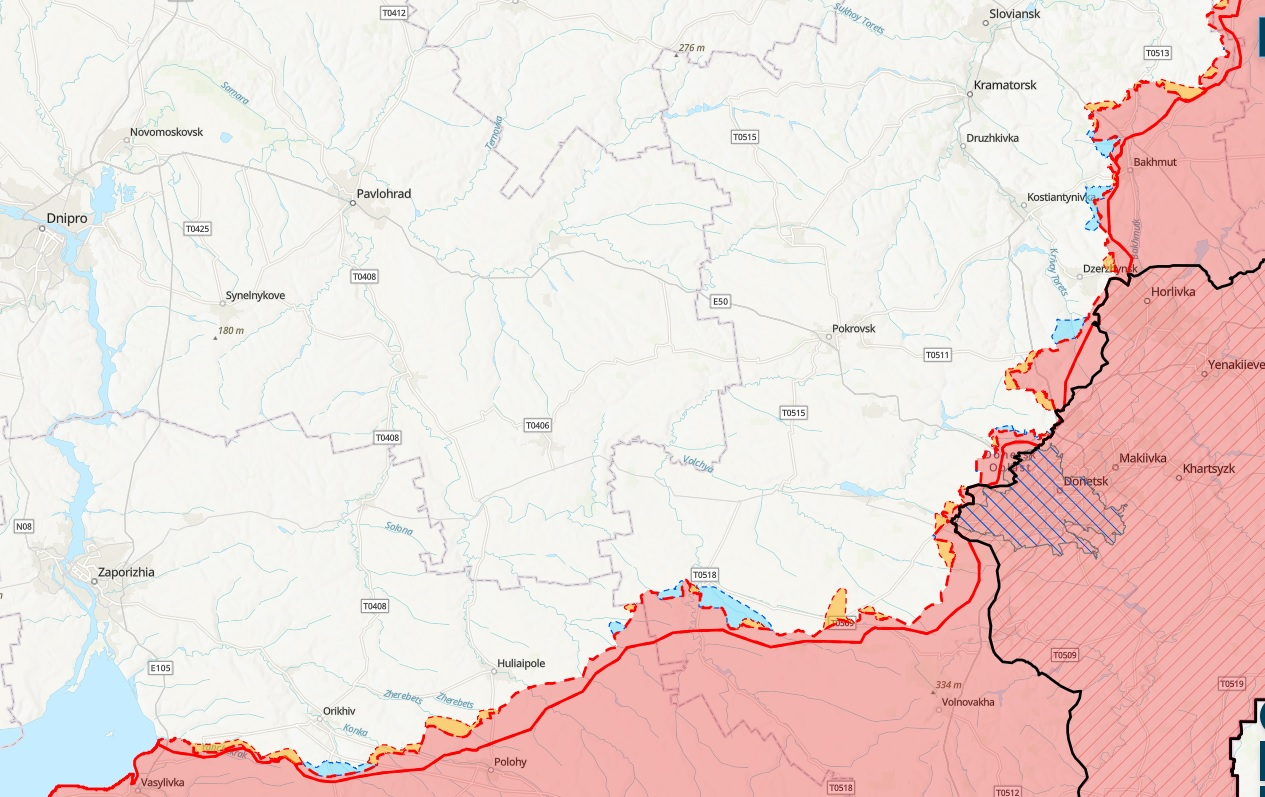
Comparing controll maps from the start of the counteroffesive to recent maps make Hersh's claim about the stopped or stalled offensive evident:

Control map in September 2023:


Control map in June 2023:


Followers


Most popular articles


ISR +


Frequently Used Labels and Topics

40 babies beheaded 77 + China A Week in Review Academic Integrity Adana Agreement afghanistan Africa African Union al-Azhar Algeria Aljazeera All Apartheid apostasy Arab League Arab nationalism Arab Spring Arabs in the West Armenia Arts and Cultures Arts and Entertainment Asia Assassinations Assimilation Azerbaijan Bangladesh Belarus Belt and Road Initiative Brazil BRI BRICS Brotherhood CAF Canada Capitalism Caroline Guenez Caspian Sea cCuba censorship Central Asia Charity Chechnya Children Rights China Christianity CIA Civil society Civil War climate colonialism communication communism con·science Conflict conscience Constitutionalism Contras Corruption Coups Covid19 Crimea Crimes against humanity D-8 Dearborn Debt Democracy Despotism Diplomacy discrimination Dissent Dmitry Medvedev Earthquakes Economics Economics and Finance Economy ECOWAS Education and Communication Egypt Elections energy Enlightenment environment equity Erdogan Europe Events Fatima FIFA FIFA World Cup FIFA World Cup Qatar 2020 Flour Massacre Food Football France Freedom freedom of speech G20 G7 Garden of Prosperity Gaza GCC GDP Genocide geopolitics Germany Global Security Global South Globalism globalization Greece Grozny Conference Hamas Health Hegemony Hezbollah hijab Hiroshima History and Civilizations Human Rights Huquq Ibadiyya Ibn Khaldun ICC Ideas IGOs Immigration Imperialism In The News india Indonesia inequality inflation INSTC Instrumentalized Human Rights Intelligence Inter International Affairs International Law Iran IranDeal Iraq Iraq War ISIL Islam in America Islam in China Islam in Europe Islam in Russia Islam Today Islamic economics Islamic Jihad Islamic law Islamic Societies Islamism Islamophobia ISR MONTHLY ISR Weekly Bulletin ISR Weekly Review Bulletin Italy Japan Jordan Journalism Kenya Khamenei Kilicdaroglu Kurdistan Latin America Law and Society Lebanon Libya Majoritarianism Malaysia Mali mass killings Mauritania Media Media Bias Media Review Middle East migration Military Affairs Morocco Multipolar World Muslim Ban Muslim Women and Leadership Muslims Muslims in Europe Muslims in West Muslims Today NAM Narratives Nationalism NATO Natural Disasters Nelson Mandela NGOs Nicaragua Nicaragua Cuba Niger Nigeria Normalization North America North Korea Nuclear Deal Nuclear Technology Nuclear War Nusra October 7 Oman OPEC+ Opinion Polls Organisation of Islamic Cooperation - OIC Oslo Accords Pakistan Palestine Peace Philippines Philosophy poerty Poland police brutality Politics and Government Population Transfer Populism Poverty Prison Systems Propaganda Prophet Muhammad prosperity Protests Proxy Wars Public Health Putin Qatar Quran Rachel Corrie Racism Raisi Ramadan Regime Change religion and conflict Religion and Culture Religion and Politics religion and society Resistance Rights Rohingya Genocide Russia Salafism Sanctions Saudi Arabia Science and Technology SCO Sectarianism security Senegal Shahed sharia Sharia-compliant financial products Shia Silk Road Singapore Slavery Soccer socialism Southwest Asia and North Africa Sovereignty Space War Spain Sports Sports and Politics Starvation State Power State Terror Sudan sunnism Supremacism SWANA Syria Ta-Nehisi Coates terrorism Thailand The Koreas Tourism Trade transportation Tunisia Turkey Turkiye U.S. Cruelty U.S. Foreign Policy UAE uk ukraine UN under the Rubble UNGA United States UNSC Uprisings Urban warfare US Foreign Policy US Veto USA Uyghur Venezuela Volga Bulgaria Wadee wahhabism War War and Peace War Crimes Wealth and Power Wealth Building West Western Civilization Western Sahara WMDs Women women rights Work Workers World and Communities Xi Yemen Zionism

Search for old news

Find Articles by year, month hierarchy


AdSpace

_______________________________________________

Copyright © Islamic Societies Review. All rights reserved.