

Ukraine's Strike on Iranian Shipping Exposes the West’s Racialized Empathy
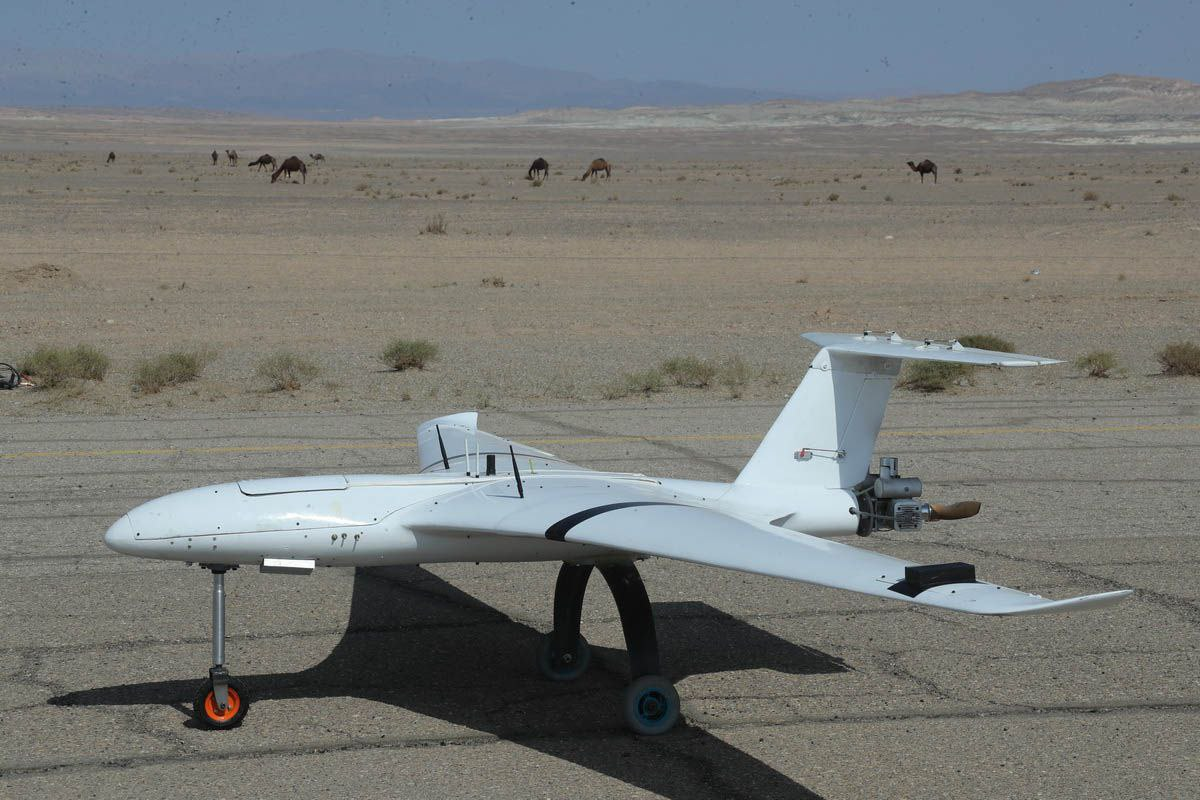
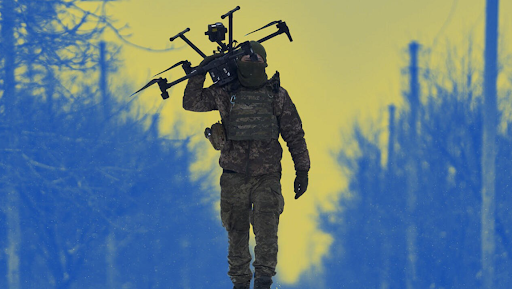
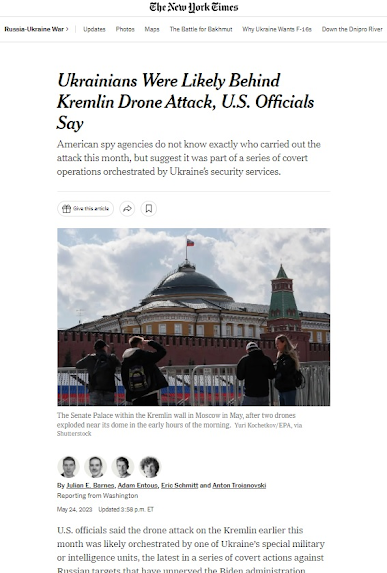
The late July 2026 Ukrainian drone strike on an Iranian-linked cargo ship in the Caspian Sea is more than just a tactical escalation; it is a glaring reminder of the deep-seated double standards that continue to drive Western foreign policy. While Ukraine stated the strike targeted military cargo destined for Russia, the resulting casualties among Iranian sailors and the subsequent condemnation from Tehran have laid bare the contradictions of the so-called "rules-based international order."

As the West rallies behind Ukraine while simultaneously waging a devastating war on Iran, the selective application of international law has never been more stark. When we place the Ukrainian and Iranian conflicts side by side, it becomes clear that the West’s foreign policy is not driven by universal principles, but by geopolitical alignment and racialized empathy.
To understand the scale of this hypocrisy, one must first look at the undeniable similarities that, in a strictly principled world, should grant both nations equal sympathy regarding their sovereignty.
Both Ukraine and Iran are sovereign nations facing existential pressure from nuclear-armed states.
Neither the US-Israeli war on Iran nor the Russian invasion of Ukraine was authorized by the United Nations Security Council. Furthermore, both nations are fighting to preserve their national sovereignty against foreign demands. Ukraine seeks integration into the EU and NATO, which Russia claims threatens its national security. Similarly, Iran asserts its right, as a signatory to the Non-Proliferation Treaty (NPT), to develop nuclear technology. The US and Israel have historically sought to deprive Iran of this capability, with maximalist factions demanding "zero enrichment" and pursuing regime change.
Both nations are resisting foreign powers attempting to dictate the terms of their sovereignty.
However, when we examine the dissimilarities between the two conflicts, the West’s hypocritical application of international law becomes impossible to ignore.
First, geography and demographics heavily complicate the Western narrative. Ukraine shares a massive, contested border with Russia and is home to a large Russian-speaking community that Moscow used as a pretext for intervention. Iran shares no border with the United States (or Israel), nor does it possess an American ethnic minority that the US could claim is being oppressed to justify military action.
Second, the historical and diplomatic contexts highlight Western double standards. Iran has been subjected to crippling, unilateral US sanctions for more than 40 years, a campaign rooted in the historical grievance of the US-backed 1953 overthrow of Iran’s democratically elected government.
Diplomatically, Iran signed the 2015 JCPOA nuclear deal, which was endorsed by the UN Security Council, only for the US to unilaterally abandon it. In contrast, while the Minsk agreements regarding ethnic Russians in the Donbas ultimately failed to prevent war, they at least represented a diplomatic framework that Ukraine engaged with, unlike the US approach to the Iranian deal.
Third, the flow of arms exposes the arbitrary nature of "international law." Ukraine is openly and massively supplied with weapons by the US and EU. Iran, isolated from the West, relies on a closed loop of military and economic support from Russia and China. Yet, the West routinely condemns Chinese and Russian aid to Iran as illicit violations of international law, while treating its own open arming of Ukraine as the legitimate defense of a sovereign nation. This proves that "proliferation" and "sanctions busting" are only considered crimes when committed by the West's adversaries.
It is a profound distortion to suggest the US-Iran conflict is merely one of "sanctions and proxy strikes."
Since February 28, 2026, the United States and Israel have waged a brutal, direct war on Iran. This campaign began with the decapitation of Iran’s leadership, including the assassination of Supreme Leader Ali Khamenei and his family, alongside numerous political and military figures. Russia, while it has the capability to assassinate Ukranian political leaders, it did not do so thus far; and it should be presumed that Russia is able to locate and strike given that it was accused of providing detailed location of US troops to Iran.
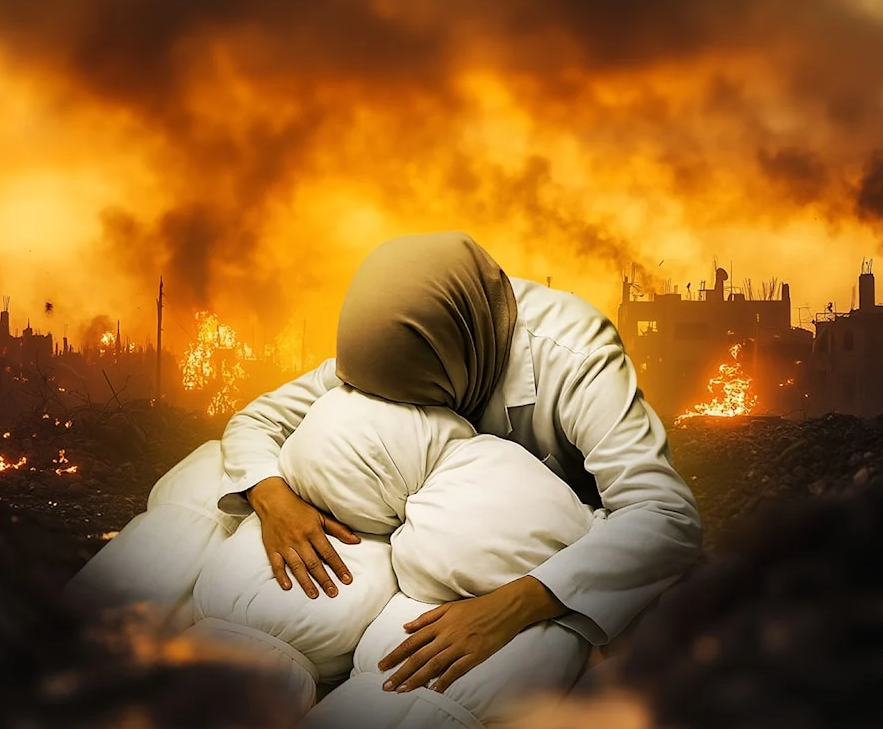
On that very first day, a US double-tap strike devastated the Shajareh Tayyebeh Elementary School in Minab, killing 168 people, including a vast number of children. When US and Israeli efforts to arm Kurdish rebels for a ground invasion were thwarted by Iraqi Hashd forces and Iranian counter-strikes, the US resorted to overwhelming aerial bombardment.
President Trump has explicitly threatened to destroy Iran’s bridges, cultural centers, and power plants, posting on Truth Social that "a whole civilization will die tonight" if Iran does not surrender unconditionally. The threats and dehumanizing language persisted with the US presidents calling Iranians "crazy bastards" and described Iranians as "sick people" and "scum". Trump wrote in his social media platform, "Open the F***in' Strait, you crazy bastards, or you'll be living in Hell - JUST WATCH!" Trump has repeatedly compared Iranians to "animals". In April 2026, when a White House reporter asked how striking civilian targets like bridges and power plants wouldn't constitute a war crime, Trump defended the actions by stating, "Because they’re animals." In March 2026, Trump spoke directly to reporters describing Iranian leaders as "thugs, and animals, and horrible people."
Therefore, comparing the two conflicts is not a false equivalence of scale, but rather a stark exposure of competing aggressions. Ukraine is enduring a Russian land invasion with territorial occupation--albeit context in some regions given the demographics disputes. Iran, on the other hand, is facing a relentless, months-long US-Israeli aerial and naval campaign that has deliberately targeted civilian infrastructure, educational institutions, and the highest levels of government. Yet, the West demands the world view Ukraine solely as the victim of unprovoked aggression, while painting Iran as a global pariah deserving of isolation, actively ignoring the catastrophic violence unleashed upon it by Western-aligned forces--aided by GCC Arab sates who opened their territories and airspaces for US use.
Why does the West demand global sympathy for Ukraine while demanding isolation for Iran? The answer lies in a deep-seated, unacknowledged supremacism.
During the early days of the Ukraine conflict in 2022, the mask of "universal values" slipped, revealing the racialized empathy at the heart of Western foreign policy. Western pundits, journalists, and officials openly argued that the war in Ukraine was uniquely tragic because Ukrainians are "white, blue-eyed people like us," explicitly contrasting them with people in the Middle East, Afghanistan, or Iraq. It is this blatant double standard—the instinct to look down upon non-Europeans as undeserving of respect or sovereignty—that drives the West’s selective outrage.




















 Posts
Posts





