Showing posts with label Silk Road. Show all posts

Friday, May 08, 2026

Pakistan’s Strategic Calculus in a Post-Hormuz World

    Friday, May 08, 2026   No comments

The sudden closure of the Strait of Hormuz following the February 28, 2026, military campaign against Iran by the United States and Israel has triggered one of the most severe disruptions to global maritime trade in recent decades. However, for Pakistan, the blockade is not just a security or economic liability; it is a strategic inflection point. Rather than retreating into passive alignment, Islamabad has moved swiftly to transform a maritime crisis into a terrestrial opportunity. By operationalizing overland transit corridors to Iran, Pakistan is pursuing a calculated three-pronged strategy: elevating its regional diplomatic and economic clout, constraining India’s strategic alternatives, and forging a continuous trade artery linking China to Iran, with the long-term ambition of extending this corridor westward into the broader Eurasian network.


To understand Pakistan’s response, one must view the crisis through the lens of historical trade geography. For millennia, corridors like the Silk Road have dictated the flow of wealth, influence, and political alignment across continents. When sea lanes are disrupted, land routes regain their strategic premium. The Strait of Hormuz has long functioned as the modern equivalent of a maritime chokepoint, channeling a critical share of global energy and commercial shipping. Its closure has forced regional actors to reconsider over-reliance on vulnerable sea passages. Pakistan’s decision to pivot toward overland transit is rooted in this historical reality: control of land corridors translates directly into geopolitical leverage, economic relevance, and diplomatic indispensability.


Pakistan’s immediate response to the Hormuz blockade has been to position itself as the primary logistical lifeline for Iran. As of late April 2026, Islamabad has designated six new transit routes and formally cleared the passage of third-country goods to Iran through Pakistani territory. This move addresses a pressing bottleneck: more than 3,000 Iran-bound shipping containers have been stranded in Karachi since the imposition of the US-led maritime blockade. By converting these stranded maritime shipments into an overland pipeline, Pakistan transforms its ports and road networks into critical regional infrastructure. This operational shift elevates Islamabad from a peripheral actor to a central facilitator of Asian trade, granting it diplomatic leverage with Tehran, Beijing, and other regional stakeholders while generating domestic economic activity in logistics, rail, and customs administration.


Pakistan’s overland strategy also carries a clear counterweight to India’s longstanding regional ambitions. Since October 2017, New Delhi has developed the Chabahar Port corridor in southeastern Iran as a direct trade route to Afghanistan, explicitly designed to bypass Pakistani territory. This route has provided India with strategic access to Central Asia and diminished Pakistan’s geographic leverage over regional commerce. The Hormuz crisis, however, fundamentally alters the strategic calculus. With maritime routes disrupted and Iran under severe economic and logistical strain, the reliability and security of India’s Chabahar-dependent supply chains are compromised. Pakistan’s newly activated land corridors through Balochistan and Sindh offer a faster, more contiguous, and geographically integrated alternative for regional trade. By linking Iranian logistics directly to its own port infrastructure, Pakistan not only undermines India’s bypass strategy but also reasserts its indispensability in South Asian and Central Asian trade networks.


At the core of Pakistan’s post-Hormuz calculus is the ambition to seamlessly integrate the China-Pakistan Economic Corridor (CPEC) with Iranian transit infrastructure. CPEC, which links China’s Xinjiang region to the Arabian Sea via Gwadar and Karachi, has long been envisioned as a cornerstone of broader Eurasian connectivity. The current crisis accelerates the practical need to extend this corridor inland. By routing Chinese and third-country goods through Pakistan into Iran, Islamabad creates a continuous land-based trade artery stretching from East Asia to the Persian Gulf. From Iran, this network holds the structural potential to connect westward into Iraq, the Levant, and eventually European markets, effectively reviving and modernizing the western branches of historical trade routes. Such a corridor would reduce regional dependency on vulnerable maritime chokepoints while positioning Pakistan as the central node in a transcontinental supply chain.


This recalibration is not without geopolitical risk. Facilitating trade to Iran under a US-imposed blockade inevitably strains Pakistan’s relationship with Washington, which has historically leveraged financial and security partnerships to influence Islamabad’s foreign policy. However, Pakistan’s calculus appears to prioritize long-term strategic autonomy over short-term alignment. By framing its transit operations as humanitarian and economic necessities rather than overtly political maneuvers, Islamabad seeks to maintain diplomatic flexibility while advancing its regional integration agenda. The bet is clear: sustained transit revenues, infrastructure development, and elevated regional standing will ultimately outweigh temporary friction with Western partners.


The closure of the Strait of Hormuz has exposed the fragility of globalized maritime trade, but it has also revealed new pathways for regional realignment. For Pakistan, the crisis is a catalyst rather than a constraint. By transforming its territory into a vital overland conduit between China, Iran, and beyond, Islamabad aims to amplify its diplomatic clout, curtail India’s strategic alternatives, and lay the groundwork for a westward-expanding trade corridor. In doing so, Pakistan is not merely reacting to a blockade; it is actively reshaping the architecture of Eurasian commerce, leveraging geography, infrastructure, and transit diplomacy to secure its place in a post-Hormuz order.



Tuesday, August 29, 2023

Russia activates its alternative routes to replace transit and shipping through the Black Sea, while Iran Saudi Arabia upgrade their newly revived relations

    Tuesday, August 29, 2023   No comments

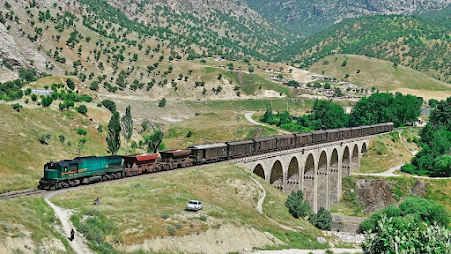
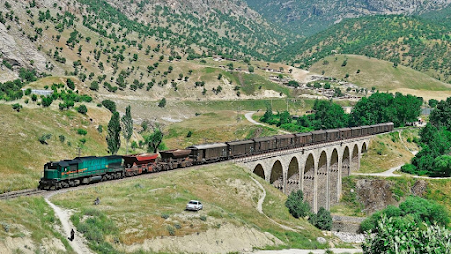
The chief executive of the Islamic Republic of Iran Railways (RAI) announced on 27 August the transit of Russian cargo to Saudi Arabia via the Iran transport corridor for the first time.

A transit train hauling 36 containers entered Iran for the first time from Russia through Iran’s Incheh Borun rail border near Turkmenistan, Miad Salehi stated.

The deputy roads minister added that this cargo transit train was dispatched to the port city of Bandar Abbas on the Strait of Hormuz and will be transferred from there to the Saudi Arabian port city of Jeddah by sea.

Russia seeks to develop the International North–South Transport Corridor (INSTC) to connect India, Iran, Russia, Azerbaijan, and other countries via railways and sea.

Russia says the INSTC will rival the Suez Canal as a major global trade route.

In May, Russian President Vladimir Putin and his Iranian counterpart Ebrahim Raisi signed a deal to finance and build an additional Iranian railway line between the cities of Rasht and Astara.

“The unique North-South transport artery, of which the Rasht-Astara railway will become a part, will help to significantly diversify global traffic flows,” Putin said.

He also said the 162-kilometer railway along the Caspian Sea coast would help to connect Russian ports on the Baltic Sea with Iranian ports in the Indian Ocean and the Gulf.

“Without a doubt, this agreement is an important and strategic step in the direction of cooperation between Tehran and Moscow,” Raisi said.

Iran hopes the successful development of Russian-financed railway links comprising the NSTC will increase transit revenues and reinforce Iran’s “Look to the east” policy of strengthening ties with neighboring countries and eastern powers in response to western economic sanctions.

Raisi’s Deputy Chief of Staff for Political Affairs, Mohammad Jamshidi, claimed that the INTSC earnings would rival Iran’s oil revenue. In this vein, the semi-official ISNA on May 17 estimated annual revenue of $20 billion from the corridor.

State broadcaster-run Jam-e Jam newspaper described Iran as the “golden path of trade” in an article highlighting the potential benefits of the railway.

Iran and Russia have developed closer economic, diplomatic, and military ties in recent years, as both countries have been subject to US economic sanctions and have resisted US foreign policy in West Asia, including Syria, and the former Soviet states, including Ukraine.


Sunday, August 13, 2023

The Century Project.. Algeria announces the completion of a road linking its borders with Tunisia and Morocco

    Sunday, August 13, 2023   No comments

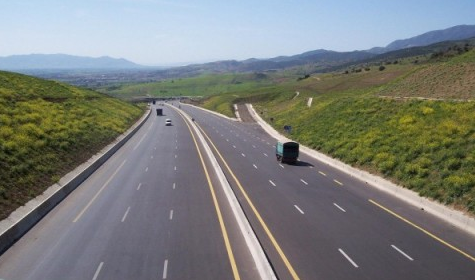
Algeria announced, on Saturday, the completion of the “East-West Highway,” which starts from the country’s western border with Morocco and reaches its eastern border with Tunisia, with a length of 1,216 km.

This came during the inauguration of the Algerian Prime Minister, Ayman bin Abdel Rahman, the last section of the road that connects the city of Daraan (Al-Tarif Governorate in the far east) with the Tunisian border at a distance of 84 km, according to state television.

Thus, Algeria has completely completed the completion of this road, which began to be built at the beginning of the new millennium and was called the “Project of the Century”.

According to official figures of the Algerian government, the total cost of the road exceeded 13 billion dollars, and it was supposed to be completed in 2012.

The project experienced delays due to technical and administrative problems, and at that time a corruption case erupted, known as the “scandal of the century,” and the trials ended in 2015 with the Algerian judiciary issuing prison sentences and financial fines against those involved.

And the Algerian authorities relied on the immediate exploitation of every section of the road that was prepared, until it was completely completed, on Saturday.

Bin Abdul Rahman called for activating road maintenance networks and ensuring that it is suitable for vehicle traffic.

The last section of the road allows for an increase in the volume of trade exchanges with Tunisia, in addition to ensuring the smooth movement of people between the two countries.

The "giant road" is located within an economic and commercial integration scheme drawn up by the Union of Arab Maghreb States, to link the land of Morocco, Algeria and Tunisia, but the differences between Algeria and Rabat and the closure of the land borders between them since 1994 prevented the completion of the road scheme.

And the Algerian Prime Minister, Ayman bin Abdel Rahman, inaugurated the last section of the road, which connects the city of Daraan (Al-Tarif Governorate in the far east) with the Tunisian border, at a distance of 84 kilometers, and thus Algeria has completely completed the completion of this road, which began construction at the beginning of the new millennium, and was named with the "Project of the Century".


The Algerian Prime Minister said that Algeria "now has the longest road network on the continent, with a distance of 141,000 km, of which 9,000 km are highways, according to international standards."


Bin Abdul Rahman called for "activating road maintenance networks and ensuring that it is suitable for vehicle traffic." The last section of the road allows for an increase in the volume of trade exchanges with Tunisia, in addition to ensuring the smooth movement of people between the two countries.

In this regard, bin Abd al-Rahman said that this road is "the artery of the economy, and we are working with an economic approach to endorse development and end isolation," pointing out that "although the Dhara'an section was completed by foreign institutions, the project involved many competencies and hands." qualified Algerian worker.


The East-West Highway is of paramount importance, in terms of the economic, developmental and social dimension, and its completion means the complete opening of the motorway that connects 17 northern Algerian states, out of 58 states, that make up the Algerian Republic, and also connects Algeria with other Arab countries.


Trending now...


ISR +


Frequently Used Labels and Topics

40 babies beheaded 77 + China A Week in Review Academic Integrity Adana Agreement afghanistan Africa African Union al-Azhar Algeria Aljazeera All Apartheid apostasy Arab League Arab nationalism Arab Spring Arabs in the West Armenia Arts and Cultures Arts and Entertainment Asia Assassinations Assimilation Azerbaijan Bangladesh Belarus Belt and Road Initiative Brazil BRI BRICS Brotherhood CAF Canada Capitalism Caroline Guenez Caspian Sea cCuba censorship Central Asia Charity Chechnya Children Rights China Christianity CIA Civil society Civil War climate colonialism communication communism con·science Conflict conscience Constitutionalism Contras Corruption Coups Covid19 Crimea Crimes against humanity D-8 Dearborn Debt Democracy Despotism Diplomacy discrimination Dissent Dmitry Medvedev Earthquakes Economics Economics and Finance Economy ECOWAS Education and Communication Egypt Elections energy Enlightenment environment equity Erdogan Europe Events Fatima FIFA FIFA World Cup FIFA World Cup Qatar 2020 Flour Massacre Food Football France Freedom freedom of speech G20 G7 Garden of Prosperity Gaza GCC GDP Genocide geopolitics Germany Global Security Global South Globalism globalization Greece Grozny Conference Hamas Health Hegemony Hezbollah hijab Hiroshima History and Civilizations Hormuz Human Rights Huquq Ibadiyya Ibn Khaldun ICC Ideas IGOs Immigration Imperialism In The News india Indonesia inequality inflation INSTC Instrumentalized Human Rights Intelligence Inter International Affairs International Law Iran IranDeal Iraq Iraq War ISIL Islam in America Islam in China Islam in Europe Islam in Russia Islam Today Islamic economics Islamic Jihad Islamic law Islamic Societies Islamism Islamophobia ISR MONTHLY ISR Weekly Bulletin ISR Weekly Review Bulletin Italy Japan Jordan Journalism Kenya Khamenei Kilicdaroglu Kurdistan Latin America Law and Society Lebanon Libya Majoritarianism Malaysia Mali mass killings Mauritania Media Media Bias Media Review Middle East migration Military Affairs Morocco Multipolar World Muslim Ban Muslim Women and Leadership Muslims Muslims in Europe Muslims in West Muslims Today NAM Narratives Nationalism NATO Natural Disasters Nelson Mandela NGOs Nicaragua Nicaragua Cuba Niger Nigeria Normalization North America North Korea Nuclear Deal Nuclear Technology Nuclear War Nusra October 7 Oman OPEC+ Opinion Polls Organisation of Islamic Cooperation - OIC Oslo Accords Pakistan Palestine Peace Philippines Philosophy poerty Poland police brutality Politics and Government Population Transfer Populism Poverty Prison Systems Propaganda Prophet Muhammad prosperity Protests Proxy Wars Public Health Putin Qatar Quran Rachel Corrie Racism Raisi Ramadan Ramadan War Regime Change religion and conflict Religion and Culture Religion and Politics religion and society Resistance Rights Rohingya Genocide Russia Salafism Sanctions Saudi Arabia Science and Technology SCO Sectarianism security Senegal Shahed sharia Sharia-compliant financial products Shia Silk Road Singapore Sistani Slavery Soccer socialism Southwest Asia and North Africa Sovereignty Space War Spain Sports Sports and Politics Starvation State Power State Terror Sudan Sunni Axis sunnism Supremacism SWANA Syria Ta-Nehisi Coates terrorism Thailand The Koreas Tourism Trade transportation Tunisia Turkey Turkiye U.S. Cruelty U.S. Foreign Policy UAE uk ukraine UN under the Rubble UNGA United States UNSC Uprisings Urban warfare US Foreign Policy US Veto USA Uyghur Venezuela Volga Bulgaria Wadee wahhabism War War and Peace War Crimes War on Iran Wealth and Power Wealth Building West Western Civilization Western Sahara WMDs Women women rights Work Workers World and Communities Xi Yemen Zionism

Search for old news

Find Articles by year, month hierarchy


WEEKLY AdSpace 3

_______________________________________________

Copyright © Islamic Societies Review. All rights reserved.