

The Kidnapping of Nicolás Maduro and Its Immediate Impact on Russian Foreign Policy
In an unprecedented breach of international law and state sovereignty, Venezuelan President Nicolás Maduro was forcibly abducted by armed forces of the United States government on January 3, 2026. The incident has triggered a global diplomatic crisis and prompted a swift, uncompromising response from Moscow.

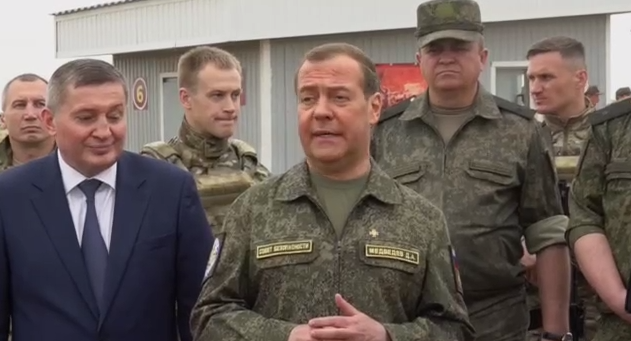
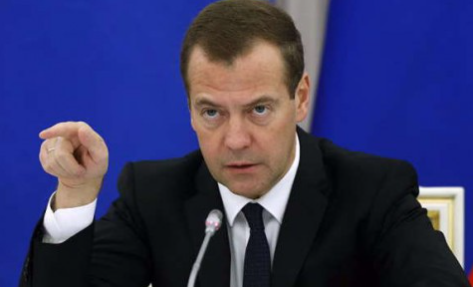
Dmitry Medvedev, Deputy Chair of the Security Council of the Russian Federation, issued a scathing statement describing it as “sheer thuggery and vileness—or, to put it more elegantly, a civilizational catastrophe in the sphere of international relations.” His remarks are not mere rhetoric; they reflect a fundamental recalibration of Russia’s strategic posture in the wake of what is now widely regarded as the most brazen act of state-sponsored abduction in modern history.
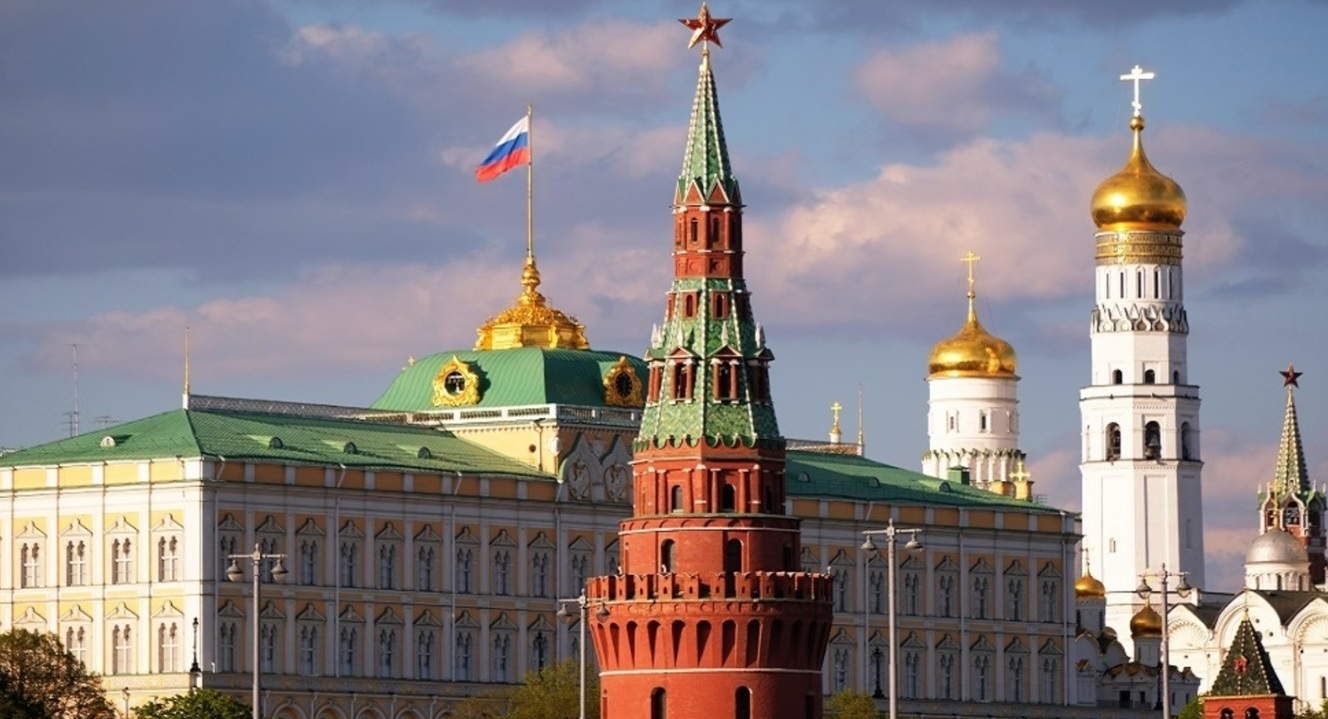
For Moscow, Maduro’s abduction is not just a regional crisis—it is a direct challenge to the multipolar world order Russia has spent two decades trying to construct. Venezuela has been a cornerstone of Russian influence in Latin America, serving as a strategic counterweight to U.S. dominance in the Western Hemisphere.
In his statement, Medvedev outlined two possible outcomes: either the U.S. releases Maduro under diplomatic cover—an outcome he deems “minimal”—or Maduro becomes “a new Latin American Mandela,” martyred by Western imperialism and immortalized alongside Simón Bolívar, Francisco de Miranda, and Hugo Chávez. Either scenario, Medvedev argues, strengthens the anti-imperialist narrative that Russia and its allies have cultivated globally.
Medvedev tied the kidnapping directly to energy politics. “Oil is the key factor here,” he noted, referencing Venezuela’s vast reserves—the largest in the world. He warned that if the current Venezuelan authorities (now led by acting President Delcy Rodríguez) refuse to grant U.S. firms access to those resources, Washington might consider a full-scale invasion. Yet he dismissed this as unlikely, citing domestic political constraints in the U.S., including a divided Congress and growing public opposition to foreign military entanglements.
Perhaps most significantly, the Maduro kidnapping has accelerated Russia’s formal abandonment of the post–World War II international legal framework. Medvedev explicitly stated that after such an act, “the American elites—both Republican and Democratic—should permanently shove their long tongues back into their rickety asses” and “acknowledge the legitimacy of Russia’s actions during the SMO [Special Military Operation] in Ukraine.”
This linkage is deliberate: Moscow now asserts moral equivalence between its actions in Ukraine and U.S. actions in Venezuela—both, in its view, are exercises of sovereign power in a world where might makes right. In this new paradigm, international law is not merely weakened; it is declared obsolete. As Medvedev chillingly put it: “international law is not required at all.”
He reinforced this stance in discussing the recent seizure of a Russian-flagged tanker by U.S. naval forces—a vessel that had been granted temporary registration to evade sanctions. While acknowledging the move violated the UN Convention on the Law of the Sea, Medvedev pointed out that the U.S. never ratified the treaty, rendering its objections hypocritical. More importantly, he argued that responses to American aggression must now occur “entirely outside the framework” of existing legal structures.
Medvedev’s closing metaphor reveals the emerging Russian doctrine: in a world turned into “outright Bedlam,” diplomacy is futile. “Dangerous madmen,” he wrote, “require either a straitjacket—or a lifesaving injection of haloperidol.” The reference to events “last night in the west of the Bandera-run Ukrainian periphery” suggests that Russia has already begun administering its own form of “treatment”—likely a major retaliatory strike or covert operation designed to signal that any further U.S. adventurism will be met with asymmetric, unpredictable force.
This marks a decisive shift from deterrence through parity to deterrence through unpredictability. Russia is no longer seeking to negotiate within the system; it is working to dismantle it and replace it with a raw balance of power enforced by “orderlies with massive fists.”
The kidnapping of Nicolás Maduro on January 3, 2026, is not a speculative fiction—it is a watershed moment in international relations. It has validated Moscow’s long-held claim that the United States operates as a lawless hegemon, willing to violate the most basic norms of sovereignty when convenient. In response, Russia has abandoned any pretense of working within Western-led institutions and is now openly advocating for a world governed by strength, loyalty, and retribution.
As nations across the Global South watch closely, the coming weeks will determine whether this act triggers a cascade of realignments—or a broader conflict. One thing is certain: the rules-based order did not die slowly. It was taken hostage from a bedroom in Caracas—and with it, the last vestiges of post–Cold War stability.











 Posts
Posts





