Wednesday, April 23, 2025

Saudi-Iran -- A New Chapter of Regional Cooperation Amid Global Turbulence

    Wednesday, April 23, 2025   No comments

In a symbolic and significant diplomatic exchange, Saudi Arabia’s Minister of Defense, Prince Khalid bin Salman, visited Tehran and delivered a personal letter from King Salman to Iran’s Supreme Leader, Ayatollah Ali Khamenei. The high-level meeting underscores the deepening normalization of relations between the two regional powerhouses, Iran and Saudi Arabia, and signals a new phase of cooperation with potential implications far beyond the Middle East.

During the meeting, Ayatollah Khamenei emphasized that Tehran and Riyadh can have a “complementary and mutually beneficial” relationship. He expressed Iran’s readiness to assist Saudi Arabia in sectors where Iran has achieved notable progress, highlighting the potential for constructive collaboration rather than rivalry. Khamenei warned, however, of external forces seeking to sabotage this rapprochement and called for regional unity, stressing that cooperation among neighboring nations is preferable to reliance on foreign powers.

Prince Khalid echoed the sentiment, stating that he arrived in Tehran with a clear agenda to expand bilateral relations and strengthen cooperation across various fields. He voiced optimism that this new chapter in Saudi-Iran ties could lead to stronger relations than ever before.

Iranian President Masoud Pezeshkian also welcomed the Saudi minister, reaffirming Iran’s commitment to deepening ties with Saudi Arabia and other Muslim nations. He emphasized the shared capacity of the two nations to solve regional problems independently, without foreign interference, and expressed hope that the emerging friendship would reinforce Islamic solidarity and thwart attempts to sow discord in the region.


President Pezeshkian also touched on the broader symbolic importance of this rapprochement, suggesting that a unified voice among Islamic nations could serve as a powerful example of peaceful coexistence and progress. He linked regional unity to the prevention of humanitarian catastrophes, pointing to ongoing tragedies like the situation in Gaza.

In a separate meeting, the Secretary of Iran’s Supreme National Security Council, Ali Akbar Ahmadian, reiterated that the normalization agreement signed in March 2023 has led to a rise in bilateral ties. He highlighted prospects for joint investments and economic cooperation, noting that strengthened economic ties could further stabilize and secure the region. The agreement he was referring to was brokered by China in 2023 as part of a security re-arragement to stabalize the region.

Prince Khalid, for his part, described engagement with Iran as the cornerstone of regional security collaboration, underlining the Saudi leadership’s determination to cultivate friendly ties at all levels. He also called for collective Islamic action against Israeli occupation and expansionist policies, reinforcing the sense of shared geopolitical interests.

Significance Amid Global Uncertainty

This warming of Saudi-Iranian relations comes at a time when the global order is increasingly unstable. Conflicts in Gaza and Ukraine, shifting alliances, and economic uncertainty have all heightened the importance of regional diplomacy. The Saudi-Iran rapprochement not only represents a strategic recalibration but also signals a broader desire for regional autonomy and resilience.

For decades, Riyadh and Tehran stood on opposing sides of regional conflicts, often backing rival factions in places like Yemen, Syria, and Lebanon. The resumption of ties, brokered in part by China, marks a turning point that could ease sectarian tensions and reduce proxy warfare.

The broader implications are significant. A united Saudi-Iranian front could stabilize energy markets, mitigate regional conflicts, and challenge the narrative that the Middle East is inherently divided. As global power structures shift, cooperation between these two influential players could form the bedrock of a new, more self-reliant regional order.

In a world where traditional alliances are in flux, the normalization of Saudi-Iran relations might be one of the most consequential diplomatic developments in recent memory.

Revealed Contents of King Salman’s Letter: A Strategic Overture

Days after this historic visit by a member of the ruling family in Saudi Arabia to Iran, more details are coming out about the content of the letter sent to iran's top official, Ayatollah Khamenei—information that sheds light on the depth and intent behind this diplomatic gesture.

According to news reports, the letter was received very positively by the Iranian leadership. Among the key points raised:

  • Support for US-Iran Talks: King Salman voiced Saudi Arabia’s support for the ongoing US-Iran negotiations over Tehran’s nuclear program—an unexpected shift from the Kingdom’s prior opposition to the 2015 nuclear deal. He encouraged Iran to pursue a settlement that would enhance regional stability.
  • Willingness to Facilitate Dialogue: The letter offered Saudi Arabia’s assistance in hosting informal meetings between Iranian and U.S. officials during former U.S. President Donald Trump’s upcoming visit to Riyadh. Iran declined the proposal, yet the gesture itself signals a new Saudi approach to facilitating regional diplomacy.
  • Yemen and Regional De-escalation: The King urged Iran to use its influence over Yemen’s Ansarallah movement (the Houthis) to prevent attacks on Saudi Arabia and the UAE, and to lower tensions in the Red Sea—an area of growing strategic concern.
  • Palestinian Statehood Commitment: King Salman reaffirmed Saudi Arabia’s longstanding position that it will not recognize Israel without the establishment of a fully independent and widely accepted Palestinian state—adding a clear note of continuity amid shifting geopolitical narratives, a shift perhaps resulting from the brutal war in Gaza.
  • Proposal for a Security Pact: Perhaps most notably, the King expressed openness to a bilateral security pact with Iran, stating that concrete steps toward such an agreement would be pursued in the near future.
  • This development comes against the backdrop of renewed U.S.-Iran indirect talks and a major regional tour by President Trump, who is scheduled to visit Saudi Arabia, Qatar, and the UAE from May 13 to 16. According to White House Press Secretary Karoline Leavitt, the purpose of the trip is to "strengthen ties" with regional allies. Trump’s visit will be his second international trip since returning to office, and it now intersects with rapidly evolving regional dynamics.

Friday, April 11, 2025

France will recognize Palestine Soon

    Friday, April 11, 2025   No comments

The West is behind in recognizing the rights of the Palestinians to self-determination. But it is better late then never.

West's refusal to recognize Palestine as an independent state could have prevented the October attacks and the cycle of wars in Gaza. Now some Western countries, including France, are coming to accept that potential.

France's president just announced that France will recognize Palestine in months.  France’s potential recognition of Palestine as a sovereign state is quite important, despite the fact that 147 out of 193 UN member states have already done so. Here's why France’s stance carries significant weight:

1. France's Influence in the West

France is a major Western power—a permanent member of the UN Security Council, a founding member of the European Union, and part of the G7. Most of the countries that haven’t recognized Palestine are Western or aligned with the U.S. position, including the U.S., UK, Germany, and others. So, a shift in France’s stance could:

  • Encourage other Western countries to reconsider their position.
  • Break the perception of a unified Western front against recognition.

2. European Policy Shift

Macron's statement might signal a broader shift in EU policy, especially since he hinted this move could happen in coordination with other states or at a UN summit in June. This could:

  • Build momentum for a multilateral recognition initiative.
  • Put pressure on other EU members to align or clarify their positions.

3. Symbolic & Diplomatic Impact

  • Recognition from a country like France is more than symbolic:
  • It could increase diplomatic legitimacy for Palestine on the global stage.
  • It might influence international forums, aid flows, and negotiations.
  • It adds pressure on Israel by elevating the statehood issue beyond bilateral talks.

4. Tactical Timing

France possibly tying this recognition to a UN event in June also gives it diplomatic weight—it suggests recognition could become part of a broader international initiative, maybe even linked to Arab normalization with Israel.

Wednesday, April 09, 2025

Media Review: Why does Trump Think Erdogan is a "Winner"? -- Analyzing Current Events in the Middle East

    Wednesday, April 09, 2025   No comments
Recent developments in the Middle East have raised significant concerns about Israel's national security, particularly in light of the shifting dynamics following the weakening of the Assad regime in Syria. This article explores how Israel's previous strategies may backfire, especially with Turkey's increasing involvement representing a new challenge for Israeli policy.

For years, Israel has maintained a complex relationship with Syria, often justifying its military actions by citing the Iranian presence in the region. The narrative framed Iran as a significant threat, allowing Israel to conduct operations with a degree of international acquiescence. However, the fall of the Assad regime, which Israel purportedly supported and even took credit for, may turn out to be a strategic miscalculation.

The vacuum left by the fall of Assad regime has not led to a straightforward advantage for Israel. Instead, it has opened the door for a more assertive Turkey, a NATO member, to expand its influence in Syria. This shift complicates Israel's security calculus, as Turkish Foreign Minister Hakan Fidan recently stated that while Turkey does not seek confrontations with Israel in Syria, Israel's actions could pave the way for future instability in the region.

Then, sitting next to Israel's prime minister, US president Trump said that Erdogan is a "winner". President Trump's comments about Turkish President Recep Tayyip ErdoÄŸan reveal a startling acknowledgment of Turkey's growing role in Syria. Trump congratulated ErdoÄŸan for effectively asserting control over Syrian territories through proxies.

Turkey's potential establishment of military bases in Syria poses a direct challenge to Israel's strategic interests. While Fidan noted that any agreements the new Syrian administration might pursue with Israel are its own business, the tension remains palpable. Israeli Prime Minister Netanyahu has expressed concerns about Turkish military presence, indicating that Israel does not want Turkey using Syrian territory as a base against it.

Iran's Enhanced Position: A Trojan Horse


Contrary to Israel's previous assertions, Iran's capacity to operate in Syria is potentially more secure due to Turkey's involvement. The collaboration between Turkey and Iran could facilitate logistics and support in ways that were previously less feasible. This partnership undermines Israel's long-standing narrative of Iranian isolation, presenting a more unified front against Israeli interests.

Moreover, Turkey's criticisms of Israeli military actions—labeling them as genocidal and a violation of regional stability—highlight the precariousness of Israel's position. Turkish officials have condemned Israeli airstrikes on Syria, which they perceive as an infringement on Syrian sovereignty. This rhetoric 
Israel's national security strategy has relied heavily on maintaining a powerless Syria. A fragmented state is easier to control and less likely to pose a direct threat. However, with Turkey's burgeoning role in the region, Israel finds itself in a precarious position. ErdoÄŸan's ambitions could lead to the establishment of Turkish military bases in Syria, effectively transforming the landscape into a more complex battleground for Israel.

The current events in the Middle East illustrate the intricacies of regional politics and the potential repercussions of Israel’s earlier strategic choices. The fall of the Assad regime, rather than serving as a victory for Israeli security, might lead to a more complicated and threatening environment.

Trump’s Perspective on Erdogan as a "Winner"


Trump's admiration for Erdogan can be traced to Turkey's significant role in the ongoing conflict in Syria. By supporting the Islamist-led coalition that ousted Bashar al-Assad, Erdogan has effectively increased Turkey's influence in a region historically dominated by various power struggles. Trump’s comments, such as congratulating Erdogan for "taking over Syria," highlight a recognition of Turkey's strategic gains. This acknowledgment reflects Trump's broader narrative of strength and success, often favoring leaders who exhibit assertive control over their territories and dominating weaker nations.

Moreover, Trump’s personal rapport with Erdogan is notable. By describing Erdogan as "very smart" and emphasizing their strong relationship, Trump positions himself as a potential mediator in the fraught dynamics between Turkey and Israel. This personal connection may enhance Trump's ability to navigate the delicate political waters of the Middle East, where alliances shift rapidly.

Erdogan’s achievements in Syria are significant. By backing opposition forces and securing a foothold in the region, Turkey has not only expanded its influence but also positioned itself as a key player in any future resolution of the Syrian crisis. However, the devastation wrought by over 11 years of war has left Syria in ruins, requiring an estimated $300 billion for reconstruction. This staggering cost presents a challenge for Turkey, as Erdogan does not have the financial resources to undertake such an extensive rebuilding effort.

Moreover, Turkey’s relationship with Iran and Russia complicates the situation. Erdogan has cultivated strong ties with both nations, enabling Turkey to leverage its relationships with the new Syrian leadership to gain economic benefits from Iran. This alignment stabilizes Iran’s influence in Syria, creating opportunities for Turkey to extract advantages from its connections with both Iran and its adversaries. Given Syria's geographical significance but economic liabilities, Erdogan's strategy may involve encouraging Gulf states and energy-rich nations, including Iran, to participate in rebuilding efforts.

Trump's offer to mediate between Erdogan and Israeli Prime Minister Benjamin Netanyahu is critical for several reasons. First, it illustrates the U.S. role as a central player in Middle Eastern diplomacy. By positioning himself as a mediator, Trump aims to stabilize relations between two countries that have historically been at odds, particularly regarding their respective approaches to the Syrian conflict.
Moreover, Trump's influence could potentially steer Erdogan towards a more conciliatory stance regarding Israel. 

While Trump’s relationship with Erdogan provides a unique opportunity for diplomatic engagement, the extent of his influence is debatable. Erdogan's actions are driven by Turkey's national interests, which may not always align with U.S. or Israeli objectives. For instance, Erdogan’s strong support for Hamas and his anti-Israel rhetoric complicate any straightforward mediation effort.

Furthermore, Erdogan's recent statements indicating a desire to avoid confrontation with Israel suggest a potential openness to dialogue, albeit cautious. 
Trump's perception of Erdogan as a "winner" reflects a broader acknowledgment of Turkey's strategic gains in Syria, especially through its relationships with Iran and Russia. Erdogan's successes, while beneficial for Turkey, also pose challenges to Israeli interests, making Trump’s proposed mediation a critical juncture in Middle Eastern diplomacy. As Syria emerges from devastation, the need for reconstruction creates a complex dynamic; Erdogan will likely seek Gulf states' participation, recognizing that any rebuilding effort will come with significant geopolitical strings attached. This transformative potential could reshape regional dynamics, with the outcomes of Erdogan's actions significantly impacting the future stability of Syria and the broader SWANA region.

Sunday, March 23, 2025

Causes and Consequences of Arresting Istanbul's Mayor

    Sunday, March 23, 2025   No comments

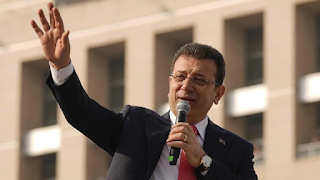
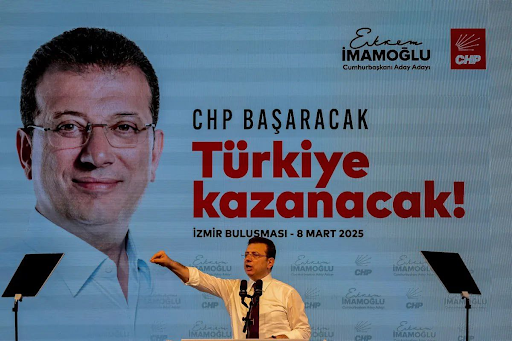
The political landscape in Turkey has been thrust into turmoil following the recent arrest of Ekrem Imamoglu, the popular mayor of Istanbul. Imamoglu, a member of the opposition Republican People's Party (CHP), was detained on corruption charges in a move that many see as politically motivated.


The arrest order, issued by a judge in Istanbul, came amid a wave of widespread protests across Turkey condemning Imamoglu's detention. The mayor was accused of "irregularities" in his handling of municipal contracts and "terrorist propaganda" - charges that his supporters decry as fabricated attempts to remove a powerful political rival of President Recep Tayyip Erdogan's ruling party.


The controversy began last week when Turkey's Interior Ministry suspended Imamoglu from his post as Istanbul mayor, along with the mayors of two other Istanbul districts. This action was taken under Article 127 of the Turkish constitution, which allows for the temporary removal of elected officials facing criminal investigations.


In response, Istanbul's city council convened an emergency session and elected a temporary replacement mayor to fill Imamoglu's role. However, Imamoglu has refused to back down, defiantly calling the move an "attack on democracy" and urging all 86 million Turkish citizens to "fill the ballot boxes and raise their voices against injustice."


The fallout from Imamoglu's arrest has ignited a groundswell of public anger that has extended far beyond just his supporters. Protests have erupted in over two-thirds of Turkey's 81 provinces, with demonstrators - including many apolitical young people and university students - voicing their outrage at what they see as the government's blatant abuse of power.


The broader significance of this crisis lies in the potential long-term implications for Turkish democracy. Imamoglu was widely viewed as a rising political star and a formidable challenger to Erdogan's dominance. His detention appears to be an attempt by the president and his party to eliminate a potent electoral threat ahead of next year's presidential and parliamentary elections.


The outcomes of this crisis remain highly uncertain. Imamoglu's supporters have vowed to continue their protests, raising the specter of sustained civil unrest. The government, for its part, has signaled its intent to press ahead with the prosecution, potentially leading to a drawn-out legal battle.


Ultimately, the fate of Ekrem Imamoglu and the future of Turkey's fragile democracy hang in the balance. This crisis has laid bare the deep divisions and power struggles within the country, and its resolution will have profound consequences for the country's political trajectory in the years to come.

Turkish court formally places Istanbul mayor Imamoglu under arrest on corruption charges

 Following a warning from the Supreme Council of Radio and Television, Turkish television channels have stopped live broadcasts from the sites of rallies, protests and from the Palace of Justice in Istanbul, where a court decision on the preventive measure for Istanbul Mayor Ekrem Imamoglu is expected.

Over 300 people have been detained, one police officer was attacked with acid, reports say. 

Wednesday, March 19, 2025

Turkey in Crisis: The Arrest of Ekrem Imamoglu and Its Far-Reaching Consequences

    Wednesday, March 19, 2025   No comments

Turkey is facing a period of heightened political and social unrest following the arrest of Istanbul’s mayor, Ekrem Imamoglu. This event has ignited massive protests, deepened tensions between the government and the opposition, and drawn international scrutiny over the state of democracy and rule of law in Turkey.

Mass Protests and Public Outrage

Thousands of Turkish citizens have taken to the streets in major cities, including Istanbul, Ankara, Trabzon, and Izmir, protesting Imamoglu’s arrest on charges of corruption and alleged connections to terrorist groups. The opposition Republican People's Party (CHP) has condemned the arrest as politically motivated, urging its supporters to mobilize nationwide in defense of democracy. The government, meanwhile, has cracked down on demonstrations, deploying riot police who have used tear gas and rubber bullets to disperse crowds.

A Politically Charged Arrest

Ekrem Imamoglu

Imamoglu, a prominent opposition leader and a key challenger to President Recep Tayyip ErdoÄŸan in the upcoming 2028 elections, was detained following an early morning raid on his home in Istanbul. His arrest coincided with the cancellation of his university degree by Istanbul University, an act perceived by many as part of a broader campaign to discredit him.

Alongside Imamoglu, Turkish authorities have issued arrest warrants for 105 other municipal officials linked to the Istanbul Metropolitan Municipality. The charges against them include corruption, fraud, and alleged ties to the Kurdistan Communities Union (KCK), an organization affiliated with the outlawed Kurdistan Workers' Party (PKK). Critics argue that these accusations are baseless and reflect the government’s increasing use of the judiciary as a tool to silence political opponents.

Government Restrictions and Crackdown on Freedoms

In response to the growing unrest, Turkish authorities have imposed stringent measures, including a four-day ban on protests and public gatherings in Istanbul. Internet access and social media platforms have been restricted, while metro and transportation routes leading to key protest sites, such as Taksim Square, have been shut down. Despite these efforts, demonstrations have persisted, with students and faculty from universities like Boğaziçi, Istanbul Technical University, and Yıldız Technical University joining the movement.

Impact on Turkey’s Economy and International Relations

The arrest of Imamoglu has triggered severe economic consequences, with the Turkish lira losing 12% of its value against the U.S. dollar. The Istanbul stock exchange also experienced a sharp decline, prompting a temporary suspension of trading. Economic analysts warn that these developments could further destabilize an already fragile economy and deter foreign investment.

Internationally, the European Union and other Western allies have voiced concern over Imamoglu’s detention. The Council of Europe issued a strong condemnation, describing the arrest as a move against the will of the Turkish people. European lawmakers and human rights organizations have called on Turkey to uphold democratic principles and the independence of its judiciary.


A Pattern of Political Repression?


Imamoglu’s arrest is the latest in a series of crackdowns against opposition figures, journalists, and activists. The recent imprisonment of Ümit ÖzdaÄŸ, leader of the nationalist Victory Party, further underscores Turkey’s deteriorating human rights record. Many fear that ErdoÄŸan’s government is intensifying its efforts to suppress dissent and consolidate power ahead of the next elections.


An Uncertain Future for Turkey

The arrest of Ekrem Imamoglu marks a pivotal moment in Turkish politics. While the government maintains that the charges against him are legitimate, widespread public outrage and international condemnation suggest otherwise. With increasing economic turmoil, growing discontent, and the erosion of democratic norms, Turkey stands at a crossroads—one that could determine its future as either a democracy or an authoritarian state.

As the situation continues to unfold, all eyes remain on Turkey, watching whether its institutions will uphold justice or succumb further to political influence.

Friday, March 14, 2025

Media Review: UK Media and the Gaza Genocide--Legal Implications of Editorial Complicity

    Friday, March 14, 2025   No comments

The revelation that top UK media editors held private meetings with former Israeli military chief General Aviv Kohavi amid Israel’s military campaign in Gaza raises profound ethical and legal concerns. As reported by Declassified UK, these meetings took place in November 2023, after Israeli forces had already killed over 10,000 Palestinians. Given the documented intent of Israeli officials and military leaders to commit acts that meet the legal definition of genocide, the media's engagement with Kohavi in this manner raises serious questions about complicity.

The Genocide Convention (1948) and the Rome Statute of the International Criminal Court (1998) define genocide as acts committed with the intent to destroy, in whole or in part, a national, ethnical, racial, or religious group. Complicity in genocide, under international law, includes aiding and abetting such acts through direct assistance, incitement, or failure to prevent and expose the crime.

Given that Kohavi had previously justified the killing of journalists and attacks on civilian infrastructure, his influence over UK media executives raises concerns about whether these news organizations played a role in shaping public perception in ways that could shield Israel from accountability.

Historically, media institutions have been held accountable for their role in enabling crimes against humanity. The International Criminal Tribunal for Rwanda (ICTR) set a precedent in Prosecutor v. Nahimana, Barayagwiza, and Ngeze (2003), where media executives were convicted for inciting genocide through biased reporting and propaganda. While UK media organizations may not have directly incited violence, their editorial choices—such as suppressing critical perspectives on Israeli war crimes or echoing Israeli military narratives—could be scrutinized under similar legal reasoning.


Declassified UK reports that BBC News online’s Middle East editor, Raffi Berg, has been accused of manipulating coverage to favor Israel. Similarly, internal documents from The Guardian allegedly show systematic amplification of Israeli government propaganda. These revelations suggest that UK media institutions may have contributed to the suppression of factual reporting on war crimes in Gaza.

Furthermore, the absence of equivalent meetings with Palestinian representatives raises further concerns about bias. By selectively engaging with Israeli officials while disregarding Palestinian voices, UK media institutions may have played a role in legitimizing Israel’s military actions, which have been widely condemned as potential war crimes.

The International Criminal Court (ICC) and other legal bodies have jurisdiction over crimes of genocide, war crimes, and crimes against humanity. If it is demonstrated that UK media organizations systematically downplayed or whitewashed evidence of genocidal intent and actions, their senior figures could, in theory, be investigated for complicity.

Additionally, under UK domestic law, complicity in war crimes may fall under the principle of universal jurisdiction, which allows courts to prosecute individuals who are linked to international crimes, regardless of where they occurred. The precedent set by previous war crimes trials suggests that media executives could face legal scrutiny if their actions are deemed to have materially aided a genocidal campaign.

The secret meetings between UK media leaders and General Kohavi amid the Gaza war raise serious ethical and legal concerns. If it is found that UK media outlets systematically enabled Israeli narratives while suppressing Palestinian perspectives, there may be grounds for legal accountability under international law.

At the very least, these revelations underscore the urgent need for greater transparency in media operations and the imperative to uphold journalistic integrity in conflict reporting. Moving forward, media organizations must be held to higher standards to ensure that they do not, knowingly or unknowingly, contribute to crimes of mass atrocity.

Beijing Hosts Trilateral Meeting Between Iran, Russia, and China: Call for Ending Sanctions and Diplomatic Resolution of Nuclear Issue

    Friday, March 14, 2025   No comments

Beijing hosted a high-level trilateral meeting on Friday, bringing together deputy foreign ministers from Iran, Russia, and China to discuss Iran’s nuclear program and broader cooperation among the three nations. The meeting concluded with a joint statement emphasizing the necessity of lifting unilateral sanctions and advocating for political dialogue as the only viable solution to ongoing disputes.

The statement highlighted the need to end all illegal unilateral sanctions, stressing that diplomatic and political dialogue, based on mutual respect, remains the only effective and feasible approach to resolving tensions. Additionally, it called on all involved parties to address the root causes of the current situation and to refrain from sanctions, pressure, or threats of force.

The three nations also reiterated their commitment to the Treaty on the Non-Proliferation of Nuclear Weapons (NPT), recognizing it as the cornerstone of the global nuclear non-proliferation regime. China and Russia welcomed Iran’s assurance of the peaceful nature of its nuclear program and its commitment to full compliance with NPT obligations and comprehensive safeguards agreements. Both countries reaffirmed their support for Iran’s continued cooperation with the International Atomic Energy Agency (IAEA) and emphasized Iran’s right to the peaceful use of nuclear energy.

The meeting, held at Beijing’s Diaoyutai State Guesthouse, was attended by Russian Deputy Foreign Minister Sergey Ryabkov, Chinese Vice Foreign Minister Ma Zhaoxu, and Iranian Deputy Foreign Minister Gharib Reza Abadi. Ryabkov reiterated the importance of respecting Iran’s right to peaceful nuclear energy and urged the avoidance of any actions that could escalate tensions in the Middle East. He stressed the need to create conditions conducive to a diplomatic resolution of the nuclear issue.

Beyond the nuclear discussions, the meeting also explored opportunities for enhanced collaboration within international organizations such as the Shanghai Cooperation Organization (SCO) and BRICS, underscoring the need to strengthen multilateral cooperation.


U.S. Sanctions and Iran’s Stance Against Pressure Tactics

The meeting in Beijing occurred against the backdrop of ongoing U.S. sanctions on Iran. Supreme Leader Ali Khamenei reaffirmed that while Iran does not seek war, it will respond decisively if provoked by the United States or its allies. Iranian President Masoud Pezeshkian also asserted that Iran will not succumb to threats, clarifying that willingness to negotiate does not equate to submission.

Iranian Foreign Minister Abbas Araghchi reiterated on Thursday that Tehran will not engage in negotiations under maximum pressure, arguing that such talks would fail to meet Iran’s demands. Araghchi stated that Iran’s strategy in response to Washington’s pressure campaign is one of “maximum resistance.” He further emphasized that Iran would only enter direct negotiations with the U.S. if its national interests were guaranteed and discussions were conducted without threats or coercion.

Meanwhile, Iranian Foreign Ministry spokesperson Esmail Baghaei condemned U.S. efforts to disrupt Iran’s economic and trade activities, labeling them as clear violations of international law and free trade principles. Earlier, the U.S. government had announced new financial sanctions targeting an alleged international network accused of transferring Iranian oil to China to fund Tehran’s military activities.


Background: The Iran Nuclear Deal and Its Fallout

In 2015, Iran reached a nuclear agreement with the U.S., the UK, France, Germany, Russia, and China, which required Tehran to limit its nuclear activities in exchange for sanctions relief. However, in May 2018, during the first term of President Donald Trump, the U.S. unilaterally withdrew from the agreement and reinstated sanctions on Iran. In response, Iran gradually reduced its commitments under the deal, including lifting restrictions on nuclear research and uranium enrichment.

As tensions persist, Iran, Russia, and China continue to push for a diplomatic approach, urging an end to economic sanctions and reaffirming their commitment to peaceful negotiations.


Monday, March 10, 2025

Syria Reaches Agreement to Integrate SDF into State Institutions

    Monday, March 10, 2025   No comments

It seems that the massacres in the coastal region of Syria compelled the governing regime and other factions to work out their differences faster.


The Syrian Democratic Forces (SDF), established in October 2015, is a coalition primarily composed of Kurdish fighters, with some Arab and other minority groups, operating in northeastern Syria. The SDF has been a key ally of the United States in the fight against ISIS, receiving significant military and logistical support. The group has also been involved in the establishment of the Autonomous Administration of North and East Syria (AANES), which has governed large parts of the region since the Syrian government lost control during the civil war.

The SDF's relationship with the Syrian government has been complex, marked by both conflict and occasional cooperation. The Syrian government, led by President Bashar al-Assad, has long viewed the SDF with suspicion, considering it a separatist movement that threatens Syria's territorial integrity. However, with the decline of ISIS and the shifting geopolitical landscape, including the partial withdrawal of U.S. forces from Syria, there has been increasing pressure on both sides to find a political solution.

Summary of the Agreement:

On Monday evening, the Syrian Presidency announced that an agreement had been reached to integrate the SDF into state institutions. The agreement aims to address key issues to ensure the rights of all Syrian citizens and maintain the country's unity. The executive committees are expected to implement the agreement by the end of the current year.

Key Points of the Agreement:


  • Ceasefire: A nationwide ceasefire across all Syrian territories.
  • Equal Rights: Guaranteeing the rights of all Syrians in state institutions based on merit, regardless of religious or ethnic background.
  • Kurdish Rights: Recognizing the Kurdish community as an integral part of Syria, ensuring their constitutional rights and citizenship.
  • Political Participation: Ensuring the representation and participation of all Syrians in the political process.
  • Institutional Integration: Merging all civil and military institutions in northeastern Syria, including border crossings, airports, and oil and gas fields, under state administration.
  • Return of Displaced Persons: Ensuring the safe return of all displaced Syrians and their protection by the state.
  • Security Cooperation: Supporting the Syrian government in combating remnants of the previous regime and other threats to national security.
  • Rejection of Division: Opposing calls for partition, hate speech, and attempts to sow discord among Syrian communities.
  • Diplomatic Efforts:
  • Earlier reports from informed sources indicated that Western diplomatic efforts and visits were underway to push for an agreement between Damascus and the SDF. These efforts aimed to prevent ISIS from exploiting the power vacuum following the fall of the previous regime or the anticipated U.S. withdrawal.

Previous reported

Last month, media outlets leaked information about a preliminary agreement between the SDF and the new Syrian administration. The leaked agreement outlined the integration of the SDF and security institutions of the Autonomous Administration into the structure of the Syrian army, as well as the reactivation of state civil and service institutions in northern and eastern Syria.

The agreement marks a significant step towards resolving the longstanding conflict between the Syrian government and the SDF. By integrating the SDF into state institutions, the Syrian government aims to strengthen its control over the northeastern region while addressing the rights and representation of the Kurdish community and other minorities. The success of this agreement will depend on the effective implementation of its terms and the continued cooperation of all parties involved.

More background

The recent agreement between the Syrian Democratic Forces (SDF) and the Syrian government, facilitated by US mediation, marks a potentially significant turning point in the Syrian conflict. This preliminary agreement, as outlined in the provided article, aims to cease military operations and foster national reconciliation. However, its implementation faces numerous complexities and uncertainties.

Central to this agreement is the integration of the SDF into Syrian state institutions. This move, as stated by the Syrian presidency, signifies a crucial step towards unifying the country. The agreement addresses several critical issues, including the deployment of Syrian government forces along the border, the resolution of prison issues through joint councils, and the management of educational matters, particularly for students who have studied the Kurdish language. Crucially, the SDF will maintain its responsibility for dealing with the ISIS threat, indicating a continued role in regional security.  

The primary objective of this agreement, according to Kurdish sources, is to halt the ongoing war and facilitate the safe return of displaced persons. The Kurdish sources emphasized the need to stop demographic changes in areas like Afrin, Serekaniye, and Tel Abyad, reflecting a commitment to restoring the pre-conflict demographic balance. Furthermore, the agreement seeks to ensure the inclusion of Kurds and all Syrian components in the political process, promoting a more inclusive and representative governance structure. 

Statements from key figures highlight the significance of this agreement. The SDF spokesperson stressed its preliminary nature and the US's essential role in its formation. The co-chair of the Syrian Democratic Council emphasized that the agreement is a step towards national reconciliation and transitional justice. The Syrian presidency’s announcement of the integration of the SDF into state institutions underscores the government’s commitment to this process.  

However, the situation in northern Syria adds a layer of complexity. Turkey's military buildup in the regions of Tishrin and Qaraqozaq signals a potential escalation, threatening the stability of the region and the implementation of the agreement. This external factor highlights the delicate balance that must be maintained to achieve lasting peace.

The agreement between the SDF and the Syrian government represents a crucial step towards ending the conflict and fostering national reconciliation. However, the agreement's success hinges on overcoming significant challenges, including the implementation of its provisions, managing external pressures, and ensuring the participation of all stakeholders. While the agreement offers a glimmer of hope for a more stable and unified Syria, its long-term impact remains to be seen.

The Escalation of Violence in Syria: A Path to Deepen Syria's fragmentation

    Monday, March 10, 2025   No comments

Syria has witnessed its most violent outbreak of conflict since the ousting of Bashar al-Assad’s regime, with over 1,300 deaths reported in just three days. The clashes between forces aligned with Syria’s new government and remnants of Assad’s loyalists have resulted in widespread civilian casualties, particularly affecting the Alawite community, which previously supported the former regime. The intensity of the violence has drawn international concern, as reports of field executions, communal massacres, and forced displacement emerge.


The conflict ignited when HTS-led government forces attempted to arrest what it calls members of the former regime. The attempt was met by armed resistance, which escalated when government brought it more of its armed militias from nearby Idlib, most of whom are not Syrian fighters. While the government aimed to restore order, retaliatory attacks by armed groups have further escalated tensions, leading to mass executions and acts of revenge against Alawite civilians. Human rights organizations, including the Syrian Observatory for Human Rights and the Syrian Network for Human Rights, have documented atrocities, including systematic killings and the destruction of homes.


Eyewitnesses and video evidence reveal harrowing acts of violence, with reports of militants conducting executions and vowing to "purify" Syria of perceived enemies. Civilians, including elderly residents and families, have been caught in the crossfire, facing persecution irrespective of their allegiance to Assad’s regime. Many Alawites, who have distanced themselves from the former government, continue to suffer the consequences of sectarian retaliation.


Despite Syria’s Ministry of Defense announcing the end of security operations, reports from the Syrian Observatory for Human Rights indicate that armed groups continue to commit atrocities against civilians in the coastal regions. Armed factions, some of whom entered towns alongside government forces, have been accused of looting, arson, and indiscriminate violence in areas such as Harisun in Baniyas. Residents from multiple villages in Latakia have pleaded for protection as killings, kidnappings, and destruction persist, highlighting the deteriorating security situation.


Survivors and local witnesses describe an ongoing campaign of ethnic cleansing, with entire villages being targeted. Calls for international intervention and independent investigations have grown louder as displaced civilians report being too afraid to return home. Some refugees have sought shelter in the Russian-operated Hmeimim Airbase, refusing to leave due to ongoing threats from armed groups. The humanitarian crisis is worsening, with severe shortages of food, electricity, and water reported across affected regions, exacerbating the suffering of civilians trapped in the conflict.


Syria’s interim leadership has vowed to hold accountable those responsible for the civilian massacres and has called for national unity. However, the government faces significant challenges in maintaining security, especially as extremist factions continue to exploit the instability. Al-Sharaa’s administration, which emerged from an Islamist insurgency, faces scrutiny over its ability to protect minorities and establish a functioning security apparatus.


The United States has condemned the extremist violence, particularly the involvement of foreign jihadists, and has expressed solidarity with Syria’s diverse religious and ethnic minorities, including Christians, Druze, Alawites, and Kurds. U.S. Secretary of State Marco Rubio has urged Syria’s interim authorities to ensure accountability for those responsible for the massacres.


The ongoing bloodshed underscores the fragile nature of Syria’s post-Assad transition and highlights the deep-seated sectarian divisions that continue to fuel violence. Without immediate and effective intervention, Syria risks descending further into chaos, jeopardizing any hopes for stability and peace in the war-torn nation.


Friday, March 07, 2025

Daraa the epicenter of 2011 protest movement against Asad government just started an uprising against the HTS-led regime in Syria

    Friday, March 07, 2025   No comments

 Massacres against civilians in the countryside of Latakia


Meida correspondents in Syria confirmed today, Friday, that a series of massacres took place in areas on the Syrian coast, quoting local sources that "a group wearing military uniforms and public security entered the village of Al-Mukhtariyya and separated the men from the women and children, and killed the males."

The correspondents stressed that the scene of the massacres was repeated in the town of Al-Haffa and in the village of Al-Qabu, describing the day as "bloody" in the countryside of Latakia.

Earlier in the week, in the south of Syria, protesters took to the street in opposition to the new regime in Syria, which is led by the HTS, a former al-Qaeda group.

The killing of civilians was also confirmed by an NGO, the Syrian Observatory for Human Rights (SOHR), which reported that security forces “executed” 134 civilians from the Alawite sect to which ousted President Bashar al-Assad belongs, during a large-scale sweep in western Syria.

The director of the observatory, Rami Abdel Rahman, told Agence France-Presse that “134 Alawite civilians, including at least 13 women and five children… were executed by security forces in the areas of Baniyas, Latakia and Jableh.” He pointed out that members of the security forces, including foreigners, stormed homes and summarily executed civilians, especially in the city of Baniyas. This raised the death toll to 229 people since the outbreak of bloody clashes on Thursday. The SOHR has been reporting about Syrian since 2011, and it was seen as anti-Asad regime and pro-rebel by some observers.

Reacting to the massacres, the head of an Alawite representative body issued the following statement:


The Supreme Alawite Islamic Council in Syria and the Diaspora

In the name of God, the Most Gracious, the Most Merciful

In light of the recent developments, and our follow-up of the ongoing escalations

And the number of convoys entering the Syrian coast under the pretext of the remnants of the regime and with the intent to terrorize and kill the Syrian people in general and the Alawite sect in particular, and with evidence, we demand from the Secretary-General of the United Nations, the State of Russia and the international community.

The President and members of the permanent UN Security Council.

Place the Syrian coast and the areas of the Alawite sect under the protection of the United Nations and implement the provisions of Chapter VII of the UN Charter to protect the Alawite sect and the rest of the minorities.

We also address the Sheikh of the Mind of the Druze Monotheists, His Eminence Sheikh Hikmat al-Hijri

And we say that with the intensification of the ordeal, we put our hand in your hand, His Eminence Sheikh Hikmat al-Hijri, and we ask you to support us and lift the injustice from us. We do not support an oppressor, nor do we stand with hands stained with blood. Rather, we stand with truth and justice, and we are ready to hold accountable any criminal who committed a crime against our people, even if he is one of our own.

We appeal to you to stand with us, for you are the people of chivalry and rescue, and the national reference that we trust in this ordeal. Let your position be a support for us, and let your voices be raised with us so that our call reaches every person with a living conscience.


Clashes in Daraa and a sit-in in Sweida

BBC reported that clashes in Daraa ended while the city of Sweida witnessed a massive sit-in against the new administration in Syria, as citizens flocked to the city in response to calls spread on social media.

Protesters in Sweida raised banners of monotheism and banners denouncing the policies of the new government, considering that "the interim government only seeks to cling to positions and does not see it as building a state," according to them.

The protesters gathered in Al-Karama Square to express their rejection of the current situation, demanding a real change in the ruling policies and justice in representing the people, according to calls on social media.

In a parallel development, the "Men of Dignity" movement announced coordination with the Ministry of Interior to activate the role of internal security in the province. The movement explained that special internal security mechanisms have been sent to Sweida, where the province's factions will work with the Interior Ministry to better organize the security situation.

In Daraa, the security operation launched by the Internal Security Forces affiliated with the Military Operations Room against an armed group led by "Mohsen al-Haimed", who was previously supported by the Military Intelligence, ended in the city of al-Sanamayn in the Daraa countryside, after violent clashes that lasted 24 hours.

With the end of the operation, the Internal Security Forces announced control over the city, while the area remains in a state of continuous tension amid tight security measures.

The final death toll from the clashes reached 15 dead, including 8 members of the Internal Security Forces, 6 local gunmen, in addition to the killing of a civilian and the injury of a number of civilians, including women and children.

Forces affiliated with the transitional authority said that they surrounded the house in which al-Haimed was holed up, amid information that he fled to an unknown location with a number of his members.

The clashes erupted after negotiations failed and al-Hamid and his group refused to surrender, leading to fighting that killed eight members of the Internal Security Forces and six local gunmen, in addition to the killing of a civilian and the injury of a number of civilians, including women and children, according to the London-based Syrian Observatory for Human Rights.

The clashes began on Wednesday in the city of al-Sanamayn in the northern countryside of the governorate between security forces and an armed group linked to the former Military Security, and continued until Thursday, amid a state of panic among civilians living in the areas of the clashes.

According to estimates, the number of al-Hamid's group is 200 armed men, and it was previously affiliated with the Military Security Service and the security forces of the Bashar al-Assad regime, according to media reports.

The Internal Security Forces are carrying out a large-scale campaign in the city with the aim of "searching for wanted persons and weapons," and the Observatory says that the campaign came the day after clashes between the security forces and the same group, which led to the killing of three gunmen and the injury of three civilians, including a child, according to the Observatory.

The official page of Daraa Governorate on Telegram quoted a source in the Internal Security as saying that the security forces are continuing military operations "to cleanse the area of ​​armed elements."

Military reinforcements arrived in the city in the morning to raid gatherings of armed groups outside the law, according to what the governorate's page quoted from the official in the Internal Security, Abdul Razzaq Al-Khatib.

He added that the clashes are still at their peak in some buildings in the southwestern neighborhood of the city. Daraa Governorate was the cradle of popular protests against the authorities in Damascus in 2011. Regime forces regained control of it in July 2018, but it has witnessed cases of security tension in recent years.

Since the new authorities took control of power in Damascus, clashes and shooting incidents have been recorded in a number of areas, and security officials accuse some militants loyal to the former regime of being behind them.

Imposing and controlling security throughout Syria is one of the most prominent challenges facing the head of the transitional phase, Ahmed Al-Sharaa, after a devastating conflict that began 13 years ago and its parties have branched out.

Assassinations and liquidations on the rise

Assassinations and physical liquidations have continued in Syria since the beginning of 2025, bringing the number of victims in various Syrian governorates to 343, including 334 men, 7 women, and 2 children, according to the Syrian Observatory for Human Rights.

On Thursday, a new assassination incident occurred in the city of Aleppo, where three unknown gunmen riding a motorcycle shot a person directly inside his office in the Salah al-Din neighborhood, killing him instantly, before fleeing.

According to information obtained by the Observatory, the victim was accused of dealing with the former regime.

In the Homs countryside, a similar incident occurred in the village of Aqrabiyah, where an armed group stormed a citizen's house, wearing uniforms similar to those of the Internal Security Forces, and took the owner of the house to an unknown destination. His body was found hours later on the Samaqiyat road, with five gunshot wounds.

These operations come amid escalating security tensions in several areas, raising fears among residents of a new wave of assassinations targeting specific figures in mysterious circumstances.

At the same time, the Syrian Observatory for Human Rights announced on Wednesday the killing of at least four civilians during a security campaign launched by security forces in the city of Latakia in western Syria, and the killing of seven others in the south of the country during two days of clashes between gunmen and security forces.

The official media quoted security sources as saying that security forces launched a campaign on Tuesday in the Daatour neighborhood in the city of Latakia, after its members were subjected to an armed ambush "set up by groups of remnants of Assad's militias", which resulted in the death of two of them.

The Observatory counted the killing of at least four civilians in the neighborhood, including two construction workers in a building under construction and two school guards, noting that cautious calm has returned to the area after the arrest of a number of residents and wanted persons.

The General Security announced, for its part, the arrest of a number of people involved in the attack, and the neutralization of others without mentioning their number.

The Ministry of Interior quoted the Director of the General Security Department in Latakia Governorate, Lieutenant Colonel Mustafa Knefati, as saying, "After receiving a report about what happened, a special security force was prepared and gathered related information, and reached one of the members of the criminal cell and raided his hideout immediately."

He added that "the criminal cell threw bombs at security patrols, which resulted in the injury of a number of members." He said, "Our forces responded immediately to the sources of fire, and were able to arrest several people involved in these criminal acts, in addition to neutralizing a number of others."

The city of Latakia, which is inhabited by a large percentage of the Alawite sect, witnessed security tensions in the first days after the overthrow of Bashar al-Assad's rule, which have recently subsided.

Attacks are still being recorded at security forces' checkpoints from time to time, sometimes carried out by gunmen loyal to Assad, or former members of the Syrian army, according to the observatory.

The New Regime's Narrative

The HTS government in Syria claims that its military operation in in eastern Syria is targeting members of the former regime (fulul al-nizam al-ba'id), as reported by Aljazeera, Qatar's TV network that supported HTS since the start of the violence in 2011.


Followers


Most popular articles


ISR +


Frequently Used Labels and Topics

40 babies beheaded 77 + China A Week in Review Academic Integrity Adana Agreement afghanistan Africa African Union al-Azhar Algeria Aljazeera All Apartheid apostasy Arab League Arab nationalism Arab Spring Arabs in the West Armenia Arts and Cultures Arts and Entertainment Asia Assassinations Assimilation Azerbaijan Bangladesh Belarus Belt and Road Initiative Brazil BRI BRICS Brotherhood CAF Canada Capitalism Caroline Guenez Caspian Sea cCuba censorship Central Asia Charity Chechnya Children Rights China Christianity CIA Civil society Civil War climate colonialism communication communism con·science Conflict conscience Constitutionalism Contras Corruption Coups Covid19 Crimea Crimes against humanity D-8 Dearborn Debt Democracy Despotism Diplomacy discrimination Dissent Dmitry Medvedev Earthquakes Economics Economics and Finance Economy ECOWAS Education and Communication Egypt Elections energy Enlightenment environment equity Erdogan Europe Events Fatima FIFA FIFA World Cup FIFA World Cup Qatar 2020 Flour Massacre Food Football France Freedom freedom of speech G20 G7 Garden of Prosperity Gaza GCC GDP Genocide geopolitics Germany Global Security Global South Globalism globalization Greece Grozny Conference Hamas Health Hegemony Hezbollah hijab Hiroshima History and Civilizations Human Rights Huquq Ibadiyya Ibn Khaldun ICC Ideas IGOs Immigration Imperialism In The News india Indonesia inequality inflation INSTC Instrumentalized Human Rights Intelligence Inter International Affairs International Law Iran IranDeal Iraq Iraq War ISIL Islam in America Islam in China Islam in Europe Islam in Russia Islam Today Islamic economics Islamic Jihad Islamic law Islamic Societies Islamism Islamophobia ISR MONTHLY ISR Weekly Bulletin ISR Weekly Review Bulletin Italy Japan Jordan Journalism Kenya Khamenei Kilicdaroglu Kurdistan Latin America Law and Society Lebanon Libya Majoritarianism Malaysia Mali mass killings Mauritania Media Media Bias Media Review Middle East migration Military Affairs Morocco Multipolar World Muslim Ban Muslim Women and Leadership Muslims Muslims in Europe Muslims in West Muslims Today NAM Narratives Nationalism NATO Natural Disasters Nelson Mandela NGOs Nicaragua Nicaragua Cuba Niger Nigeria Normalization North America North Korea Nuclear Deal Nuclear Technology Nuclear War Nusra October 7 Oman OPEC+ Opinion Polls Organisation of Islamic Cooperation - OIC Oslo Accords Pakistan Palestine Peace Philippines Philosophy poerty Poland police brutality Politics and Government Population Transfer Populism Poverty Prison Systems Propaganda Prophet Muhammad prosperity Protests Proxy Wars Public Health Putin Qatar Quran Rachel Corrie Racism Raisi Ramadan Regime Change religion and conflict Religion and Culture Religion and Politics religion and society Resistance Rights Rohingya Genocide Russia Salafism Sanctions Saudi Arabia Science and Technology SCO Sectarianism security Senegal Shahed sharia Sharia-compliant financial products Shia Silk Road Singapore Slavery Soccer socialism Southwest Asia and North Africa Sovereignty Space War Spain Sports Sports and Politics Starvation State Power State Terror Sudan sunnism Supremacism SWANA Syria Ta-Nehisi Coates terrorism Thailand The Koreas Tourism Trade transportation Tunisia Turkey Turkiye U.S. Cruelty U.S. Foreign Policy UAE uk ukraine UN under the Rubble UNGA United States UNSC Uprisings Urban warfare US Foreign Policy US Veto USA Uyghur Venezuela Volga Bulgaria Wadee wahhabism War War and Peace War Crimes Wealth and Power Wealth Building West Western Civilization Western Sahara WMDs Women women rights Work Workers World and Communities Xi Yemen Zionism

Search for old news

Find Articles by year, month hierarchy


AdSpace

_______________________________________________

Copyright © Islamic Societies Review. All rights reserved.