Thursday, June 15, 2023

China's president, Xi, calls for a Palestinian state to become full member of UN

    Thursday, June 15, 2023   No comments

Meeting the Palestinian president, China's president, Xi, calls for a Palestinian state to become full member of UN.
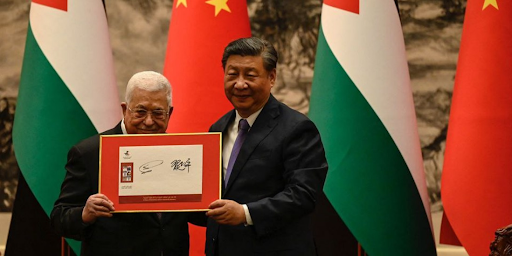
Chinese President Xi Jinping reiterated to Palestinian leader Mahmud Abbas on Wednesday his call for a state of Palestine to become a "full member" of the United Nations, state media reported.

The Palestinian President arrived in Beijing, on Monday, on his fifth official visit, which will continue until Friday.

The Chinese president told his Palestinian counterpart at a reception in the Great Hall of the People that China "is ready to strengthen coordination and cooperation with the Palestinian side, in the face of a century of global changes and new developments in the situation in the Middle East."

He added, "Today, we will jointly announce the establishment of a strategic partnership between China and Palestine, which will represent an important milestone in the history of bilateral relations."

Abbas is holding talks with senior Chinese leaders, including Premier Li Qiang, where the two sides' discussions will discuss ways to strengthen relations and confront the "long-term challenges" of the Israeli occupation of Palestine.


It is noteworthy that the two presidents signed a card issuing a Palestinian stamp issued on the occasion of the 35th anniversary of Chinese-Palestinian diplomatic relations.


A spokesman for the Chinese Ministry of Foreign Affairs, Wang Wenbin, said in a regular press conference, Friday, that “President Abbas is an old friend of the Chinese people,” pointing out that he is the first Arab head of state that China has received this year, and that this embodies the “high level of Chinese-Chinese relations.” Traditionally good Palestinian.


Winbin affirmed that "the Palestinian issue is the core of the Middle East issue, and affects peace and stability in it, and international justice and justice."


President Abbas expressed his appreciation for China's agreement to join the State of Palestine as a dialogue partner in the Shanghai Cooperation Organization, pending the approval of other member states.

And he considered that "these regional gatherings and similar ones are an opportunity to strengthen relations, and for the peoples and countries of the world to have a fair opportunity for development and progress, away from manifestations of domination and exploitation."


In April's UNSC meeting, China representative called for a new approach to solving the Palestinian question. In his remarks at a meeting of the Security Council, Zhang Jun, China's permanent representative to the United Nations, stressed the importance of upholding fairness and justice on the Palestinian issue.


He said, "What is lacking in resolving the Palestinian issue is not a grand plan, but rather a living conscience to establish justice. The fulfillment of the Security Council's responsibilities does not depend on blatant slogans, but on concrete measures."


"On issues related to the future and fate of the Palestinian people, no party has the right to use the veto," Zhang added.


Xi expressed Beijing's position during a summit with Arab countries in Saudi Arabia in December, although the latest call comes as the Asian powerhouse works to strengthen its role as mediator in the Middle East.

Xi met Abbas during the December trip and pledged to "work for an early, just and durable solution to the Palestinian issue".

Beijing has since positioned itself as a mediator in the Middle East, brokering the restoration of ties between Iran and Saudi Arabia -- rivals in a region where the United States has for decades been the main powerbroker.

The Saudi-Iranian relations have improved since the China sponsored agreement. Foreign Minister of Saudi Arabia Faisal bin Farhan Al-Saud will travel to Tehran on Saturday for talks with senior Iranian officials.

The top Saudi diplomat and his delegation will visit Tehran on June 17 to hold a series of talks with Iranian officials.
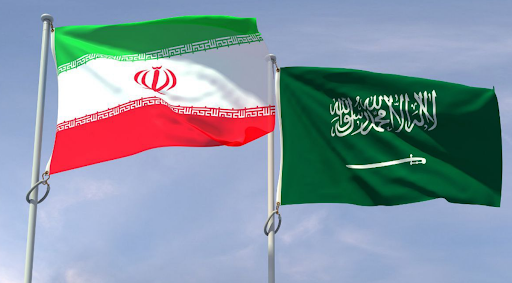
Sources had reported earlier that the embassy of Saudi Arabia in Tehran will reopen during the ministerial visit to Iran.

The foreign ministers of Iran and Saudi Arabia held a meeting in South Africa in early June to weigh plans for the full restoration of relations and broaden regional and economic cooperation between Tehran and Riyadh.

After several days of intensive negotiations hosted by China, Iran and Saudi Arabia clinched a deal on March 10 to restore diplomatic relations and reopen embassies and missions after seven years of estrangement.


******

Commenting on these developments, some media outlets and think tank analysis sites highlighted the geopolitical changes occuring since the start of the war in Ukraine. "The United States of America is lagging behind while the Middle East is embracing a new geopolitical era," said the Responsible Statecraft magazine, in a report.


"As the region progresses towards a multipolar system, Washington must promote more cooperation and economic development," the magazine said.


It added, "Amidst the reopening of Iranian and Saudi diplomatic missions after a 7-year hiatus, symbolizing their official rapprochement and the changing geopolitical dynamics in the Persian Gulf, US Secretary of State Anthony Blinken arrived in Riyadh last week with an old agenda."


The magazine commented, "Washington's failure to adapt to the new regional realities left it isolated, as its policies no longer resonate with its partners in the region."

And while "the United States remains deeply invested in the region for the foreseeable future, its policies have become the main impediment to diplomatic engagements, as well as economic development and integration in the broader Middle East," according to the magazine.


For example, the US administration implicated the Gulf in the war on Yemen, and it, however, made it clear that it was "not ready to solve it," according to Responsible Craft.


Likewise, “the absence of the United States in recent regional developments has provided opportunities for other global actors to assert their influence and enhance multilateral cooperation,” as the upcoming summit between Iran, the GCC and China in Beijing and the third meeting of the Baghdad conference later this year will provide “multiple avenues.” parties for dialogue and cooperation.


It is worth mentioning here that the United States will be absent from both events, which further highlights its isolation and diminished influence in the region.


Accordingly, the magazine concluded, "The changing dynamics and the emergence of alternative centers of power necessitate a recalibration of US policies in line with new geopolitical shifts throughout the Middle East."


She made it clear that this can be achieved by adopting a multipolar system and promoting economic development, and Washington should allow the region to further explore these diplomatic avenues and not hinder them.


Similarly, the European electronic magazine "Modern Policy" dealt with the issue of political transformations in what it called "the era of self-help in the post-American Middle East," stressing that the Gulf states will seek to form their foreign alliances based on their interests in the region.


The magazine explained that the US's relations in the region are not only with Saudi Arabia, but also with all Arab countries in the Gulf, noting that these relations today are "far from their golden years."


And she stressed, in the context, that if the countries of the region cannot see a role for the United States in stabilizing and maintaining stability, and if they cannot obtain a real American contribution to their security, then of course they will have to search for other potential partners.


She pointed out that the new isolation of the United States had dire consequences for the American leadership in the Middle East, which led to a great vacuum in its authority, which it tried to ensure its expansion in the region.

The magazine talked about Russia's efforts to fill this void in countries such as Syria and Libya, in addition to the efforts of regional powers such as Iran, Saudi Arabia, the UAE and Turkey to exercise greater influence within their areas of influence.

Relations between the United States and the countries of the region deteriorated almost globally, as a result of the United States ignoring the influence of local powers, for a period of time, in addition to its failure to realize the need for urgent intervention to repair these relations.

Also, China's work in the region as a mediator comes at the expense of the American role in it, especially since Beijing succeeds in reconciling the opponents in the region and putting an effective end to the conflicts in it, unlike the United States, according to the magazine, especially since it refrains from imposing political conditions on Middle Eastern countries during reconciliation efforts.


Wednesday, June 14, 2023

Raisi visit Venezuela, Nicaragua, as part of his Latin American tour

    Wednesday, June 14, 2023   No comments

The Iranian President, Ebrahim Raisi, left the Venezuelan capital, Caracas, heading to Managua, the capital of Nicaragua, after the end of his two-day official visit, at the head of two political and economic delegations, as part of a tour to several countries in Latin America.

During his visit to Caracas, my president met with Venezuelan President Nicolas Maduro, and high-level delegations of the two countries signed 25 agreements.

Raisi also met with the Speaker of Parliament and a group of chairmen of the Venezuelan National Assembly committees, visited the science and technology exhibition of Iranian achievements, sponsored the revival of the production line of two Iranian car companies, and met with Venezuelan youth groups and elites.

Earlier today, Tuesday, Iran and Venezuela signed a number of agreements in the presence of Iranian President Ibrahim Raisi and Venezuelan President Nicolas Maduro in the capital, Caracas, including agreements related to oil, trade, health and technology.

In a joint press conference with his Venezuelan counterpart, the Iranian president stressed that "relations between Tehran and Caracas are not ordinary diplomatic relations, but rather strategic relations," noting that the two countries have "common opponents" and "common interests and common views in the areas of seeking independence and freedom." and justice.”

Referring to an increase in the volume of trade between the two countries from $600 million in 2021 to more than $3 billion, Raisi said, "The volume of trade exchange can be increased to $10 billion in a first step, and to $20 billion in a second step."

In turn, the Venezuelan president said, "Raisi's visit marks a new milestone in the relationship with Iran, which plays an excellent role as one of the most important emerging powers in the new world."


"We signed 25 agreements during this historic visit by President Raisi, and new agreements are still under negotiation," he said, explaining that "the goal of the sanctions is to make Venezuelan society collapse so that the United States can control its oil."

Monday, Raisi began his tour to Latin America, which includes Venezuela, Cuba and Nicaragua, with the aim of "continuing the policy of strengthening relations with friendly countries and promoting cooperation, economically, politically and scientifically."


This visit will last for 5 days, at the official invitation of Raisi's counterparts in the three countries.

A year ago, on such days, Tehran hosted the Venezuelan president, and the two sides signed a 20-year cooperation agreement.


Iran and Venezuela are two major oil producers and members of the Organization of the Petroleum Exporting Countries (OPEC), which makes them the focus of international discussions on the energy crisis resulting from the war in Ukraine.


Iran is strengthening its orientation towards Latin American countries, within the framework of its policy aimed at "diversifying foreign relations", which coincides with its efforts to strengthen and improve relations with the countries of the region, under the title of "neighborhood policy".

In the face of sanctions.. Raisi from Nicaragua calls for pluralism

Iranian President Ebrahim Raisi affirmed his country's readiness to expand and strengthen bilateral cooperation with Nicaragua, stressing that the relations between the two countries are strategic.

Raisi added during his meeting with Nicaraguan President Daniel Ortega: "We want to increase and deepen our relations in the political, economic and cultural fields, and in all other fields, especially in the field of science and technology."


He thanked the government for the warm reception and hospitality he received and the delegation accompanying him on his first visit, which began yesterday evening to the Central American country.


In turn, Ortega stressed that Nicaragua and Iran are twin revolutions that have deep roots in defending the identity and well-being of peoples.


When welcoming his Iranian counterpart, Ortega highlighted the perpetual struggle of both countries against empires that throughout history have tried to seize various lands to control the world.


The Head of State reviewed some of the battles waged by the first Nicaraguan anti-colonialists, while he told his Iranian counterpart the different stages of Nicaragua's struggle in defense of freedom and national sovereignty.


"Over the years, the United States has been extremely brutal with Nicaragua in its search for hegemony to build an inter-oceanic canal here, because this route was so coveted by North American businessmen," Ortega said.


Ortega received his Iranian counterpart at the head of a high-level political and economic delegation in Freedom Square in the capital, Managua, during an official reception ceremony.

Meanwhile, the Iranian president called for an end to unilateral sanctions that aim to subjugate people, calling on Latin American countries to bet on pluralism.


In an interview with Telesur, Raisi said, "We have to put an end to this unilateralism, create a multipolar world, and put an end to this oppression against human beings."


According to Raisi, "Sanctions are a declared war against states, and the tool was military. Now, sanctions are used to subjugate people."

He pointed out that "the Americans are looking for their interests in that region and all over the world, and they are looking for their hegemony. And what Trump said is the reality of the United States; that fact is that they are looking to usurp the reserves and plunder them."

Likewise, the Iranian president believed that the United States wanted to punish countries that did not submit to its policy.


He stressed that "Iran will not oppress anyone, and therefore will never accept being subjected to oppression," adding, "They do not want us to be independent and self-sufficient."


Raisi referred to "the various damages caused by the northern force in several countries such as Iraq and Afghanistan," stressing "the need to respect the internal decisions of each country."


It is noteworthy that the Iranian president had arrived yesterday in Managua, the capital of Nicaragua, at the end of his visit to Venezuela, as part of a tour in Latin America that also includes Cuba, which he started last Monday.


The Iranian President's visit to Nicaragua comes at the official invitation of his counterpart, President Ortega.


Prior to his Latin tour, Raisi said that the position of Iran and the countries he will visit is to "stand up to the hegemonic regime," stressing that relations with independent Latin countries are strategic.


Iran is strengthening its orientation towards Latin American countries within the framework of its policy aimed at "diversifying foreign relations", which coincides with its efforts to strengthen relations with countries in the region under the title of "neighborhood policy".


After cancelling a scheduled visit to France, the Algerian President goes to Russia on an official visit

    Wednesday, June 14, 2023   No comments

On Tuesday, the Algerian Presidency website announced that President Abdelmadjid Tebboune will visit Russia for 3 days, at the invitation of Russian President Vladimir Putin.

And the official website of the Algerian presidency wrote, “At the invitation of the President of Russia, Vladimir Putin, the President of the Republic, Abdelmadjid Tebboune, embarks today on a three-day visit to Russia, within the framework of strengthening cooperation between the two friendly countries.”


  During this visit, President Tebboune will participate in the work of the International Economic Forum, in the Russian city of St. Petersburg.


It is worth mentioning that the President of the Federal Council of the Federal Assembly of Russia, Valentina Matviyenko, confirmed, last March, Moscow's support for Algeria's desire to join the "BRICS" group.


Valentina Matviyenko said, in media statements, after meeting with the President of the Republic of Algeria, Abdelmadjid Tebboune, that she had conveyed to him an official message from President Vladimir Putin, which included an official invitation to visit Russia.


It is noteworthy that the former Algerian Foreign Minister, Ramtane Lamamra, had declared that "Algeria and Russia are important partners."


And Russian Foreign Minister Sergey Lavrov announced, during a visit to Algeria, that Algeria and Moscow are now convinced that "a strategic cooperation agreement must be signed."


Tuesday, June 13, 2023

African leaders are increasingly calling for use of African currencies for African trade; President of Kenya calls on all African countries to abandon the US dollar for local trade transactions

    Tuesday, June 13, 2023   No comments

Realizing that much of the economic problems of Africa are due to unfair financial practices at the hands of institutions controlled by colonial powers, African leaders are now willing to look at local solutions to local problems--including using local currencies for local trade.  

President William Ruto stressed that the mechanism that will allow Africans to switch to local currencies will be provided by the African Export-Import Bank (Afreximbank).

Afreximbank is a supranational financial institution that unites most African countries (51 states).

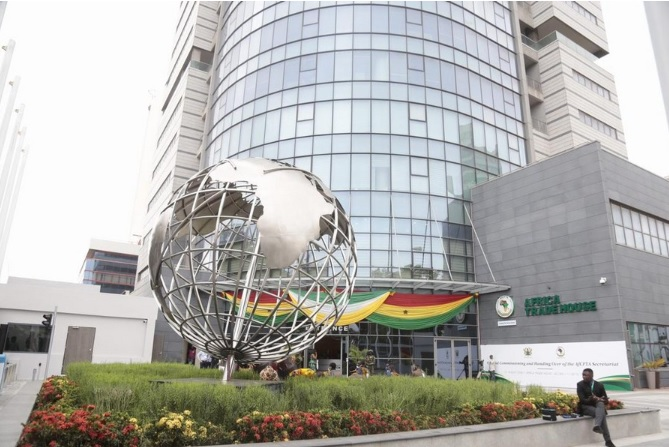
The cost of currency convertibility due to the use of U.S. dollars in trade among African countries is close to 5 billion dollars annually, according to Wamkele Mene, secretary general of the AfCFTA Secretariat. "That is expensive and so we have rolled out the pan Africa payment and settlement system that enables trading in local currencies."


he African Continental Free Trade Area (AfCFTA) is striving for the usage of local currencies in trade among countries in the continent, an official said Thursday.


Cross-border trading among countries in the Economic Community of West African States is already happening through the use of local currencies instead of the use of U.S. dollars, said Wamkele Mene, secretary general of the AfCFTA Secretariat, on the sidelines of a trade forum in the Kenyan capital of Nairobi.


"We now want to expand to other regional blocs including the East African Community which is in talks with the African Export-Import Bank," Mene said.


He said that the cost of currency convertibility due to the use of U.S. dollars in trade among African countries is close to 5 billion dollars annually. "That is expensive and so we have rolled out the pan Africa payment and settlement system that enables trading in local currencies."


Kenya President William Ruto has urged African leaders to sign up for the pan-African payments system to facilitate trade within the continent to reduce reliance on the US dollar.


He urged his peers in Africa to mobilise central and commercial banks to join the Pan-African Payments and Settlement System, which was launched in January 2022, Business Daily newspaper reported.


The system for intra-African trade was developed by African Export-Import Bank (Afreximbank) and African Continental Free Trade Area (AfCFTA), an initiative backed by the African Union and African central banks.


“We are all struggling to make payments for goods and services from one country to another because of differences in currencies,” the president told an AfCFTA forum in Nairobi.


“There has been a mechanism where all our traders can trade in the local currency, and we leave it to the Afreximbank to settle all the payments. We do not have to look for dollars,” he said, seeking settlement of payment through local currencies.

Algeria's president, Tebboune, signs a decree requiring the full performance of the Algerian national anthem

    Tuesday, June 13, 2023   No comments

Algerian President Abdelmadjid Tebboune recently signed a decree imposing the full performance of the national anthem with its five stanzas, to include a stanza containing words bearing a threat to France, and this stanza had angered Paris earlier.

It is noteworthy that Algeria wrested its independence from France in 1962 after 132 years of struggle against French colonialism, as that period was considered bloody in the history of the Arab country and remained a deep wound in the heart of every Algerian despite the passage of generations.


The Algerian national anthem is the only one that mentions another country in its lyrics, as one of its stanzas includes these sentences:

Oh France, the time for admonition has passed,
and we folded it as the book is folded,
O France, the day of reckoning,
prepare and take from us the answer,
in our revolution Separate the speech, and 
we resolved that Algeria would live.
so bear witness, 
bear witness, 
bear witness.


The section was sometimes sung, and at other times the Algerian authorities were satisfied with showing only part of the anthem to shorten it, but Algerian President Abdelmadjid Tebboune signed the decree imposing the full performance of the anthem with its five sections.

The abbreviated version can be performed on certain occasions, such as receiving heads of state during official visits, or speeches addressed by the president to the nation, military decrees at the Ministry of Defense, and others.

The clip had aroused "France's anger", and the French negotiating delegation objected to it prior to the signing of the "Evian" treaty with the then interim Algerian government, which recognized Algeria's independence, but its request was rejected.

The clip was deleted during the reign of President Chadli Ben Jedid during the eighties of the last century, after that the former Algerian President Liamine Zeroual decided to restore it finally in 1995.

In 2007, the section of the Algerian national anthem was removed from school books, which caused great discontent in Algeria at the time.

Indeed, the video of Tebboune's inauguration ceremony and his taking the constitutional oath, in 2019, shows the full performance of the Algerian national anthem, including the passage that mentions France.

It is noteworthy that Algerian President Abdelmadjid Tebboune was scheduled to visit France last May, but he postponed his visit without giving reasons.


Monday, June 12, 2023

ISR Weekly Review Bulletin for June 12, 2023

    Monday, June 12, 2023   No comments

 Keeping our readers informed about the most consequential events in this fast changing world.

Manage your Subscription; invite a friend to subscribe to ISR’s Weekly Review Bulletin


Commentary:


Behind the raft of OPEC+ production decisions riling the collective west lies a tight Russian-Saudi strategy and enhanced Russian-Iranian energy cooperation

Current EventsGeopolitics

Behind the raft of OPEC+ production decisions riling the collective west lies a tight Russian-Saudi strategy and enhanced Russian-Iranian energy cooperation

by MK Bhadrakumar * A curious thing happened in Vienna on Sunday just as the…

Saudi Arabia seeks closer ties with China, defends criticism from the west, explains ties to China as "Cooperation for prosperity"

    Monday, June 12, 2023   No comments

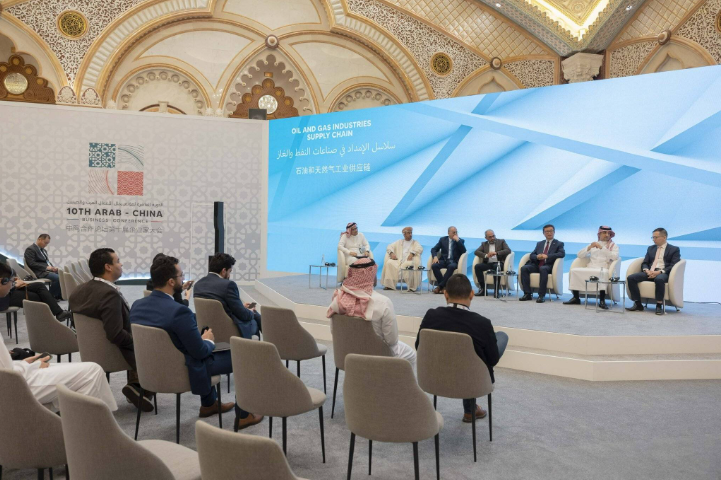
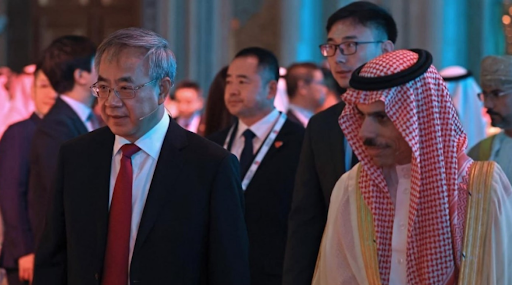
 Saudi Arabia, one of the key partners of the United States in the region, seeks to develop cooperation with China, despite the concerns of Western countries. This was stated by the Minister of Energy of Saudi Arabia, Prince Abdul Aziz bin Salman Al Saud, speaking at the Tenth Conference of Arab and Chinese entrepreneurs in Riyadh.

"Today's reality is that China occupies, has occupied and will continue to occupy a leading position. We should not compete with China, we should cooperate with it," the minister said, whose speech was broadcast by Asharq TV channel. "Cooperation with China is advisable because they have taken the initiative to attract the right manufacturers."

When asked how the minister perceives the criticism that Western countries are subjecting Saudi Arabia to for expanding economic and political ties with China, he said that he "actually ignores it." "Like any business person, you will go where there are appropriate opportunities," he added.

The tenth Conference of Arab and Chinese entrepreneurs is being held on June 11-12 in Riyadh under the slogan "Cooperation for prosperity". The event, organized by the Ministry of Investment of Saudi Arabia, is aimed at strengthening economic cooperation between China and the countries of the Arab world. The conference is attended by more than 3 thousand people - high-ranking officials and representatives of large businesses.


According to the Saudi Press Agency, on the first day of the conference, its participants signed dozens of investment agreements worth more than $ 10 billion. Among them is a $533 million agreement between Amar Al-Oula and Zhonghuan International Group, which involves the construction of an iron ore processing plant in Saudi Arabia, as well as a $500 million agreement between ASK Group and the Chinese National Geological and Mining Company on the development of a copper mining project in the kingdom.


Khamenei: There is no harm in concluding an agreement with the West and not heading towards building a nuclear weapon, not because of our fear of enemies, but rather because of our faith

    Monday, June 12, 2023   No comments

Iran's Supreme Leader Ayatollah Ali Khamenei said on Sunday it is possible to reach an agreement with the West over Tehran's nuclear activities if the country's nuclear infrastructure remains intact, at a time of disagreement between Iran and the United States over reviving the 2015 nuclear deal.


Indirect talks between Tehran and Washington to revive the deal with six major powers hit an impasse in September, with both sides accusing each other of making unreasonable demands.

Khamenei's cautious approval comes days after both Tehran and Washington denied a report that they were close to an interim agreement under which Iran would curb its nuclear program in return for sanctions relief.

"There is nothing wrong with the agreement (with the West), but the infrastructure of our nuclear activities should not be touched," Khamenei was quoted as saying by state media.

The 2015 agreement limited Iran's uranium enrichment activity and made it difficult for Tehran to develop nuclear weapons, in exchange for the lifting of international sanctions.

In 2018, then-US President Donald Trump withdrew from the agreement and re-imposed sanctions that crippled the Iranian economy, prompting Tehran to move gradually to not abide by the provisions of the agreement stipulated. This renewed US, European and Israeli fears that Iran might seek to obtain an atomic bomb.

Khamenei said, repeating his country's official position, that the Islamic Republic has never sought to build a nuclear bomb.


And he added, “Talking about Tehran’s nuclear weapons is a lie, and they (the West) know that. We don't want to build nuclear weapons because of our religious faith, otherwise they wouldn't have been able to stop it."

Khamenei, who has the supreme say in all state affairs including the nuclear program, added that Iran's Atomic Energy Organization should continue to work with the UN's International Atomic Energy Agency "within a framework of guarantees".

However, Khamenei called on the Iranian authorities "not to bow to the exaggerated and wrong demands of the International Atomic Energy Agency," adding that a law passed by the Iranian parliament in 2020 must be respected.

Under the law, Tehran suspends IAEA inspections of Iranian nuclear sites and ramps up uranium enrichment if sanctions are not lifted.

At the end of May, the UN body reported “progress” in cooperation with Iran, while noting that the Islamic Republic had significantly increased its stockpile of enriched uranium in recent months.

In addition, the International Atomic Energy Agency decided to close the file on the presence of nuclear materials in one of the three undeclared sites, after this led to strained relations between the two parties for a long time.

On Sunday, Khamenei urged those responsible for the nuclear program to "not succumb to pressure... baseless allegations," without providing further details.

He said, "There is no problem in signing an agreement with the agency, but the infrastructure of the Iranian nuclear industry should not be harmed."

These statements come at a time when press reports reported indirect contacts between Iran and the United States to resume negotiations on the Iranian nuclear agreement that was concluded in 2015, and the United States withdrew from it during the era of former President Donald Trump in 2018.

This agreement was aimed at restricting Iran's nuclear activities in exchange for the lifting of international sanctions.

And Monday, US Secretary of State Anthony Blinken reiterated that President Joe Biden's administration will not allow Iran to obtain a nuclear bomb, which Iran denies seeking.

In the context, Khamenei said, “We do not want to reach nuclear weapons on the basis of our Islamic principles. Otherwise, they would not have been able to prevent us from obtaining this weapon, just as they have not been able to stop our nuclear developments so far.

"This is a good law... it must be respected and not violated when giving access to (the International Atomic Energy Agency) sites and information," Khamenei said.

Last month, the IAEA reported limited progress on issues at issue with Iran, including the reinstallation of some monitoring equipment originally installed under the 2015 deal and ordered removed by Tehran last year.


Saturday, June 10, 2023

Ahmed's Chechen special forces fighting in Ukraine alongside Russia: Origins, Development, and mission

    Saturday, June 10, 2023   No comments

Chechen forces consisting of 4 battalions, named "Ahmad's forces" after the Chechen leader Akhmad Kadyrov, numbering 10,000 and carrying out several attacks in Ukrainian cities. They are considered semi-affiliated to the Russian army, although they include volunteers from outside the army.

On June 26, 2022, Chechen President Ramzan Kadyrov announced his intention to form 4 special Chechen military battalions, and declared their subordination to the Chechen Ministry of Defense.

It is 4 battalions (Ahmed North, Ahmed South, Ahmed East, and Ahmed West). He added that these battalions will include huge numbers of Chechen fighters exclusively, and they will join the ranks of the Russian Ministry of Defense forces.

The Chechen president gave the four battalions the name of his father Ahmed, also known as the "Akhmat" forces in a special symbolism for him, and a motivator for the Chechen soldiers, especially since Akhmad Kadyrov is considered a patriotic leader in Chechnya.


The Ukrainian media believes that Ahmed's special forces are "terrifying", as they are the only forces from outside Russia and Ukraine that participate directly in the war, while the rest of the countries other than Chechnya are satisfied with providing logistical support, especially the European countries that support Ukraine.

Ahmed's Chechen Special Forces were formed to support Russia in its war on Ukraine, and it consists of 10 thousand soldiers, and it represents part of the Chechen army, as it is headed by General Apti Alaudinov.


The brigades are armed with the latest and most powerful Russian weapons, as some newspapers indicated that they have Russian tanks and vehicles.

All Chechen Ahmed forces' vehicles bear the letter "Z" in English, which is the emblem of support for the Russian forces in Ukraine.


The "Ahmed Forces" brigades have rituals and traditions that they are keen on before all the operations that they carry out, including that a muezzin calls the call to prayer among the members, and they perform what they call the "conquest prayer" and then enter the Ukrainian cities to "liberate" them from what Ramzan Kadyrov calls "neo-Nazis."


One of the rituals of the "Ahmed Brigades" is also the takbeer, and it is a firm tradition for it, and it has a special song entitled "Akhmat Sila", whose words glorify the strength of the "Caucasus" fighters, and praise the "knights" and are proud of their cooperation and brotherhood.


On May 7, 2023, the founder of the Russian Wagner Forces, Yevgeny Prigozhin, announced his readiness to hand over the sites in the city of Artyomovsk to Ahmed's Chechen forces.


On February 13, 2023, the Chechen president announced the attempted poisoning of his aide and commander of Ahmed's special forces, Alaudinov.

And this was after Alaeddinov received, on the eighth of February, an envelope containing a letter, which later turned out to be saturated with a toxic substance.

In March, the commander of Ahmed's special forces said he had "not fully recovered yet, because it takes a long time."

In June 2023, Kadyrov announced that Akhmed's special forces were preparing to launch a new offensive in Donetsk.


He also added on his Telegram channel, "A regiment has been appointed under my command, and two other regiments, in preparation for active offensive actions," and emphasized the efficiency of Ahmed's special forces, and their ability to perform any task assigned to them.


On the part of the commander of the forces, General Alaudinov said, "If we are transferred to the Donetsk direction, I guarantee that the (Ahmed) special forces will do everything for the liberation of the Donetsk People's Republic."


Friday, June 09, 2023

A joint Gulf-American statement issued after the joint ministerial meeting of the strategic partnership between the Gulf Cooperation Council states and the United States

    Friday, June 09, 2023   No comments


A joint Gulf-American statement issued after the joint ministerial meeting of the strategic partnership between the Gulf Cooperation Council states and the United States stressed the need to commit to reaching a political solution in Syria.

The Foreign Ministers of the Cooperation Council and the US Secretary of State, Anthony Blinken, held the meeting on Wednesday evening, June 7, under the chairmanship of the Minister of Foreign Affairs of the Sultanate of Oman, Badr bin Hamad al-Busaidi, who is the chairman of the current session of the meeting.

The ministerial meeting, which was held at the headquarters of the General Secretariat in Riyadh, discussed a package of regional issues, including Syria.

On the Syrian issue: The statement affirmed commitment to reaching a political solution to the Syrian crisis in a way that preserves Syria's unity and sovereignty, and meets the aspirations of its people in line with UN Security Council Resolution No. 2254. The ministers welcomed the Arab efforts to resolve the crisis in a step-for-step manner in accordance with Security Council resolution. 2254, as agreed upon during the Amman Consultative Meeting of the Arab Ministerial Contact Group on Syria on May 1, 2023.

In the joint statement, the ministers reaffirmed their support for the US and coalition forces working to achieve the defeat of ISIS in Syria, and condemned all actions that threaten the safety and security of these forces.

The two sides also stressed the need to create safe conditions for the safe, dignified and voluntary return of refugees and internally displaced persons in accordance with the standards of the United Nations High Commissioner for Refugees, and the importance of providing the necessary support to Syrian refugees and the countries that host them.

The statement welcomed the UN Secretary-General's call to renew the Security Council's mandate for a period of 12 months to operate the cross-border mechanism, and expressed support for the inclusion of all currently open border crossings (Bab al-Hawa, Bab al-Salam and al-Rai) in a Security Council resolution next month.

The two sides also discussed the issue of “arbitrarily detained and missing persons,” as mentioned in the “Oman” statement and Security Council Resolution “2254,” and in coordination with all concerned parties.


The following is the text of the statement:

The foreign ministers of the Cooperation Council for the Arab States of the Gulf held the joint ministerial meeting of the strategic partnership between the countries of the Cooperation Council and the United States of America, chaired by the Minister of Foreign Affairs of the Sultanate of Oman - the current session chairman - Badr bin Hamad bin Hamoud Al-Busaidi, at the headquarters of the General Secretariat in Riyadh, with the participation of: Member of the Council of Ministers and Minister of State at the Ministry of Foreign Affairs of the United Arab Emirates Sheikh Shakhbout bin Nahyan Al Nahyan, Undersecretary of the Ministry of Foreign Affairs for Political Affairs in Bahrain Dr. Sheikh Abdullah bin Ahmed Al Khalifa, Minister of Foreign Affairs of the Kingdom of Saudi Arabia Prince Faisal bin Farhan bin Abdullah, Prime Minister and Minister The Foreign Ministry of the State of Qatar, Sheikh Muhammad bin Abdulrahman Al Thani, the Minister of Foreign Affairs of the State of Kuwait, Sheikh Salem Abdullah Al-Jaber Al-Sabah, the Secretary of State of the United States of America Anthony Blinken, and the Secretary-General of the Cooperation Council for the Arab States of the Gulf, Jassem Muhammad Al-Budaiwi.

On Wednesday, June 7, 2023, the GCC foreign ministers met at the headquarters of the General Secretariat of the Cooperation Council for the Arab States of the Gulf, the Secretary of State of the United States of America Anthony Blinken, and the Secretary-General of the Cooperation Council Jassem Muhammad Al-Budaiwi, to emphasize the strategic importance of the historical relations between the two sides.

The two sides affirmed their joint commitment to build on the achievements of the previous ministerial meetings and the Jeddah Summit held on July 16, 2022, by strengthening consultation, coordination and cooperation in all fields.

The two sides focused on the ambitious and growing strategic partnerships between the United States and the Cooperation Council for the Arab States of the Gulf and its member states, aimed at enhancing peace, security, stability, integration and economic prosperity in the Middle East.

The two sides also stressed the importance of joint efforts to work to reduce escalation in the region, stressing their joint commitment to supporting diplomacy to achieve these goals. The two sides also agreed on the importance of infrastructure projects in enhancing integration and interdependence in the region, and contributing to stability and prosperity at the regional level.

The two sides stressed the importance of supporting navigational rights and freedoms and collective efforts to address threats to the security of ships through the waterways in the region.

The Ministers also stressed the importance of countering terrorism and violent extremism around the world, and welcomed the upcoming Ministerial Meeting of the Global Coalition to Defeat ISIS, which will be held in Riyadh, Saudi Arabia on June 8, 2023.

Secretary Blinken affirmed the United States' permanent commitment to the security of the region, and its awareness of the vital role of this region in the global economy and international trade.

Iran:

The Cooperation Council and the United States of America affirmed their commitment to freedom of navigation and maritime security in the region, and their determination to confront any aggressive or illegal acts at sea or anywhere else that would threaten shipping lanes, international trade and oil installations in the GCC states.

The two sides affirmed their support for the Treaty on the Non-Proliferation of Nuclear Weapons and renewed their call on Iran for full cooperation with the International Atomic Energy Agency.

The Ministers welcomed the decision of the Kingdom of Saudi Arabia and Iran to resume diplomatic relations, stressing the importance of countries in the region adhering to international law, including the United Nations Charter.

Yemen:

The two sides stressed the importance of the ongoing peace efforts led by the United Nations in Yemen after the April 2022 armistice and the calm that resulted from it, and expressed their deep appreciation for the efforts made by the Kingdom of Saudi Arabia, the Sultanate of Oman, the United Nations envoy and the United States envoy in this regard. The two sides expressed their hope to see a comprehensive Yemeni-Yemeni political process leading to a permanent end to the conflict, responding to Yemenis' calls for justice, accountability for human rights violations and abuses, and putting the country on the path to recovery.

The two sides also affirmed their support for Yemen's sovereignty, independence, unity and territorial integrity, and their support for the Presidential Leadership Council in Yemen and urged the Houthis to seize this opportunity and take advantage of the past 14 calmer and more stable months to provide relief to millions of Yemenis.

The ministers stressed the importance of continuing to meet the humanitarian needs of the people in all regions of Yemen and to provide economic and development support throughout the country. The two sides also affirmed their support for the efforts led by the United Nations to confront the environmental and economic threat posed by the Safer oil tanker off the coast of Yemen.

The Palestinian issue and Israel:

The two sides reaffirmed their commitment to reaching a just, lasting and comprehensive peace in the Middle East in accordance with the two-state solution, based on the 1967 borders and any agreement between the two sides on land swaps, in accordance with internationally recognized standards and the Arab Peace Initiative.

The two sides also stressed the need to refrain from all unilateral measures that undermine the two-state solution, raise the level of tension, and preserve the historical status quo in the holy places in Jerusalem, stressing the special role of the Hashemite Kingdom of Jordan in this regard.

The Ministers also expressed their appreciation for Egypt's decisive role in mediating between the armed factions in Gaza and Israel during the recent hostilities. The Ministers also stressed the importance of their support for the Palestinian Authority and the improvement of the daily lifestyle of the Palestinians through humanitarian aid and efforts to support the Palestinian economy. Both sides reaffirmed their support for the Palestinian Authority.

Syrian:

On the Syrian issue, the two sides reaffirmed their commitment to reaching a political solution to the Syrian crisis in a way that preserves Syria's unity and sovereignty, meets the aspirations of its people, and is consistent with international humanitarian law, in line with UN Security Council Resolution No. 2254 (2015). In this regard, the ministers welcomed the Arab efforts to resolve the crisis in a step-by-step manner in accordance with Security Council Resolution 2254, as agreed upon during the Amman consultative meeting of the Arab Ministerial Contact Group on Syria on May 1, 2023.

The Ministers reaffirmed their support for the US and Coalition forces working to defeat ISIS in Syria, and condemned all actions that threaten the safety and security of these forces.

The two sides stressed the need to create safe conditions for the safe, dignified and voluntary return of refugees and internally displaced persons in accordance with the standards of the United Nations High Commissioner for Refugees, and the importance of providing the necessary support to Syrian refugees and the countries that host them. The two sides also reaffirmed their call for a ceasefire, welcomed the UN Secretary-General's call to renew the Security Council's mandate for 12 months to operate the cross-border mechanism, and expressed support for the inclusion of all currently open border crossings (Bab al-Hawa, Bab al-Salam and al-Rai) in a Security Council resolution to be issued in July. Next.

The two sides also discussed the issue of arbitrarily detained and missing persons - as mentioned in the Amman Declaration and Security Council Resolution 2254, and in coordination with all concerned parties.

Iraq:

The two sides praised the positive and growing partnership between the Cooperation Council for the Arab States of the Gulf and Iraq, and welcomed the continuous progress in the electrical interconnection project to link Iraq to the electricity network in the Gulf Cooperation Council countries. The Iraqi people and the region. With the completion of this project, it will provide the energy needed by the Iraqi people, and pave the way for more economic cooperation in the future. The ministers also discussed the importance of civilian-led efforts in Iraq, including economic reforms to ensure that the people of Iraq benefit from the country's natural resources, achieve stability and ensure society recovers from conflict and ISIS violence, and strengthen efforts to prevent terrorist financing and counter ISIS's terrorist narrative, thereby strengthening Iraq's capabilities in the fight against terrorism. The two sides affirmed their support for a secure, stable and fully sovereign Iraq.

Sudan:

The two sides expressed their grave concern about the recent outbreak of fighting in Sudan, and the ministers affirmed the Cooperation Council's support for the diplomatic efforts led by the Kingdom of Saudi Arabia and the United States in Jeddah, to reach an agreement between the Sudanese Armed Forces and the Rapid Support Forces to fully implement a short-term ceasefire agreement, and allow access Humanitarian aid without hindrance. They reaffirmed their support for diplomatic efforts aimed at achieving a permanent cessation of hostilities in Sudan. The two sides also affirmed their conviction that there is no military solution to end the conflict, calling on the Sudanese Armed Forces and the Rapid Support Forces to silence their weapons.

The war in Ukraine:

The Ministers reaffirmed the importance of respecting the principle of sovereignty and international law, including the United Nations Charter, and the obligation to refrain from the use or threat of force against the territorial integrity or political independence of any state. The ministers urged all countries and the international community to intensify their efforts to reach a peaceful solution, end the humanitarian crisis, support refugees, displaced persons and others affected by the war in Ukraine, as well as facilitate the export of grain and other food supplies, and support food security in the affected countries.

The strategic partnership between the Cooperation Council for the Arab States of the Gulf and the United States:

The ministers affirmed their common determination to contribute to achieving regional security and stability within the framework of the strategic partnership between the GCC and the United States. The Ministers commended the outcomes of the meetings of the Joint Working Groups on Integrated Air and Missile Defense, Maritime Security, and Iran, which were held in Riyadh from February 13 to 15, 2023. They commended the deliberations of the Fourth Trade and Investment Dialogue meeting, which was held on March 9, 2023, in Riyadh. They noted the joint military exercises that took place between their armed forces within the framework of the joint naval forces. The Ministers decided to convene the Joint Working Group on Cyber Security later this year. The ministers stressed the importance of continuing the periodic working groups to discuss defense issues, and decided to hold another round of the joint working groups on integrated air and missile defense and maritime security later this year. The ministers will then discuss the possibility of convening working groups on military readiness, training and streamlining the transfer of vital defense capabilities.


Followers


Trending now...


ISR +


Frequently Used Labels and Topics

40 babies beheaded 77 + China A Week in Review Academic Integrity Adana Agreement afghanistan Africa African Union al-Azhar Algeria Aljazeera All Apartheid apostasy Arab League Arab nationalism Arab Spring Arabs in the West Armenia Arts and Cultures Arts and Entertainment Asia Assassinations Assimilation Azerbaijan Bangladesh Belarus Belt and Road Initiative Brazil BRI BRICS Brotherhood CAF Canada Capitalism Caroline Guenez Caspian Sea cCuba censorship Central Asia Charity Chechnya Children Rights China Christianity CIA Civil society Civil War climate colonialism communication communism con·science Conflict conscience Constitutionalism Contras Corruption Coups Covid19 Crimea Crimes against humanity D-8 Dearborn Debt Democracy Despotism Diplomacy discrimination Dissent Dmitry Medvedev Earthquakes Economics Economics and Finance Economy ECOWAS Education and Communication Egypt Elections energy Enlightenment environment equity Erdogan Europe Events Fatima FIFA FIFA World Cup FIFA World Cup Qatar 2020 Flour Massacre Food Football France Freedom freedom of speech G20 G7 Garden of Prosperity Gaza GCC GDP Genocide geopolitics Germany Global Security Global South Globalism globalization Greece Grozny Conference Hamas Health Hegemony Hezbollah hijab Hiroshima History and Civilizations Hormuz Human Rights Huquq Ibadiyya Ibn Khaldun ICC Ideas IGOs Immigration Imperialism In The News india Indonesia inequality inflation INSTC Instrumentalized Human Rights Intelligence Inter International Affairs International Law Iran IranDeal Iraq Iraq War ISIL Islam in America Islam in China Islam in Europe Islam in Russia Islam Today Islamic economics Islamic Jihad Islamic law Islamic Societies Islamism Islamophobia ISR MONTHLY ISR Weekly Bulletin ISR Weekly Review Bulletin Italy Japan Jordan Journalism Kenya Khamenei Kilicdaroglu Kurdistan Latin America Law and Society Lebanon Libya Majoritarianism Malaysia Mali mass killings Mauritania Media Media Bias Media Review Middle East migration Military Affairs Morocco Multipolar World Muslim Ban Muslim Women and Leadership Muslims Muslims in Europe Muslims in West Muslims Today NAM Narratives Nationalism NATO Natural Disasters Nelson Mandela NGOs Nicaragua Nicaragua Cuba Niger Nigeria Normalization North America North Korea Nuclear Deal Nuclear Technology Nuclear War Nusra October 7 Oman OPEC+ Opinion Polls Organisation of Islamic Cooperation - OIC Oslo Accords Pakistan Palestine Peace Philippines Philosophy poerty Poland police brutality Politics and Government Population Transfer Populism Poverty Prison Systems Propaganda Prophet Muhammad prosperity Protests Proxy Wars Public Health Putin Qatar Quran Rachel Corrie Racism Raisi Ramadan Ramadan War Regime Change religion and conflict Religion and Culture Religion and Politics religion and society Resistance Rights Rohingya Genocide Russia Salafism Sanctions Saudi Arabia Science and Technology SCO Sectarianism security Senegal Shahed sharia Sharia-compliant financial products Shia Silk Road Singapore Slavery Soccer socialism Southwest Asia and North Africa Sovereignty Space War Spain Sports Sports and Politics Starvation State Power State Terror Sudan Sunni Axis sunnism Supremacism SWANA Syria Ta-Nehisi Coates terrorism Thailand The Koreas Tourism Trade transportation Tunisia Turkey Turkiye U.S. Cruelty U.S. Foreign Policy UAE uk ukraine UN under the Rubble UNGA United States UNSC Uprisings Urban warfare US Foreign Policy US Veto USA Uyghur Venezuela Volga Bulgaria Wadee wahhabism War War and Peace War Crimes War on Iran Wealth and Power Wealth Building West Western Civilization Western Sahara WMDs Women women rights Work Workers World and Communities Xi Yemen Zionism

Search for old news

Find Articles by year, month hierarchy


AdSpace

_______________________________________________

Copyright © Islamic Societies Review. All rights reserved.