Showing posts with label Protests. Show all posts

Wednesday, June 11, 2025

Global Solidarity March to Gaza: A Historic Civilian Mobilization to Break the Siege

    Wednesday, June 11, 2025   No comments

June 2025 – In an unprecedented act of international solidarity, over 4,000 individuals from more than 80 countries have launched a global march to Gaza, aiming to reach the besieged Palestinian territory on foot via Egypt’s Rafah border crossing. The initiative, titled “The Global March to Gaza,” is being organized by a coalition of international trade unions, human rights groups, and solidarity movements in response to what they describe as a “man-made humanitarian catastrophe” in Gaza, under Israeli siege since October 2023.

About a year ago, Republican politicians suggested that American citizens who are protesting the genocide in Gaza be sent to Gaza; it would seem some are doing just that now.

A Humanitarian Crisis in Focus

Led by the International Coalition Against Israeli Occupation, the march is a civilian response to the rapidly deteriorating situation in Gaza, where over two million residents face famine, medical shortages, and a near-total blockade. The organizers cite starvation being used as a weapon and the systematic targeting of civilians, especially children, as central motivations for this extraordinary mobilization.


Thousands of aid trucks, loaded with food, medicine, and fuel, have been stalled at the Rafah border for months. The marchers aim to physically escort and pressure for their immediate entry.


International Participation and Civil Mobilization

The march is uniquely global and grassroots. Delegations include European parliamentarians and civil society representatives from across Africa, Asia, the Americas, and Europe. The “March to Gaza” has drawn support not only from Arab and Muslim communities but also from diverse backgrounds—doctors, lawyers, students, and humanitarian activists, many of whom are personally financing their participation.


Groups such as the Catalan alternative union (IAC), Irish human rights activists, and legal advocates like German lawyer Melanie Schweizer emphasize the peaceful and volunteer-based nature of the march. According to spokesperson Karen Moynihan of the Irish group, this is “a civilian cry against genocide,” calling for an end to complicity by silence.


Objectives of the March

The organizers have laid out five primary goals:

  • Stop the Genocide: Pressure the international community to halt ongoing Israeli violations against Palestinians, particularly the deliberate starvation of civilians.
  • Immediate Humanitarian Access: Demand the entry of urgent aid through Rafah without restrictions, emphasizing the thousands of trucks already waiting at the border.

  • End the Siege: Advocate for the unconditional lifting of the Israeli blockade, enabling sustainable access to essentials like water, food, fuel, and medicine.
  • International Accountability: Urge global institutions to hold Israel accountable for violations of international law, and condemn governments that remain passive or complicit.
  • Empower Civil Society: Amplify the voices of global civil society as a force of peaceful resistance, drawing inspiration from historical solidarity movements and emphasizing non-violent civilian action.


Path to Gaza: A Difficult but Symbolic Route

Participants began arriving in Cairo in early June, ahead of a final push towards Gaza. The “Caravan of Steadfastness,” a land convoy from Algeria and Tunisia, is scheduled to merge with the larger group in Egypt’s northern Sinai region. From the city of Al-Arish, the coalition will begin its march on foot to the Rafah crossing, where they plan to stage a peaceful sit-in until aid is allowed in.

Organizers acknowledge the challenges of marching through desert terrain but insist it pales in comparison to the suffering endured by Gazans over the past 20 months.


A Message of Peace and Global Conscience

The march is deliberately unaffiliated with any government, military force, or political party. It is presented as a civilian-led, peaceful protest meant to convey the global demand for justice, humanity, and dignity for Palestinians.

“This is not just a march to Gaza,” said organizer Saif Abu Khashk. “It is a march for humanity itself.”

As international attention turns toward Rafah, the Global March to Gaza represents a striking moment in modern civil action—where borders, languages, and politics are set aside in the name of urgent humanitarian relief and moral accountability. Whether or not it succeeds in breaking the blockade, the march has already sent a clear message: the world is watching, and civil society is rising.


Sunday, March 23, 2025

Causes and Consequences of Arresting Istanbul's Mayor

    Sunday, March 23, 2025   No comments

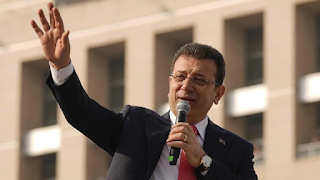
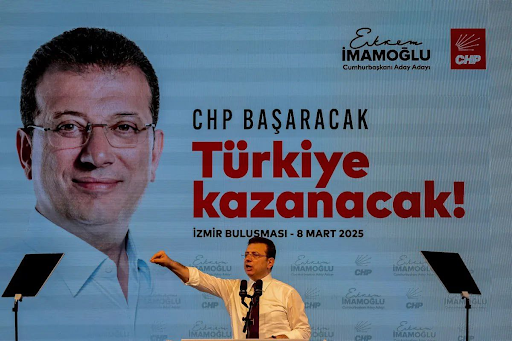
The political landscape in Turkey has been thrust into turmoil following the recent arrest of Ekrem Imamoglu, the popular mayor of Istanbul. Imamoglu, a member of the opposition Republican People's Party (CHP), was detained on corruption charges in a move that many see as politically motivated.


The arrest order, issued by a judge in Istanbul, came amid a wave of widespread protests across Turkey condemning Imamoglu's detention. The mayor was accused of "irregularities" in his handling of municipal contracts and "terrorist propaganda" - charges that his supporters decry as fabricated attempts to remove a powerful political rival of President Recep Tayyip Erdogan's ruling party.


The controversy began last week when Turkey's Interior Ministry suspended Imamoglu from his post as Istanbul mayor, along with the mayors of two other Istanbul districts. This action was taken under Article 127 of the Turkish constitution, which allows for the temporary removal of elected officials facing criminal investigations.


In response, Istanbul's city council convened an emergency session and elected a temporary replacement mayor to fill Imamoglu's role. However, Imamoglu has refused to back down, defiantly calling the move an "attack on democracy" and urging all 86 million Turkish citizens to "fill the ballot boxes and raise their voices against injustice."


The fallout from Imamoglu's arrest has ignited a groundswell of public anger that has extended far beyond just his supporters. Protests have erupted in over two-thirds of Turkey's 81 provinces, with demonstrators - including many apolitical young people and university students - voicing their outrage at what they see as the government's blatant abuse of power.


The broader significance of this crisis lies in the potential long-term implications for Turkish democracy. Imamoglu was widely viewed as a rising political star and a formidable challenger to Erdogan's dominance. His detention appears to be an attempt by the president and his party to eliminate a potent electoral threat ahead of next year's presidential and parliamentary elections.


The outcomes of this crisis remain highly uncertain. Imamoglu's supporters have vowed to continue their protests, raising the specter of sustained civil unrest. The government, for its part, has signaled its intent to press ahead with the prosecution, potentially leading to a drawn-out legal battle.


Ultimately, the fate of Ekrem Imamoglu and the future of Turkey's fragile democracy hang in the balance. This crisis has laid bare the deep divisions and power struggles within the country, and its resolution will have profound consequences for the country's political trajectory in the years to come.

Turkish court formally places Istanbul mayor Imamoglu under arrest on corruption charges

 Following a warning from the Supreme Council of Radio and Television, Turkish television channels have stopped live broadcasts from the sites of rallies, protests and from the Palace of Justice in Istanbul, where a court decision on the preventive measure for Istanbul Mayor Ekrem Imamoglu is expected.

Over 300 people have been detained, one police officer was attacked with acid, reports say. 

Wednesday, March 19, 2025

Turkey in Crisis: The Arrest of Ekrem Imamoglu and Its Far-Reaching Consequences

    Wednesday, March 19, 2025   No comments

Turkey is facing a period of heightened political and social unrest following the arrest of Istanbul’s mayor, Ekrem Imamoglu. This event has ignited massive protests, deepened tensions between the government and the opposition, and drawn international scrutiny over the state of democracy and rule of law in Turkey.

Mass Protests and Public Outrage

Thousands of Turkish citizens have taken to the streets in major cities, including Istanbul, Ankara, Trabzon, and Izmir, protesting Imamoglu’s arrest on charges of corruption and alleged connections to terrorist groups. The opposition Republican People's Party (CHP) has condemned the arrest as politically motivated, urging its supporters to mobilize nationwide in defense of democracy. The government, meanwhile, has cracked down on demonstrations, deploying riot police who have used tear gas and rubber bullets to disperse crowds.

A Politically Charged Arrest

Ekrem Imamoglu

Imamoglu, a prominent opposition leader and a key challenger to President Recep Tayyip Erdoğan in the upcoming 2028 elections, was detained following an early morning raid on his home in Istanbul. His arrest coincided with the cancellation of his university degree by Istanbul University, an act perceived by many as part of a broader campaign to discredit him.

Alongside Imamoglu, Turkish authorities have issued arrest warrants for 105 other municipal officials linked to the Istanbul Metropolitan Municipality. The charges against them include corruption, fraud, and alleged ties to the Kurdistan Communities Union (KCK), an organization affiliated with the outlawed Kurdistan Workers' Party (PKK). Critics argue that these accusations are baseless and reflect the government’s increasing use of the judiciary as a tool to silence political opponents.

Government Restrictions and Crackdown on Freedoms

In response to the growing unrest, Turkish authorities have imposed stringent measures, including a four-day ban on protests and public gatherings in Istanbul. Internet access and social media platforms have been restricted, while metro and transportation routes leading to key protest sites, such as Taksim Square, have been shut down. Despite these efforts, demonstrations have persisted, with students and faculty from universities like Boğaziçi, Istanbul Technical University, and Yıldız Technical University joining the movement.

Impact on Turkey’s Economy and International Relations

The arrest of Imamoglu has triggered severe economic consequences, with the Turkish lira losing 12% of its value against the U.S. dollar. The Istanbul stock exchange also experienced a sharp decline, prompting a temporary suspension of trading. Economic analysts warn that these developments could further destabilize an already fragile economy and deter foreign investment.

Internationally, the European Union and other Western allies have voiced concern over Imamoglu’s detention. The Council of Europe issued a strong condemnation, describing the arrest as a move against the will of the Turkish people. European lawmakers and human rights organizations have called on Turkey to uphold democratic principles and the independence of its judiciary.


A Pattern of Political Repression?


Imamoglu’s arrest is the latest in a series of crackdowns against opposition figures, journalists, and activists. The recent imprisonment of Ümit Özdağ, leader of the nationalist Victory Party, further underscores Turkey’s deteriorating human rights record. Many fear that Erdoğan’s government is intensifying its efforts to suppress dissent and consolidate power ahead of the next elections.


An Uncertain Future for Turkey

The arrest of Ekrem Imamoglu marks a pivotal moment in Turkish politics. While the government maintains that the charges against him are legitimate, widespread public outrage and international condemnation suggest otherwise. With increasing economic turmoil, growing discontent, and the erosion of democratic norms, Turkey stands at a crossroads—one that could determine its future as either a democracy or an authoritarian state.

As the situation continues to unfold, all eyes remain on Turkey, watching whether its institutions will uphold justice or succumb further to political influence.

Friday, May 17, 2024

Another US governmental official and a Biden Appointee, who is also Jewish, resign protesting Biden's handling of the war in Gaza calling it a Genocide

    Friday, May 17, 2024   No comments

In a move that some observers described as a resounding rejection of Biden's handling of the war in Gaza, a high-ranking Jewish employee in the administration of US President Joe Biden announced her resignation from her position on Wednesday, due to what she described as his disastrous and ongoing support for the Israeli war on the Gaza Strip.

In an article published by the Washington Post, Lily Greenberg Call, Special Assistant to the Chief of Staff at the Interior Ministry, cited her Jewish upbringing and relationship with Israel and recounted how her family fled from Europe to America to escape anti-Semitic persecution there.

In her resignation letter (see below), Greenberg Call - who made the first public resignation by a Jew over Biden's support for Israel - wrote, "I can no longer in good conscience continue to represent this administration amid President Biden's disastrous and continuing support for the genocide in Gaza."

In an interview she conducted with writer Yasmine Abu Talib Yasmine Abu Talib, Greenberg Call said that resigning was a difficult decision because of the society in which she grew up, but the Jewish values ​​in which she was raised led her to make this decision.

“Judaism is the most important part of my identity, and all the values ​​I was raised with and all my Jewish education are what led me to this decision,” Greenberg Call said. She added, "What Israel is doing in Gaza and to the Palestinians throughout the land does not represent the Jews and is a shame to our ancestors."

Commenting on her position in the Biden administration, she said, “Everyone here is thinking about achieving the American dream and rising to the top, but I asked myself several times during the past eight months: What is the benefit of power if it is not used to stop crimes against humanity?”

Earlier this week, a US Army major working for the Defense Intelligence Agency resignedUS Army major working for the Defense Intelligence Agency resigned, writing in an open letter that he felt “incredibly ashamed and guilty” when he realized that his work contributed to the suffering and killing of Palestinians.

A political official also resigned from the Ministry of Education last January, and an employee at the Ministry of Foreign Affairs who worked on transporting weapons to foreign countries last October.

In february of this year, U.S. airman Aaron Bushnell U.S. airman Aaron Bushnell set himself on fire at the Israeli embassy in Washington, D.C., after he described his action while walking to the location as an extreme act of protest against the war in Gaza—a desperate plea to “free Palestine,” as he screamed while flames engulfed his body.

As early as October of last year, some US officials, including State Department officials, have resigned rejecting Biden's blind support of a genocidal war in Gaza.

Whi is Lily Greenberg Call

 An American Jewish politician and human rights activist at the local and international levels. She served as Special Assistant to the Chief of Staff at the US Department of the Interior, and participated in the election campaigns of US President Joe Biden and his Vice President, Kamala Harris.

She worked for many years within Zionist groups supporting Israel, then took an anti-occupation stance, opposed violence in the occupied Palestinian territories, and called for peaceful coexistence between Palestinians and Jews.

Lily Greenberg Cole was born and raised in San Diego, California. Her origins go back to a Jewish family that immigrated to the United States of America to escape the persecution practiced against Jews in Europe.

Her family lived on Ellis Island, New York, and spent decades suffering under the weight of racial discrimination, which affected Lily's upbringing and her vision of issues of justice and discrimination.

Greenberg grew up in a Jewish community in which unconditional support for Israel prevails, to the point where it is considered part of the Jewish identity, so she was a prominent youth in pro-Israel activism in her high school years, and has been involved in the American Israel Public Affairs Committee (AIPAC) since her freshman year of high school. She was elected president of the Israel Defense Club at her school.

When she was 16 years old, she went on a trip to the occupied territories and stayed there for a full year, as part of a program for the “Jewish Youth” movement, which included making trips in the occupying state and joining educational courses. Among the activities were meetings with Palestinian teenagers, the goal of which was Developing the spirit of coexistence between the two parties.

When she joined the University of California, she joined pro-Israel groups, and became the leader of a student movement supporting Israel and known within the university.

In 2017, she led a trip to Israel, organized by the Hillel Berkeley Jewish Student Center. Students from a wide range of ethnic and religious backgrounds joined the trip, visited Palestinian cities such as Bethlehem and Ramallah, and met Palestinians and settlers.

Greenberg worked for many years as an activist to defend Israel, but experiences began to change her convictions. During a relief mission in Greece, she forged friendly relations with refugees of Palestinian origins, developed deep relationships with Palestinians through academic programs, and established close relationships with Palestinian Americans during periods of study and campaigns. Electoral relations, and those relations had a significant impact on changing the ideas on which they grew up.

In her article about severing its relationship with AIPAC, Lilly stated that she realized that the organization, through its unconditional support for the Israeli government, was supporting violence, which was contrary to its values, and so she joined to work with other groups.

Greenberg also worked with non-Zionist organizations, such as the "If Not Now" organization, which opposes the Israeli occupation in the West Bank and Gaza Strip.


Saturday, May 04, 2024

Anti-Genocide student protests go global

    Saturday, May 04, 2024   No comments

By mid-April, students attending wealthy private universities that have tens of billions of dollars in endowments invested in all forms of economic activities wanted their universities to be selective in their investments and divest from companies that produce anything tied to the Gaza Genocide. This happened after the International Court of Justice found that Israel is committing a plausible genocide and ordered it to take specificactions to stop the genocide. Since then protests spread to almost all Western countries, and there are signs that it will spread to poor countries though universities in such countries have no large investments in weapon manufacturing enterprises.

 Universities in France, Canada, Switzerland, Australia and Mexico are witnessing sit-ins and movements demanding an end to the war that broke out seven months ago on the besieged Gaza Strip. In America, the police, who attended in large numbers, broke up the camps set up by pro-Palestinian students at various universities, the most recent of which was the University of California - Los Angeles, where dozens were arrested.

 As the uprising of American university students continues to escalate in intensity, student mobilization is expanding in a number of countries in solidarity with the Gaza Strip, the day after US President Joe Biden called for order to prevail in American universities, while the French police evacuated the building of the Institute of Political Sciences in Paris of unarmed demonstrators. accidents.


On April 18, students who rejected the Israeli war on the Gaza Strip began a sit-in on the campus of Columbia University in New York, demanding that its administration stop its academic cooperation with Israeli universities and withdraw its investments in companies that support the occupation of Palestinian territories.

 With the intervention of police forces and the arrest of dozens of students, the state of anger expanded, and the demonstrations extended to dozens of American universities, including leading universities such as Harvard, George Washington, New York, Yale, the Massachusetts Institute of Technology, and North Carolina.

 Later, the unprecedented student movement in support of Palestine in the United States expanded to universities in countries such as France, Britain, Germany, Canada and India, all of which witnessed demonstrations in support of their American counterparts and demands to stop the war on Gaza and boycott the companies that supply weapons to Israel.

 CNN reported that the administration of the University of California, Riverside reached an agreement with its students to ensure the end of their sit-in camp, after the university pledged transparency and disclosure of investments and academic cooperation programs with external institutions.

 CNN reported that the faculty of the College of Arts and Sciences at Emory University in Georgia will vote in favor of no confidence in the university president, against the backdrop of his calling the police against the protesting students.

 The administration of the University of Chicago in the United States said that there was information “about the presence of physical altercations” on campus, indicating in a statement that in the absence of an agreement with the protesters, the time had come to disperse the crowd.

Students seem to know the consequences of their actions but act, why?

A report in the Times newspaper reviewed the story of Jewish student Iris Hsiang, who was among more than 100 people arrested, in television scenes that credited her with inspiring similar acts of protests on college campuses across the United States.

Hsiang was arrested along with dozens of students at Columbia University for refusing to leave the campus during protests in support of the Palestinians and rejecting the Israeli war on the besieged Gaza Strip.

The student who was suspended from her studies and did not know whether the university would allow her to continue her studies - explained to the newspaper, in a report written by Josie Ensor - the reason for her participation in the pro-Palestinian demonstrations and what prompted her to do so. She said that she was arrested, her hands were tied with ties, and she was placed in a detention cell at the police headquarters all night. .

Hsiang - according to the British newspaper - is now standing outside the gates of the Columbia University campus during the afternoon, because she was prevented from attending classes and accessing the library, dining halls and any other buildings on campus, and was only allowed to remain in her residence as part of the terms of her suspension.

Hsiang has been charged by Columbia University, based on a police indictment, with trespassing, vandalism and “disruptive behavior.” The climate science and human rights student has been suspended from her studies, but she asks indignantly, “How can I trespass on my property at my university?”

Hsiang, who wears a black-and-white keffiyeh as a symbol of solidarity with the Palestinian cause, faces a court hearing later this month and is awaiting the university's decision on whether she will be allowed to continue her studies.

She says that her parents (the mother is Jewish and the father is Asian) are worried about her like all parents, and they support her. She adds, “I grew up in a house where we stood up to injustice, so I formulated the matter to them as follows: What do we want people to do if we were in Gaza and this happened?” Happening to us?

However, the threat of a criminal record and permanent expulsion worries the outstanding student, especially since tuition fees at Columbia University cost $66,000 annually, and she will have to pay another year’s fees if she is forced to repeat her studies after missing crucial classes and exams during the demonstration.

Although a number of professors have reached out to students to offer their support, particularly criticizing the university's handling of the demonstrations, and at least 10 faculty members wearing orange jackets standing hugging each other in Central Park on Monday when the evacuation order was issued, Hsiang is disappointed. “I can't believe it has come to this.”

The newspaper reported that New York City officials ran out of patience due to the protests, and its Mayor Eric Adams called on the parents of the students who entered Hamilton Hall to “come pick up their children” and said that the campus must be a safe place for all students.

But Hsiang rejected the idea that Columbia had become an unsafe place for Jewish students. “I am Jewish and I am afraid to enter campus, but for a different reason. I was arrested for my peaceful protest,” she said. “There is a history of using Jewish identity as a weapon. Because I am Jewish, I support the Palestinians against persecution.” .

The newspaper concluded that Hsiang, even if she was not expelled, would have to repeat the academic year because she missed most of her final exams, although it is up to the individual professor to accept or reject the course work of the arrested protesting students, according to the university.

Hsiang concluded her interview with the newspaper by saying, “I am thinking about my future, but at the same time I am thinking about the students of Gaza, as there are no longer established universities. This will definitely change the course of my life, but I went into it knowing that it was a possibility. If Columbia University continues in this situation "There's not much this university can teach me."

Sunday, April 28, 2024

Media Review: A college professor who protested the Vietnam War in 1968 compares her experiences with the anti-genocide protests currently happening at Columbia University

    Sunday, April 28, 2024   No comments

MICHEL MARTIN, NPR HOST:

Demonstrations are still going on at more than a dozen universities across the country where students are calling for an end to the Israel-Hamas war, and they say they want their schools to divest in companies that do business with Israel. The epicenter of these demonstrations is Columbia University, where images of police arresting students brought back powerful memories of another protest there.


MARTIN: In 1968, Eleanor Raskin was a student at Columbia and took part in demonstrations against the Vietnam War there. Raskin, now Eleanor Stein, now teaches law and human rights at the State University of New York, and she's with us now to talk about whether she sees parallels between then and now. Good morning. Thanks so much for joining us.

ELEANOR STEIN: It's a pleasure.

MARTIN: If you would just remind us, for people who weren't there or don't remember, about the demonstrations in 1968 - what started it, and what happened?


STEIN: It's hard to conjure up what that moment was for our country. It was a moment of real crisis. But the issues at Colombia, there were two, really, that were critical, basically a war research body. The Institute for Defense Analysis had a contract with Colombia, which could have meant participation in military research for the war. The second issue was that Colombia was in the process of building a new gym. And they were building it in Morningside Park, one of the few green spaces in Harlem. And we felt that it couldn't be business as usual, that the university itself was engaging in an indefensible takeover of Harlem land and an indefensible participation and complicity with the Vietnam War effort. And students felt so strongly about this. We felt that whatever the risks, whatever the outcomes, we should demand that the university take action.

MARTIN: So what did you do?

STEIN: Well, first, I went to the rally. And then, at the rally, people decided to go into a classroom building, Hamilton Hall, and kind of have a sit-in. And then we decided to stay and to kind of barricade the doors. I ended up going into another classroom building, Fayerweather Hall, where I lived for five days, and I was arrested there. So actually, we were much more disruptive in terms of the functioning of the university. We were blocking access to classroom buildings. Whereas today, there's - none of that has been going on.


listen/read full interview


Followers


Most popular articles


ISR +


Frequently Used Labels and Topics

40 babies beheaded 77 + China A Week in Review Academic Integrity Adana Agreement afghanistan Africa African Union al-Azhar Algeria Aljazeera All Apartheid apostasy Arab League Arab nationalism Arab Spring Arabs in the West Armenia Arts and Cultures Arts and Entertainment Asia Assassinations Assimilation Azerbaijan Bangladesh Belarus Belt and Road Initiative Brazil BRI BRICS Brotherhood CAF Canada Capitalism Caroline Guenez Caspian Sea cCuba censorship Central Asia Charity Chechnya Children Rights China Christianity CIA Civil society Civil War climate colonialism communism con·science Conflict conscience Constitutionalism Contras Corruption Coups Covid19 Crimea Crimes against humanity D-8 Dearborn Debt Democracy Despotism Diplomacy discrimination Dissent Dmitry Medvedev Earthquakes Economics Economics and Finance Economy ECOWAS Education and Communication Egypt Elections energy Enlightenment environment equity Erdogan Europe Events Fatima FIFA FIFA World Cup FIFA World Cup Qatar 2020 Flour Massacre Food Football France Freedom freedom of speech G20 G7 Garden of Prosperity Gaza GCC GDP Genocide geopolitics Germany Global Security Global South Globalism globalization Greece Grozny Conference Hamas Health Hegemony Hezbollah hijab Hiroshima History and Civilizations Human Rights Huquq Ibadiyya Ibn Khaldun ICC Ideas IGOs Immigration Imperialism In The News india Indonesia inequality inflation INSTC Instrumentalized Human Rights Intelligence Inter International Affairs International Law Iran IranDeal Iraq Iraq War ISIL Islam in America Islam in China Islam in Europe Islam in Russia Islam Today Islamic economics Islamic Jihad Islamic law Islamic Societies Islamism Islamophobia ISR MONTHLY ISR Weekly Bulletin ISR Weekly Review Bulletin Italy Japan Jordan Journalism Kenya Khamenei Kilicdaroglu Kurdistan Latin America Law and Society Lebanon Libya Majoritarianism Malaysia Mali mass killings Mauritania Media Media Bias Media Review Middle East migration Military Affairs Morocco Multipolar World Muslim Ban Muslim Women and Leadership Muslims Muslims in Europe Muslims in West Muslims Today NAM Narratives Nationalism NATO Natural Disasters Nelson Mandela NGOs Nicaragua Nicaragua Cuba Niger Nigeria Normalization North America North Korea Nuclear Deal Nuclear Technology Nuclear War Nusra October 7 Oman OPEC+ Opinion Polls Organisation of Islamic Cooperation - OIC Oslo Accords Pakistan Palestine Peace Philippines Philosophy poerty Poland police brutality Politics and Government Population Transfer Populism Poverty Prison Systems Propaganda Prophet Muhammad prosperity Protests Proxy Wars Public Health Putin Qatar Quran Rachel Corrie Racism Raisi Ramadan Regime Change religion and conflict Religion and Culture Religion and Politics religion and society Resistance Rights Rohingya Genocide Russia Salafism Sanctions Saudi Arabia Science and Technology SCO Sectarianism security Senegal Shahed sharia Sharia-compliant financial products Shia Silk Road Singapore Slavery Soccer socialism Southwest Asia and North Africa Sovereignty Space War Spain Sports Sports and Politics Starvation State Terror Sudan sunnism Supremacism SWANA Syria Ta-Nehisi Coates terrorism Thailand The Koreas Tourism Trade transportation Tunisia Turkey Turkiye U.S. Cruelty U.S. Foreign Policy UAE uk ukraine UN under the Rubble UNGA United States UNSC Uprisings Urban warfare US Foreign Policy US Veto USA Uyghur Venezuela Volga Bulgaria Wadee wahhabism War War and Peace War Crimes Wealth and Power Wealth Building West Western Civilization Western Sahara WMDs Women women rights Work Workers World and Communities Xi Yemen Zionism

Search for old news

Find Articles by year, month hierarchy


AdSpace

_______________________________________________

Copyright © Islamic Societies Review. All rights reserved.