Showing posts with label Economy. Show all posts

Monday, July 27, 2026

Media Review: Yemeni strikes shift pressure from Hormuz to Saudi Arabia's Red Sea workaround

    Monday, July 27, 2026   No comments

Brigadier General Yahya Saree

Yemeni Armed Forces announce targeting critical Saudi Aramco Oil infrastructure in Jazan and Yanbu


Yemeni Armed Forces Spokesperson Brigadier General Yahya Saree has announced that military units successfully struck multiple sensitive and vital installations tied to the crude oil supply line running from eastern Saudi Arabia in Jazan to Yanbu.

The operation was executed using a swarm of drone aircraft and served as a direct retaliation against the Saudi-led coalition's ongoing violations of Yemeni airspace.

Economic cost

Tech Times reported on 26 July that Ansarallah's coordinated strikes on Saudi Aramco's Jazan refinery and Yanbu oil facilities have exposed the vulnerability of Saudi Arabia's alternative export route after the closure of the Strait of Hormuz. 

Satellite data from NASA's FIRMS and SoarAtlas confirmed major fires at Jazan, while Reuters, citing Greek security sources, reported that two ballistic missiles targeting Yanbu were intercepted by Saudi air defenses.


According to the report, Saudi Arabia has spent months rerouting crude exports through the East-West (Petroline) Pipeline to Yanbu to bypass Hormuz. 


However, because tankers departing Yanbu must still transit the Bab al-Mandab, where Ansarallah has declared a naval blockade, the strikes have effectively shifted, rather than eliminated, Saudi Arabia's strategic maritime vulnerability.


The report noted that Yanbu handled around 92% of Saudi Arabia's seaborne crude exports in June, citing Kpler data reported by AFP, making it the kingdom's primary export outlet during the Hormuz disruption. 


While the full extent of the damage remains unclear, Reuters reported that Asia-based trading sources had received reports of damage at Jazan, as Saudi Aramco had not yet issued an official assessment.


Tech Times added that the attacks pushed Brent crude back above $100 per barrel and intensified concerns over global energy supplies, warning that simultaneous disruptions at Hormuz and Bab al-Mandab could place a significant share of regional oil exports at risk and further tighten global energy markets.


The cisis may get worse before it is resolved


Over the weekend, Saudi Arabia reports intercepting drones attempting to target petroleum facilities

The official spokesperson for the Ministry of Defense, Major General Turki al-Maliki, stated that air defenses intercepted and destroyed a number of drones over the past few hours that attempted to target petroleum facilities in the Eastern Province and Riyadh.

Major General Maliki alleges that these attempts originated from Iraqi territory and were carried out by 'militias affiliated with Iran.'

Sunday, February 25, 2024

The US troops in Iraq are there to stay unless the US government chooses to pull them out

    Sunday, February 25, 2024   No comments

 Since the 1990 US intervention in Iraq and the UNSC action after Iraq’s invasion of Kuwait, Iraq lost control of its economy and that has not changed. The Iraqi government recently asked the US to schedule full withdrawal of the latter’s troops. That is unlikely to happen unless the US needs or wants to pull troops out, because the US maintains tight control over the Iraqi economy which is entirely dependent on oil. Revenues from the sale of Iraqi oil is processed by US banks and the US government is leveraging it to keep troops in Iraq. 

Member of the Finance Committee in the Iraqi Parliament, Jamal Kujar, confirmed that there are three economic files that the United States uses to pressure Iraq, namely the oil file, Iraqi funds in the US Treasury, and the dollar file, and that the release of Iraqi funds in the US Federal Bank has become conditional in accordance with American controls and specifications.

 Koger explained, “These files represent strong and influential pressure cards if used against Iraq, because the Iraqi economy is fragile and depends entirely on oil revenues at a rate of up to 94% of the gross national product.”

 Oil export revenues in 2023, according to data issued by the Ministry of Oil last January, amounted to about 87.6 billion dollars, at a rate of about 7.3 billion dollars per month. The country sold more than 1.23 billion barrels.

 Iraqi funds deposited with the US Federal Bank from oil export revenues, which is a procedure applied within the requirements of Chapter Seven of the United Nations procedures following the Iraqi invasion of Kuwait in 1990 and is still in effect, in addition to the inclusion of new Iraqi companies and banks on the sanctions list it issues.


Monday, January 22, 2024

US Central Command Statement: "U.S. Forces, Allies Conduct Joint Strikes in Yemen; Houthis respond

    Monday, January 22, 2024   No comments

After re-listing Houthis as a terrorist entity, US government has signaled that its strikes in Yemen are going to gain some permanence, coining a new name for the operation:  “Operation Poseidon Archer”. Afterwards, the  US Central Command issued a statement, announcing that the "U.S. Forces, Allies Conduct Joint Strikes in Yemen."

The full statement from US Central Command:

As part of ongoing international efforts to respond to increased Houthi destabilizing and illegal activities in the region, on Jan. 22 at approximately 11:59 p.m. (Sanaa / Yemen time), U.S. Central Command forces alongside UK Armed Forces, and with the support from Australia, Bahrain, Canada, and the Netherlands, conducted strikes on 8 Houthi targets in Iranian-backed Houthi terrorist-controlled areas of Yemen. 

These strikes from this multilateral coalition targeted areas in Houthi-controlled Yemen used to attack international merchant vessels and U.S. Navy ships in the region. The targets included missile systems and launchers, air defense systems, radars, and deeply buried weapons storage facilities. 

These strikes are intended to degrade Houthi capability to continue their reckless and unlawful attacks on U.S. and U.K. ships as well as international commercial shipping in the Red Sea, Bab Al-Mandeb Strait, and the Gulf of Aden. These strikes are separate and distinct from the multinational freedom of navigation actions performed under Operation Prosperity Guardian."

The UK followed with its own statement:

UK Defense Security statement. Four British Eurofighter Typhoon fighters conducted strikes against Ansar Allah this evening.


____


Meanwhile, the Yemen government in Sanaa, responded to the new strikes with this statement, posted by Mohammed Albukhaiti. 


This reaction follows a detailed responce issued by the same Yemini official reacting to EU intent to join the US and UK in their war on Sanaa government. The full text of the statement is below.

A message from Mohammed Albukhaiti, senior member and spokesperson of Ansar Allah

My message to the European Union countries regarding their possible participation in a military mission in the Red Sea.

The exceptional state of stability and security that Europe experienced after World War II is a result of the moral values   that prevailed in its societies at the internal level.  However, this moral system began to weaken as a result of the participation of some European countries in the immoral wars that America fought outside its borders.  We are now seeing its effects in the rise of the extreme right and the war in Ukraine.

European societies must realize that moral and human values   are fixed and do not change according to the nationality and religion of a person, and their treatment of them with extreme selectivity that amounts to schizophrenia will expand the scope of wars in the world, which will expand to Europe.

There are genocidal crimes committed every day in Gaza, the majority of whose victims are women and children, in full view of the world, and all countries must take serious action to stop them.

Unfortunately, the movement of some countries with their fleets in support of the perpetrators of genocide and the silence of others is what prompted us to take unilateral military action to stop it, because we had no choice but to do so.

We only target ships linked to Israel, not with the aim of seizing them or sinking them, but with the aim of changing their course to increase the economic cost to Israel as a pressure card to stop its crimes in Gaza and allow the entry of food, medicine and fuel to its besieged residents. This is a legitimate act, especially since we are in a state of war with it.  If the crews of those ships had responded to the instructions of our naval forces, they would not have been detained or bombed.

The steadfastness of the Palestinian people and the military operations of Yemen and Hezbollah against Israel were sufficient to pressure it to stop its crimes, but the American and British support for it, which reached the point of launching an aggression against Yemen, created the conditions for it to continue committing more crimes and expanded the scope of the conflict.

Today there is a war between Yemen, which is struggling to stop the crimes of genocide, and America and Britain, which are fighting to support and protect the perpetrators. It is also clear that the Palestinian people are not ready to surrender, which means that the situation is heading towards escalation.

Instead of European Union countries moving to add more fuel to the fire, they should move seriously to stop the crimes of genocide in Gaza, and then we will stop all our military operations immediately and automatically.

The Palestinian people are being subjected to great injustice to the point of being deprived of the right to live on their land by force of arms. If another human group had been subjected to the injustice that the Palestinians are being subjected to, we would have moved to help them, regardless of their religion or color.

We are not advocates of war, but rather advocates of peace, and it is America and Britain that attacked us, whether in 2015 indirectly or today directly, and we advise the European Union countries not to participate in any aggression against Yemen.

Our keenness to achieve a just and comprehensive peace that guarantees the safety and dignity of all countries and peoples does not mean abandoning our duty to defend the oppressed, nor abandoning our right to self-defense, no matter the sacrifices it costs us. We are prepared to fight until the Day of Resurrection even if the whole world comes together against us."


Friday, January 12, 2024

Media Review: Underscoring the risks associated with attacking Yemen, European countries, including France, refused to support it

    Friday, January 12, 2024   No comments

 Attack on Yemen might be the riskiest action taken by the US administration, and that risk is obvious. France and some other European powers refused to take part in it or even sign on the statement issued after the strike on Yemen that were carried out by the US and UK, and supported by a handful of other nation-states like Bahrain. In Yemen, on the other hand, Houthis government may have gained more support not only from the people living in the territories under its control, but even from territories still under the control of Saudi-backed government.

Some background for this emerging military confrontation between the US and the Sanaa government in Yemen: Houthis-run goverment in Yemen imposed a blockade on commercial ships that either belong to Israel or trading with Israel until the blockade imposed by Israel on Gaza and its war in Gaza are stopped. Although Houthis stated that no other ships will be denied transit, the US insisted that the actions taken by Yemen are threat to global commerce. It acted on this jsutification. After the strike, the Government of Sanaa said that it will retaliate and that it will continue to enforce the blockade until Gazans are allowed food and safety.

Now the aftermath of the attacks and the reaction of worl to it.

The British newspaper "The Telegraph" indicates that Paris refused to work jointly with its Western allies, and did not support the American and British air strikes against Yemen.

An unidentified French official told the British newspaper The Telegraph that Paris “fears that, by joining the US-led strikes, it will lose any influence it has in the talks to defuse tensions between Hezbollah and Israel.” France has focused much of its diplomacy in recent weeks on avoiding escalation in Lebanon.

According to The Telegraph newspaper, France did not sign a statement of support for the US and British air strikes against Yemen, after saying that it “will not participate in air strikes to protect maritime navigation in the Red Sea.”


On the other hand, Germany, Denmark, the Netherlands, Australia, New Zealand, Canada, South Korea and Bahrain signed a joint statement supporting the US-British strikes and warning against taking further measures.


The Dutch also provided logistical assistance during the strikes, but other major European powers, including France, Spain and Italy, did not provide military or political support.


On the other hand, France, along with Italy and Spain, refused to participate in the strikes, and avoided signing a statement supporting them.


According to The Telegraph newspaper, Emmanuel Macron's government refrained from joint action with its Western allies against Yemen, in contrast to what happened with it in recent years, in Libya and Syria, when its army participated in repelling ISIS attacks, according to its claim.


In turn, the joint commander of the French forces in the Red Sea region, Admiral Emmanuel Sallars, said yesterday, Thursday, that “Paris’ current mandate does not include striking Ansar Allah directly.”


The American "Bloomberg" agency reported, in a report, that US President Joe Biden is facing "his biggest test yet regarding his ability to avoid a broader war in the Middle East," in the wake of the American-British aggression against Yemen.


The British Sky News network reported on Friday that the American and British strikes are pushing more Yemenis to support Ansar Allah in Yemen.


According to the British Sky News correspondent, who spoke to people inside Yemen, and they told her how terrified they felt when the British and American missiles fell yesterday, the Yemenis view the United Kingdom and the United States as “igniting the war by supporting the Saudi-led coalition.” .


She pointed out that, after the recent British and American strikes, the Yemenis are increasing their support for Ansar Allah, and “Washington and London do not favor this matter at all.”


Saturday, January 06, 2024

Contrary to Ankara’s political rhetoric in support of Palestinians, Turkish exports to Israel increased

    Saturday, January 06, 2024   No comments

Economics is the overriding engine in global relations

Contrary to Ankara’s political rhetoric on the war in the Palestinian enclave of Gaza, Turkish exports to Israel rose by 34.8 percent last month, according to official figures, as the country’s trade relations with Tel Aviv come under scrutiny.


Israel began pounding Gaza after Hamas militants carried out an unprecedented attack in the country on October 7, killing 1,200 people and taking more than 200 hostage. Israeli airstrikes and ground attacks on Gaza have so far claimed the lives of more than 22,000 people, according to the local authorities, in addition to leading to vast destruction in the enclave.

Tuesday, August 08, 2023

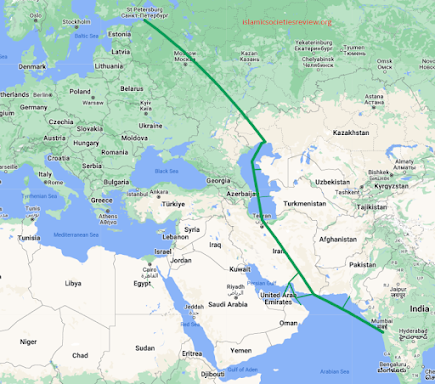
Kazakhstan, and soon Russia, increase export of agricultural goods through Iran via the INSTC

    Tuesday, August 08, 2023   No comments

In another sign of activating alternative paths for global trade with the uncertainty in the Black Sea due to the conflict in in Ukraine, Kazakhstan decided to export its agricultural goods across the Persian Gulf through the Islamic Republic of Iran to open a new direct route to free waters, which starts from the port of Korik in Kazakhstan, then the Iranian port of Amirabad overlooking the Caspian Sea, and then to the port of Bandar Abbas on the Persian Gulf.

The Iran route reduces the duration of the transfer of goods through presence in the ports of the Emirates, India, Pakistan, the Far East and the coasts of East Africa, in addition to that this route can export Kazakh goods to the European Union.

Meanwhile, the Deputy Prime Minister of Kazakhstan, Srik Jumangarin, held talks with the head of an Emirati shipping and transport company, to employ joint investments for this goal.

This is a major development, which practically, could allow Russia to export its goods and services through this route directly or through Kazakhstan, bypassing the risk associated with the Black Sea trade route. However, this North-South route has been in the making for over two decades, and only now it is showing its potential in a new geopolitical climate.

What is the International North–South Transport Corridor—INSTC?

It was first conceived in the early 2000’s. The idea was to build a transport corridor linking Russia’s Baltic Sea coast to India’s western ports in the Arabian Sea via Iran. Russia, India and Iran signed preliminary agreements to develop the 7,200-km-long International North-South Transport Corridor (NSTC) in 2002. NSTC consists of sea, road, and rail transportation systems with investments for building the railroads and truck highways coming mostly from India, Russia, and Iran. 

The INSTC's western route passes through Russia, South Caucasus, and Iran. The middle axis reaches India through Saint Petersburg – Astrakhan – Caspian Sea – North and South ports of Iran (Amirabad, Anzali, Chabahar, and Astara ports). The eastern axis passes through Russia-Kazakhstan-Turkmenistan and Uzbekistan-Iran.

Three years later, Azerbaijan signed up for the project. This agreement was eventually ratified by 13 countries — India, Russia, Iran, Azerbaijan, Belarus, Bulgaria, Armenia, Kazakhstan, Kyrgyzstan, Oman, Tajikistan, Turkey and Ukraine.

Now the NSTC is allowing states close to its main path to benefit from this increased North-South activities created by the sanctions imposed on Russia and the new sanctions imposed on Iran after the collapse of the Nuclear Deal. Iran stands to benefit most from this initiative, which, together with China’s BRI project will create new networks I the region and east Africa.


Submit your story (pitch an article)

Name

Email *

Message *


Trending Today...


ISR +


Frequently Used Labels and Topics

40 babies beheaded 77 + China A Week in Review Academic Integrity Adana Agreement afghanistan Africa African Union al-Azhar Algeria Aljazeera All Apartheid apostasy Arab League Arab nationalism Arab Spring Arabs in the West Armenia Arts and Cultures Arts and Entertainment Asia Assassinations Assimilation Azerbaijan Bangladesh Belarus Belt and Road Initiative Brazil BRI BRICS Brotherhood CAF Canada Capitalism Caroline Guenez Caspian Sea cCuba censorship Central Asia Charity Chechnya Children Rights China Christianity CIA Civil society Civil War climate colonialism communication communism con·science Conflict conscience Constitutionalism Contras Corruption Coups Covid19 Crimea Crimes against humanity D-8 Dearborn Debt Democracy Despotism Diplomacy discrimination Dissent Dmitry Medvedev Earthquakes Economics Economics and Finance Economy ECOWAS Education and Communication Egypt Elections energy Enlightenment environment equity Erdogan ethics Europe Events Fatima FIFA FIFA World Cup FIFA World Cup Qatar 2020 Flour Massacre Food Football France Freedom freedom of speech G20 G7 Garden of Prosperity Gaza GCC GDP Genocide geopolitics Germany Global Security Global South Globalism globalization Greece Grozny Conference Hamas Health Hegemony Hezbollah hijab Hiroshima History and Civilizations Hormuz Human Rights Huquq Ibadiyya Ibn Khaldun ICC Ideas IGOs Immigration Imperialism In The News india Indonesia inequality inflation INSTC Instrumentalized Human Rights Intelligence Inter International Affairs International Law Iran IranDeal Iraq Iraq War ISIL Islam in America Islam in China Islam in Europe Islam in Russia Islam Today Islamic economics Islamic Jihad Islamic law Islamic Societies Islamism Islamophobia ISR MONTHLY ISR Weekly Bulletin ISR Weekly Review Bulletin Italy Japan Jordan Journalism Kenya Khamenei Kilicdaroglu Kurdistan Latin America Law and Society Lebanon Libya Majoritarianism Malaysia Mali mass killings Mauritania Media Media Bias Media Review Middle East migration Military Affairs Morocco Multipolar World Muslim Ban Muslim Women and Leadership Muslims Muslims in Europe Muslims in West Muslims Today NAM Narratives Nationalism NATO Natural Disasters Nelson Mandela NGOs Nicaragua Nicaragua Cuba Niger Nigeria Normalization North America North Korea Nuclear Deal Nuclear Technology Nuclear War Nusra October 7 Oman OPEC+ Opinion Polls Organisation of Islamic Cooperation - OIC Oslo Accords Pakistan Palestine Peace Philippines Philosophy poerty Poland police brutality Politics and Government Population Transfer Populism Poverty Prison Systems Propaganda Prophet Muhammad prosperity Protests Proxy Wars Public Health Putin Qatar Quran Rachel Corrie Racism Raisi Ramadan Ramadan War Regime Change religion and conflict Religion and Culture Religion and Politics religion and society Resistance Rights Rohingya Genocide rule of law Russia Salafism Sanctions Saudi Arabia Science and Technology SCO Sectarianism security Senegal Shahed sharia Sharia-compliant financial products Shia Silk Road Singapore Sistani Slavery Soccer socialism Southwest Asia and North Africa Sovereignty Space War Spain Sports Sports and Politics Starvation State Power State Terror Sudan Sunni Axis sunnism Supremacism SWANA Syria Ta-Nehisi Coates terrorism Thailand The Koreas Tourism Trade transportation Tunisia Turkey Turkiye U.S. Cruelty U.S. Foreign Policy UAE uk ukraine UN under the Rubble UNGA United States UNSC Uprisings Urban warfare US Foreign Policy US Veto US-Iran MoU USA Uyghur Venezuela Volga Bulgaria Wadee wahhabism War War and Peace War Crimes War on Iran Wealth and Power Wealth Building West Western Civilization Western Sahara WMDs Women women rights Work Workers World and Communities Xi Yemen Zionism

Search for old news

Find Articles by year, month hierarchy


WEEKLY AdSpace 3

_______________________________________________

Copyright © Islamic Societies Review. All rights reserved.