Showing posts with label Democracy. Show all posts

Monday, April 27, 2026

Ali Al‑Zaidi’s Nomination and Iraq’s Fragile Path to Regional Stability

    Monday, April 27, 2026   No comments


In a development that could reshape Iraq’s political trajectory and ease mounting regional tensions, the Coordination Framework, Iraq’s dominant Shiite parliamentary bloc, has nominated Ali Al‑Zaidi as its consensus candidate for prime minister. The announcement came after weeks of intense internal negotiations and marked a potential turning point in a political crisis that had paralyzed Baghdad since the November elections. The selection of Al‑Zaidi was neither straightforward nor predetermined. The Coordination Framework’s deliberations unfolded in three distinct phases. Initially, former Prime Minister Nouri al‑Maliki appeared poised for a comeback, securing support from ten of the framework’s twelve key members after incumbent Prime Minister Mohammed Shia al‑Sudani stepped aside. This momentum stalled, however, when U.S. President Donald Trump publicly warned that Washington would no longer help Iraq if Maliki returned to power, citing what he called Maliki’s insane policies and ideologies. With Maliki’s path blocked, attention shifted to Bassem al‑Badri, who reportedly secured seven signatures within the framework, but this support proved insufficient to overcome internal divisions, turning his candidacy into a proxy battle between competing factions. In marathon sessions hosted by Falih al‑Fayyad, head of the Popular Mobilization Forces, negotiators finally converged on Al‑Zaidi, a figure described as a technocrat with economic expertise who could bridge ideological divides without granting decisive victory to any single camp. President Nizar Amedi formally tasked Al‑Zaidi with forming a new government, granting him thirty days under Article 76 of Iraq’s constitution to assemble a cabinet and secure parliamentary confidence.

Ali Shakir Mahmoud Al‑Zaidi was born in Baghdad in 1978 and brings a profile distinct from Iraq’s traditional political class. He holds a PhD in public law with a specialization in constitutional law, as well as bachelor’s and master’s degrees in finance and banking. He has served as chairman of Al‑Janoob Islamic Bank and CEO of Dijlah TV. Notably, Al‑Janoob Islamic Bank was among several Iraqi financial institutions sanctioned by the U.S. Treasury in 2024 over allegations of facilitating dollar transfers to Iran, a detail that underscores the delicate balancing act Al‑Zaidi must now perform. In his first statement as prime minister‑designate, Al‑Zaidi emphasized continuity and pragmatism, declaring that the upcoming government program would complement previous efforts to improve service delivery and social conditions, while pledging to position Iraq as a balanced country regionally and internationally.

Al‑Zaidi’s nomination arrives at a moment of extraordinary regional volatility. Iraq finds itself caught in the crossfire of an escalating U.S.‑Iran confrontation, with Iranian‑backed militias launching hundreds of attacks on American interests since the outbreak of wider conflict in February 2026. The U.S. Embassy in Baghdad has repeatedly warned of imminent threats from these groups, while Tehran insists that Iraq’s leadership choices must remain purely based on the decision of Iraqis. On the potential stabilizing side, Al‑Zaidi’s economic background may appeal to international donors and investors seeking stability over ideology. His emergence as a compromise candidate suggests broad, if reluctant, acceptance across Shiite factions, a prerequisite for governing effectively. By selecting a figure less overtly aligned with Tehran than Maliki, the Coordination Framework may be signaling openness to renewed dialogue with Washington. Yet persistent risks remain. Al‑Zaidi’s association with a sanctioned bank raises questions about whether the Trump administration will extend full cooperation to his government. The continued political weight of Iran‑aligned armed groups within the framework could constrain Al‑Zaidi’s ability to pursue independent security policies. And with the Coordination Framework controlling roughly 162 to 185 of parliament’s 329 seats, Al‑Zaidi will need support from Kurdish and Sunni blocs to pass legislation and approve his cabinet.

Al‑Zaidi’s immediate challenges are formidable. He must assemble a diverse and competent team capable of addressing Iraq’s chronic service deficits, corruption, and unemployment. With oil revenues under pressure from regional conflict, prudent fiscal management will be critical. Balancing relations with both U.S. forces and Iran‑aligned militias requires diplomatic finesse of the highest order. Moreover, many Iraqis demand changes to the political system that has produced repeated cycles of deadlock. The Coordination Framework’s praise for Maliki and al‑Sudani’s decision to step aside, reflecting concern for supreme national interests, suggests an awareness that continued obstruction would risk broader instability. Yet rhetoric alone cannot resolve the structural tensions that have plagued Iraqi politics since 2003.

Ali Al‑Zaidi’s nomination represents not a definitive solution but a provisional opportunity. In a region where miscalculation can trigger escalation, Iraq’s ability to form a functional, inclusive government carries implications far beyond its borders. If Al‑Zaidi can leverage his technocratic credentials to deliver tangible improvements in governance while navigating the treacherous waters of great‑power competition, his premiership could become a modest anchor of stability. If he fails, the consequences could reverberate from Baghdad to Beirut, from Tehran to Washington. For now, the world watches as Iraq attempts to turn a moment of compromise into a foundation for renewal. The stakes could not be higher.


Monday, April 06, 2026

More details about US-Israel plans to overthrow the government of Iran revealed

    Monday, April 06, 2026   No comments

Trump admits US sent arms to Iran protesters but says Kurds kept the weapons. On 5 April, 2026, US President Trump admitted for the first time during an interview with Fox News that the United States attempted to ship "a lot of guns" to anti-government protesters in Iran. 


While confirming the intent to arm the uprising that began in late 2025, Trump claimed the operation failed because the Kurds, who were used as the delivery channel, "kept the weapons" for themselves instead of passing them to the demonstrators. 

This blunt disclosure not only provides the Iranian government with direct evidence of US interference but also publicly blames the US’s Kurdish allies for the missing arms.

Iranian Kurdish groups reject Trump claim they received US weapons to aid Iran riots

Leaders of Iranian Kurdish parties have denied reports that they were given weapons by the US to support riots inside Iran, contradicting claims made by US President Donald Trump. 

According to media reports, Siamand Moeini, a senior figure in the armed Kurdistan Free Life Party (PJAK), said the group had not received any weapons and declined to speak for others. Hana Yazdanpanah, foreign relations coordinator for the Kurdistan Freedom Party (PAK), added that their arsenal remains limited to older weapons used in the fight against ISIS and those abandoned after the group’s defeat. Both parties insisted they have not received any support from the US.


Tuesday, September 02, 2025

The Powder Keg of the Levant--How Sectarian Power Structures Guarantee Perpetual Instability

    Tuesday, September 02, 2025   No comments

In the ancient lands of the Levant, where history is measured in millennia, a modern curse condemns nations to a purgatory of weakness. This is not a curse of geography or resources, but one of design—a political architecture built not on the bedrock of principled compromise and shared national vision, but on the shifting sands of sectarian appeasement. The fates of Lebanon and Syria stand as stark, bloody testaments to a brutal truth: a government forged in the fire of sectarian civil war is destined to be weak, illegitimate, and a prelude to the next conflict.

One would think that healing and reconciliation should follow three decades of peace. Yet Lebanon, whose 15-year civil war ended 35 years ago, is a nation frozen in time, a ghost haunting its own corpse. It is not a healed nation but a palimpsest of its former conflicts, its power structures meticulously drawn along the very sectarian lines that once tore it apart.

This is a country still ruled, in effect, by unelected leaders. The current president was appointed after years of vacuum, his ascent only possible by twisting the constitution to bypass a rule prohibiting active military officers from political office. The prime minister, a respected former international judge, was less elected than selected, installed through backroom compromise and heavy-handed pressure from foreign capitals like Washington, Paris, and Riyadh. Even the speakership, held by an elected MP, is shackled to a sectarian quota, its legitimacy perpetually questioned.

This patched-together entity now dares to act as a legitimate government, attempting to change the very practices its own flawed existence perpetuates. But a house divided against itself cannot stand, and a government built on sectarian compromise cannot govern. It will either fracture under the weight of its own contradictions or push ahead with its agenda, inevitably alienating one faction or another and risking a return to the civil war days it was designed to prevent. In Lebanon, the peace is the war, continued by other means.

This tragic model is not unique. Libya, shattered since 2011, is a mosaic of rival fiefdoms. A weak, internationally recognized government controls the capital, while the rest of the country answers to another regime in Benghazi or to autonomous tribal forces. There is no central authority, only a precarious and violent stalemate.


But it is Syria that presents the most chilling and recent case study. After a decade of brutal war exacerbated by a proxy conflict involving regional and global powers, the Baathist regime finally collapsed nearly a year ago. The rebels, aided by Turkey and Qatar and spearheaded by factions with extremist ideologies, seized their moment amidst the regional instability sparked by the war in Gaza.


Their victory, however, was merely the prelude to the next chapter of failure. The new Damascus regime, finding its authority challenged, has already resorted to the same tactics of its predecessor: massacres in Alawite and Druze regions, sowing fear among all ethnic and religious minorities. This has not consolidated power; it has shattered it further. The powerful Kurds, along with other groups, are now arming themselves for survival, refusing to hand their weapons to a central government they see as just another sectarian predator.

The outcome is inevitable. Syria is rapidly descending into the Lebanese and Libyan model—a central government that lacks both the legitimacy to command respect and the power to enforce its will. It rules not by consent but by fear, and fear is a fuel that quickly burns out, leaving only the ash of resentment.

When you add Iran to the mix, a country that was destabilized by US invasion and governed through a power-sharing arrangement still, the entire Levant thus becomes a powder keg, its nations condemned to cycles of violence by a refusal to transcend sectarian and tribal identities. The power of the gun, mistaken for political power, creates only a brutal illusion of control. True legitimacy is not seized through the barrel of a rifle or assigned by religious quota; it is earned through the principled compromise of a social contract that serves all citizens equally.

Without this fundamental transformation—without building states for all citizens rather than fiefdoms for sects—the next ten years will not bring peace. They will bring more transformative, and likely armed, events. The civilians of this ancient region will be lucky to witness change that is not delivered by a bullet. For now, their destiny remains held hostage by the very structures claiming to save them, guaranteeing that instability is not a phase, but a permanent condition.


Tuesday, July 01, 2025

Media review: How Democracies Fail to Confront Corruption

    Tuesday, July 01, 2025   No comments

 At the Edge of Accountability 

Recently, U.S. President Donald Trump, who himself has faced 88 criminal and civil indictments and was nonetheless elected to a second term, issued a public demand that Israel’s judicial system drop all charges against Prime Minister Benjamin Netanyahu. Trump called the trial a “travesty of justice,” labeling the Israeli legal proceedings a “witch hunt,” and implied that U.S. aid to Israel might be contingent on ending Netanyahu’s prosecution. This unprecedented intervention—an indicted American leader defending an indicted Israeli leader, who is also facing war crimes charges at the International Criminal Court—raises a profound question: How does democracy, if it is to be taken seriously as a system of values and not merely of process, guard against corruption and the rise of authoritarian figures cloaked in democratic legitimacy? This moment is not just politically volatile; it exposes uncomfortable contradictions within how democracies perceive themselves and others.

The indictment of elected leaders in democracies such as Israel and the United States raises difficult and urgent questions about the integrity of democratic systems. When prime ministers or presidents face criminal charges—whether for corruption, abuse of power, or other serious offenses—it is natural to wonder whether democracy has failed to produce ethical and responsible leadership. But while such developments highlight vulnerabilities in democratic practice, they also reveal certain institutional strengths. Democracy does not guarantee virtuous leadership; it guarantees the opportunity for accountability. Whether that opportunity is seized—or manipulated—depends on the strength of institutions and the moral commitment of both leaders and citizens.


One of the core principles of a functioning democracy is that no one, however powerful, is above the law. The fact that legal institutions in places like the United States or Israel can bring charges against sitting or former leaders speaks to the resilience of the rule of law. In authoritarian systems, leaders often operate with impunity; in democracies, they may still face scrutiny and legal consequences. In this respect, the indictment of a head of state can be viewed not as a failure of democracy, but as evidence that democratic institutions are, at least in part, doing their job.

However, this view becomes more complicated when we consider how democracies respond to similar situations in different parts of the world. When elections in the Global South produce leaders with questionable records or populist agendas, Western democracies are quick to dismiss those outcomes as the result of “sham elections” or “corrupt processes.” Yet when similarly compromised figures rise to power within the West—figures under indictment, or credibly accused of serious misconduct—those same governments often insist that the outcome must be respected as the will of the people. They demand deference to the democratic process at home, while undermining or delegitimizing it abroad. This double standard reveals a deeper truth: in many cases, democracy is treated less as a value system than as a political instrument—embraced when convenient, disregarded when not.

Such inconsistencies are damaging not only to international credibility, but to democracy itself. If democratic legitimacy is defined not by values—such as accountability, justice, and equal representation—but by outcomes that serve particular interests, then democracy becomes hollow. The insistence that democracy must be respected when it produces indicted or corrupt leaders in Western nations, while being denied that legitimacy elsewhere, exposes the erosion of democratic ethics. It becomes clear that the principle of democracy is sometimes wielded more as a shield for power than as a reflection of shared values.

Moreover, in deeply polarized societies, even the mechanisms of accountability begin to fracture. Voters may see legal indictments not as a signal of wrongdoing, but as a partisan attack. In such an environment, democratic institutions remain formally intact, but their moral authority is weakened. Leaders who are under investigation—or even convicted—may be rewarded with public support rather than rejection. Far from being disqualified, their defiance becomes a badge of honor. This speaks not only to the failings of political elites, but to a broader cultural crisis in democratic societies: the erosion of civic norms, the rise of partisan loyalty over public ethics, and the loss of a shared commitment to the common good.

While the indictment of elected leaders does not necessarily prove that democracy is broken, it does serve as a warning. It reveals the tension between democratic form and democratic substance—between holding elections and cultivating a culture of accountability and ethical governance. The fact that such tensions are more readily condemned in the Global South than confronted at home suggests that democracy, in the hands of powerful nations, is often invoked more as a geopolitical tool than as a universal standard.

Ultimately, the health of democracy cannot be judged solely by whether elections occur, or whether leaders are indicted. It must be measured by the integrity of institutions, the honesty of public discourse, and the degree to which citizens demand responsibility and justice from those who govern them. Democracy may still provide the tools to hold leaders accountable, but those tools are only effective if people are willing to use them—not selectively, not cynically, but consistently, and in defense of the values democracy is supposed to serve.

Wednesday, March 19, 2025

Turkey in Crisis: The Arrest of Ekrem Imamoglu and Its Far-Reaching Consequences

    Wednesday, March 19, 2025   No comments

Turkey is facing a period of heightened political and social unrest following the arrest of Istanbul’s mayor, Ekrem Imamoglu. This event has ignited massive protests, deepened tensions between the government and the opposition, and drawn international scrutiny over the state of democracy and rule of law in Turkey.

Mass Protests and Public Outrage

Thousands of Turkish citizens have taken to the streets in major cities, including Istanbul, Ankara, Trabzon, and Izmir, protesting Imamoglu’s arrest on charges of corruption and alleged connections to terrorist groups. The opposition Republican People's Party (CHP) has condemned the arrest as politically motivated, urging its supporters to mobilize nationwide in defense of democracy. The government, meanwhile, has cracked down on demonstrations, deploying riot police who have used tear gas and rubber bullets to disperse crowds.

A Politically Charged Arrest

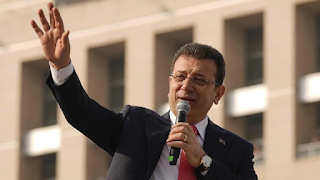
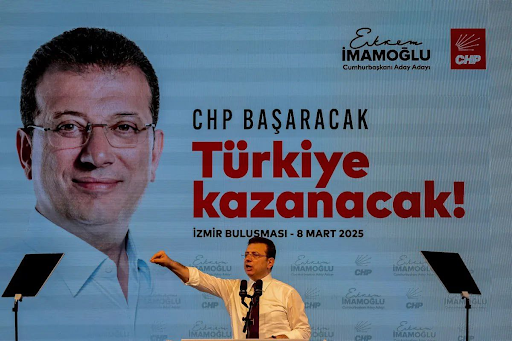
Ekrem Imamoglu

Imamoglu, a prominent opposition leader and a key challenger to President Recep Tayyip Erdoğan in the upcoming 2028 elections, was detained following an early morning raid on his home in Istanbul. His arrest coincided with the cancellation of his university degree by Istanbul University, an act perceived by many as part of a broader campaign to discredit him.

Alongside Imamoglu, Turkish authorities have issued arrest warrants for 105 other municipal officials linked to the Istanbul Metropolitan Municipality. The charges against them include corruption, fraud, and alleged ties to the Kurdistan Communities Union (KCK), an organization affiliated with the outlawed Kurdistan Workers' Party (PKK). Critics argue that these accusations are baseless and reflect the government’s increasing use of the judiciary as a tool to silence political opponents.

Government Restrictions and Crackdown on Freedoms

In response to the growing unrest, Turkish authorities have imposed stringent measures, including a four-day ban on protests and public gatherings in Istanbul. Internet access and social media platforms have been restricted, while metro and transportation routes leading to key protest sites, such as Taksim Square, have been shut down. Despite these efforts, demonstrations have persisted, with students and faculty from universities like Boğaziçi, Istanbul Technical University, and Yıldız Technical University joining the movement.

Impact on Turkey’s Economy and International Relations

The arrest of Imamoglu has triggered severe economic consequences, with the Turkish lira losing 12% of its value against the U.S. dollar. The Istanbul stock exchange also experienced a sharp decline, prompting a temporary suspension of trading. Economic analysts warn that these developments could further destabilize an already fragile economy and deter foreign investment.

Internationally, the European Union and other Western allies have voiced concern over Imamoglu’s detention. The Council of Europe issued a strong condemnation, describing the arrest as a move against the will of the Turkish people. European lawmakers and human rights organizations have called on Turkey to uphold democratic principles and the independence of its judiciary.


A Pattern of Political Repression?


Imamoglu’s arrest is the latest in a series of crackdowns against opposition figures, journalists, and activists. The recent imprisonment of Ümit Özdağ, leader of the nationalist Victory Party, further underscores Turkey’s deteriorating human rights record. Many fear that Erdoğan’s government is intensifying its efforts to suppress dissent and consolidate power ahead of the next elections.


An Uncertain Future for Turkey

The arrest of Ekrem Imamoglu marks a pivotal moment in Turkish politics. While the government maintains that the charges against him are legitimate, widespread public outrage and international condemnation suggest otherwise. With increasing economic turmoil, growing discontent, and the erosion of democratic norms, Turkey stands at a crossroads—one that could determine its future as either a democracy or an authoritarian state.

As the situation continues to unfold, all eyes remain on Turkey, watching whether its institutions will uphold justice or succumb further to political influence.

Saturday, May 04, 2024

Current Events: What should the world think when a majority of the people in a country support a Genocidal regime?

    Saturday, May 04, 2024   No comments

How should a nation whose majority support extremists be treated?

It depends.

If such a country is a non-Western nation-state, then that will make the entire country a terrorist country and genociding them by a “civilized” state will be acceptable.

If such a country is a “Western” nation-state, the will of the majority is sacred. That is what seems to be the implication of the extraordinary admission by head of the US State Department, Anthony Blinken.

US State Secretary Anthony Blinken said on 4 May that the genocidal actions undertaken by Israeli Prime Minister Benjamin Netanyahu in Gaza are "a reflection of where a large majority of Israelis are in this moment.”

“This is a complicated government. It’s a balancing act when you have a coalition. And if you’re just looking at the politics of it, that’s something that he has to factor in,” Blinken said at an event in Arizona.

"What’s important to understand is that much of what [Netanyahu is] doing is not simply a reflection of his politics or his policies; it’s actually a reflection of where a large majority of Israelis are in this moment,” the top US diplomat said.

Last month, a survey conducted by the Israel Democracy Institute revealed that three-quarters of Jewish Israelis support Netanyahu's much-anticipated ground invasion of Gaza’s southernmost city, Rafah, where about 1.3 million Palestinians are sheltering after being violently displaced from their homes.

Surveys conducted over recent months have shown a similar trend despite growing pressure to see Netanyahu removed from office.

In January, opinion polls showed that Israelis overwhelmingly agreed that “the best way” to obtain the release of captives held inside Gaza was “military pressure” against Hamas, falling in line with the same rhetoric Netanyahu and his war chief have been repeating daily since 7 October.

Polls have also shown a stern objection to delivering humanitarian aid to Gaza, even if the UN Relief and Works Agency (UNRWA) is “replaced.”

The problem of seeing a majority electing demonstrably authoritarian, supremacist bigots is the true test of the limits and flaws of democracy. In the past, when such processes happened in non-Western  nation-states, it is often blamed on corruption and processes being flawed. Turkey, for example, over 4 decades voted for a conservative party and a conservative leader. The West dismissed these elections, because they simply thought of all Turkish people as backward, incapable of embracing "true democracy". 

However, with rise of extremist politicians through democratic processes, the West is now facing a moment of truth about democracy. In the past, when democracy did not represent any problems at home, Western leaders used it abroad as a political instrument to intimidate and subjugate other nations.

Followers


Trending now...


ISR +


Frequently Used Labels and Topics

40 babies beheaded 77 + China A Week in Review Academic Integrity Adana Agreement afghanistan Africa African Union al-Azhar Algeria Aljazeera All Apartheid apostasy Arab League Arab nationalism Arab Spring Arabs in the West Armenia Arts and Cultures Arts and Entertainment Asia Assassinations Assimilation Azerbaijan Bangladesh Belarus Belt and Road Initiative Brazil BRI BRICS Brotherhood CAF Canada Capitalism Caroline Guenez Caspian Sea cCuba censorship Central Asia Charity Chechnya Children Rights China Christianity CIA Civil society Civil War climate colonialism communication communism con·science Conflict conscience Constitutionalism Contras Corruption Coups Covid19 Crimea Crimes against humanity D-8 Dearborn Debt Democracy Despotism Diplomacy discrimination Dissent Dmitry Medvedev Earthquakes Economics Economics and Finance Economy ECOWAS Education and Communication Egypt Elections energy Enlightenment environment equity Erdogan Europe Events Fatima FIFA FIFA World Cup FIFA World Cup Qatar 2020 Flour Massacre Food Football France Freedom freedom of speech G20 G7 Garden of Prosperity Gaza GCC GDP Genocide geopolitics Germany Global Security Global South Globalism globalization Greece Grozny Conference Hamas Health Hegemony Hezbollah hijab Hiroshima History and Civilizations Hormuz Human Rights Huquq Ibadiyya Ibn Khaldun ICC Ideas IGOs Immigration Imperialism In The News india Indonesia inequality inflation INSTC Instrumentalized Human Rights Intelligence Inter International Affairs International Law Iran IranDeal Iraq Iraq War ISIL Islam in America Islam in China Islam in Europe Islam in Russia Islam Today Islamic economics Islamic Jihad Islamic law Islamic Societies Islamism Islamophobia ISR MONTHLY ISR Weekly Bulletin ISR Weekly Review Bulletin Italy Japan Jordan Journalism Kenya Khamenei Kilicdaroglu Kurdistan Latin America Law and Society Lebanon Libya Majoritarianism Malaysia Mali mass killings Mauritania Media Media Bias Media Review Middle East migration Military Affairs Morocco Multipolar World Muslim Ban Muslim Women and Leadership Muslims Muslims in Europe Muslims in West Muslims Today NAM Narratives Nationalism NATO Natural Disasters Nelson Mandela NGOs Nicaragua Nicaragua Cuba Niger Nigeria Normalization North America North Korea Nuclear Deal Nuclear Technology Nuclear War Nusra October 7 Oman OPEC+ Opinion Polls Organisation of Islamic Cooperation - OIC Oslo Accords Pakistan Palestine Peace Philippines Philosophy poerty Poland police brutality Politics and Government Population Transfer Populism Poverty Prison Systems Propaganda Prophet Muhammad prosperity Protests Proxy Wars Public Health Putin Qatar Quran Rachel Corrie Racism Raisi Ramadan Ramadan War Regime Change religion and conflict Religion and Culture Religion and Politics religion and society Resistance Rights Rohingya Genocide Russia Salafism Sanctions Saudi Arabia Science and Technology SCO Sectarianism security Senegal Shahed sharia Sharia-compliant financial products Shia Silk Road Singapore Slavery Soccer socialism Southwest Asia and North Africa Sovereignty Space War Spain Sports Sports and Politics Starvation State Power State Terror Sudan Sunni Axis sunnism Supremacism SWANA Syria Ta-Nehisi Coates terrorism Thailand The Koreas Tourism Trade transportation Tunisia Turkey Turkiye U.S. Cruelty U.S. Foreign Policy UAE uk ukraine UN under the Rubble UNGA United States UNSC Uprisings Urban warfare US Foreign Policy US Veto USA Uyghur Venezuela Volga Bulgaria Wadee wahhabism War War and Peace War Crimes War on Iran Wealth and Power Wealth Building West Western Civilization Western Sahara WMDs Women women rights Work Workers World and Communities Xi Yemen Zionism

Search for old news

Find Articles by year, month hierarchy


AdSpace

_______________________________________________

Copyright © Islamic Societies Review. All rights reserved.