Showing posts with label Shia. Show all posts

Friday, July 17, 2026

Trump’s Push for Syria to Confront Hezbollah: A Recipe for Regional Chaos

    Friday, July 17, 2026   No comments

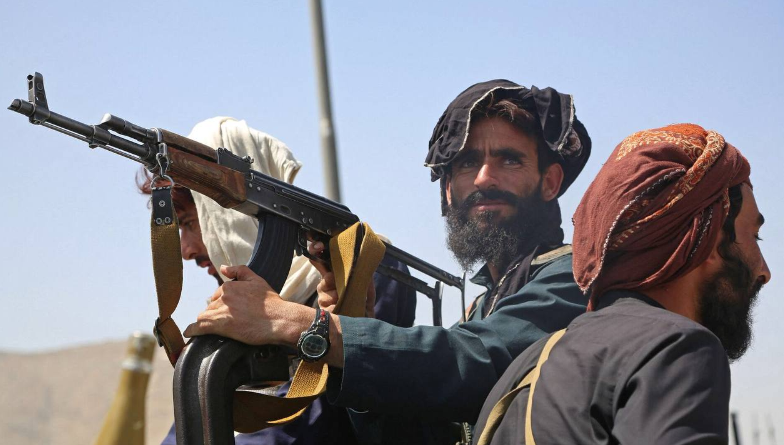
In a move that has sent shockwaves through an already fragile Middle East, U.S. President Donald Trump has reportedly been pressing the new Syrian leadership to take military action against Hezbollah in Lebanon. According to recent reports, Trump has suggested that the Islamist-led insurgents, led by a former al-qaeda leader, who overthrew Bashar al-Assad a year and a half ago are better positioned to root out the Iran-backed militant group than the Israeli army. While the White House may view this as a convenient offloading of regional burdens, the reality is starkly different: greenlighting Syrian President Ahmad al-Sharaa (formerly known as Julani) to “take care of” Hezbollah will create a vastly larger and more intractable problem for the region than it could ever solve.

The Iraqi Warning: A Line in the Sand

The profound dangers of this proposal have not gone unnoticed in Baghdad. The Iraqi government has recently issued a stark “advice” to Sharaa, explicitly warning Damascus against any involvement in the Lebanese file. According to regional sources, the Iraqi message carried a clear caveat: any Syrian encroachment into Lebanon will have direct, severe repercussions on Syria itself. Baghdad made it unequivocally clear that if Lebanese Shias or Hezbollah face any danger originating from Syrian territory, Iraqi resistance factions will not stand idly by. “Every Syrian step toward Lebanon may be followed by an Iraqi step toward Syria,” the warning read.

This is not an empty threat. It is rooted in recent, painful history. Syria is currently ruled by unelected rebel factions that have a documented track record of threatening and killing Iraqis. It was not so long ago that it took the massive, desperate mobilization of Iraqi volunteer forces—the Hashd al-Shaabi (Popular Mobilization Forces)—to counter the very same Islamist ideologies that now hold power in Damascus. Crucially, this mobilization was authorized by Grand Ayatollah Ali al-Sistani and other prominent religious leaders to defend Iraq and protect Shia communities from existential threats. The memory of that defense remains vivid and potent.

The Disarmament Paradox

If the United States and Israel genuinely desire the disarmament of Hezbollah and the Iraqi Hashd forces, suggesting that a Syrian regime composed of former rebels will intervene in Lebanon to crush Shias is profoundly counterproductive. Rather than coercing these groups into laying down their arms, such a scenario validates their core narrative: that they are under imminent threat of annihilation.

For Hezbollah, a Syrian-led offensive would be framed as an existential war, guaranteeing fierce resistance. For the Hashd al-Shaabi in Iraq, the logic is equally clear. Faced with the prospect of Syrian rebels attacking Shias in Lebanon, Iraqi paramilitary forces will now insist, with heightened public and religious backing, that they must remain fully armed, mobilized, and ready to defend their brethren across the border. Any Western or Israeli hope of demobilizing these forces will instantly evaporate, replaced by a hardened resolve for self-defense.

Unleashing Internal Fragility in Iraq

The ripple effects of this destabilizing rhetoric extend far beyond the Hashd. Trump’s proposal inadvertently sheds harsh light on the fragile monopoly on force held by the central Iraqi government. If the state cannot guarantee the security of Shia communities regionally, it emboldens other armed groups operating outside Baghdad’s command.

This includes the Peshmerga and various other Kurdish armed factions. Whether these groups are anti-Turkey or anti-Iran, their entrenched bases in Iraq represent a complex web of localized power. A regional escalation triggered by Syrian intervention in Lebanon would provide these groups with both the pretext and the opportunity to expand their own military postures, further fracturing Iraq’s internal security and complicating any efforts at national cohesion.

A Pattern of Impulsive Diplomacy

Trump’s claim that he will greenlight Sharaa to handle Hezbollah fits a troubling trend in his on-the-spot, ill-conceived decision-making. Historically, such impulsive geopolitical gambits have generated cascading problems that their architects are utterly unequipped to solve. Treating the Middle East as a chessboard where rebel factions can be casually redirected to fight proxy wars ignores the deep-seated sectarian, historical, and political realities of the region.

Even Syrian interim president Sharaa has reportedly pushed back against this idea, telling Iraqi officials that he refused the U.S. request and that Damascus is not interested in reopening old fronts or returning to past policies of regional intervention. His priority, he stressed, is internal stability. Still, the mere amplification of this idea by the U.S. president is enough to destabilize the delicate balance of power.

A Region Governed by Weakness and Trauma

The Iraqi government’s stern warning to Syrian rulers serves as a microcosm of how extraordinarily complex the Middle East has become. It is a region now characterized by weak central regimes and territories ruled by former rebels, all navigating a post-Gaza war landscape that has displayed a total disregard for human dignity and international law. The trauma of recent conflicts has left communities hyper-vigilant and deeply distrustful of external meddling.

True regional stability cannot be achieved by pitting one fragile, rebel-led state against another, nor by encouraging sectarian proxy wars. If the international community wishes to see the disarmament of militias and the stabilization of the Levant, it must pursue inclusive diplomacy, strengthen legitimate state institutions, and cease floating dangerous, half-baked military alternatives. Otherwise, Trump’s latest suggestion will not be a solution, but the spark that ignites the next, even more devastating, regional conflagration.

Monday, June 29, 2026

The Israel-Turkey Rift and the War on Iran Are Exposing the Limits of Power Politics

    Monday, June 29, 2026   No comments

 Azerbaijan's Strongman Gamble

By analyzing the geopolitical tightrope Baku walks between Ankara and Tel Aviv, we see a cautionary tale about the fragility of authoritarian alliances built on proximity to power

The Architecture of Autocratic Power

President Ilham Aliyev has ruled Azerbaijan with an iron fist since 2003, when he succeeded his father Heydar Aliyev in a transfer of power that transformed the country into a hereditary autocracy. His governing philosophy rests on a simple premise: project strength through proximity to powerful patrons. Oil wealth has been the foundation—funding military modernization, suppressing dissent, and financing what critics call "caviar diplomacy," the systematic use of financial inducements to influence foreign politicians, journalists, and lobbying groups.

The domestic architecture of this power is totalizing. Constitutional amendments have abolished presidential term limits, allowing Aliyev to extend his rule indefinitely. In 2017, he appointed his wife Mehriban as vice president, cementing the dynastic character of the regime. Media restrictions, crackdowns on political opposition, and control over civil society have eliminated meaningful domestic challenges to his authority.

Yet this strongman model, so effective at maintaining domestic control, has created a foreign policy dependency that is now unraveling. Azerbaijan's strategy of balancing between competing regional powers—maintaining close ties with Israel, Turkey, Russia, and the West simultaneously—assumed that these powers would remain stable partners. The 2026 US War On Iran and the escalating Israel-Turkey rivalry have shattered that assumption.

The Israel-Turkey Rupture: Azerbaijan's Impossible Choice

For years, Azerbaijan positioned itself as the rare Muslim-majority country with deep strategic ties to Israel while maintaining its fraternal bond with Turkey. The 2021 Shusha Declaration formalized a mutual defense pact between Baku and Ankara, committing both countries to support each other "using all possibilities" in case of military attack. This alliance was instrumental in Azerbaijan's 2020 victory in Nagorno-Karabakh, with Turkish drones and Israeli weapons combining to devastating effect.

But the geopolitical landscape has shifted dramatically. By early 2026, what began as diplomatic friction between Israel and Turkey has hardened into what analysts now describe as a "strategic rivalry" with direct consequences for regional stability. The Gaza conflict, competition in Syria, disputes over Eastern Mediterranean energy resources, and Israel's recognition of Somaliland (challenging Turkey's influence in the Horn of Africa) have created multiple flashpoints.

Azerbaijan has attempted to play mediator. Hikmet Haciyev, assistant to President Aliyev, revealed that Baku has been conducting "silent diplomacy" to de-escalate tensions, even facilitating a military hotline between Turkish and Israeli forces to prevent accidental clashes over Syria. But mediation requires credibility with both sides, and Azerbaijan's credibility with Turkey is now in question.

The breaking point came on June 28, 2026, when the Israeli cabinet unanimously approved Foreign Minister Gideon Saar's proposal to formally recognize the Armenian genocide. For Azerbaijan, this was an existential provocation. The country has built its national identity in part on denying the events of 1915, maintaining that the deaths were part of a broader wartime tragedy affecting both Armenians and Azerbaijanis. The Azerbaijani foreign ministry issued a rare public rebuke, calling the move an "unacceptable distortion of historical facts without sound legal or scholarly basis" and warning that it "deepens regional divisions and undermines efforts to achieve lasting peace."

This diplomatic rupture exposes the fundamental contradiction in Azerbaijan's foreign policy. Baku cannot maintain its strategic partnership with Israel while Israel takes positions that directly threaten Azerbaijan's relationship with Turkey—its guarantor of security against Armenia and its ethnic kin. Turkey dismissed the Israeli decision as a "political distraction" aimed at diverting attention from the International Criminal Court's arrest warrants against Israeli officials, but the damage to Azerbaijan-Israel relations may be lasting.

The Iran War: Geography as Vulnerability

The February 2026 US-Israeli military strikes on Iran laid bare another vulnerability in Azerbaijan's power projection strategy: geography. Azerbaijan shares a long border with Iran, and the two countries have complex ties. Ethnic Azerbaijanis constitute a significant minority in Iran—some estimate they form the largest ethnic group in the country—and hold positions of influence in the clerical establishment, military, and bureaucracy.

Initially, Azerbaijan attempted to maintain neutrality. President Aliyev visited Iran's embassy in Baku on March 4 to offer condolences following the US-Israeli assassination of Iran's Supreme Leader Ali Khamenei. But neutrality proved impossible. On March 5, Iranian drones struck Azerbaijan's Nakhchivan exclave, with Tehran implying that the territory had been used by Israeli and American forces. Azerbaijan closed its southern airspace for 12 hours, shut border crossings with Iran, and Aliyev threatened military retaliation.

Reports subsequently emerged that Israel had used Azerbaijani territory as a base for operations during the Iran war. Azerbaijan's energy minister confirmed what many suspected: "We do not refute those allegations that we have a very, very deep security partnership with Israel," including intelligence sharing, military cooperation, and weapons supply.

This proximity to conflict has transformed Azerbaijan's greatest asset—its strategic location connecting the Caspian to the Middle East—into a liability. The country now faces what analysts call "contagion risk" from the Iran war, with fears that Iranian proxies or sympathetic elements could launch attacks against Israeli interests on Azerbaijani soil. Azerbaijan's security forces have already arrested Iranian agents planning such attacks.

The Identity Paradox: Ethnicity, Religion, and the Autocrat's Dilemma

Beneath the geopolitical maneuvering lies a profound demographic reality that complicates Azerbaijan’s foreign policy: the country’s population is overwhelmingly Shia Muslim, even as it is ethnically and linguistically Turkic. This dual identity creates competing visions for national solidarity. The Turkic connection naturally pulls Baku toward Ankara, fostering a secular, pan-Turkic nationalism that the Aliyev regime has championed. Conversely, the Shia religious affinity creates a deep, underlying cultural and spiritual gravity toward Tehran.

This internal fault line is being exacerbated by the very conflicts Aliyev seeks to navigate. The shared outrage over Israel's military campaigns—first in Gaza and now in the broader regional war—is acting as a powerful unifying catalyst across the Muslim world. Paradoxically, the "Israel threat" is bridging traditional sectarian divides, drawing the Israeli-designated "Sunni axis" (anchored by Turkey) closer to the "Shia axis" (led by Iran).

This convergence poses a direct internal threat to the autocrat in Baku. Aliyev has carefully managed these identity dynamics, strictly enforcing state secularism to suppress political Islam and maintain absolute control. However, if the escalating tensions with Israel push Turkey into a strategic alignment with Iran, the religious dimension of Azerbaijani identity will inevitably be empowered. As Ankara moves closer to Tehran, the Azerbaijani public—already connected to Iran through the shared faith of Shiism—will naturally drift closer to Tehran in their geopolitical sympathies. This shift threatens to undermine the state's carefully curated secular, Turkic-nationalist narrative, empowering domestic religious factions that the regime has long kept marginalized. For Aliyev, the ultimate nightmare is a regional realignment where his primary patron, Turkey, aligns with his primary security concern, Iran, leaving his secular autocracy caught in the crossfire of a resurgent religious solidarity.

The Limits of American and Israeli Power

Azerbaijan's bet on proximity to power assumed that American and Israeli influence in the region would remain ascendant. The 2026 Iran war has demonstrated the limits of that power.

Military analysts have noted that air power—the primary tool of both the US and Israeli campaigns—has "significant limitations in influencing the outcome of a war." Historical precedent shows that aerial bombardment often fails to achieve political objectives. The US bombing of North Vietnam did not break Hanoi's will; NATO's 1999 campaign against Serbia rallied support for Slobodan Milošević rather than undermining him. In Iran, the initial strikes may have disrupted nuclear facilities, but they also "rally segments of the population to the government that would otherwise oppose it."

The broader lesson is that military power cannot easily translate into political outcomes. The US has sought to limit its involvement to avoid "another Iraq-like quagmire," but the stated objectives—regime change and permanent elimination of Iran's nuclear capability—may require precisely the kind of ground commitment Washington wishes to avoid. Israel's Arrow missile interceptors neared depletion during Iran's response, revealing vulnerabilities in even advanced military systems.

For Azerbaijan, this means its powerful patrons are showing strain. The US is increasingly focused on domestic politics and great power competition with China; Israel is fighting multiple conflicts and facing growing international isolation. The "uncontested military hegemon" status Israel seeks to maintain in the Middle East is being challenged not just by Iran but by Turkey's reassertion of its own regional role.

The Risk of Isolation

Azerbaijan now faces a convergence of pressures that threaten to isolate it. The "3+3" regional format—bringing together the three Caucasus states (Azerbaijan, Armenia, Georgia) with Turkey, Iran, and Russia—represents a pushback against permanent Western military presence in the region. Iran and Turkey, despite their rivalries, remain wary of US commercial or military entrenchment on their borders.

Economically, Azerbaijan faces structural challenges. Oil production fell by approximately 5% in 2025, and the IMF projects a further narrowing of the current account surplus in 2026. The country is pursuing "green energy" and transit partnerships to compensate, but rapid diversification has not materialized. As the economic advantages from the Karabakh wars diminish, domestic social unrest becomes more likely.

Diplomatically, Azerbaijan's multivector approach—maintaining ties with competing powers simultaneously—is being tested to the breaking point. The country cannot simultaneously:

  1. Maintain its strategic partnership with Israel while Israel recognizes the Armenian genocide
  2. Honor its mutual defense pact with Turkey while Turkey and Israel become strategic rivals
  3. Manage its border with Iran while hosting Israeli military operations
  4. Balance relations with Russia while pursuing Western energy partnerships

Each of these contradictions creates friction. The recent rebuke of Israel over genocide recognition signals that Baku may be prioritizing its Turkish relationship—but this comes at the cost of the intelligence and military cooperation that made Azerbaijan's 2020 victory possible.

The Philosophy of Strength Through Proximity

Azerbaijan's governing philosophy under Aliyev has always been transactional: align with the strongest patrons, extract maximum benefit, and use those resources to consolidate domestic power. This approach worked when the international order was more stable, when US hegemony seemed permanent, and when regional rivalries could be managed through careful balancing.

But the fast-changing world of 2026—catalyzed by the Iran war, the Israel-Turkey rupture, and the broader erosion of American influence—has exposed the limits of this philosophy. Strength through proximity to power requires that power remain stable and effective. When patrons are overextended, when alliances fracture, and when geography becomes a liability rather than an asset, the strongman's gamble begins to look like a trap.

Azerbaijan now risks the very isolation it has spent decades avoiding. The question is whether Aliyev's regime can adapt to a world where the old calculations no longer apply—or whether the architecture of autocratic power, so carefully constructed over two decades, will prove as fragile as the alliances it was built upon.

The coming months will reveal whether Baku can navigate this transition, or whether the strongman's bet on proximity to power will leave Azerbaijan stranded between patrons who can no longer protect it and neighbors who no longer trust it.


Saturday, May 09, 2026

Beyond the News: Understanding Mojtaba Khamenei's Silence Through the Lens of Shia Religious Tradition

    Saturday, May 09, 2026   No comments

 In the weeks following the appointment of Mojtaba Khamenei as Iran's new Supreme Leader, a steady drumbeat of speculation has echoed through Western newsrooms and diplomatic corridors. Why has he not appeared on television? Why are there no public speeches, no filmed addresses to the nation? For many observers accustomed to leaders who cultivate visibility as a form of authority, the silence reads as a signal of crisis—perhaps a serious injury, perhaps heightened security concerns, perhaps political instability. This interpretation overlooks a fundamental aspect of Shia religious culture: that for many of its most senior clerics, reclusion is not a symptom of weakness, but a deliberate expression of spiritual authority.


The news that sparked this international attention is itself significant. According to Iranian officials, Mojtaba Khamenei sustained bruises to his back and knee during a February attack targeting the compound of his late father, Ali Khamenei. Officials have since confirmed his recovery and emphasized that he remains in full health, dismissing rumors of more severe injuries. They have also noted that adversaries actively seek any image, voice recording, or document related to the new leader that could be exploited. While these details matter, they have largely overshadowed a deeper question: what does public silence mean within the framework of Shia religious leadership?

To understand Mojtaba Khamenei's current approach, it helps to look beyond the political theater of the Islamic Republic and toward the broader traditions of Twelver Shia Islam. For centuries, many of its most revered religious authorities have consciously avoided the spotlight. They issue guidance through written jurisprudence, deliver sermons through trusted representatives, and receive visitors only on rare, carefully managed occasions. Public visibility is not a measure of their influence; indeed, for many, discretion reinforces their spiritual stature.

Nowhere is this tradition more clearly embodied than in the figure of Grand Ayatollah Ali al-Sistani, based in Najaf, Iraq. Widely regarded as one of the most influential Shia clerics in the world, Sistani has spent decades maintaining an exceptionally low public profile. He does not deliver Friday sermons in person; instead, his messages are read aloud by appointed representatives. He rarely grants interviews, and when he does meet with foreign dignitaries—as he did with Pope Francis in 2021—the encounters are private, unfilmed, and released only in summary form. His authority flows not from camera presence but from scholarly reputation, moral consistency, and the trust of millions of followers who look to his written rulings for guidance.

This stands in contrast to the public style of Ali Khamenei, whose role as Iran's Supreme Leader required a different mode of engagement. The position of Velayat-e Faqih—Guardianship of the Jurist—is uniquely Iranian, blending religious authority with direct political leadership. In that context, regular televised addresses, public sermons, and visible diplomatic engagement became part of the job. Ali Khamenei's accessibility was not merely personal preference; it was institutional expectation. Still, Khamenei rarely led Friday prayers. Instead, his representatives did. Even within Iran, many senior clerics outside the formal structures of the state have preferred the quieter path of scholarly retreat.

It is against this backdrop that Mojtaba Khamenei's current silence may be more meaningfully understood. Those who know him describe a man who has long avoided the camera, preferring to work behind the scenes and communicate through trusted intermediaries. If he chooses to follow the model of figures like Sistani—releasing statements through representatives, limiting public appearances, and focusing on written guidance over televised performance—it would represent not a break from tradition, but a return to it. Such an approach would emphasize the spiritual and scholarly dimensions of religious leadership, distinguishing them from the performative demands of modern political communication.

Western media and political analysts, however, often interpret silence through a different lens. Accustomed to leaders who use media visibility as a tool of legitimacy, they may read absence as vulnerability. This is not just a difference in style; it reflects a deeper gap in cultural understanding. In secular political frameworks, public presence is often equated with control, transparency, and strength. In many Shia religious traditions, however, humility, scholarly focus, and insulation from political spectacle are seen as virtues that protect the integrity of religious authority.

This is not to suggest that security concerns or health considerations are irrelevant in Mojtaba Khamenei's case. The attack that injured him was real, and the geopolitical tensions surrounding Iran's leadership are undeniable. But to reduce his public silence solely to these factors is to miss a richer, more nuanced explanation rooted in religious practice and cultural expectation. Just as one would not judge a monk's devotion by his Twitter following, one should not assume a Shia cleric's influence by his television ratings.

For observers seeking to understand Iran's evolving leadership, the lesson is not to ignore the facts of injury or security, but to place them within a broader context. Mojtaba Khamenei may yet choose to address the public directly; he may continue to communicate through representatives; he may adopt a hybrid approach that blends tradition with the demands of modern governance. Whatever path he takes, recognizing the Shia clerical tradition of reclusion allows for a more informed, less speculative interpretation of his choices.

In an age where visibility is often mistaken for legitimacy, the quiet authority of a reclusive religious leader can be easy to misunderstand. However, for millions of Shia Muslims, guidance does not require a camera, it requires wisdom, consistency, and moral clarity. Whether Mojtaba Khamenei speaks from a podium or through a written statement, his influence will ultimately be measured not by how often he appears, but by the substance of what he offers and the trust he inspires. Understanding that distinction is essential not only for accurate journalism, but for meaningful engagement with one of the world's most complex and consequential religious-political traditions.


Monday, November 04, 2024

Sistani to the UN representative: We regret the international community's inability to stop the Israeli aggression on Gaza and Lebanon

    Monday, November 04, 2024   No comments

The highest religious authority in Iraq, Sayyid Ali al-Sistani, stressed today, Monday, the prevention of foreign interventions in all its forms, while expressing his regret for the inability of the international community and its institutions to impose effective solutions to stop the Israeli aggression on the Gaza Strip and Lebanon.

Sayyid al-Sistani received the representative of the Secretary-General of the United Nations and head of its mission in Iraq (UNAMI) Mohammed al-Hassan and his accompanying delegation. In a statement issued by Sayyid al-Sistani's office, he said that "Sayyid provided a brief explanation of the tasks of the international mission and the role it seeks to play in the coming period. In return, he welcomed the presence of the United Nations in Iraq and wished its mission success in carrying out its tasks."

Sayyid al-Sistani added that "Iraqis - especially the conscious elites - should learn from the experiences they have gone through and do their utmost to overcome their failures and work hard to achieve a better future for their country in which everyone enjoys security, stability, progress and prosperity."

He also stressed that "this cannot be achieved without preparing scientific and practical plans to manage the country based on the principle of competence and integrity in assuming positions of responsibility, preventing foreign interventions in all their aspects, and enforcing the rule of law."

Regarding the volatile situations in our region, Mr. Sistani expressed his "deep sorrow over the ongoing tragedy in Lebanon and Gaza and his deep regret over the inability of the international community and its institutions to impose effective solutions to stop it or at the very least to neutralize civilians from the tragedies of the fierce aggression practiced by the Israeli entity."

For his part, the United Nations representative in Iraq, Mohammed Al-Hassan, confirmed today, Monday, that any infringement on the status of the supreme religious authority represented by Sayyid Ali al-Sistani cannot be accepted.

Al-Hassan said during a press conference following his meeting with Sayyid al-Sistani in Najaf, Iraq: "I was honored to meet His Eminence Sayyid al-Sistani, and I listened to his wisdom and visions for the region and Iraq."

He added, "You know the status of the Sayyid in the Islamic and international worlds, and I am happy with this meeting, and I agreed with His Eminence to work together to enhance the status of Iraq."

Al-Hassan also noted that "Sayyid al-Sistani asked him to implement priorities in the interests of Iraq," expecting that "Iraq will strengthen its relations with its neighbors."

He also stated that "the United Nations is committed to supporting Iraq's priorities and does not interfere except in consultation."

It is noteworthy that Israeli sources published, last month, pictures of leaders Israel assassinated or plans to assassinate and included Sayyid Ali al-Sistani in the list, which angered the Iraqi government.


Sunday, May 28, 2023

The "Taliban": "we destroyed 18 Iranian border facilities in total"

    Sunday, May 28, 2023   No comments

Taliban is stil driven by the same supremacist ideology that founded it; that appears to be the conclusion one can draw from the statements of its leaders about the recent clashes at the border with Iran.


A statement issued by the Taliban's Social Communications Department read: "The Iranian Revolutionary Guards carried out terrorist attacks from its huge border posts. Iran has not put up a strong resistance so far. It seems that its army is weak and feminine."

For his part, the leader of the "Taliban" movement, Abdul Hamid Khorasani, stated in a video speech: "Do not test our strength. You are behind the scenes with the Westerners. We are true Muslims. If the sheikhs allow us, we will seize Tehran."


Tuesday, November 15, 2022

The Sunni-Shia Cold War: The Origins and Evolution of the Saudi Hegomony

    Tuesday, November 15, 2022   No comments

There has been a Sunni-Shia cold war going on since 1979, but hardly anyone talked about it in those terms. That is because, in part, the rulers of Saudi Arabia chose to conduct this cold war through proxies or from the shadows. Then, Wikileaks ended the Saudi rulers' abilities to project power and influence, especially as a Sunni moderate power, in secret and the rise of the young, ambitious prince, MBS as he is known, to power while his father is still the nominal figurehead allowed them to deflect blame for any and all missteps. However, during a long tv interview in 2017, MBS revealed all the cards: He described his clash with Iran as an existential one because he sees Iranian leaders and Shia, in general, as irrational actors who hold on to messianic belief about the coming of a savior--which makes them unworthy of dialogue and diplomacy.

Wikileaks' documents described the Saudi war on Iran from behind the scene succinctly and clearly. The Saudi leaders, according to the diplomatic cables, while publicly expressing dialogue with Iran, pushed US and European leaders to go after the "head of the snake", instead of fighting Iran's proxies. The framed it as a need to liberate Iran, as Biden said recently, they wanted the West to unleash a direct war on Iran, not rely just on sanctions. Those revelations forced Saudi and Emariti leaders to emerge from the shadows and attack Iran directly--but not militarily of course. They focused instead on a strategy that aims to unravel the entire political system of Iran from within. 

The new "leak" of documents from UAE shows how the strategy was developed and executed. The Lebanese newspaper, Alakhbar, produced a dossier about these developments. Other researchers and observers have compiled more evidence about the Saudi investment in media assets to realize their goals: the paralysis and destruction of the Iranian system of governance through internal Iranian actors.

_______________

From Alakhbar Dossier about Saudi-UAE Leaks: When Mohammed bin Salman stated the above sentence, in answer to Dawood Al-Sheryan's question about dialogue with Iran, he was announcing what was not usual in Saudi foreign policy, in what was termed "transferring the battle to the Iranian interior." Many at the time, when interpreting what Ibn Salman said, said that Riyadh would resort to what it used to do in terms of employing ISIS cells and the operations that separatist movements in Sistan-Baluchestan had long carried out in the Iranian depths. However, in the documents obtained by Al-Akhbar, it becomes clear that Ibn Salman meant targeting the Iranian interior, through a plan to influence the Iranian youth group, in parallel with the intensification of the discourse of demonizing Iran, directed at the Arab and Islamic audiences.


“We will not wait for the battle to be in Saudi Arabia, but rather we will work so that the battle for them is in Iran and not in Saudi Arabia.”
Deputy Crown Prince of Saudi Arabia
Mohammed bin Salman

3 May 2017

On the morning of January 2, 2016, the world woke up to the news of the execution of Sheikh Nimr Baqir al-Nimr and a group of al-Qatifi youth, along with a group of Saudi officials and cadres of al-Qaeda. Angry reactions continued inside and outside Salman’s kingdom, and the night of that day closed. On the scene of the burning of the buildings of the Saudi diplomatic mission in Iran by angry Iranian youths.


Four days later, on January 6, the Emirati National Media Council was presenting to representatives of Saudi Arabia and Bahrain a proposed plan that he called the “media strategy for dealing with the Iranian file”, which developed in subsequent years, in coordination with the Americans, to become the “plan to undermine Iran.” From the inside.”

The proposal for the media strategy put forward by the Minister of State and Chairman of the Board of Directors of the National Media Council in the UAE, Sultan Al Jaber, stated that the goal behind it is to “build a public opinion hostile to Iranian policies from the internal and external public,” and that the strategy “centers on the political dimension and away from the sectarian discourse that It may weaken the public media discourse if it is relied upon. And most importantly, “the results of the strategy should be achieved after years.” In the initial proposal, as document No. 1 shows, the target audience is regional public opinion, Gulf public opinion, domestic public opinion inside Iran (the Iranian people and non-Persian Iranian minorities in particular), and the Iranian opposition abroad and at home. It is noteworthy in the “implementation partners” paragraph that the Emiratis mentioned the “Organization of Islamic Cooperation” as a partner in implementing the strategy, along with the official Gulf entities, the League of Arab States, and Iranian think tanks and opposition, noting that the Islamic Republic of Iran is an original member of the aforementioned organization whose decision-making is dominated by Saudi Arabia and harnessed. interests since its inception.

Read full dossier (Ar)...


Submit your story (pitch an article)

Name

Email *

Message *


Trending Today...


ISR +


Frequently Used Labels and Topics

40 babies beheaded 77 + China A Week in Review Academic Integrity Adana Agreement afghanistan Africa African Union al-Azhar Algeria Aljazeera All Apartheid apostasy Arab League Arab nationalism Arab Spring Arabs in the West Armenia Arts and Cultures Arts and Entertainment Asia Assassinations Assimilation Azerbaijan Bangladesh Belarus Belt and Road Initiative Brazil BRI BRICS Brotherhood CAF Canada Capitalism Caroline Guenez Caspian Sea cCuba censorship Central Asia Charity Chechnya Children Rights China Christianity CIA Civil society Civil War climate colonialism communication communism con·science Conflict conscience Constitutionalism Contras Corruption Coups Covid19 Crimea Crimes against humanity D-8 Dearborn Debt Democracy Despotism Diplomacy discrimination Dissent Dmitry Medvedev Earthquakes Economics Economics and Finance Economy ECOWAS Education and Communication Egypt Elections energy Enlightenment environment equity Erdogan ethics Europe Events Fatima FIFA FIFA World Cup FIFA World Cup Qatar 2020 Flour Massacre Food Football France Freedom freedom of speech G20 G7 Garden of Prosperity Gaza GCC GDP Genocide geopolitics Germany Global Security Global South Globalism globalization Greece Grozny Conference Hamas Health Hegemony Hezbollah hijab Hiroshima History and Civilizations Hormuz Human Rights Huquq Ibadiyya Ibn Khaldun ICC Ideas IGOs Immigration Imperialism In The News india Indonesia inequality inflation INSTC Instrumentalized Human Rights Intelligence Inter International Affairs International Law Iran IranDeal Iraq Iraq War ISIL Islam in America Islam in China Islam in Europe Islam in Russia Islam Today Islamic economics Islamic Jihad Islamic law Islamic Societies Islamism Islamophobia ISR MONTHLY ISR Weekly Bulletin ISR Weekly Review Bulletin Italy Japan Jordan Journalism Kenya Khamenei Kilicdaroglu Kurdistan Latin America Law and Society Lebanon Libya Majoritarianism Malaysia Mali mass killings Mauritania Media Media Bias Media Review Middle East migration Military Affairs Morocco Multipolar World Muslim Ban Muslim Women and Leadership Muslims Muslims in Europe Muslims in West Muslims Today NAM Narratives Nationalism NATO Natural Disasters Nelson Mandela NGOs Nicaragua Nicaragua Cuba Niger Nigeria Normalization North America North Korea Nuclear Deal Nuclear Technology Nuclear War Nusra October 7 Oman OPEC+ Opinion Polls Organisation of Islamic Cooperation - OIC Oslo Accords Pakistan Palestine Peace Philippines Philosophy poerty Poland police brutality Politics and Government Population Transfer Populism Poverty Prison Systems Propaganda Prophet Muhammad prosperity Protests Proxy Wars Public Health Putin Qatar Quran Rachel Corrie Racism Raisi Ramadan Ramadan War Regime Change religion and conflict Religion and Culture Religion and Politics religion and society Resistance Rights Rohingya Genocide rule of law Russia Salafism Sanctions Saudi Arabia Science and Technology SCO Sectarianism security Senegal Shahed sharia Sharia-compliant financial products Shia Silk Road Singapore Sistani Slavery Soccer socialism Southwest Asia and North Africa Sovereignty Space War Spain Sports Sports and Politics Starvation State Power State Terror Sudan Sunni Axis sunnism Supremacism SWANA Syria Ta-Nehisi Coates terrorism Thailand The Koreas Tourism Trade transportation Tunisia Turkey Turkiye U.S. Cruelty U.S. Foreign Policy UAE uk ukraine UN under the Rubble UNGA United States UNSC Uprisings Urban warfare US Foreign Policy US Veto US-Iran MoU USA Uyghur Venezuela Volga Bulgaria Wadee wahhabism War War and Peace War Crimes War on Iran Wealth and Power Wealth Building West Western Civilization Western Sahara WMDs Women women rights Work Workers World and Communities Xi Yemen Zionism

Search for old news

Find Articles by year, month hierarchy


WEEKLY AdSpace 3

_______________________________________________

Copyright © Islamic Societies Review. All rights reserved.