Showing posts with label Iraq. Show all posts

Monday, April 27, 2026

Ali Al‑Zaidi’s Nomination and Iraq’s Fragile Path to Regional Stability

    Monday, April 27, 2026   No comments


In a development that could reshape Iraq’s political trajectory and ease mounting regional tensions, the Coordination Framework, Iraq’s dominant Shiite parliamentary bloc, has nominated Ali Al‑Zaidi as its consensus candidate for prime minister. The announcement came after weeks of intense internal negotiations and marked a potential turning point in a political crisis that had paralyzed Baghdad since the November elections. The selection of Al‑Zaidi was neither straightforward nor predetermined. The Coordination Framework’s deliberations unfolded in three distinct phases. Initially, former Prime Minister Nouri al‑Maliki appeared poised for a comeback, securing support from ten of the framework’s twelve key members after incumbent Prime Minister Mohammed Shia al‑Sudani stepped aside. This momentum stalled, however, when U.S. President Donald Trump publicly warned that Washington would no longer help Iraq if Maliki returned to power, citing what he called Maliki’s insane policies and ideologies. With Maliki’s path blocked, attention shifted to Bassem al‑Badri, who reportedly secured seven signatures within the framework, but this support proved insufficient to overcome internal divisions, turning his candidacy into a proxy battle between competing factions. In marathon sessions hosted by Falih al‑Fayyad, head of the Popular Mobilization Forces, negotiators finally converged on Al‑Zaidi, a figure described as a technocrat with economic expertise who could bridge ideological divides without granting decisive victory to any single camp. President Nizar Amedi formally tasked Al‑Zaidi with forming a new government, granting him thirty days under Article 76 of Iraq’s constitution to assemble a cabinet and secure parliamentary confidence.

Ali Shakir Mahmoud Al‑Zaidi was born in Baghdad in 1978 and brings a profile distinct from Iraq’s traditional political class. He holds a PhD in public law with a specialization in constitutional law, as well as bachelor’s and master’s degrees in finance and banking. He has served as chairman of Al‑Janoob Islamic Bank and CEO of Dijlah TV. Notably, Al‑Janoob Islamic Bank was among several Iraqi financial institutions sanctioned by the U.S. Treasury in 2024 over allegations of facilitating dollar transfers to Iran, a detail that underscores the delicate balancing act Al‑Zaidi must now perform. In his first statement as prime minister‑designate, Al‑Zaidi emphasized continuity and pragmatism, declaring that the upcoming government program would complement previous efforts to improve service delivery and social conditions, while pledging to position Iraq as a balanced country regionally and internationally.

Al‑Zaidi’s nomination arrives at a moment of extraordinary regional volatility. Iraq finds itself caught in the crossfire of an escalating U.S.‑Iran confrontation, with Iranian‑backed militias launching hundreds of attacks on American interests since the outbreak of wider conflict in February 2026. The U.S. Embassy in Baghdad has repeatedly warned of imminent threats from these groups, while Tehran insists that Iraq’s leadership choices must remain purely based on the decision of Iraqis. On the potential stabilizing side, Al‑Zaidi’s economic background may appeal to international donors and investors seeking stability over ideology. His emergence as a compromise candidate suggests broad, if reluctant, acceptance across Shiite factions, a prerequisite for governing effectively. By selecting a figure less overtly aligned with Tehran than Maliki, the Coordination Framework may be signaling openness to renewed dialogue with Washington. Yet persistent risks remain. Al‑Zaidi’s association with a sanctioned bank raises questions about whether the Trump administration will extend full cooperation to his government. The continued political weight of Iran‑aligned armed groups within the framework could constrain Al‑Zaidi’s ability to pursue independent security policies. And with the Coordination Framework controlling roughly 162 to 185 of parliament’s 329 seats, Al‑Zaidi will need support from Kurdish and Sunni blocs to pass legislation and approve his cabinet.

Al‑Zaidi’s immediate challenges are formidable. He must assemble a diverse and competent team capable of addressing Iraq’s chronic service deficits, corruption, and unemployment. With oil revenues under pressure from regional conflict, prudent fiscal management will be critical. Balancing relations with both U.S. forces and Iran‑aligned militias requires diplomatic finesse of the highest order. Moreover, many Iraqis demand changes to the political system that has produced repeated cycles of deadlock. The Coordination Framework’s praise for Maliki and al‑Sudani’s decision to step aside, reflecting concern for supreme national interests, suggests an awareness that continued obstruction would risk broader instability. Yet rhetoric alone cannot resolve the structural tensions that have plagued Iraqi politics since 2003.

Ali Al‑Zaidi’s nomination represents not a definitive solution but a provisional opportunity. In a region where miscalculation can trigger escalation, Iraq’s ability to form a functional, inclusive government carries implications far beyond its borders. If Al‑Zaidi can leverage his technocratic credentials to deliver tangible improvements in governance while navigating the treacherous waters of great‑power competition, his premiership could become a modest anchor of stability. If he fails, the consequences could reverberate from Baghdad to Beirut, from Tehran to Washington. For now, the world watches as Iraq attempts to turn a moment of compromise into a foundation for renewal. The stakes could not be higher.


Friday, December 06, 2024

Syria and the "Arab Spring" 2.0

    Friday, December 06, 2024   No comments

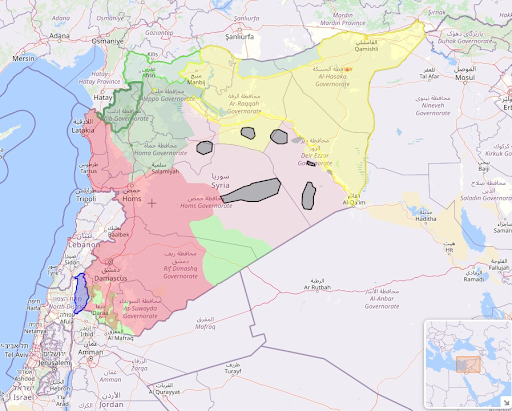
The popular uprising that broke in the Southwest Asian and North African, SWANA, in 2011, that transformed the region was frozen ten years later, especially in Syria and Yemen. Syria, after ten years of war, saw some calm since 2021, with the country still divided into three areas of control: one under "Sunni" rebels supported by Turkey and Qatar controlling the northwest, a second under Kurdish control in the northeast supported by the US, and the rest of Syria controlled by the Syrian government supported by Russia and Iran. On November 27 of this year, the calm was shattered when the Turkish backed armed groups regained major cities they lost in 2017-19. The crisis is unlikely to be resolved short of outside strong intervention, which is also unlikely, given that the outside actors are now busy dealing with new crises centers. So, for the foreseeable future, there are two possible paths forward. The various faction will continue to fight, but unlikely that one will prevail over the other two. Alternatively, a reshuffle of the alliances internally will consolidate some power leading to a stalemate, which will force all three sides to negotiate a deal that preserve the gains and interests of all ethnic, religious, sectarian, and ideological groups. That seem to be the realization of some world and regional powers, though not all think they have to give anything to dial down violence.

Erdogan: We hope that the Syrian "opposition" factions will continue their progress.. and the goal is Damascus


Turkish President Recep Tayyip Erdogan said he hopes that the progress of what he called the "opposition" in Syria will continue "without problems," considering that the next "target" after the armed factions took control of Idlib, Hama and Homs, "is Damascus."

Erdogan's words came in press statements, and he added: "We had invited Assad (Syrian President Bashar al-Assad)... and we told him: Let us determine the future of Syria together. Unfortunately, we did not receive a positive response on this issue."

Recently, Syria's permanent representative to the United Nations, Qusay al-Dahhak, confirmed that the terrorist attack on northern Syria could not have been carried out without a green light and a joint Turkish-Israeli operational order paved by repeated Israeli attacks on Syrian territory.

Syrian President Bashar al-Assad also confirmed his country's insistence on eradicating terrorism, stressing that terrorists do not represent a people or institutions, but rather the apparatuses that support them.


Foreign Ministers of Iraq, Syria and Iran: Protecting Syria's Security is Necessary to Protect the Security of the Region

The foreign ministers of Iraq, Syria and Iran stressed on Friday that "threatening Syria's security poses a general danger to the stability of the entire region," stressing that "there is no choice but to coordinate, cooperate and consult diplomatically continuously, in order to eliminate all risks of escalation in the region."

In a joint statement following the meeting at the Iraqi Foreign Ministry, the ministers stressed "the seriousness of the events in Syria and their sensitivity to all parties in the region," warning of "the possibility of their expanding dimensions, which will pose a grave danger to the three countries and threaten the security of their peoples and the entire region."

The ministers also urged "the need to mobilize all Arab, regional and international efforts to reach peaceful solutions to the challenges facing the region in general, and Syria in particular."


In addition, the statement stressed "the agreement on the need to continue consultation and coordination between the three countries, follow up on these developments and prepare for any developments in the coming days," and respect for Syria's sovereignty, independence, unity and territorial integrity.


They also condemned "terrorism in all its forms and manifestations classified by the Security Council," stressing "collective action to confront it." They also condemned the ongoing Israeli attacks on Syria, Gaza and Lebanon.


Monday, November 04, 2024

Sistani to the UN representative: We regret the international community's inability to stop the Israeli aggression on Gaza and Lebanon

    Monday, November 04, 2024   No comments

The highest religious authority in Iraq, Sayyid Ali al-Sistani, stressed today, Monday, the prevention of foreign interventions in all its forms, while expressing his regret for the inability of the international community and its institutions to impose effective solutions to stop the Israeli aggression on the Gaza Strip and Lebanon.

Sayyid al-Sistani received the representative of the Secretary-General of the United Nations and head of its mission in Iraq (UNAMI) Mohammed al-Hassan and his accompanying delegation. In a statement issued by Sayyid al-Sistani's office, he said that "Sayyid provided a brief explanation of the tasks of the international mission and the role it seeks to play in the coming period. In return, he welcomed the presence of the United Nations in Iraq and wished its mission success in carrying out its tasks."

Sayyid al-Sistani added that "Iraqis - especially the conscious elites - should learn from the experiences they have gone through and do their utmost to overcome their failures and work hard to achieve a better future for their country in which everyone enjoys security, stability, progress and prosperity."

He also stressed that "this cannot be achieved without preparing scientific and practical plans to manage the country based on the principle of competence and integrity in assuming positions of responsibility, preventing foreign interventions in all their aspects, and enforcing the rule of law."

Regarding the volatile situations in our region, Mr. Sistani expressed his "deep sorrow over the ongoing tragedy in Lebanon and Gaza and his deep regret over the inability of the international community and its institutions to impose effective solutions to stop it or at the very least to neutralize civilians from the tragedies of the fierce aggression practiced by the Israeli entity."

For his part, the United Nations representative in Iraq, Mohammed Al-Hassan, confirmed today, Monday, that any infringement on the status of the supreme religious authority represented by Sayyid Ali al-Sistani cannot be accepted.

Al-Hassan said during a press conference following his meeting with Sayyid al-Sistani in Najaf, Iraq: "I was honored to meet His Eminence Sayyid al-Sistani, and I listened to his wisdom and visions for the region and Iraq."

He added, "You know the status of the Sayyid in the Islamic and international worlds, and I am happy with this meeting, and I agreed with His Eminence to work together to enhance the status of Iraq."

Al-Hassan also noted that "Sayyid al-Sistani asked him to implement priorities in the interests of Iraq," expecting that "Iraq will strengthen its relations with its neighbors."

He also stated that "the United Nations is committed to supporting Iraq's priorities and does not interfere except in consultation."

It is noteworthy that Israeli sources published, last month, pictures of leaders Israel assassinated or plans to assassinate and included Sayyid Ali al-Sistani in the list, which angered the Iraqi government.


Wednesday, October 09, 2024

Israel is normalizing the assassination of religious leaders by targeting Sistani

    Wednesday, October 09, 2024   No comments

Channel close to Netanyahu included Sistani on Israeli assassination list. Channel 14 Israel published a photo of the highest Shiite authority in Iraq, Ali al-Sistani, as one of the targets of Israeli assassination plans.

The photo of al-Sistani appeared alongside photos of the leader of the Houthi Ansar Allah group, Abdul-Malik al-Houthi, Naim Qassem, deputy secretary-general of the Lebanese Hezbollah, Yahya Sinwar, head of the political bureau of the Islamic Resistance Movement (Hamas), Esmail Qaani, commander of the Quds Force in the Iranian Revolutionary Guard, and Iranian Supreme Leader Ali Khamenei.

The Israeli channel, which is close to Israeli Prime Minister Benjamin Netanyahu, broadcast the photos yesterday, Tuesday, with the word “target” over the head of each of the aforementioned figures, without explaining the reasons for placing al-Sistani on the assassination list.

The photos appeared while one of the right-wing channel’s correspondents was talking about the possible Israeli response to the missile attack launched by Iran on Israel last Tuesday.

The correspondent said during his interview accompanying the photos that Israel "has made a decision to strike Iran, but the targets that will be attacked have not yet been determined," and he also indicated that the date of the possible Israeli response has not yet been determined either.

He said that unless a decision is made regarding the determination of targets and the date of the response, all possibilities are possible.

Israel has not previously spoken about the assassination of Sistani, although a number of its officials have mentioned the names of all the other figures whose pictures were shown on the channel as potential targets on the Israeli assassination list.

Sistani, who was born in 1930, is a religious authority for the fundamentalist Twelver Shiites and resides in the city of Najaf in central Iraq, which is the center of the main religious science schools known as the "Najaf Seminary," and he is one of the most influential figures in the country due to his broad religious authority. His name might have been added to Israel's assassination list due to his statements about the assassination of the Lebanese leader of Hezbollah. Sistani issued a statement, then, saying that "Martyr Nasrallah is a leadership model that is unparalleled in recent decades"

In his official statement he added: "We received with great sorrow and regret the news of the martyrdom of the great scholar, the hujjat al-Islam and Muslims, Sayyed Hassan Nasrallah, and a group of his brothers in the honorable Lebanese resistance, and dozens of innocent civilians in the horrific massacre committed by the Zionist enemy army in the beloved suburb of Beirut."

He added, "The great martyr was a leadership model that was rarely seen in recent decades. He played a distinguished role in the victory over the Zionist occupation by liberating Lebanese lands and supported the Iraqis with everything he could in liberating their country from the ISIS terrorists. He also took great positions in support of the oppressed Palestinian people until he paid his precious life as a price for that." He added, "As we offer our sincere condolences and deepest sympathy to the noble Lebanese people and all oppressed peoples in this great loss and affliction, we implore God Almighty to bestow His vast mercy and satisfaction upon the deceased and to unite him with His saints, Muhammad and his pure family, in the highest heavens, and to inspire his family and all those who are grieving his loss with patience and solace. To God we belong and to Him we shall return."

Iraqi government responds

In the first reactions, the Iraqi government said that it rejects in the strongest terms any infringement on the status of the supreme religious authority.

The spokesman for the Iraqi government, Bassem Al-Awadi, stressed in an official government statement that "after the Zionist entity has gone too far in its genocidal war, committed blatant crimes against humanity, and openly practiced murder and aggression in Gaza and Lebanon, it is the turn of its inciting and racist media, in a cheap attempt to harm the image of the supreme religious authority."

He added, "the Iraqi government rejects in the strongest terms any infringement on the status of our authority, which is appreciated and respected by all the Iraqi people, the Arab and Islamic worlds, and the international community, and warns of the danger of these attempts based on a racist intellectual background, and foundations that have gone too far in disregarding the sanctities of peoples, which encourages the expansion of the circle of aggression and exposes international security and peace to a real threat."

He continued, "the Zionist entity proves, once again, that it is nothing but a criminal group that thrives on fabricating crises, feeding aggression and wars, and its isolation increases day after day, and the popular and international positions in the world rejecting its behavior are nothing but confirmation of this aggressive trend."

Based on these facts, the Iraqi government- according to the statement - "call on the Secretary-General of the United Nations, and all international and UN forums, to reject and denounce everything that affects the feelings of Muslims in the world, and attempts to undermine figures with global influence and respect."

The statement explained that Iraq, government and people, have made every effort to stop the war, but Israel and its extremist government, in addition to the failure of the international community, have caused the situation to worsen, and today it is trying to spread insults to cover up the clear crimes, which we reject in general, and consider it a dangerous aggression that will not change Iraq's firm and principled position on all fateful issues.


Sunday, February 25, 2024

The US troops in Iraq are there to stay unless the US government chooses to pull them out

    Sunday, February 25, 2024   No comments

 Since the 1990 US intervention in Iraq and the UNSC action after Iraq’s invasion of Kuwait, Iraq lost control of its economy and that has not changed. The Iraqi government recently asked the US to schedule full withdrawal of the latter’s troops. That is unlikely to happen unless the US needs or wants to pull troops out, because the US maintains tight control over the Iraqi economy which is entirely dependent on oil. Revenues from the sale of Iraqi oil is processed by US banks and the US government is leveraging it to keep troops in Iraq. 

Member of the Finance Committee in the Iraqi Parliament, Jamal Kujar, confirmed that there are three economic files that the United States uses to pressure Iraq, namely the oil file, Iraqi funds in the US Treasury, and the dollar file, and that the release of Iraqi funds in the US Federal Bank has become conditional in accordance with American controls and specifications.

 Koger explained, “These files represent strong and influential pressure cards if used against Iraq, because the Iraqi economy is fragile and depends entirely on oil revenues at a rate of up to 94% of the gross national product.”

 Oil export revenues in 2023, according to data issued by the Ministry of Oil last January, amounted to about 87.6 billion dollars, at a rate of about 7.3 billion dollars per month. The country sold more than 1.23 billion barrels.

 Iraqi funds deposited with the US Federal Bank from oil export revenues, which is a procedure applied within the requirements of Chapter Seven of the United Nations procedures following the Iraqi invasion of Kuwait in 1990 and is still in effect, in addition to the inclusion of new Iraqi companies and banks on the sanctions list it issues.


Monday, May 01, 2023

Amman Consultative Meeting Statement: For the exit of illegal foreign forces from Syria

    Monday, May 01, 2023   No comments

Summary:


- Cooperation between Damascus, the concerned countries, and the United Nations in developing a comprehensive strategy to combat terrorism in all its forms and organizations.

- The need for illegal foreign forces to leave Syrian soil.

- The need to deliver humanitarian and medical aid to the Syrian people.

- Working on ending the presence of armed and terrorist groups on Syrian soil.

- Cooperation of #Syria, #Jordan and #Iraq to locate and identify the sources of drug production and smuggling methods.

- Provide appropriate conditions in #Syria for the voluntary and safe return of refugees.


________________

Review of the meeting:

The final statement of the consultative meeting of the foreign ministers of Jordan, Saudi Arabia, and Egypt, with the Syrian Foreign Minister, Faisal Al-Miqdad, held in the Jordanian capital, Amman, affirmed the priority of ending the Syrian crisis and all the suffering it caused to the Syrian people.


The statement stressed the need to end the negative repercussions of the crisis, regionally and internationally, through "a political solution that preserves Syria's unity, cohesion and sovereignty, meets the aspirations of its people, rids it of terrorism, and contributes to strengthening the appropriate conditions for the voluntary and safe return of refugees."


The statement called for a political solution to the crisis to lead to "the exit of all illegal foreign forces from it, to achieve national reconciliation, and to restore Syria's security, stability, health and role."


The statement called for the delivery of humanitarian and medical aid that contributes to meeting the life needs of all those who need it among the Syrian people, in all their places of residence, stressing that it is a necessity that all efforts must be combined to meet, in cooperation and coordination between the Syrian government and the relevant United Nations bodies, and in accordance with the decisions relevant United Nations.


The ministers participating in the consultative meeting welcomed the Syrian government's decision to open the Bab al-Salama and al-Rai crossings for the United Nations to deliver humanitarian and medical aid, after the earthquake that struck Syria on February 6.


The priority of the return of the displaced Syrians

The statement touched on the voluntary and safe return of Syrian refugees to their country, stressing that it is a top priority and the necessary steps must be taken to start implementing it immediately.


He also called for strengthening cooperation between the Syrian government and countries hosting refugees, and coordination with the relevant United Nations bodies, to organize voluntary and safe returns for refugees and end their suffering, according to specific procedures and a clear time frame, provided that the Syrian government begins by identifying the necessary needs to improve public services provided in areas of refugee return.


The statement called for intensified work with the international community and the United Nations to accelerate the implementation of early recovery projects for Syria, in a way that contributes to stabilization, and that steps be taken, as appropriate, to resolve the issue of the internally displaced, including the issue of the Rukban camp.


The statement referred to cooperation between the Syrian government and the Jordanian government, in coordination with the relevant United Nations bodies, in organizing a voluntary return of about a thousand Syrian refugees in Jordan.


The need to end the existence of various terrorist organizations

The meeting statement stressed the need for cooperation between the Syrian government, the concerned countries and the United Nations, in developing a comprehensive strategy to enhance security and combat terrorism in all its forms and organizations, and to end the presence of terrorist organizations in the Syrian territories, and neutralize their ability to threaten regional and international security.


In addition to affirming work to support Syria and its institutions in any legitimate efforts to achieve "extending its control over its lands, imposing the rule of law, and ending the presence of armed and terrorist groups on its lands," calling for stopping external interference in Syrian internal affairs, and for establishing effective coordination mechanisms between the military and security agencies. Syria and its counterparts in neighboring countries.


The statement called for work to resume the work of the Constitutional Committee, as soon as possible, in the context of political steps aimed at achieving comprehensive national reconciliation.


The meeting discussed the humanitarian aspect, and the steps required to achieve progress in efforts to address it, in a way that will directly affect the Syrian people, in addition to a number of security and political issues.


The foreign ministers also agreed with their Syrian counterpart on the agenda of the talks, which will continue according to a timetable to be agreed upon, according to the statement, and on the formation of a technical team at the level of experts, which will follow up on the outcomes of this meeting and determine the next steps.


The Jordanian Foreign Minister, Ayman Safadi, and his Syrian counterpart discussed efforts to launch an Arab leadership role to reach a political solution to the Syrian crisis and bilateral relations prior to the Amman Consultative Meeting.


Followers


Trending now...


ISR +


Frequently Used Labels and Topics

40 babies beheaded 77 + China A Week in Review Academic Integrity Adana Agreement afghanistan Africa African Union al-Azhar Algeria Aljazeera All Apartheid apostasy Arab League Arab nationalism Arab Spring Arabs in the West Armenia Arts and Cultures Arts and Entertainment Asia Assassinations Assimilation Azerbaijan Bangladesh Belarus Belt and Road Initiative Brazil BRI BRICS Brotherhood CAF Canada Capitalism Caroline Guenez Caspian Sea cCuba censorship Central Asia Charity Chechnya Children Rights China Christianity CIA Civil society Civil War climate colonialism communication communism con·science Conflict conscience Constitutionalism Contras Corruption Coups Covid19 Crimea Crimes against humanity D-8 Dearborn Debt Democracy Despotism Diplomacy discrimination Dissent Dmitry Medvedev Earthquakes Economics Economics and Finance Economy ECOWAS Education and Communication Egypt Elections energy Enlightenment environment equity Erdogan Europe Events Fatima FIFA FIFA World Cup FIFA World Cup Qatar 2020 Flour Massacre Food Football France Freedom freedom of speech G20 G7 Garden of Prosperity Gaza GCC GDP Genocide geopolitics Germany Global Security Global South Globalism globalization Greece Grozny Conference Hamas Health Hegemony Hezbollah hijab Hiroshima History and Civilizations Hormuz Human Rights Huquq Ibadiyya Ibn Khaldun ICC Ideas IGOs Immigration Imperialism In The News india Indonesia inequality inflation INSTC Instrumentalized Human Rights Intelligence Inter International Affairs International Law Iran IranDeal Iraq Iraq War ISIL Islam in America Islam in China Islam in Europe Islam in Russia Islam Today Islamic economics Islamic Jihad Islamic law Islamic Societies Islamism Islamophobia ISR MONTHLY ISR Weekly Bulletin ISR Weekly Review Bulletin Italy Japan Jordan Journalism Kenya Khamenei Kilicdaroglu Kurdistan Latin America Law and Society Lebanon Libya Majoritarianism Malaysia Mali mass killings Mauritania Media Media Bias Media Review Middle East migration Military Affairs Morocco Multipolar World Muslim Ban Muslim Women and Leadership Muslims Muslims in Europe Muslims in West Muslims Today NAM Narratives Nationalism NATO Natural Disasters Nelson Mandela NGOs Nicaragua Nicaragua Cuba Niger Nigeria Normalization North America North Korea Nuclear Deal Nuclear Technology Nuclear War Nusra October 7 Oman OPEC+ Opinion Polls Organisation of Islamic Cooperation - OIC Oslo Accords Pakistan Palestine Peace Philippines Philosophy poerty Poland police brutality Politics and Government Population Transfer Populism Poverty Prison Systems Propaganda Prophet Muhammad prosperity Protests Proxy Wars Public Health Putin Qatar Quran Rachel Corrie Racism Raisi Ramadan Ramadan War Regime Change religion and conflict Religion and Culture Religion and Politics religion and society Resistance Rights Rohingya Genocide Russia Salafism Sanctions Saudi Arabia Science and Technology SCO Sectarianism security Senegal Shahed sharia Sharia-compliant financial products Shia Silk Road Singapore Slavery Soccer socialism Southwest Asia and North Africa Sovereignty Space War Spain Sports Sports and Politics Starvation State Power State Terror Sudan Sunni Axis sunnism Supremacism SWANA Syria Ta-Nehisi Coates terrorism Thailand The Koreas Tourism Trade transportation Tunisia Turkey Turkiye U.S. Cruelty U.S. Foreign Policy UAE uk ukraine UN under the Rubble UNGA United States UNSC Uprisings Urban warfare US Foreign Policy US Veto USA Uyghur Venezuela Volga Bulgaria Wadee wahhabism War War and Peace War Crimes War on Iran Wealth and Power Wealth Building West Western Civilization Western Sahara WMDs Women women rights Work Workers World and Communities Xi Yemen Zionism

Search for old news

Find Articles by year, month hierarchy


AdSpace

_______________________________________________

Copyright © Islamic Societies Review. All rights reserved.