Thursday, March 02, 2023

Prime Minister of Qatar: The war with Iran is not in the interest of the Gulf states, and reaching a solution through frank dialogue would be a great achievement for peace, trade and the economy

    Thursday, March 02, 2023   No comments

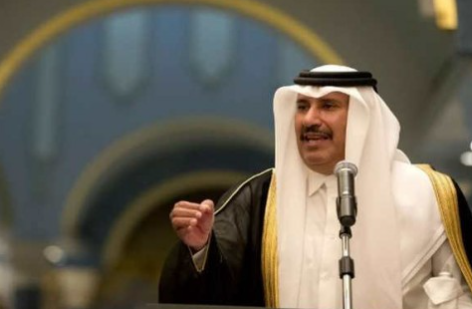
The former Prime Minister of Qatar, Hamad bin Jassim, said that the war with Iran is not in the interest of the Gulf states, calling for a frank dialogue to reach a solution that would be “a great achievement not only for peace but also for trade and the economy.”
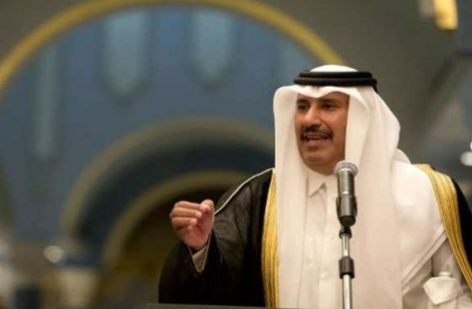
This came in an interview with “Bloomberg” in response to a question about the concern of many Arab countries from Iran, especially the Kingdom of Saudi Arabia.

Bin Jassim added, “My first fear is not Iran, but we are in the region and the way we behave, I mean the leaders, I am not one of them. It should be discussed in a civilized manner.”

He continued, “If we have challenges ahead, and if we agree that Iran is our number one enemy, how will we deal with this matter? Will we deal with it through direct negotiations or war? Nobody wants war because it is not in our interest.”

He explained, “The problem is that this decision is not in our hands because we are not currently in a position, as I said about the Gulf Cooperation Council countries, to take the lead in our region and say, ‘Okay, we have problems with Iran. In harmony between Iran, Iraq and the countries of the Gulf Cooperation Council.

And the former Prime Minister of Qatar believed that "if the Gulf countries were able to do this, it would be a great achievement not only for peace, but also for trade, business and the economy."

And he added, “They (in Iran) have more than 100 million people, Iraq has 40 million people, and we (the Gulf countries) have about 50 million people. We are talking about 200 or 250 million people in oil-rich countries, imagine what they can do.”


Monday, February 27, 2023

From the humanitarian gate, Egypt moved towards raising the level of its relationship with Syria

    Monday, February 27, 2023   No comments

In a development that opens a new chapter in Syrian-Egyptian relations, the Egyptian Foreign Minister, Sameh Shoukry, was a guest in Damascus, where he met with his Syrian counterpart, Faisal Al-Miqdad, and President Bashar Al-Assad, in a visit that is the first of its kind for a high-ranking Egyptian diplomatic official to Syria. Since 2011. The visit, which Shoukry tried to humanize, by confirming more than once that he came to announce his country’s solidarity with Syria against the background of the devastating earthquake that struck the country on the sixth of last February, coincides with an Arab movement on several levels, in which both The UAE and the Sultanate of Oman played a prominent role in converging points of view and reaching a suitable formula for all parties through which Damascus would return to playing its strategic role, especially after the crisis reached a state of intractability resulting from the failure of all attempts to change the regime in Syria.


During his meeting with al-Assad, the Egyptian minister conveyed a message from President Abdel Fattah al-Sisi, in which the latter affirmed Egypt's solidarity with Syria, its willingness to continue supporting the Syrians in facing the effects of the earthquake, his pride in the historical relations between the two countries, and Cairo's keenness to strengthen these relations and develop joint cooperation. Al-Assad responded by thanking the Egyptian guest, and expressing Syria's keenness on relations with Egypt "within the natural and historical context," considering that "work to improve relations between Arab countries on a bilateral basis is the basis for improving the Arab situation in general." The visit of Ras Haram, the Egyptian diplomat, to Damascus comes to revive historical ties between the two countries, after a rupture that began in 2011, and reached its climax during the assumption of the “Muslim Brotherhood” to rule Egypt under the leadership of the late Mohamed Morsi, who announced in June 2013 that his country had officially cut ties with Damascus. And joining the anti-Syrian government coalition, embracing the activity of a section of the Syrian opposition, and calling for an air embargo on Syria. Several Egyptian sources narrate that the position of the Egyptian army, which was led at that time by Sisi, who held the position of Minister of Defense at the time, remained opposed to Morsi’s position, which was confirmed by the late Egyptian writer, Mohamed Hassanein Heikal, during a television interview, during which he stated that the Egyptian army rejected the policy of The late president, but the latter continued it.

After the collapse of the “Brotherhood” government, and the rise of Sisi to power, relations partially restored between the two countries, which was explicitly announced by the Egyptian president during a visit he made shortly after assuming power to the United States in 2014, where he referred to the strength of the ties that unite the armies of the two countries, and stressed that the unity of Syria It is considered part of the Egyptian national security. However, the ties did not rise to high levels, but rather were limited to the scope of security meetings, before the meeting that brought together the Syrian Foreign Minister, Faisal Al-Miqdad, with his Egyptian counterpart in New York on the sidelines of the United Nations General Assembly meeting in 2021, which constituted a milestone. In addition to close security and military cooperation, Syrian investors who transferred their investments from Syria to Egypt during the war played a prominent role in strengthening relations between the two countries, after the volume of those investments amounted to about $23 billion.

Syria has expressed, many times, during statements made by Al-Assad and Al-Miqdad, its understanding of the position of some countries that communicate with Syria in private due to Western and American pressures. Big "opening" steps. However, these circumstances seem to have begun to transform during the past few months, in light of several Arab initiatives led by Jordan, the Emirates and the Sultanate of Oman to break the political stalemate. The catastrophic repercussions of the earthquake provided an opportunity to move forward and open the door for Egypt, whose president, immediately after the disaster, initiated contact. Assad, and instructed to send aid by air and sea. At a time when there is talk in some Arab political circles of the existence of Saudi-Egyptian differences that could have constituted an additional motive for Cairo to take its broad step towards Damascus, the Arab moves indicate that the Egyptian openness falls within the framework of a broad Arab activity that does not exclude Riyadh, which the minister announced. Its foreign minister, Faisal bin Farhan, changed his country's position on Syria, stressing the need to communicate with Damascus, which he is expected to visit in the coming days.

Despite the continuous openness of Arab capitals to Damascus, whether before or after the earthquake, these steps face many obstacles and difficult tests, most notably the US position rejecting this normalization, and the threat of unilateral US sanctions imposed on Syria, in addition to Washington's possession of many pressure cards that may initiate use during the next period.


Media Review: Military Watch: A “terrifying” Chinese weapon located in Algeria destroys “NATO” tanks if delivered to Russia

    Monday, February 27, 2023   No comments

A magazine specialized in weapons and military equipment published a lengthy article about one of the effective Chinese weapons against tanks, stressing that this simple weapon may destroy the various Western tanks that NATO recently sent to Ukraine.

Military Watch magazine indicated that Western countries pledged tens of billions of dollars worth of new weapons to support the Ukrainian forces, at a time when Washington and European sources claimed that “the Russian army could receive support from China.”

The magazine considered that “this proposition and speculation contradicts Beijing’s neutral position, which is in line with the position of the majority of non-Western countries on the Ukrainian crisis,” but noted that “the wide range of weapons that China can provide, from guided missile artillery to missiles, could change the balance of Powers..although there is a great danger for China through the seizure of its weapons systems and its study by Ukraine and its Western supporters.

And the magazine noted that "if China decides to provide weapons, which is unlikely as it seems, one of the weapons with the greatest impact that it can provide is the simplest in terms of size and back."

However, the magazine considered that the simple Chinese anti-tank type “HJ-12” could cause a major problem for Western tanks supplied from NATO.

According to the report published by Military Watch, the Chinese company (China North Industries Corporation) developed this weapon in 2014, and obtained only one export contract to the Algerian army.

The HJ-12 is widely considered the most capable missile system of its kind in the world, competing with the US Javelin and the French NNB.

The simple shape of the Chinese weapon “HJ-12” allows for launching operations from inside buildings and targeting targets tightly before they are targeted.


The Chinese weapon allows the elements to carry out the targeting process and then to hide directly after firing, and gives them time to re-stock in order to engage a second target, considering that the Chinese weapon is the “most terrifying” for the Ukrainian army.

The magazine considered that the Chinese anti-tank “HJ-12” would be very dangerous for the new categories of tanks supplied to Ukraine, such as “Leopard 2”, “Leopard 1”, “Abrams” and others.

“China has worked on developing the HJ-12 anti-tank with the aim of improving its ability to penetrate and detonate reactive armor, in addition to its very long range of 4 kilometers, which enables it to engage less well-armoured targets at longer ranges at the expense of accuracy and penetration power.”

The missile system combines highly advanced capabilities with extremely light weight and weighs only 22 kg, allowing ground forces to maintain high mobility and great dynamism.

“Missiles are highly maneuverable and are designed to hit enemy vehicles from above where shields are weakest.”

Kremlin spokesman Dmitry Peskov had commented on the allegations of supplying Chinese weapons to Russia, saying that he “does not see any point in commenting on Western reports about discussing the supply of military equipment to Russia by Beijing, as all information has been refuted by China.”

The US Secretary of State, Antony Blinken, had warned Beijing of the consequences of supplying Moscow with weapons. NATO Secretary General Jens Stoltenberg said that the alliance is concerned about the possibility of China supplying weapons to Russia.

Today, Monday, China commented on the US imposing sanctions on its companies, due to allegations of its support for Russia.

"Beijing will take firm countermeasures, and will firmly protect the interests of Chinese companies," said Chinese Foreign Ministry spokeswoman Mao Ning, according to the Chinese state-run Global Times newspaper.

And Ning urged America to stop spreading disinformation, and to lift sanctions on Chinese companies, according to “Sputnik”.


Sunday, February 26, 2023

The History of Illegal, Unjust Wars

    Sunday, February 26, 2023   No comments

History of Illegal, Unjust Wars


Saturday, February 25, 2023

At the conclusion of the "G20"... India refuses to condemn the Russian military operation in Ukraine

    Saturday, February 25, 2023   No comments

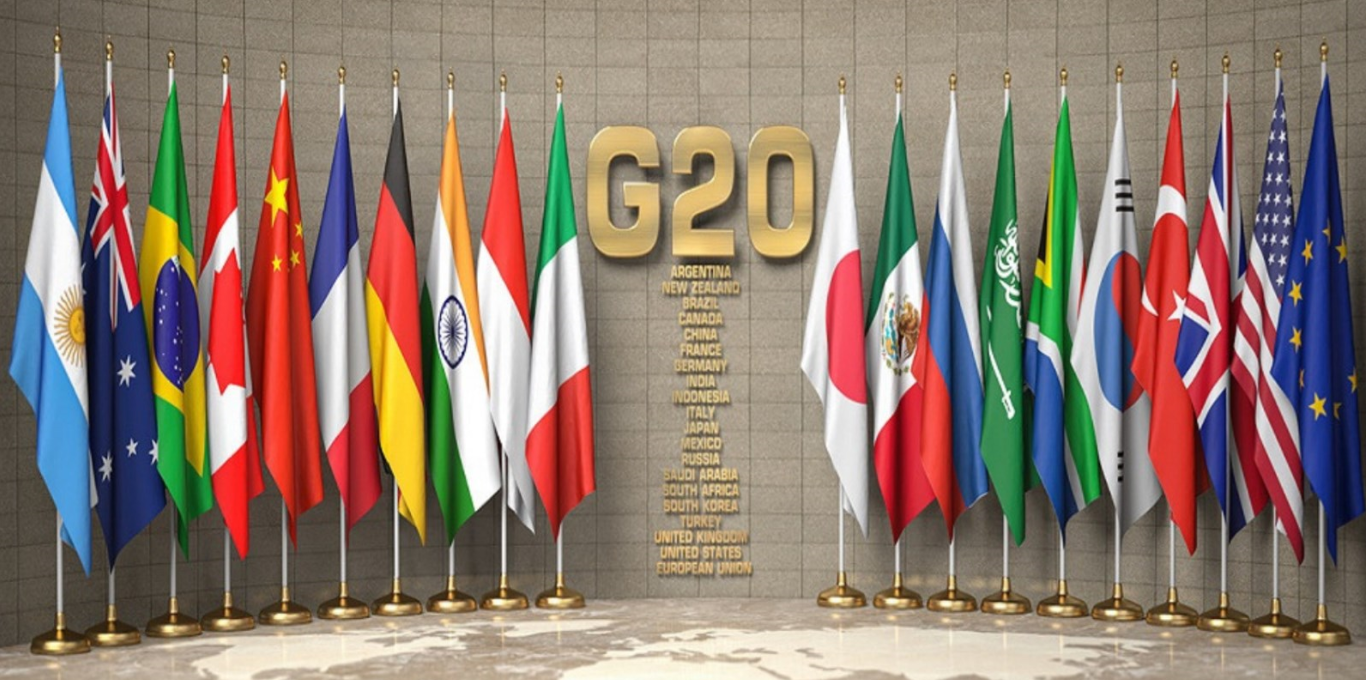
India refused to condemn the Russian special military operation in Ukraine, and had reservations about including the condemnation in the final statement of the meeting of finance ministers and central bank governors of the G20 countries, which was held yesterday and today in New Delhi.


And the Indian Ministry of Finance stated, in a statement: “Most of the members decisively condemned the war in Ukraine, and affirmed that it causes great human suffering and exacerbates imbalances in the global economy … but there are other visions and different assessments of the situation and sanctions.”


She added, "While noting that the G-20 is not a forum for resolving security issues, we realize that security issues may have significant repercussions on the global economy."


Russian Foreign Minister Sergey Lavrov intends to participate in the meeting of foreign ministers of the Group of Twenty, which is scheduled to be held on March 1 and 2 in New Delhi, according to what was announced by the spokeswoman for the Russian Foreign Ministry, Maria Zakharova, earlier this month.


Zakharova pointed out that during the event, issues of capacity-building, reform of international institutions, and strengthening the positions of developing countries in the collective decision-making process will be discussed.


She added, "It is expected that there will be a busy schedule of bilateral meetings for Lavrov, on the sidelines of a meeting of the Council of Foreign Ministers. Work is underway to prepare these contacts. We are talking about countries such as China and Brazil, and of course the host country."


In addition to participating in the G20 Foreign Ministers' Council, Lavrov will be in New Delhi from March 1-3, as part of a working visit during which he will hold talks with his Indian counterpart, Subramaniam Jaishankar, and after that he will participate in the international "Raisinya Dialogue" conference.


India holds the G20 presidency from last December until November 30, 2023.


The G20 summit started on February 24 in Bangalore, the technological capital of India, to agree on the challenges posed by the global economy in the atmosphere of war in Ukraine, and high inflation with the recovery after the "Covid-19" epidemic.


Indian Prime Minister Narendra Modi called for reform of international institutions, including the World Bank, on the first day of the G20 financial summit in the southern Indian city of Bangalore.


The meeting takes place exactly a year after the start of the Russian military operation in Ukraine, and amid disagreements among the G20 participants on this issue.


Friday, February 24, 2023

Beijing submits a peace plan proposal as a public position for the conflcit between Russia and Ukraine

    Friday, February 24, 2023   No comments

Media coverage of the Chinese proposal related to the military conflict in Ukraine is different depending on the source and its connection to the political systems. Here, a fact-driven, sourced summary is presented to serious readers who wish to understand, not take side.

With increased pressure on China to stop "thinking about" providing Russia with lethal weapons, China chose instead to propose a road map for ending the conflict. There are many legitimate questions as to the timing of the proposal and the increased pressure on China and other countries to take public stance about the conflict. A summary of the Chinese proposal as explained by Chinese officials and Chinese media is provided here along with some references for context.


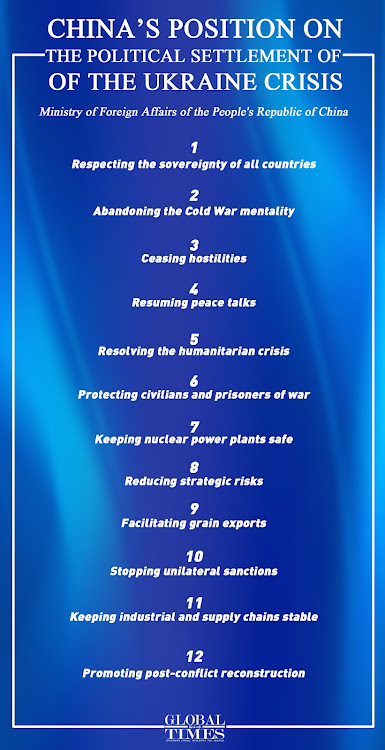
In a 12-point position paper dubbed "China's Position on the Political Settlement of the Ukraine Crisis," issued on Friday morning, the Chinese Foreign Ministry called for ceasing hostilities and resuming peace talks, stopping unilateral sanctions and abandoning the Cold War mentality.

It also called for respecting the sovereignty of all countries and expressed opposition to the use of nuclear weapons. 

Chinese experts said the document should be viewed as a blueprint that has made China's principles clear for resolving the crisis and pointed out the basic path to achieve it constructively.

Although the document reflects China's position as a peacemaker and negotiation facilitator, as well as China's great sincerity in global governance, experts suggested that the course of the conflict largely depends on the willingness of both sides to resolve the conflict peacefully. And the atmosphere and willingness to negotiate are seemingly still far from being mature given the US and NATO's interference. 

Beijing called for stopping military operations in Ukraine, starting a negotiation process, and resuming direct dialogue as soon as possible.

Today, Friday, in a statement coinciding with the one-year anniversary of the start of the Russian special operation in Ukraine, the Chinese Foreign Ministry considered that "it is necessary to cease-fire and military operations," calling on "all parties to maintain rationality and restraint and avoid further aggravation of the Ukrainian crisis or even It's out of control."

The statement indicated that it was necessary to "support Russia and Ukraine in moving towards each other to resume direct dialogue as soon as possible."

The Chinese Foreign Ministry stressed that "dialogue and negotiations are the only possible way to solve the Ukrainian crisis," adding: "The international community should create conditions and provide a platform for the resumption of negotiations. China is ready to continue to play a constructive role in this regard."


China considered it important to abandon "unilateral sanctions and pressure, as it will not solve the problem and will create new problems."

The Chinese Foreign Ministry called for "reducing strategic risks" and stressed "resistance to the use or threat of use of nuclear weapons."


This statement was preceded by an announcement in which China said that it would submit a proposal this week to reach a political solution to end the war, which has been going on for nearly a year.


It is noteworthy that China has called on the United States more than once to settle the Ukrainian crisis politically instead of fueling it, and also called for an end to the war in Ukraine, and confirmed that its relationship with Russia is not against anyone.


In the Russian-Ukrainian negotiations, the head of the German Foreign Intelligence Service, Bruno Kahl, saw yesterday that Russian President Vladimir Putin is "currently interested in ending the conflict on the battlefield," while the Kremlin previously ruled out resuming talks with Kiev, especially after the latter passed a law. It stipulates that no negotiations with Russia should continue.


Likewise, the Kremlin accused Kiev of withdrawing from peace negotiations with Moscow last March on orders from Washington, and stressed at the same time that "Russia does not give up the possibility of negotiations with Ukraine, but postponing negotiations makes it difficult to agree."


Negotiations took place between Moscow and Kiev after the Russian military operation in Ukraine to end it. The foreign ministers of the two countries also met last March in Turkey without reaching substantial results. Since the negotiations faltered, the two sides exchanged accusations of causing this stalemate.

Updade (to reflect Russsia's reaction):

The Russian Foreign Ministry welcomed China's sincere desire to contribute to the settlement in Ukraine through peaceful means, and expressed Moscow's share with Beijing's vision for a settlement.


And the Russian Foreign Ministry statement said: "We share Beijing's proposal for a settlement, and we are committed to respecting the United Nations Charter, international and humanitarian law, and comprehensive security, in a way that does not enhance the security of one country at the expense of another country, or one group of countries at the expense of another."


She added, "We, along with China, see any restrictions imposed outside the scope of the UN Security Council as illegitimate, and a tool in unequal competition and economic warfare."


The Foreign Ministry affirmed that "Moscow is open to achieving the goals of the military operation through political and diplomatic means."


References:

Thursday, February 23, 2023

Western Media Review: After the Ukraine war, the West has become more isolated

    Thursday, February 23, 2023   No comments

A year after the war in Ukraine, the West has never been more isolated, Politico reported Thursday.

The newspaper said, "The war in Ukraine accelerated the development of a post-Western world, and given current trends, it seems that this world may be more united, but also more isolated from the rest."

She added, "A year after the war in Ukraine, European and American governments defied critics with an extraordinary display of unity," asking: "But has this internal cohesion been achieved at the expense of external influence?"

This is the main question explored in a new survey by the European Council on Foreign Relations and the Europe in a Changing World project at Oxford University, which covers public opinion from 10 European countries and five from other regions of the world.


According to the results of the survey, while the war brought the West closer together, it also revealed a gap between the West's perception of Russia and the war, and the perception of other countries, and part of this gap comes from radically different perceptions of the state of the world.


Citizens from Europe and non-Western countries share the same conviction that the US-led liberal order is over, but their understanding of what kind of order will come next differs sharply, according to the survey.


He also revealed that many in the West believe, through the legacy of the Cold War, that we are entering a bipolar world dominated by the United States and China, but in other parts of the world, they do not believe this division. The fundamental reason for this is that from the perspective of those in China, Turkey or Russia, we are entering a multipolar world between many centers of power, not a bipolar one.


In other words, the citizens of these countries believe that fragmentation into different systems will determine the future. In this scenario, the entire West would be just one center of power among many others, which would not single-handedly define order and lead global democracy.


According to the newspaper, the most fundamental reason for this view is that people in non-Western major powers now tend to believe that they also represent a real democracy. % of Indians, 36% of Turks, and 20% of Russians.


The newspaper pointed out that with Western governments anticipating the return of the Cold War-type bipolarity between democracy and tyranny, they often tend to view countries such as India and Turkey as swing states that can be persuaded to take sides, pointing out that "these countries see themselves completely differently, As emerging great powers, they may side with the West on some issues, but not on everything.


She also reported that "the ability of the West to work alongside those international partners who have a different understanding of the conflict will have an important impact on the outcome of the war, as well as on the shape of geopolitics," noting that "it takes humility to see countries like India, Brazil and Turkey as partners." In shaping the future system, not as players being moved to the right side of history."


Wednesday, February 22, 2023

Dmitry Medvedev: Defeating Russia will Trigger Nuclear War

    Wednesday, February 22, 2023   No comments

Known for his biting commentaries, sharp wit, and concise articulation of policy-sourced analysis, Dmitry Medvedev, Deputy Chair of the Security Council of the Russian Federation, unleashed an attack on US President with a chillling warning: Defeating Russia will Trigger Nuclear War. Medvedev published this ominous warning on his favorite social media platform, Telegram, with the title, About two performances. For full context of his Feb. 22 post, we provide a full translation below.

_______________


1. Yesterday there was a Message from the President of Russia to the Federal Assembly, which, among other things, announced the suspension of our participation in START-3. An overdue decision, the inevitability of which I noted last year. The decision prompted by the war declared by the United States and other NATO countries to our country. A decision that will have a huge resonance in the world in general and in the United States in particular. After all, the American establishment has been thinking until now something like this: we will spoil you everywhere and in everything, we will supply gigantic volumes of weapons to the Kiev regime, we will work to defeat Russia, we will limit and destroy you, but strategic security is a separate issue. It is not connected with the general context of relations between the US and Russia. She is almost a sacred cow.

This conclusion is worse than a crime - this is a gross mistake of the Americans. An error generated by their mania grandiosa. Their sense of superiority and impunity. After all, it is obvious to all reasonable forces that if the United States wants the defeat of Russia, then we are on the verge of a world conflict. If the United States wants to defeat Russia, then we have the right to defend ourselves with any weapon, including nuclear. And as Vladimir Putin rightly said: "It is impossible to defeat Russia on the battlefield." It is with this that the suspension (for now) of START-3 is connected. Let the out-of-touch elites in the US think about what they have achieved. We will also observe the reaction of other nuclear powers - NATO members: France and Britain. Their strategic nuclear forces were usually not included in the balance of nuclear warheads and carriers when preparing agreements between the US and the USSR (Russia), but it is high time to do so.

2. Biden addressed the Russian people in front of a crowd of Poles. In fact, he delivered a sermon in the traditional messianic key for America, adjusted for senile insanity. Heaped high words about how important it is to defend democracy, and that the US is not going to attack Russia. It looked dishonest and ridiculous. Who is this strange grandfather, broadcasting with a bewildered look from Poland? Why does he appeal to the people of another country at a time when he is full of domestic problems? With what fright should we listen to a politician from a hostile state that exudes hatred for our Motherland? Why should the citizens of Russia trust the leader of the United States, who unleashed the most wars in the 20th and 21st centuries, but reproach us for aggressiveness? A person who directs all his weakening intellectual capabilities only to ensure that Russia suffers a “strategic defeat”.

And further. To paraphrase a famous expression, Biden said in Warsaw: “If Russia stops its invasion, it will end right now. If Ukrainians stop defending themselves, that will be the end of Ukraine.” This is a refined lie. The truth is quite different.

If Russia stops the SMO without achieving victory, Russia will not exist, it will be torn to pieces. If the US stops supplying weapons to the Kyiv regime, the war will end.

On February 24, Medvedev added this:


It's been a year since the special operation has been going on. A year since our servicemen restore order, peace and justice in our land, protect our people and destroy the roots of neo-Nazism. They are heroes.

The whole country helps them, supplying the front with everything necessary.

Victory will be achieved. We all want this to happen as soon as possible. And that day will come. We will return our territories and reliably protect our people, who have suffered during the years of genocide and shelling.

What's next?

Then there will be negotiations, which, I am sure, will become difficult and nervous. First of all, because the formal participants in the negotiations on the part of our enemy are one, and the actual leaders are completely different. And decisions for the Kiev regime will, of course, not be made by some kind of Zelensky, if he is still alive, or his clique. The decision will be made across the ocean by those in whose hands the supply of weapons to Kyiv and the allocation of money to maintain the remains of the Ukrainian economy. The motives of the main enemies of our country are obvious: to weaken Russia as much as possible, to bleed us for a long time. Therefore, they are not interested in ending the conflict. But sooner or later, according to historical laws, they will do it. And then there will be an agreement. Naturally, without fundamental agreements on real borders or on a new Helsinki Pact that ensures security in Europe. Just some kind of agreement.

Then, most likely, no less difficult time will begin. Exhausting months and years of confrontation, tantrums and rudeness on the part of those who will manage the stub that remains of Ukraine. Their fate is unenviable. They will not be able to recognize the results of the SVO without the risk of being executed on the same day. The nationalists will continue to control the powerful camarilla, because none of them have any other ideology than Bandera's neo-Nazism. Recognition of defeat for them is like death. Therefore, the ideology of “something to win” can remain for a long time.

And at some point, the new bloody boys, backed to the wall by once again unbelted Bandera, who call themselves the legal Ukrainian authorities, will again provoke a world conflict. It doesn't matter - on the eve of the elections or just on the next Maidan.

This cannot be allowed.

Therefore, it is so important to achieve all the goals of a special military operation. Push the borders of threats to our country as far as possible, even if these are the borders of Poland. Destroy neo-Nazism to the ground. In order not to waste time later on catching the remnants of Bandera gangs in the Little Russian forests. So that the world will find the long-awaited peace.


Dmitry Medvedev Bio:

Dmitry Anatolyevich Medvedev graduated from the Faculty of Law of Leningrad State University in 1987 and completed his post-graduate studies at Leningrad State University in 1990. Holds a PhD in law and the title of associate professor.

Medvedev is a Russian politician who has been serving as the deputy chairman of the Security Council of Russia since 2020. Medvedev also served as the president of Russia between 2008 and 2012 and as the prime minister of Russia between 2012 and 2020.

Putin: The relations between Russia and China are developing...and waiting for the Chinese President's visit

    Wednesday, February 22, 2023   No comments

Russian President Vladimir Putin announced today, Wednesday, that Russian-Chinese relations are developing as planned, stressing that the two countries are reaching new stages.

This came in a meeting with the Head of the Bureau of the Foreign Affairs Committee of the Communist Party of China Central Committee, Wang Yi, in which, on the Russian side, the Minister of Foreign Affairs, Sergey Lavrov, and the Secretary of the Russian Security Council, Nikolai Patrushev, participated.


Putin added, during the meeting, that "Russia is waiting for Chinese President Xi Jinping on its territory," saying that "a visit like this will give impetus to the development of relations between the two countries."

And he stressed that "Russia is aware of the very important internal political developments that have taken place recently in China, which certainly contribute to the country's strength, and create the appropriate conditions for its continuous development in accordance with the plans of the Chinese Communist Party."

Speaking about the growing trade relations between Beijing and Moscow, the Russian president indicated that "the volume of trade exchange between the two countries will reach $200 billion before 2024."

"We set a goal to reach the level of 200 billion dollars in 2024. Last year it already reached 185 billion, and there is every reason to believe that we will achieve our goals in terms of trade, perhaps even earlier than planned," Putin told Wang Yi. .

Lavrov, in turn, stated that relations between Russia and China are developing dynamically despite the international turmoil, stressing that Moscow and Beijing are ready to defend each other's interests.

For his part, Wang Yi stressed during his talks with Lavrov that "Russian-Chinese relations maintain a high momentum," expressing his hope to "reach new agreements."

The Chinese official pointed out that "the Chinese-Russian relations, which are based on broad partnership and strategic cooperation in the new era, maintain a high momentum of development thanks to the strategic direction of President Xi Jinping and President Vladimir Putin."

And the Chinese Ministry of Foreign Affairs announced earlier today that Russia and China agreed to jointly confront all forms of unilateral intimidation.

"The two sides expressed their willingness to jointly practice true multilateralism, confront all forms of unilateral intimidation, and promote the democratization of international relations and multipolarity," she added.

The two sides also agreed to further strengthen multilateral cooperation, and stressed the need to maintain peace and stability in the Asia-Pacific region.

This came during a meeting between the Secretary of the Russian Security Council, Nikolai Patrushev, and Wang Yi, yesterday, Tuesday, which dealt with the development of bilateral relations between Russia and China.


GT, Chinese English Daily, reported that Chinese top diplomat Wang Yi started his Russia visit on Tuesday after his trip to France, Italy, Hungary and a series of meetings with diplomats from countries including the US and Ukraine in Germany on the sideline of the Munich Security Conference, with analysts saying China is making efforts for mediation by engaging with all relevant parties involved in the Russia-Ukraine conflict, while the US keeps on adding fuel to the flame and exploiting the conflict to make a political show. 


Tuesday, February 21, 2023

Secret documents reveal for the first time.. Bush and Blair were certain of Iraq's inability to develop weapons of mass destruction two years before the war

    Tuesday, February 21, 2023   No comments


Britain recently released documents to the British Cabinet that reveal information about the US-British lies that the two countries told before the invasion of Iraq in 2003.

The documents revealed that London was confident that the allegations of Iraq's possession of any ability to obtain weapons of mass destruction or long-range missiles, at least two years before its invasion, were false.


And the “BBC” considered that these documents are the first of their kind that “proves that the British Prime Minister (at the time) Tony Blair knew that Iraq was devoid of any capabilities to possess prohibited weapons in accordance with United Nations resolutions issued before and after the removal of the Iraqi army from Kuwait in February. 1991, in the aftermath of Operation Desert Storm.

Twenty years after the start of the war, the documents confirm that "the policy of containment and the strict international sanctions imposed on Iraq after the liberation of Kuwait from the occupation of its army in 1991 achieved its goal of preventing Saddam Hussein from developing weapons that were not permitted."


The documents refer mainly to the effectiveness of British military, arms and technological sanctions in the context of a review conducted by the Blair administration in 2001 of the US-British policy on Iraq, and this review was agreed upon during the first visit of the British Prime Minister to Washington after the inauguration of George Bush Jr., as US President.

The documents confirm that (at the time) Britain offered the Bush administration a new policy called “a contract with the Iraqi people” aimed at obtaining support, especially from the countries and peoples of the Arab region, for the US-British policy in dealing with Iraq.

The review clearly confirmed, according to the documents, that “without the containment policy that we follow, it was likely that Iraq would now possess a long-range missile capable of reaching Britain and Europe, as well as chemical, biological and nuclear warheads for such a weapon (the missile).”

She pointed out that the United Nations ban on Iraq manufacturing missiles with a range not exceeding 150 kilometers "is a major restriction that prevents it from developing such a missile."

The documents say that "the Blair administration sought to communicate effectively with the French to persuade them to include elements of the contract with the Iraqi people in any statements issued to promote our new approach at the United Nations."

The review suggested that “we may inform major Arab countries such as Egypt, Saudi Arabia and Kuwait about the new approach in order to issue supportive statements.”


Trending now...


ISR +


Frequently Used Labels and Topics

40 babies beheaded 77 + China A Week in Review Academic Integrity Adana Agreement afghanistan Africa African Union al-Azhar Algeria Aljazeera All Apartheid apostasy Arab League Arab nationalism Arab Spring Arabs in the West Armenia Arts and Cultures Arts and Entertainment Asia Assassinations Assimilation Azerbaijan Bangladesh Belarus Belt and Road Initiative Brazil BRI BRICS Brotherhood CAF Canada Capitalism Caroline Guenez Caspian Sea cCuba censorship Central Asia Charity Chechnya Children Rights China Christianity CIA Civil society Civil War climate colonialism communication communism con·science Conflict conscience Constitutionalism Contras Corruption Coups Covid19 Crimea Crimes against humanity D-8 Dearborn Debt Democracy Despotism Diplomacy discrimination Dissent Dmitry Medvedev Earthquakes Economics Economics and Finance Economy ECOWAS Education and Communication Egypt Elections energy Enlightenment environment equity Erdogan Europe Events Fatima FIFA FIFA World Cup FIFA World Cup Qatar 2020 Flour Massacre Food Football France Freedom freedom of speech G20 G7 Garden of Prosperity Gaza GCC GDP Genocide geopolitics Germany Global Security Global South Globalism globalization Greece Grozny Conference Hamas Health Hegemony Hezbollah hijab Hiroshima History and Civilizations Hormuz Human Rights Huquq Ibadiyya Ibn Khaldun ICC Ideas IGOs Immigration Imperialism In The News india Indonesia inequality inflation INSTC Instrumentalized Human Rights Intelligence Inter International Affairs International Law Iran IranDeal Iraq Iraq War ISIL Islam in America Islam in China Islam in Europe Islam in Russia Islam Today Islamic economics Islamic Jihad Islamic law Islamic Societies Islamism Islamophobia ISR MONTHLY ISR Weekly Bulletin ISR Weekly Review Bulletin Italy Japan Jordan Journalism Kenya Khamenei Kilicdaroglu Kurdistan Latin America Law and Society Lebanon Libya Majoritarianism Malaysia Mali mass killings Mauritania Media Media Bias Media Review Middle East migration Military Affairs Morocco Multipolar World Muslim Ban Muslim Women and Leadership Muslims Muslims in Europe Muslims in West Muslims Today NAM Narratives Nationalism NATO Natural Disasters Nelson Mandela NGOs Nicaragua Nicaragua Cuba Niger Nigeria Normalization North America North Korea Nuclear Deal Nuclear Technology Nuclear War Nusra October 7 Oman OPEC+ Opinion Polls Organisation of Islamic Cooperation - OIC Oslo Accords Pakistan Palestine Peace Philippines Philosophy poerty Poland police brutality Politics and Government Population Transfer Populism Poverty Prison Systems Propaganda Prophet Muhammad prosperity Protests Proxy Wars Public Health Putin Qatar Quran Rachel Corrie Racism Raisi Ramadan Ramadan War Regime Change religion and conflict Religion and Culture Religion and Politics religion and society Resistance Rights Rohingya Genocide Russia Salafism Sanctions Saudi Arabia Science and Technology SCO Sectarianism security Senegal Shahed sharia Sharia-compliant financial products Shia Silk Road Singapore Sistani Slavery Soccer socialism Southwest Asia and North Africa Sovereignty Space War Spain Sports Sports and Politics Starvation State Power State Terror Sudan Sunni Axis sunnism Supremacism SWANA Syria Ta-Nehisi Coates terrorism Thailand The Koreas Tourism Trade transportation Tunisia Turkey Turkiye U.S. Cruelty U.S. Foreign Policy UAE uk ukraine UN under the Rubble UNGA United States UNSC Uprisings Urban warfare US Foreign Policy US Veto USA Uyghur Venezuela Volga Bulgaria Wadee wahhabism War War and Peace War Crimes War on Iran Wealth and Power Wealth Building West Western Civilization Western Sahara WMDs Women women rights Work Workers World and Communities Xi Yemen Zionism

Search for old news

Find Articles by year, month hierarchy


WEEKLY AdSpace 3

_______________________________________________

Copyright © Islamic Societies Review. All rights reserved.