Wednesday, July 24, 2013

While important government figures were playing “brotherhood” at five star hotels, the groups have decided to share the table with the Anti-Capitalist Muslims, who share Alevis’ sorrow and recognize the community as it is, rather than attempting to define the group

    Wednesday, July 24, 2013   No comments
An Alevi association has announced plans to reject an offer from President Abdullah Gül to attend an iftar at Istanbul’s five-star Polat Renaissance Hotel in favor of breaking the fast with the Anti-Capitalist Muslims group.

The Central Office of Alevi Cultural Associations and the Hubyar Sultan Association said brotherhood between Alevis and the government could not be secured only at iftar tables, noting that Alevi citizens’ problems and requests have been ignored by the government for years.

While important government figures were playing “brotherhood” at five star hotels, the groups have decided to share the table with the Anti-Capitalist Muslims, who share Alevis’ sorrow and recognize the community as it is, rather than attempting to define the group.

“We believe brotherhood cannot be secured merely by eating and drinking at a table in an environment where cemevis are still not counted as houses of worship, compulsory Sunni education is continued for Alevi children, children are forced to choose elective Sunni religion classes, Alevi houses of worship, especially the Hacı Bektaş Dervish lodge, which was extorted by the government, have not been given back to Alevis and the Madımak Hotel has been converted into a memorial house where the murderers’ names are also found instead of [being converted into] an exemplary museum condemning the [1993 Sivas] massacre,” the foundation said in a statement yesterday.

“Alevis don’t have equal rights in all fields as should be in a democratic country, and the government does not cease defining and describing faiths, their prayers and houses of worship,” the statement said.

read more >>

The Telegraph: Hundreds of men who took up arms against President Bashar al-Assad are defecting back to the government side

    Wednesday, July 24, 2013   No comments
Disillusioned by the Islamist twist that the "revolution" in Syria has taken, exhausted after more than two years of conflict and feeling that they are losing, growing numbers of rebels are signing up to a negotiated amnesty offered by the Assad regime.

At the same time, the families of retreating fighters have begun quietly moving back to government-controlled territory, seen as a safer place to live as the regime continues its intense military push against rebel-held areas.
The move is a sign of the growing confidence of the regime, which has established a so-called "ministry of reconciliation" with the task of easing the way for former opponents to return to the government side.

Ali Haider, the minister in charge, said: "Our message is, 'if you really want to defend the Syrian people, put down your weapons and come and defend Syria in the right way, through dialogue'."
Mr Haider, who has a reputation as a moderate within the regime, has established a system in which opposition fighters give up their weapons in exchange for safe passage to government-held areas.

read more >>
Tuesday, July 23, 2013

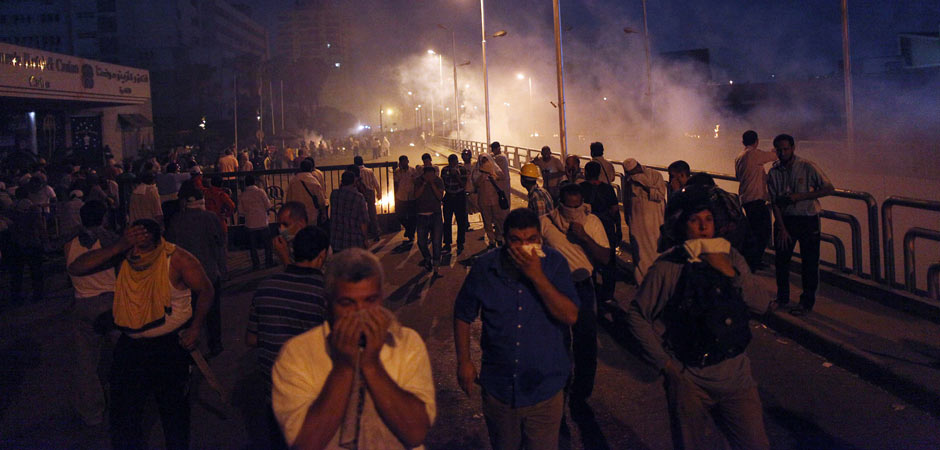
Egyptian politicians and Western diplomats: Mohamed Mursi might still be president of Egypt today if he had grasped a political deal brokered by the European Union with opposition parties in April

    Tuesday, July 23, 2013   No comments
Convinced that election victories gave them a sufficient basis to rule, Mursi and his Muslim Brotherhood spurned the offer to bridge the most populous Arab nation's deep political divide. Less than three months later, the army overthrew him after mass anti-government protests.

Under a compromise crafted in months of shuttle diplomacy by EU envoy Bernardino Leon, six secular opposition parties allied in the National Salvation Front would have recognised Mursi's legitimacy and agreed to participate in parliamentary elections they had threatened to boycott.

In return, Mursi would have agreed to replace Prime Minister Hisham Kandil and five key ministers to form a technocratic national unity cabinet, sack a disputed prosecutor general and amend the election law to satisfy Egypt's constitutional court.

The failure to clinch a deal shows the challenge facing the EU as it seeks to raise its profile in an area where the United States was long the sole power broker. But given deep antipathy to Washington on both sides of Egyptian politics, the EU may be the only "honest broker" and it is not giving up.

Its foreign policy chief, Catherine Ashton, returns to Cairo on Wednesday in a fresh effort to forge consensus - though there was little sign of that on Tuesday when an interim government was sworn in and the Brotherhood denounced it as "illegitimate".

read more >>

Kurdish-islamist infighting: fighting has spread from Hasakeh in northeastern Syria to several hotspots in Raqa province in the north

    Tuesday, July 23, 2013   No comments
Syrian Kurds made rapid advances in the north of the country Tuesday, expelling jihadists from several villages, as a gulf of mistrust between Arabs and Kurds grew, activists said.

Tuesday's fighting hit several villages including Yabseh, Kandal and Jalbeh, which lie in the northern province of Raqa on Syria's border with Turkey and are home to a mixture of ethnic and religious communities, said the Syrian Observatory for Human Rights.

It also reported that the Kurds expelled the jihadists from Kur Hassu, Atwan, Sarej and Khirbet Alu villages in the same area, which lies near the majority Kurdish town of Cobany.

In Hasake to the east, Kurdish-jihadist fighting went into the seventh consecutive day in the Jal Agha area and other villages in the majority Kurdish province, the Observatory added.

The latest battles come a week after fighters loyal to the Committees for the Protection of the Kurdish People (YPG) expelled the jihadist Al-Nusra Front and the Islamic State of Iraq and the Levant (ISIS) from the strategic Kurdish town of Ras al-Ain in Hasake province.


Read more >>

EU foreign ministers agreed on Monday to put the military wing of Lebanese group Hezbollah on the bloc's list of terrorist groups. But sanctions will have little impact

    Tuesday, July 23, 2013   No comments
It's a mistake that many make when they first arrive in Lebanon. Along the highway between the airport and city center, they see portraits of a plump man hanging on buildings, billboards and street lamps. He wears a black turban and glasses, his mouth usually turned up in a smile under his bushy, gray beard. Visitors often wonder if this is Lebanon's president.

But Hassan Nasrallah holds neither the office of president, nor any other political post in the country. Nevertheless, he is a powerful man in his homeland -- perhaps even its most powerful -- as the leader of Hezbollah, the Shiite militant group and political party that heads the strongest coalition in the country's parliament. Nasrallah also directs thousands of elite fighters who are searching for like-minded recruits in the region. Thanks to Nasrallah's private army, which is fighting on the side of the Syrian regime, President Bashar Assad has the upper hand against rebels there once again.
On Monday, European Union foreign ministers agreed to put this armed wing of Hezbollah on the bloc's list of terrorist groups. The move marks a striking about-face in European policy regarding the Shiite militants. Previously, European leaders had argued that Lebanon, already in a vulnerable state, would be further destabilized if the influential group were declared outcasts.

Sanctions Won't Be Felt...

read more >>

Sunday, July 21, 2013

A senior US intelligence official has warned that Syria's civil war could rage for several years and that the conflict is reviving al-Qaeda in Iraq

    Sunday, July 21, 2013   No comments
David Shedd, deputy director of the Defence Intelligence Agency, delivered one of the grimmest US public assessments of the Syrian conflict as he described the increasing strength of Islamic radicals there.
His sobering analysis was echoed by David Cameron yesterday. Syria "is a very depressing picture and it is a picture which is on the wrong trajectory," the Prime Minister said on the BBC's Andrew Marr Show.
"There is too much extremism among the rebels. There is also still appalling behaviour from this dreadful regime using chemical weapons. There is an enormous overspill of problems into neighbouring countries.
"I think he [President Bashar al-Assad] may be stronger than he was a few months ago but I'd still describe the situation as a stalemate."
Speaking at the Aspen Security Forum, Mr Shedd outlined equally bloody outcomes whether the Syrian dictator was toppled or not.

read more >>

Now we arrive in the Middle East as smiling supplicants, blessing any “people’s change” (unless it is any monarchical autocracy of the Gulf)

    Sunday, July 21, 2013   No comments
...
Middle East and NA
But never before has America joined in our European submission. Take the Obama policy, constructed on the colossal wreck of Bush’s New American Century. Barack Obama held out his hand to Iran. They bit his hand. He supported Mubarak. Then he no longer supported Mubarak. He supported the Egyptian Muslim Brotherhood president of Egypt after he won the elections. And he – and the repulsive Tony Blair – now support the Egyptian army. Blair was bad enough. Egypt was in danger of “sliding into total chaos”, he has now told us, and we have to help the country “go back [sic] to democracy” after the “virtually unique situation” in which “either the army intervened or the country collapsed”.

But now listen to William Burns, the US Under-Secretary of State and allegedly the most powerful diplomat in America – and thus the world – as he arrived in Cairo last week. “I did not come with American solutions, nor did I come to lecture anyone. We will not try to impose our model on Egypt.” Just what that “model” is was a mystery to Egyptians, but Burns’ inevitable visit to the lads in khaki who staged the latest coup suggests that, once again, Washington prefers generals to democrats in hot places.

read more >>

Syrian Kurdish forces freed a local leader linked to al Qaeda as part of an agreed ceasefire to end fierce fighting with Islamist rebels in the northern Syrian town of Tel Abyad on Sunday

    Sunday, July 21, 2013   No comments
In return, Islamist rebels have promised to release hundreds of Kurds taken hostage as collateral from the leader of the Islamic State of Iraq and Sham (ISIS), known as Abu Musaab.

The sporadic fighting in the northern Syrian border region over the past five days has signaled a growing power struggle as Islamists work to cement control of rebel zones while Kurds assert their autonomy in mostly Kurdish parts of the region.

The tensions highlight how the two-year insurgency against 43 years of Assad family rule is spinning off into strife within his opponents' ranks, running the risk of creating regionalized conflicts that could destabilize neighboring countries.

Pro-opposition activists said that Turkish military forces had been reinforced on Turkey's side of the frontier near Tel Abyad on Sunday, but the Turkish army could not be reached for comment. Turkish forces exchanged fire with Syrian Kurdish fighters in another border region earlier this week.


David Cameron: The Assad government may have got "stronger" in recent months, but more can be done to help Syria's opposition forces

    Sunday, July 21, 2013   No comments
The UK prime minister told the BBC there was a "stalemate" on the ground, but work must continue internationally to try to find a solution.

UK military chiefs have warned of the risks of arming rebel groups.

Mr Cameron said there was "too much extremism" among the opposition, but moderate groups still deserved support.

Syrian government forces have taken the initiative in recent months, and have been bolstered by the capture of the strategically important town of Qusair in the west of the country in June.

Most of the much bigger city of Homs has been recaptured by government troops backed by Lebanon's Hezbollah.
read more >>
 

Killing in Cairo: the full story of the Republican Guards' club shootings

    Sunday, July 21, 2013   No comments
In the early hours of 8 July 2013, 51 Muslim Brotherhood supporters camped outside the Republican Guards' club in Cairo were killed by security forces. The Egyptian military claimed the demonstrators had attempted to break into the building with the aid of armed motorcyclists.

After examining video evidence and interviewing eyewitnesses, medics and demonstrators Patrick Kingsley finds a different story – a coordinated assault on largely peaceful civilians. 'If they'd just wanted to break the sit-in, they could have done it in other ways. But they wanted to kill us,' a survivor says...

read more >>
  

Followers


Trending now...


ISR +


Frequently Used Labels and Topics

40 babies beheaded 77 + China A Week in Review Academic Integrity Adana Agreement afghanistan Africa African Union al-Azhar Algeria Aljazeera All Apartheid apostasy Arab League Arab nationalism Arab Spring Arabs in the West Armenia Arts and Cultures Arts and Entertainment Asia Assassinations Assimilation Azerbaijan Bangladesh Belarus Belt and Road Initiative Brazil BRI BRICS Brotherhood CAF Canada Capitalism Caroline Guenez Caspian Sea cCuba censorship Central Asia Charity Chechnya Children Rights China Christianity CIA Civil society Civil War climate colonialism communication communism con·science Conflict conscience Constitutionalism Contras Corruption Coups Covid19 Crimea Crimes against humanity D-8 Dearborn Debt Democracy Despotism Diplomacy discrimination Dissent Dmitry Medvedev Earthquakes Economics Economics and Finance Economy ECOWAS Education and Communication Egypt Elections energy Enlightenment environment equity Erdogan Europe Events Fatima FIFA FIFA World Cup FIFA World Cup Qatar 2020 Flour Massacre Food Football France Freedom freedom of speech G20 G7 Garden of Prosperity Gaza GCC GDP Genocide geopolitics Germany Global Security Global South Globalism globalization Greece Grozny Conference Hamas Health Hegemony Hezbollah hijab Hiroshima History and Civilizations Hormuz Human Rights Huquq Ibadiyya Ibn Khaldun ICC Ideas IGOs Immigration Imperialism In The News india Indonesia inequality inflation INSTC Instrumentalized Human Rights Intelligence Inter International Affairs International Law Iran IranDeal Iraq Iraq War ISIL Islam in America Islam in China Islam in Europe Islam in Russia Islam Today Islamic economics Islamic Jihad Islamic law Islamic Societies Islamism Islamophobia ISR MONTHLY ISR Weekly Bulletin ISR Weekly Review Bulletin Italy Japan Jordan Journalism Kenya Khamenei Kilicdaroglu Kurdistan Latin America Law and Society Lebanon Libya Majoritarianism Malaysia Mali mass killings Mauritania Media Media Bias Media Review Middle East migration Military Affairs Morocco Multipolar World Muslim Ban Muslim Women and Leadership Muslims Muslims in Europe Muslims in West Muslims Today NAM Narratives Nationalism NATO Natural Disasters Nelson Mandela NGOs Nicaragua Nicaragua Cuba Niger Nigeria Normalization North America North Korea Nuclear Deal Nuclear Technology Nuclear War Nusra October 7 Oman OPEC+ Opinion Polls Organisation of Islamic Cooperation - OIC Oslo Accords Pakistan Palestine Peace Philippines Philosophy poerty Poland police brutality Politics and Government Population Transfer Populism Poverty Prison Systems Propaganda Prophet Muhammad prosperity Protests Proxy Wars Public Health Putin Qatar Quran Rachel Corrie Racism Raisi Ramadan Ramadan War Regime Change religion and conflict Religion and Culture Religion and Politics religion and society Resistance Rights Rohingya Genocide Russia Salafism Sanctions Saudi Arabia Science and Technology SCO Sectarianism security Senegal Shahed sharia Sharia-compliant financial products Shia Silk Road Singapore Slavery Soccer socialism Southwest Asia and North Africa Sovereignty Space War Spain Sports Sports and Politics Starvation State Power State Terror Sudan Sunni Axis sunnism Supremacism SWANA Syria Ta-Nehisi Coates terrorism Thailand The Koreas Tourism Trade transportation Tunisia Turkey Turkiye U.S. Cruelty U.S. Foreign Policy UAE uk ukraine UN under the Rubble UNGA United States UNSC Uprisings Urban warfare US Foreign Policy US Veto USA Uyghur Venezuela Volga Bulgaria Wadee wahhabism War War and Peace War Crimes War on Iran Wealth and Power Wealth Building West Western Civilization Western Sahara WMDs Women women rights Work Workers World and Communities Xi Yemen Zionism

Search for old news

Find Articles by year, month hierarchy


AdSpace

_______________________________________________

Copyright © Islamic Societies Review. All rights reserved.