Wednesday, April 10, 2013

Egypt's army took part in torture and killings during revolution, report shows

    Wednesday, April 10, 2013   No comments
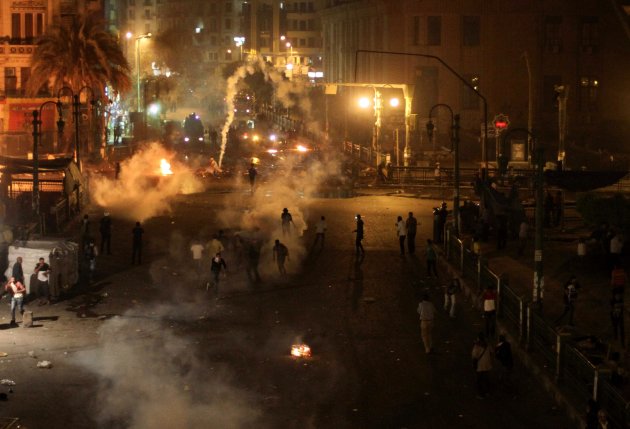
Egypt's armed forces participated in forced disappearances, torture and killings across the country – including in the Egyptian Museum – during the 2011 uprising, even as military leaders publicly declared their neutrality, according to a leaked presidential fact-finding report on revolution-era crimes.

The report, submitted to the president, Mohamed Morsi, by his own hand-picked committee in January, has yet to be made public, but a chapter obtained by the Guardian implicates the military in a catalogue of crimes against civilians, beginning with their first deployment to the streets. The chapter recommends that the government investigate the highest ranks of the armed forces to determine who was responsible.

More than 1,000 people, including many prisoners, are said to have gone missing during the 18 days of the revolt. Scores turned up in Egypt's morgues, shot or bearing signs of torture. Many have simply disappeared, leaving behind desperate families who hope, at best, that their loved ones are serving prison sentences that the government does not acknowledge.

The findings of the high-level investigation, implicating Egypt's powerful and secretive military, will put pressure on Morsi, who assumed power from the Supreme Council of the Armed Forces after his election last June and has declined to prosecute any officers, despite allegations that some participated in abuse. They could also figure in the retrial of the toppled president Hosni Mubarak and his former interior minister Habib el-Adly, who are set to return to court on Saturday to face charges – perhaps supported by new evidence from the fact-finding committee – that they were responsible for killing protesters during the revolt.

"This chapter sheds light on new and extremely disturbing incidents that implicate the military in serious human rights violations," said Hossam Bahgat, the director of the Egyptian Initiative for Personal Rights. "In particular, it uncovers new details on one of the most secret aspects of the 18 days of revolt that ended with the ouster of Mubarak: the role played by the armed forces in supporting Mubarak against protesters from the date they were deployed on 28 January 2011, until the first military statement was issued in support of the protesters on 10 February."

Syria's Jihadists face test of government in eastern city

    Wednesday, April 10, 2013   No comments
A month after they pulled down a statue of President Bashar al-Assad's once feared father, people in a city in eastern Syria are living under a Jihadist regime that could be a taste of what is in store for the country if Assad himself is overthrown.
Hardline Islamist brigades patrol streets abandoned by police. A religious court has replaced a collapsed judicial system, and minorities have fled, according to civic activists in Raqqa, the largest city to fall to the opposition since the uprising against four decades of Assad family rule broke out in March 2011.
The Jihadist show of force coupled with the absence of the Western-backed Syrian National Coalition, the main grouping of the political opposition, could consolidate an Islamist sweep in the north and east of the country. But the experience of Raqqa, where there have been demonstrations and strikes, shows that Islamist rule has got off to a difficult start.
The east, which accounts for all of Syria's oil output and most of its grain production, borders Iraq's Sunni Muslim heartland, where Sunni Jihadists opposed to the Iranian-backed Shi'ite government in Baghdad are also active.
Since falling, Raqqa has been in effect run by Ahrar al-Sham, one of the best organized of hundreds of opposition formations fighting to oust Assad, and its Islamist allies, opposition campaigners in the area said.
They said the al Qaeda-linked al-Nusra Front has a strong presence in the city and cooperates with Ahrar. The Iraqi wing of al Qaeda announced on Tuesday that Nusra was now its Syrian branch and the two groups would operate under one name -- the Islamic State in Iraq and the Levant.
Activist Maen Khader said Ahrar were quick to take control of the power and water departments, which are providing a mostly uninterrupted service, largely because a main hydro-electric dam on the Euphrates River, 40 km (25 miles) to the southwest in the town of Tabaqa, had been overrun by jihadists.
Unlike the town of Tel Abyad on the border with Turkey to the north, looting in Raqqa has been minimal, Khader said.

read more >>

Tuesday, April 09, 2013

Tunisia Now Exporting “Jihadis”

    Tuesday, April 09, 2013   No comments

Tunisian families have begun to dread knocks on their doors, or late-night phone calls, fearing that the messenger will bear the news that their son has been smuggled out of the country to join the “jihad” in Syria.
Families here told IPS that they have no way of contacting their sons once they leave — whether by choice or coercion they will never know — for the warring nation nearly 3,000 miles away. At most, family members receive an inaudible telephone call from Libya, where the soon-to-be militants are trained, the muffled voice on the other end of the line saying a quiet and final goodbye.

After that point, no news is good news. If they are contacted again, it will only be an anonymous caller announcing the death of a son, brother or husband, adding that the family should be proud of their martyred loved one.

The next day, the family might find a CD, slipped under the door, containing filmed footage of the burial.

There are no reliable data on exactly when young Tunisian men began rushing to join the Free Syrian Army, currently engaged in a battle to depose Syrian president Bashar al-Assad, but experts and civil society activists are agreed on one thing: the number is increasing.

On Mar. 29, local sources reported that between 6,000 and 10,000 men have left the country, while the Algerian press say the number could be closer to 12,000.

Families tell IPS the self-proclaimed jihadists leave in secret, often under cover of darkness, and change their names en route so that Facebook and internet searches yield no results. They believe mosques and charity organisations serve as fronts for this “recruitment” process.

Widely considered the cradle of the Arab Spring, Tunisia has gained a reputation as a progressive country, bolstered by the strong democratic current that toppled former dictator Zine Abadine Ben Ali in January 2011. The election of the moderate Islamist party Ennahda in October 2011 further raised hopes that the country would stay on track towards a more inclusive future.

But beneath the moderate veneer, a strong ultra-conservative undercurrent remained, steered by Salafist-controlled mosques – like Fath, Ennassr, Ettadhamen, and the great mosque of Ben Arous located on the outskirts of Tunis – that are now serving as headquarters for the smuggling of fighters.


Jabhat Al Nusra, Syrian Islamic Rebel Group, Merges With Al Qaeda In Iraq

    Tuesday, April 09, 2013   No comments
BEIRUT — Al-Qaida's branch in Iraq said it has merged with Syria's extremist Jabhat al-Nusra, a move that shows the rising confidence of radicals within the Syrian rebel movement and is likely to trigger renewed fears among its international backers.

A website linked to Jabhat al-Nusra confirmed on Tuesday the merger with the Islamic State of Iraq, whose leader, Abu Bakr al-Baghdadi, first made the announcement in a 21-minute audio message posted on militant websites late Monday.

Jabhat al-Nusra has taken an ever-bigger role in Syria's conflict over the last year, fighting in key battles and staging several large suicide bombings. The U.S. has designated it a terrorist organization.

The Syrian group has made little secret of its links across the Iraqi border, but until now it has not officially declared itself to be part of al-Qaida.

Al-Baghdadi said that his group – the Islamic State of Iraq – and Syria's Jabhat al-Nusra will now be known as the Islamic State in Iraq and the Levant.

"It is time to announce to the Levantine people and the whole world that Jabhat al-Nusra is merely an extension and part of the Islamic State of Iraq," he said.

He said that the Iraqi group was providing half of its budget to the conflict in Syria. Al-Baghdadi said that the Syrian group would have no separate leader but instead be led by the "people of Syria themselves" – implying that he would be in charge in both countries.


Monday, April 08, 2013

Brazil, China, and India Are Fat, And Getting Fatter

    Monday, April 08, 2013   No comments

In China, the growth rate of new Kentucky Fried Chicken restaurants is 13 percent a year, compared with 2.9 percent in the U.S. And as the chain has expanded, so have Chinese citizens' waistlines. Recently, the aspiring BRICS nations (Brazil, Russia, India, China, and South Africa) met in sunny Durban, South Africa, for their fifth summit to discuss their plans for creating their proposed BRICS Development Bank (BDB). Despite ongoing doubts that these nations will be able to quickly come to an agreement over where and how the bank will function, there is hope that these differences can be overcome.

But there is one issue that the BRICS leaders seemed to have overlooked. That is, how will the BRICS bank address these nations' ongoing struggle to contain the spread of disease? Diseases commonly attributed to economic wealth and prosperity, such as obesity and diabetes, are on the rise and will inevitably threaten their bristling economies should the BDB fail to adequately invest in healthcare infrastructure.

The proposed BDB bank is mainly focused on providing loans and grants - approximately $4.5 trillion in total - to finance infrastructural development projects in the BRICS and other developing nations. This funding will be used to construct railroads, bridges, highways, and ports. Created as an alternative " Bretton Woods for the developing nations," loans will be provided at favorable lending terms. The bank will also provide a currency reserve of $100 billion dollars to be used in times of economic crisis. Another implicit goal through this banking endeavor is to decrease the BRICS and other developing nations' ongoing reliance on the World Bank and IMF for financial assistance while creating a lending facility that better understands developing nations' context and needs.


Christian mourners, mob, police clash in Egypt

    Monday, April 08, 2013   No comments

CAIRO (AP) — A mob threw rocks and fired birdshot Sunday at several hundred Christians marching in a protest against Egypt's Islamist government after the funeral of four Christians killed in sectarian clashes over the weekend.
The Christians were chanting slogans against Islamist President Mohammed Morsi, just as several thousand did earlier during the funeral service nearby in the Coptic Orthodox cathedral in Cairo.
The attacking mob, described by witnesses as residents of the area, forced the marchers to take shelter inside the sprawling cathedral complex. They also showered the protesters with rocks from the roofs of nearby buildings, according to witness Ibrahim el-Shareef.
Mohammed Sultan, director of Egypt's national ambulance services, said at least 17 people were wounded in the clashes.

read more >>

WikiLeaks publishes 1.7m US diplomatic records

    Monday, April 08, 2013   No comments
WikiLeaks has published more than 1.7m US records covering diplomatic or intelligence reports on every country in the world.

The data, which has not been leaked, comprises diplomatic records from the beginning of 1973 to the end of 1976, covering a variety of diplomatic traffic including cables, intelligence reports and congressional correspondence.

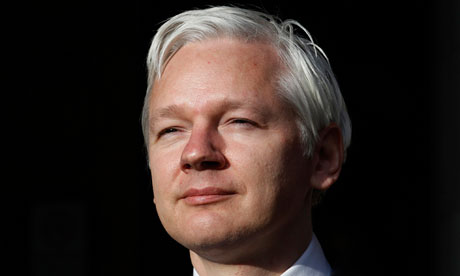
Julian Assange said WikiLeaks had been working for the past year to analyse and assess a vast amount of data held at the US national archives before releasing it in a searchable form.

WikiLeaks has called the collection the Public Library of US Diplomacy (PlusD), describing it as the world's largest searchable collection of US confidential, or formerly confidential, diplomatic communications.

Assange told Press Association the information showed the vast range and scope of US diplomatic and intelligence activity around the world.


Sunday, April 07, 2013

The leader of Iraq’s oil union is being threatened with prison–again

    Sunday, April 07, 2013   No comments

Many Iraqi oil workers thought the fall of Saddam Hussein would mean they would finally be free to organize unions, and that their nationally owned industry would be devoted to financing the reconstruction of the country. But the reality could not have been more different. Earlier this month, the head of the Iraqi Federation of Oil Unions, Hassan Juma’a (below right), was hauled into a Basra courtroom and accused of organizing strikes, a charge for which he could face prison time. The union he heads is still technically illegal: Saddam’s ban on public-sector unions was the sole Saddam-era dictate kept in place under the U.S. occupation, and Iraqi Prime Minister Nouri Maliki hasn't shown any interest in changing it since most U.S. troops left.

And the oil industry? The big multinational petroleum giants now run the nation’s fields. Between 2009 and 2010, the Maliki government granted contracts for developing existing fields and exploring new ones to 18 companies, including ExxonMobil, Royal Dutch Shell, the Italian Eni, Russia's Gazprom and Lukoil, Malaysia's Petronas and a partnership between BP and the Chinese National Petroleum Corporation. When they started, the U.S. military provided the initial security umbrella protecting all of their field operations.

The Ministry of Oil technically still owns the oil, but functions more as the multinationals’ adjunct, while stripping workers of their rights. Since 2003 the ministry has denied the union its right to exist and retaliated against its leaders and activists. As the oil corporations rush in to lay claim to developing fields, ministry spokesman Assam Jihad told the Iraq Oil Report in 2010, “Unionists instigate the public against the plans of the oil ministry to develop [Iraq's] oil riches using foreign development.”


The Nation Is Made Of These

    Sunday, April 07, 2013   No comments

by Javed Jabbar


The further we move on from March 23, 1940—and from December 16, 1971, when the original Pakistan disintegra­ted—the stronger and deeper, and at the same time, more stressful, becomes the search for a cohesive sense of Pakistani nationalism.

Composed of several elements, Muslim identity is the prime driver of Pakistani nationalism, but not exclusively so. Non-Muslim identities are small, yet vital and intrinsic parts of Pakistani nationalism. Foremost among them are Pakistani Hindu and Buddhist citizens. In a foundational sense, Pakistani Hindus and Buddhists are the oldest Pakistanis. Their ancestors have lived upon the lands that constitute our territory for centuries before the first Muslims arrived, or before the first local was converted to Islam.

If roots in territory make people eligible to be regarded as ‘sons of the soil’, then these non-Muslims are the first sons and daughters of Pakistan. It is unfortunate that, in the name of a state entity created less than 70 years ago, peoples whose ancestors have lived on these very territories for over 7,000 years are now ‘minorities’. Worse, many of them are regarded (and regard themselves) as second-class citizens. Adherents of all non-Islamic faiths are ineligible, by virtue of their religion, to be elected president or prime minister. This is so despite the fact that Article 20 of the Constitution grants—subject to law, public order and morality—freedom to profess religion and to manage religious institutions. Article 25, which deals with citizens’ equality says, in part: “All citizens are equal before law and are entitled to equal protection of law.” This is further reinforced by Article 36, which obliges the state to safeguard the legitimate rights and interests of minorities, including their due representation in the federal and provincial services.

Working with Hindus, Christians and Zoroastrians for over 30 years in remote areas and in urban centres, this wri­ter has first-hand experience of their attitudes and act­ions. These non-Muslim Pakistanis have a deep love for Pakistan. They are proud Pakistanis, and contribute abundantly to the country’s progress—and little to its problems! Yet Pakistani Hindus are often regarded by segments of the state and society as Indian ‘agents’ or as being inherently disloyal to Pakistan. Such suspicion is a profanity in itself.

However, this does not prevent non-Muslim Pakistanis from rendering notable roles in all areas, from agriculture, business and law to education, diplomacy and politics.


Azeri Muslims Protest Theologian’s Arrest

    Sunday, April 07, 2013   No comments

By Idrak Abbasov

The arrest of an Muslim theologian who preached against the government in Azerbaijan has sparked a new show of opposition in which representatives of secular parties have sided with Islamists.

Police arrested Taleh Bagirzadeh, 29, on March 31 and charged him with possession of drugs, an allegation often used against opponents of the government.

On April 1, devout Muslims and opposition activists took to Imam Hussain Square in Baku to show their support for Bagirzadeh.

Veysal Gasimov, a member of the opposition Popular Front party, was arrested and sentenced to ten days in jail for taking part in the protest, which attracted between 500 and 600 people.

Further demonstrations followed on April 2, in the town of Lenkoran close to the Iranian border, and in the village of Nardaran, a village 25 kilometres north of the capital Baku which is a focal point for Azerbaijan’s majority Shia Muslim faith.

Residents of Nardaran promised to carrying on protesting both in the village and in Baku until Bagirzadeh is released.


Followers


Most popular articles


ISR +


Frequently Used Labels and Topics

40 babies beheaded 77 + China A Week in Review Academic Integrity Adana Agreement afghanistan Africa African Union al-Azhar Algeria Aljazeera All Apartheid apostasy Arab League Arab nationalism Arab Spring Arabs in the West Armenia Arts and Cultures Arts and Entertainment Asia Assassinations Assimilation Azerbaijan Bangladesh Belarus Belt and Road Initiative Brazil BRI BRICS Brotherhood CAF Canada Capitalism Caroline Guenez Caspian Sea cCuba censorship Central Asia Charity Chechnya Children Rights China Christianity CIA Civil society Civil War climate colonialism communication communism con·science Conflict conscience Constitutionalism Contras Corruption Coups Covid19 Crimea Crimes against humanity D-8 Dearborn Debt Democracy Despotism Diplomacy discrimination Dissent Dmitry Medvedev Earthquakes Economics Economics and Finance Economy ECOWAS Education and Communication Egypt Elections energy Enlightenment environment equity Erdogan Europe Events Fatima FIFA FIFA World Cup FIFA World Cup Qatar 2020 Flour Massacre Food Football France Freedom freedom of speech G20 G7 Garden of Prosperity Gaza GCC GDP Genocide geopolitics Germany Global Security Global South Globalism globalization Greece Grozny Conference Hamas Health Hegemony Hezbollah hijab Hiroshima History and Civilizations Human Rights Huquq Ibadiyya Ibn Khaldun ICC Ideas IGOs Immigration Imperialism In The News india Indonesia inequality inflation INSTC Instrumentalized Human Rights Intelligence Inter International Affairs International Law Iran IranDeal Iraq Iraq War ISIL Islam in America Islam in China Islam in Europe Islam in Russia Islam Today Islamic economics Islamic Jihad Islamic law Islamic Societies Islamism Islamophobia ISR MONTHLY ISR Weekly Bulletin ISR Weekly Review Bulletin Italy Japan Jordan Journalism Kenya Khamenei Kilicdaroglu Kurdistan Latin America Law and Society Lebanon Libya Majoritarianism Malaysia Mali mass killings Mauritania Media Media Bias Media Review Middle East migration Military Affairs Morocco Multipolar World Muslim Ban Muslim Women and Leadership Muslims Muslims in Europe Muslims in West Muslims Today NAM Narratives Nationalism NATO Natural Disasters Nelson Mandela NGOs Nicaragua Nicaragua Cuba Niger Nigeria Normalization North America North Korea Nuclear Deal Nuclear Technology Nuclear War Nusra October 7 Oman OPEC+ Opinion Polls Organisation of Islamic Cooperation - OIC Oslo Accords Pakistan Palestine Peace Philippines Philosophy poerty Poland police brutality Politics and Government Population Transfer Populism Poverty Prison Systems Propaganda Prophet Muhammad prosperity Protests Proxy Wars Public Health Putin Qatar Quran Rachel Corrie Racism Raisi Ramadan Regime Change religion and conflict Religion and Culture Religion and Politics religion and society Resistance Rights Rohingya Genocide Russia Salafism Sanctions Saudi Arabia Science and Technology SCO Sectarianism security Senegal Shahed sharia Sharia-compliant financial products Shia Silk Road Singapore Slavery Soccer socialism Southwest Asia and North Africa Sovereignty Space War Spain Sports Sports and Politics Starvation State Power State Terror Sudan sunnism Supremacism SWANA Syria Ta-Nehisi Coates terrorism Thailand The Koreas Tourism Trade transportation Tunisia Turkey Turkiye U.S. Cruelty U.S. Foreign Policy UAE uk ukraine UN under the Rubble UNGA United States UNSC Uprisings Urban warfare US Foreign Policy US Veto USA Uyghur Venezuela Volga Bulgaria Wadee wahhabism War War and Peace War Crimes Wealth and Power Wealth Building West Western Civilization Western Sahara WMDs Women women rights Work Workers World and Communities Xi Yemen Zionism

Search for old news

Find Articles by year, month hierarchy


AdSpace

_______________________________________________

Copyright © Islamic Societies Review. All rights reserved.