Showing posts with label wahhabism. Show all posts

Thursday, July 30, 2026

Saudi Arabia’s New Naval Alliance Masks an Old War and Risks Global Catastrophe

    Thursday, July 30, 2026   No comments

The announcement from Riyadh on July 30, 2026, of a 14-nation "multinational defensive naval alliance" is being sold to the international community as a necessary measure to protect global maritime trade. However, a closer look at the geopolitical realities on the ground reveals a familiar, dangerous playbook. This repeated scenario is clearly designed to provide political cover for Saudi Arabia to launch a wider military offensive against the Yemen government in Sanaa.


Far from securing the waterways, this initiative is highly unlikely to stop the Houthis or successfully open the strait. Instead, if this militarization drags on, it will be catastrophic for the global economy and will ultimately isolate the 14 countries that have signed on to support this Saudi initiative.

The Ghost of the 2015 Coalition

To understand the current maneuver, one must look at the recent past. More than ten years ago, in 2015, Saudi Arabia announced a coalition of 10 Muslim states with a stated mission to overthrow the Sanaa government and restore its own allied government, which was operating first out of Riyadh and later from Aden.

The reality of that war, however, was starkly different from the diplomatic optics. During that period, it was just Saudi Arabia and the UAE who actually conducted the war on the ground and in the air. The broader coalition largely stayed on the sidelines, and the military campaign went nowhere, resulting in a protracted stalemate and a devastating humanitarian crisis.

Today, Riyadh is attempting to recycle this strategy under a new facade. The new coalition boasts a different stated mission—protecting transit in the Red Sea—but the underlying objective remains the same: to build a multinational shield behind which Saudi Arabia can escalate its conflict with Sanaa.

A Chokepoint Turned Crisis Zone

According to the founding charter announced in Riyadh, the alliance will focus on the Bab el-Mandeb Strait, the Red Sea, and the Gulf of Aden. While the 14 founding members—including regional heavyweights like Egypt, Turkey, Pakistan, and Jordan—claim the alliance is "purely defensive," the practical effect will be the exact opposite.

Rather than securing the region, this massive naval buildup is likely to increase the cost of transit in the Red Sea and turn that tight, vital waterway into a permanent crisis point. The presence of a large, Saudi-led multinational naval force will inevitably be viewed by the Sanaa government and its allies as a direct blockade and a prelude to invasion. This will spook global economic systems, driving up insurance premiums, forcing shipping reroutes, and injecting massive volatility into global energy and supply chain markets.

If this standoff takes longer than a few weeks, the resulting disruption will be catastrophic for the global economy, which is already struggling to absorb the shocks of ongoing US-Iran tensions and broader Middle Eastern instability.

Diplomatic Isolation for the 14

By joining this coalition, the 14 founding nations are inadvertently signing up for a diplomatic disaster. The international community is increasingly wary of endless Middle Eastern conflicts. By providing political and military cover for a Saudi initiative to start a wider war with the Sanaa government, these 14 countries risk severe diplomatic isolation.

They will be viewed not as defenders of global trade, but as complicit actors in a regional land grab and an aggressive expansion of the Yemen conflict. Nations like Turkey, Pakistan, and Egypt, which have their own complex geopolitical balancing acts, will find their international standing severely damaged if this naval alliance is used as a Trojan horse for bombing campaigns against Sanaa.

The Internal Saudi Tinderbox

Perhaps the most dangerous aspect of this new military venture is how it intersects with Saudi Arabia’s fragile internal landscape. Given the current global and regional context, this round of Saudi violence can easily backfire and destabilize the Kingdom.

Saudi Arabia is currently undergoing radical internal changes. The kingdom, traditionally a very conservative society, is rapidly abandoning aspects of its historical culture in a aggressive push for economic gains and foreign investment under Vision 2030. This rapid social engineering has created underlying friction within Saudi society.

Furthermore, the political foundation of the current leadership remains susceptible to internal shocks. The current trajectory was set when the young prince, Mohammed bin Salman, sidelined the more traditional crown prince, Mohammed bin Nayef, in what was widely seen by regional observers as a bloodless coup within the halls of power in the Kingdom. This consolidation of power relied heavily on the promise of economic prosperity and regional stability.

Dragging the Kingdom into another unwinnable, expensive war in Yemen—disguised as a maritime defense pact—threatens to shatter those promises. The financial drain of a prolonged naval and aerial campaign, combined with the risk of retaliatory strikes on Saudi oil infrastructure (as seen in the recent attacks on the Eastern Province), could ignite domestic unrest.


The 14-nation naval alliance announced in Riyadh is a geopolitical mirage. It promises security but delivers a roadmap for escalation. It will not stop the Houthis, it will not secure the Red Sea, and it will not bring stability to the Arabian Peninsula. Instead, it threatens to crash the global economy, isolate its member states on the world stage, and push the Saudi Kingdom toward an internal and external crisis from which it may not easily recover. The world should not be fooled by the "defensive" label; this is the opening salvo of a much wider, and much more dangerous, war.

Who are the member-states of the Saudi Coalition against the Houthis?

  1. Saudi Arabia Lead nation and host of headquarters
  2. Qatar
  3. Kuwait
  4. Bahrain 
  5. Pakistan 
  6. Turkey 
  7. Egypt
  8. Jordan
  9. Yemen  Note: This refers to the Saudi-backed government, not the Sanaa government
  10. Bangladesh
  11. Nigeria 
  12. Sudan 
  13. Djibouti 
  14. Somalia 
Regional Breakdown:
  • Gulf States: 4 (Saudi Arabia, Qatar, Kuwait, Bahrain)
  • Middle East/North Africa: 4 (Egypt, Jordan, Yemen, Sudan)
  • Horn of Africa: 2 (Djibouti, Somalia)
  • South Asia: 2 (Pakistan, Bangladesh)
  • Other: 1 (Turkey - transcontinental), 1 (Nigeria - West Africa)


Yemeni counternarrative:

Meanwhile, the Houthis are already actively weaponizing a potent propaganda narrative to galvanize religious and regional opposition to this new coalition. Capitalizing on recently surfaced allegations and documents suggesting that pieces of the sacred Kaaba cover (the Kiswa) were gifted or shipped to Jeffrey Epstein’s residence, Houthi media and allied outlets are accusing the Saudi ruling elite of defiling Islam’s holiest sites and beliefs for corrupt, secular ends.

This narrative is sharply amplified by the circulation of photographs showing Crown Prince Mohammed bin Salman alongside Epstein, which Houthi supporters are using to frame the Saudi leadership not as defenders of the faith, but as participants in an "alliance of criminality" with Western predatory elites.

By framing the impending conflict as a moral and religious defense of Islamic sanctities against a corrupt monarchy, the Houthis aim to severely undermine the religious legitimacy of the Saudi state, transforming a geopolitical dispute into a profound ideological flashpoint that could resonate dangerously across the broader Muslim world.

Leader of Yemen's Ansar Allah, Sayyed Abdul-Malik al-Houthi: 

The Saudis gave Epstein the curtain of the Holy Kaaba, intending for him to use it as a mat to walk on with his shoes, and to incorporate it into his satanic rituals.


Unfortunately, Islamic governments and religious authorities in the Muslim world have remained silent regarding the gift of the Kaaba's curtain to the Jewish criminal Epstein.

I call for the formation of an Islamic committee to investigate this betrayal of giving the Kaaba's curtain to the Jewish criminal Epstein.


Wednesday, July 29, 2026

A Decade of Transformation: Al-Julani's Public Debut and the Geopolitical Chess Game in Syria

    Wednesday, July 29, 2026   No comments

Ten years ago today, a masked militant leader removed his veil before the world, signaling not just a rebranding but a revealing chapter in the complex theater of proxy warfare.

July 30, 2026 — On this day in 2016, Abu Mohammad al-Julani, then the emir of Jabhat al-Nusra, Al-Qaeda's Syrian affiliate, sat before an Aljazeera camera and publicly revealed his face for the first time. Flanked by two other figures, dressed in military fatigues with a white turban, he read from a statement that would reshape the Syrian conflict's trajectory: the severance of formal ties with Al-Qaeda and the birth of "Jabhat Fath al-Sham" (The Front for the Conquest of Syria).

In the carefully staged video, broadcast exclusively by Qatar's Aljazeera, al-Julani—now known as Ahmad al-Sharaa and the self-decalred leader of Syria's transitional government—thanked Al-Qaeda's leadership, including Ayman al-Zawahiri, for their "noble stance" in prioritizing "the interests of the people of Al-Sham, their Jihad, their revolution."

He quoted Osama bin Laden: "The interests of the Ummah take precedence over the interest of any state; the interests of the state take precedence over the interest of any Jama'ah (group); the interests of the Jama'ah take precedence over any individual."

Then came the announcement: "For the aforementioned reasons, we declare the complete cancellation of all operations under the name of Jabhat Al-Nusra, and the formation of a new group operating under the name 'Jabhat Fath Al-Sham,' noting that this new organisation has no affiliation to any external entity."

The statement outlined five goals:

Establishing Sharia law and justice

  • Unifying mujahideen ranks to liberate Syria from Bashar al-Assad
  • Protecting jihad in Syria
  • Serving Muslims' daily needs
  • Ensuring security and stability for the masses

The Afghan Template Revisited

This moment, a decade ago, reveals a pattern as old as the modern jihad movement itself. The theatrical severing of ties, the rebranding, the public unveiling—these were not signs of ideological moderation but of strategic adaptation within a framework that has served various geopolitical interests since the 1980s.

During the Soviet-Afghan War, the United States, through Pakistan's ISI and Saudi Arabia, funneled billions to mujahideen fighters, including those who would later form Al-Qaeda. The strategy was clear: use religiously motivated fighters as a proxy force against a geopolitical rival. When the Soviets withdrew in 1989, the infrastructure of jihad remained, as did the networks, the ideology, and the operatives.

What we witnessed in Syria, and particularly in al-Julani's 2016 announcement, was the refinement of this model. By 2016, the Syrian conflict had become the new Afghanistan—a proxy battlefield where regional and global powers could fight without direct confrontation. Russia had intervened in 2015 to prop up Assad. The United States was backing various opposition groups while simultaneously fighting ISIS. Turkey, Saudi Arabia, Qatar, and Iran were all pursuing their own agendas.

The Convenience of "Moderate" Extremism

Al-Julani's statement emphasized that the new organization would have "no affiliation to any external entity"—a claim that strained credibility given the complex web of support flowing through Turkey and other channels. Yet this rebranding served multiple masters:

For al-Julani and his fighters, it provided operational flexibility, allowing them to receive support from actors who couldn't openly back an Al-Qaeda affiliate. It enabled participation in political processes and potential negotiations.

For regional powers, particularly Turkey and Gulf states, it created a deniable proxy—a group that could fight Assad and Kurdish forces while maintaining plausible distance from Al-Qaeda's global terrorism brand.

For the United States and its allies, it fit a familiar pattern: the "good jihadist" versus "bad jihadist" dichotomy that had proven so useful in Afghanistan, Bosnia, Kosovo, and Libya. While officially designating Al-Nusra as a terrorist organization, the reality on the ground was more nuanced, with the group often fighting against ISIS and Assad—enemies shared with the West.

The Strategic Assimilation

The video's content reveals the ideological continuity beneath the organizational change. Al-Julani quoted bin Laden's hierarchical framework of interests, demonstrating that the strategic thinking remained intact even as the organizational chart changed. The goal of establishing Sharia law, unifying mujahideen, and liberating Syria remained constant.

What changed was the packaging—and that was the point. The transformation from Al-Nusra to Jabhat Fath al-Sham (and later to Hay'at Tahrir al-Sham) demonstrated how jihadist groups could evolve tactically while maintaining strategic objectives. This adaptability made them more useful to various geopolitical actors pursuing their own interests in Syria.

The fact that this announcement was broadcast on Al Jazeera, a Qatari state-funded network, was itself significant. Qatar, a U.S. ally hosting America's largest Middle East military base at Al Udeid, was providing a platform for a former Al-Qaeda leader to announce his group's rebranding—highlighting the complex, often contradictory nature of Middle East geopolitics.

A Decade Later: From Jihadist to Statesman

The ultimate irony of this anniversary is where al-Julani stands today. Now governing Syria as Ahmad al-Sharaa, wearing suits instead of fatigues, meeting with world leaders, and leading a transitional government, he has completed the transformation that began with that 2016 announcement.

This trajectory—from masked jihadist to public political leader—validates the strategic thinking outlined in that video. By severing the formal Al-Qaeda link, maintaining operational capability, and positioning himself as a defender of Syrian interests against both Assad and foreign powers, al-Julani navigated the conflict to emerge as Syria's de facto leader.

The Enduring Pattern

Ten years on, al-Julani's public debut reminds us that the use of jihadist groups as geopolitical tools didn't end with the Soviet withdrawal from Afghanistan. It evolved. The Syrian conflict demonstrated that even groups with global terrorist ambitions could be assimilated into regional power struggles, serving interests that extended far beyond their ideological goals.

The United States, which once armed the mujahideen against the Soviets, found itself in Syria in the uncomfortable position of tacitly benefiting from the efforts of groups it officially designated as terrorists, when those groups fought against ISIS and Assad—enemies aligned against U.S. interests.

This is not to suggest a conspiracy, but rather to acknowledge a recurring pattern: in the chaos of proxy warfare, ideological enemies can become tactical allies, and today's terrorist can become tomorrow's negotiating partner. The 2016 announcement wasn't a break from Al-Qaeda's strategy—it was the fulfillment of it, demonstrating the movement's ability to adapt, survive, and ultimately thrive within the international system it claims to reject.

As Syria attempts to rebuild under al-Sharaa's leadership, this anniversary serves as a stark reminder of the unintended consequences of proxy warfare and the long shadows cast by geopolitical expediency. The man who once quoted bin Laden now sits in presidential palaces, and the world must decide whether to engage with him—a testament to the complex, morally ambiguous reality of modern geopolitics.

Monday, October 21, 2024

The Mufti of the Sultanate of Oman issues an official statement about the death of Sinwar

    Monday, October 21, 2024   No comments

A few hours after the Grand Mufti of the Sultanate of Oman, Sheikh Ahmed bin Hamad Al-Khalili, mourned the Palestinians and “the entire nation for the martyrdom of the head of the political bureau of the Hamas movement", Yahya Sinwar, calling on the nation to support the resistance with all its might, he issued a strongly worded second statement against anyone who mocks the martyrs of the resistance. His Eminence said in a statement on Saturday: “No one mocks the honorable people who die as martyrs in the fields of honor in jihad for the sake of God except the vile, who has been deprived of a mind that enables him to think, (And he for whom Allah has not given light - for him there is no light). 

 The Grand Mufti’s statement came said, Friday: “We received with pride and honor the news of the martyrdom of the heroic leader Yahya Sinwar, after he spent a period in jihad and the enemy was unable to capture him.” He added, praising Sinwar: “Congratulations to him, as he passed away facing the enemy and not turning his back. For that, we, the struggling Palestinian people, and the entire nation offer our condolences.”

Al-Khalili continued: “It is a matter that calls for the entire nation to unite, and for its scholars to rise like the wind sent forth to defend its rights, and to urge it to stand up to the Zionist entity, and to support this resistance with all its might.”

The Grand Mufti of Oman praised what Sinwar had offered, stressing that “he passed away to his Lord after a journey full of holy jihad, and joined those who preceded him, men who were true to their covenant with God,” expressing his hope that those who follow him “will fill his void with the same determination and resolve.”

The Grand Mufti of Oman concluded his post by saying: “The entire nation must unite, and its scholars must rise like the wind sent forth to defend its rights,” he said. We received with great pride the news of the martyrdom of the heroic leader Yahya Sinwar, after a long career in the holy jihad, following in the footsteps of his jihadist predecessors. We hope that someone will soon succeed him to fill his void with the same determination and resolve. The entire nation must unite, and its scholars must rise like the wind to defend its rights.


Monday, April 08, 2024

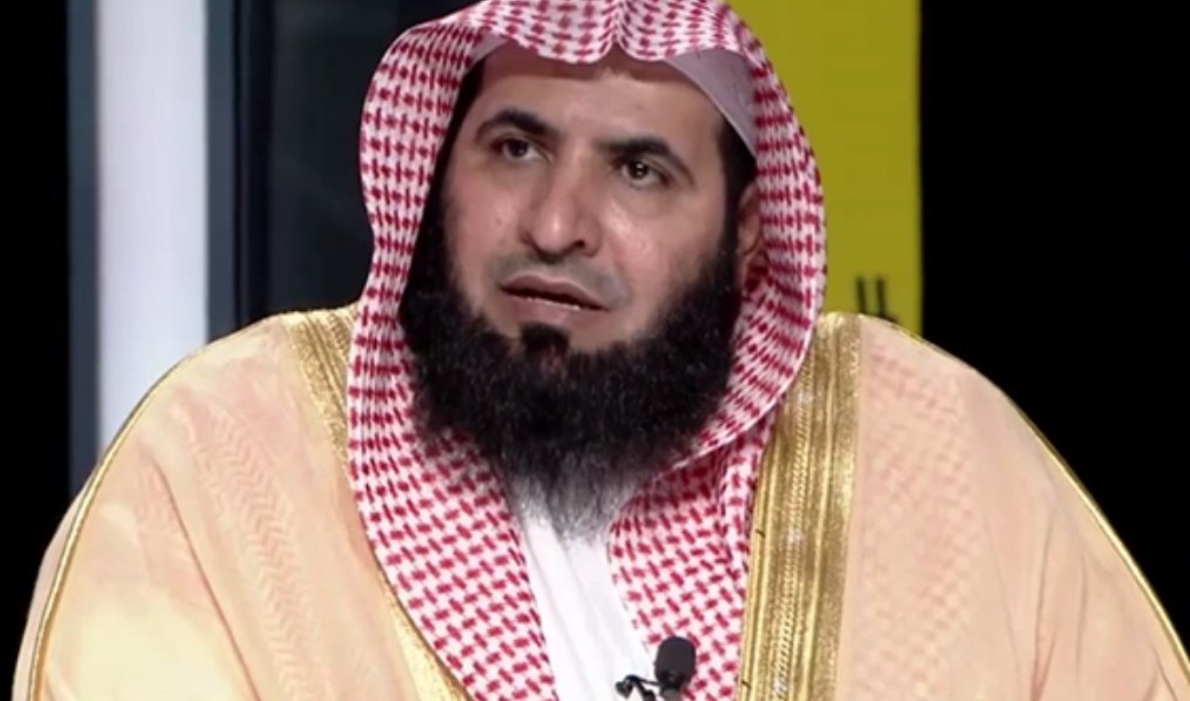
The Saudi Mufti Prohibits giving money for Iftar charity, legitimizes slavery

    Monday, April 08, 2024   No comments

Saudi Arabia’s highest religious authority, issuing a religious decree concerning the practice of giving Iftar sadaqa in the form of cash (money), provided reference that can be seen as legitimizing slavery despite its abolition all around the world and despite the evidence in the Quran that designated slavery as evil and encouraged Muslims to free slaves when unable to fast, break an oath, or commit other moral or legal infractions. The Fatwa comes in a time when more than 2 million people in Gaza are starved to death and could need cash provided to them through aid organizations who can only receive money from the world community.

According to the Saudi Press Agency, the Grand Mufti of the Kingdom said, the Grand Mufti of Saudi Arabia, Chairman of the Council of Senior Scholars and Chairman of the Permanent Committee for Scholarly Research and Fatwa, Sheikh Abdul Aziz Al Sheikh, issued a ruling that giving Zakat al-Fitr in money is not valid “because that is contrary to the Sunnah of the Messenger of God, may God’s prayers and peace be upon him. May God bless him and grant him peace and the Rightly Guided Caliphs who used to remove it from food.”

The Saudi Mufti added that “Zakat al-Fitr has been prescribed for all Muslims, males and females, old and young, free and slaves.”

It should be noted that other Sunni schools of law consider giving iftar charity in the form of cash (or anything of value), to be valid.

The kingdom has been run through an arrangement that granted Wahhabi scholars from Al Sheikh clan, religious power in return for their blessing of the form of governance in the kingdom under the control of the Al Saudi clan. Saudi Arabia’s official religious practices are derived from the Wahhabism, the strictest religious sect in Islamic societies and Wahhabi religious figures use textual evidence irrespective of rational facts and changed circumstances. The same sect is followed by members of al-Qaeda and the “Islamic State”.


Sunday, May 28, 2023

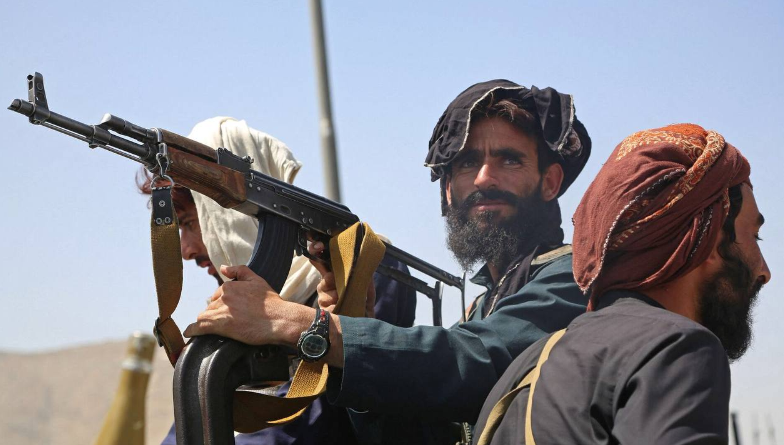
The "Taliban": "we destroyed 18 Iranian border facilities in total"

    Sunday, May 28, 2023   No comments

Taliban is stil driven by the same supremacist ideology that founded it; that appears to be the conclusion one can draw from the statements of its leaders about the recent clashes at the border with Iran.


A statement issued by the Taliban's Social Communications Department read: "The Iranian Revolutionary Guards carried out terrorist attacks from its huge border posts. Iran has not put up a strong resistance so far. It seems that its army is weak and feminine."

For his part, the leader of the "Taliban" movement, Abdul Hamid Khorasani, stated in a video speech: "Do not test our strength. You are behind the scenes with the Westerners. We are true Muslims. If the sheikhs allow us, we will seize Tehran."


Sunday, January 22, 2023

Saudi Religious Rulers: There is no validity to apostasy law in Islam

    Sunday, January 22, 2023   No comments

For years, the Saudi political rulers used the fictitious apostasy law to kill political opponents, religious Salafi authority found the fictitious bases for the political rulers to do so. Now with the Saudi political rulers changing their tune about apostasy, the Saudi Religious Rulers are preparing the ground for them to change apostasy law. An influential Saudi religious authority just declared this: "There is no validity to apostasy."


Tolerance with regard to leaving the Islamic religion in Saudi Arabia, or what is known as apostasy and the apostate from Islam, was not permissible or open to discussion.

“There is no punishment for apostasy unless the apostate is against the ruler.”

However, as the Kingdom entered the era of openness, rational voices began to address these controls, the latest of which was what Ahmed Al-Ghamdi, the former director of the Commission for the Promotion of Virtue and the Prevention of Vice, dared to do, and his writing of an article entitled “There is no validity until apostasy.”


Al-Ghamdi said in his article, which sparked controversy among Saudis, that what is established in the court texts of the Qur’an is the freedom of man in his faith, and that there is no compulsion in religion. Abstract apostasy is an explicit, coherent, correct text that cannot be challenged.

Al-Ghamdi added: I will explain here the response to the suspicions of this objection, as follows: First: They argued with what the two sheikhs included in their Sahihs on the authority of Ibn Masoud, who said: The Messenger of God said: “The blood of a Muslim who testifies that there is no god but God and that I am the Messenger of God is not lawful except in one of three “A life for a life, the married adulterer, the one who separates from his religion and the one who abandons the group.” They said, “This is a report in the Two Sahihs that states that the apostate should be killed.” I said: This hadith is incorrect, and it is not accepted that it is clear for the following: First: Its chain of transmission is weak, because its effect is on the most basic, and it is fraudulent. He narrated it with cursing, and what he cursed will not be accepted from him.”


The Saudis were divided over Al-Ghamdi's interpretations. Some of them found that he inferred false evidence, and its purpose was to waste God's law, and some of them found that Sheikh Al-Ghamdi is leading a battle of thought and enlightenment against the extremists.

Those who rejected Al-Ghamdi’s article invoked what Ibn Taymiyyah said in Al-Sarim Al-Masloul: Apostasy is of two types: an abstract apostasy, and a severe apostasy, the law of killing in particular, and both of them have established evidence that the owner must be killed.

The Saudi authorities were leveling accusations of apostasy, not only with regard to leaving Islam, but those charges included insulting the divine being and the Prophet Muhammad, and criticizing the Saudi state for applying the provisions of Sharia, for example, the charges that were leveled against the Palestinian poet Ashraf Fayyad, and a death sentence was issued against him. Then it was commuted to 8 years in prison.

Saudi Arabia has not yet abolished the “punishment of apostasy,” and in some cases replaces its mandatory punishment with death, with imprisonment.


Submit your story (pitch an article)

Name

Email *

Message *


Trending Today...


ISR +


Frequently Used Labels and Topics

40 babies beheaded 77 + China A Week in Review Academic Integrity Adana Agreement afghanistan Africa African Union al-Azhar Algeria Aljazeera All Apartheid apostasy Arab League Arab nationalism Arab Spring Arabs in the West Armenia Arts and Cultures Arts and Entertainment Asia Assassinations Assimilation Azerbaijan Bahrain Bangladesh Belarus Belt and Road Initiative Brazil BRI BRICS Brotherhood CAF Canada Capitalism Caroline Guenez Caspian Sea cCuba censorship Central Asia Charity Chechnya Children Rights China Christianity CIA Civil society Civil War climate colonialism communication communism con·science Conflict conscience Constitutionalism Contras Corruption Coups Covid19 Crimea Crimes against humanity D-8 Dearborn Debt Democracy Despotism Diplomacy discrimination Dissent Dmitry Medvedev Earthquakes Economics Economics and Finance Economy ECOWAS Education and Communication Egypt Elections energy Enlightenment environment Epstein equity Erdogan ethics Europe Events Fatima FIFA FIFA World Cup FIFA World Cup Qatar 2020 Flour Massacre Food Football France Freedom freedom of speech G20 G7 Garden of Prosperity Gaza GCC GDP Genocide geopolitics Germany Global Security Global South Globalism globalization Greece Grozny Conference Hamas Health Hegemony Hezbollah hijab Hiroshima History and Civilizations Hormuz hum Human Rights Huquq Ibadiyya Ibn Khaldun ICC Ideas IGOs Immigration Imperialism In The News india Indonesia inequality inflation INSTC Instrumentalized Human Rights Intelligence Inter International Affairs International Law Iran IranDeal Iraq Iraq War ISIL Islam in America Islam in China Islam in Europe Islam in Russia Islam Today Islamic economics Islamic Jihad Islamic law Islamic Societies Islamism Islamophobia ISR MONTHLY ISR Weekly Bulletin ISR Weekly Review Bulletin Italy Japan Jordan Journalism Kenya Khamenei Kilicdaroglu Kurdistan Latin America Law and Society Lebanon Libya Majoritarianism Malaysia Mali mass killings Mauritania Media Media Bias Media Review Middle East migration Military Affairs Morocco Multipolar World Muslim Ban Muslim Women and Leadership Muslims Muslims in Europe Muslims in West Muslims Today NAM Narratives Nationalism NATO Natural Disasters Nelson Mandela NGOs Nicaragua Nicaragua Cuba Niger Nigeria Normalization North America North Korea Nuclear Deal Nuclear Technology Nuclear War Nusra October 7 Oman OPEC+ Opinion Polls Organisation of Islamic Cooperation - OIC Oslo Accords Pakistan Palestine Peace Philippines Philosophy poerty Poland police brutality Politics and Government Population Transfer Populism Poverty Prison Systems Propaganda Prophet Muhammad prosperity Protests Proxy Wars Public Health Putin Qatar Quran Rachel Corrie Racism Raisi Ramadan Ramadan War Regime Change religion and conflict Religion and Culture Religion and Politics religion and society Resistance Rights Rohingya Genocide rule of law Russia Salafism Sanctions Saudi Arabia Science and Technology SCO Sectarianism security Senegal Shahed sharia Sharia-compliant financial products Shia Silk Road Singapore Sistani Slavery Soccer socialism Southwest Asia and North Africa Sovereignty Space War Spain Sports Sports and Politics Starvation State Power State Terror Sudan Sunni Axis sunnism Supremacism SWANA Syria Ta-Nehisi Coates terrorism Thailand The Koreas Tourism Trade transportation Tunisia Turkey Turkiye U.S. Cruelty U.S. Foreign Policy UAE uk ukraine UN under the Rubble UNGA United Arab Emirates United States UNSC Uprisings Urban warfare US Foreign Policy US Veto US-Iran MoU USA Uyghur Venezuela Volga Bulgaria Wadee wahhabism War War and Peace War Crimes War on Iran Wealth and Power Wealth Building West Western Civilization Western Sahara WMDs Women women rights Work Workers World and Communities Xi Yemen Zionism

Search for old news

Find Articles by year, month hierarchy


WEEKLY AdSpace 3

_______________________________________________

Copyright © Islamic Societies Review. All rights reserved.