Showing posts with label Law and Society. Show all posts

Sunday, March 29, 2026

How the UAE's Reparations Demand Opens the Door to Iran's Counterclaim

    Sunday, March 29, 2026   No comments

The Mirror of Accountability


In the fraught theater of Middle East diplomacy, a striking rhetorical pivot has emerged: the United Arab Emirates, a key U.S. ally in the Gulf, has publicly demanded that Iran pay reparations for attacks on Gulf civilians and infrastructure. Anwar Gargash, diplomatic adviser to the UAE president, stated that any political solution to Iranian attacks must include reparations for damage to vital facilities and civilians, alongside guarantees to prevent recurrence, accusing Iran of deceiving its neighbors before the war and engaging in premeditated aggression despite Gulf efforts to avoid conflict. This stance, reflecting growing Gulf frustration over the human and economic costs of the widening conflict, seeks to embed accountability into any future settlement.

In advancing this argument, the UAE has inadvertently furnished Iran with a powerful legal and moral framework to advance its own claim—one that turns the logic of reparations back upon its originators. Just days after Gargash's statement, Iran's U.N. Ambassador, Amir-Saeid Iravani, formally notified the U.N. Secretary-General that Tehran seeks compensation from the UAE, accusing it of enabling U.S. attacks against Iranian territory. In the letter, Iravani asserted that the UAE's decision to allow its territory to be used for the strikes constituted an internationally wrongful act that entailed state responsibility. Tehran further argued that the UAE had an international responsibility to provide reparation, including compensation for all material and moral damages incurred.

The Legal Symmetry of State Responsibility

At the heart of this diplomatic duel lies a foundational principle of international law: the doctrine of state responsibility. Under this framework, a state is legally accountable for internationally wrongful acts attributable to it, including facilitating the use of its territory for attacks against another sovereign state. The UAE's demand for reparations rests on the premise that Iran's attacks violated Gulf sovereignty and caused measurable harm—a premise Iran does not dispute in principle, but rather redirects. If Iranian strikes launched from its own territory warrant compensation, then, by identical legal reasoning, the use of Emirati soil, airspace, or logistical support to launch U.S. strikes against Iran constitutes a parallel wrongful act. As Iravani emphasized in subsequent complaints, Jordan, the UAE, Bahrain, Saudi Arabia, Oman, Qatar, and Kuwait were all allegedly used to facilitate these attacks, urging these governments to observe the principle of good neighbourliness and prevent the continued use of their territories against the Islamic Republic of Iran.

This is not merely rhetorical tit-for-tat. It is a strategic invocation of legal symmetry: the same standard applied to hold Iran accountable can—and should—be applied to those who enabled the aggression. The UAE's omission of this context in its public statements is telling. By demanding reparations without acknowledging that Iran's retaliatory strikes occurred within the context of a broader conflict initiated, in part, from Gulf territory, the UAE presents a one-sided narrative. However, international law does not operate on selective memory. If premeditated aggression merits compensation, then so too does the premeditated provision of territory for launching that aggression.

The Transactional Calculus: Trump, Gulf Allies, and Shifting the Burden

Enter the variable of U.S. presidential politics. Donald Trump, known for his transactional approach to foreign policy, has repeatedly signaled openness to deals that redistribute costs and benefits among regional actors. Reports indicate that several Gulf states—including the UAE, Saudi Arabia, Qatar, Kuwait, and Bahrain—reportedly lobbied the U.S. government to initiate and sustain military pressure on Iran, even as some U.S. officials privately urged de-escalation. Should Trump embrace Iran's compensation claim, he could theoretically agree to the principle of reparations while shifting the financial burden onto those Gulf states deemed to have benefited from or enabled the conflict.

This would align with Trump's documented preference for making allies pay their share and leveraging economic pressure to achieve strategic outcomes. In this scenario, the UAE's demand for Iranian reparations could backfire spectacularly: rather than receiving compensation, it might find itself on the hook for paying it. The logic is elegantly circular: if the UAE insists that aggression emanating from Iranian territory creates liability, then aggression emanating through Emirati territory must create equivalent liability. A transactional president, focused on outcomes rather than ideological consistency, could seize upon this symmetry to broker a settlement that holds Gulf allies financially accountable for their role in the conflict.

"Be Careful What You Wish For": The Strategic Peril of Selective Justice

The UAE's rhetorical gambit thus embodies a classic strategic hazard: the weaponization of a principle that can be turned against its wielder. By foregrounding reparations as a non-negotiable element of peace, Gulf officials have elevated a legal standard that Iran is now deploying with precision. This is not merely about assigning blame for specific incidents; it is about establishing a precedent for how accountability is adjudicated in regional conflicts. If the international community accepts that states can be held liable for enabling attacks launched from their territory, then every Gulf capital that hosted U.S. aircraft, shared intelligence, or provided logistical support becomes a potential defendant in Iran's counterclaim.


Moreover, the broader context matters. The war on Iran has been widely criticized by international legal scholars and human rights organizations as lacking clear authorization under the U.N. Charter, raising questions about its legality under international law. If the conflict itself is deemed an illegal use of force, then states that facilitated it may bear heightened responsibility for resulting damages. Iran's diplomatic offensive, framed in the language of state responsibility and good neighborliness, seeks to capitalize on this ambiguity. By demanding compensation from the UAE, Tehran is not only seeking redress for specific strikes but also challenging the legitimacy of the entire military campaign waged against it.

Accountability Must Be Reciprocal to Be Credible

The UAE's call for Iranian reparations is understandable from a national interest perspective: Gulf states have borne real costs from the conflict, including damage to infrastructure, disruption to energy markets, and threats to civilian safety. Nonetheless, credibility in demanding accountability requires consistency in applying its principles. International law does not permit states to claim the benefits of legal norms while evading their burdens. If the UAE wishes to hold Iran accountable for attacks launched from its territory, it must also accept accountability for enabling attacks launched through its territory.

For policymakers in Washington, Riyadh, Abu Dhabi, and beyond, this moment presents a choice: double down on selective justice and risk legitimizing Iran's counterclaims, or embrace a more reciprocal framework for accountability that acknowledges the complex interdependencies of modern warfare. In an era where transactional diplomacy increasingly shapes geopolitical outcomes, the most sustainable path forward may be one that recognizes a simple truth: the logic used to claim reparations can, and will, be used to claim them in return. The UAE's demand for Iranian compensation has not only opened the door to Iran's counterclaim—it has handed Tehran the legal keys to walk through it. As the region grapples with the aftermath of conflict, the principle of reciprocal accountability may prove to be the only foundation durable enough to support a lasting peace.

Update (3/30):

Trump likely to ask Arab states to pay for war, and that may include compensation for Iran: 


Thursday, March 19, 2026

Media Review: Gulf States, International Law, and the Unspoken Link Between Iran Strikes and Regional Complicity

    Thursday, March 19, 2026   No comments

 The Sovereignty Paradox

In the corridors of the United Nations Human Rights Council this week, a diplomatic note from Gulf Cooperation Council (GCC) states described ballistic missile and drone attacks on Bahrain, Jordan, Kuwait, Oman, Qatar, Saudi Arabia, and the United Arab Emirates as a "situation of serious concern for international peace and security." The note characterized these strikes as "unprovoked attacks" requiring urgent international attention, calling for reparations for civilian, infrastructure, and environmental damage.

Beneath this unified diplomatic appeal lies a complex legal and strategic reality that most international actors have been reluctant to articulate plainly: the attacks on Gulf territories are occurring within the context of a broader military campaign against Iran that numerous legal scholars and a small number of Western governments—including Spain—have characterized as inconsistent with international law.

The Legal Framework: Sovereignty, Retaliation, and Contradiction

Under the United Nations Charter, Article 2(4) prohibits the threat or use of force against the territorial integrity or political independence of any state. Article 51 recognizes the inherent right of self-defense if an armed attack occurs. These principles form the bedrock of the post-1945 international legal order.

When Iran launched strikes targeting military and energy infrastructure in Gulf states hosting U.S. forces, Tehran framed these actions not as aggression against sovereign neighbors, but as targeted responses to facilities being used to conduct what it characterizes as an illegal armed campaign against Iranian territory. In a letter to the UN Secretary-General cited by Iranian state media, Iran's UN ambassador Amir Saeid Iravani stated that the UAE's decision to allow its territory to be used in attacks on Iran amounted to "an internationally wrongful act that entailed state responsibility."

This legal argument presents a challenge for states seeking to condemn Iranian actions while remaining silent on the initial use of force against Iran. As one principle of international law holds: a state cannot claim for itself rights it denies to others. If the use of another state's territory to launch attacks violates sovereignty, then the same standard must apply consistently.

Oman's Distinctive Diplomatic Position

Amid regional consensus, Oman has maintained a notably different diplomatic posture. Foreign Minister Badr Albusaidi, writing in The Economist, argued that the United States has "effectively lost control of its own foreign policy" by allowing itself to be drawn into what he termed an "unwanted entanglement" with Iran.

Albusaidi described Iranian strikes on Gulf states hosting U.S. bases as "inevitable, if deeply regrettable," calling them "probably the only rational option available" in response to a war "designed to terminate" Iran. His analysis underscores a reality that complicates simple narratives of aggression: military infrastructure hosted on sovereign territory does not exist in a legal vacuum. When that infrastructure is used to project force against a neighboring state, the hosting state becomes, in the eyes of international law and strategic calculation, a participant in the conflict.

Targeting the Architecture of War: Radar Sites and Military Infrastructure

An analysis by ABC News of satellite imagery and verified footage indicates that Iranian drones and missiles have struck at least 10 radar sites used by the U.S. and its allies across West Asia since the conflict escalated. These include facilities at Prince Sultan Air Base in Saudi Arabia, sites in the UAE, Muwaffaq Salti Air Base in Jordan, Camp Arifjan in Kuwait, Al Udeid Air Base in Qatar, and the U.S. Fifth Fleet headquarters in Bahrain.

Experts note that radar systems are both vital and vulnerable: their emissions make them detectable, and even partial damage can degrade detection capabilities, effectively "blinding" segments of missile defense networks. The targeting of these assets reflects a strategic calculation: disrupting the early-warning architecture that enables offensive operations.

From a legal perspective, the distinction between "military" and "civilian" infrastructure becomes critical. International humanitarian law requires parties to distinguish between military objectives and civilian objects. However, when military assets are embedded within or adjacent to civilian infrastructure—as is often the case with radar installations near population centers—the legal and humanitarian consequences multiply.

International Responses: A Spectrum of Legal Interpretation

While Gulf states have sought emergency UN debate over Iranian strikes, the international response has revealed significant divergence in legal interpretation.

Spanish Prime Minister Pedro Sánchez has been among the clearest Western voices, stating ahead of a recent EU summit that the war on Iran is "illegal," has "no reason behind it," and is causing significant harm to civilians, refugees, and economies. Sánchez linked the conflict to wider Middle East tensions, emphasizing that the EU must send a clear message supporting multilateralism and international law.

China's Foreign Ministry stated it is "always opposed to the use of force in international relations" and expressed shock at remarks by Israeli officials regarding targeting Iranian leadership. The UN Secretary-General has called on all parties to end a conflict "that is risking to get completely out of control, causing immense suffering on civilians."

EU foreign policy chief Kaja Kallas emphasized that "member states do not have an appetite to go to this war" and that "we need an exit from this war, not escalation." These statements reflect a growing recognition that military escalation carries profound humanitarian and economic risks without clear strategic resolution.

Economic Dimensions: Hormuz, Sanctions, and Energy Security

The conflict's economic stakes are substantial. Iran is reportedly weighing legislation to impose transit fees on ships moving through the Strait of Hormuz, through which approximately 20% of global oil trade passes. An advisor to Iran's supreme leader suggested that "a new regime for the Strait of Hormuz" could enable Tehran to enforce maritime limits on countries that have imposed sanctions.

Meanwhile, U.S. Treasury Secretary Scott Bessent indicated that the United States "may unsanction the Iranian oil that's on the water"—approximately 140 million barrels—to manage global energy prices. This potential policy shift underscores how economic instruments are being recalibrated in response to military realities.

Strikes on key gas fields have sparked fears of broader energy market disruption. With three of the world's top gas producers facing sustained attacks, analysts warn of risks that could reshape global energy supply chains.

The Narrative Imperative: Consistency and Credibility in International Discourse

The central diplomatic challenge emerging from this crisis is not merely military but narrative. States that condemn attacks on their sovereignty while facilitating military operations against others from their territory face a credibility gap that undermines their diplomatic standing.

International law does not permit selective application. If sovereignty is inviolable, it must be inviolable for all. If the use of force requires justification under Article 51, that justification must meet the same threshold regardless of the actor. When states house radar stations, military bases, and allow airspace to be used for operations against a neighbor, they cannot credibly claim non-participation in the resulting conflict.

This is not a matter of assigning blame but of upholding the consistency that gives international law its authority. As legal scholars have noted, the prohibition on the use of force is a jus cogens norm—a peremptory principle from which no derogation is permitted. Its application cannot be contingent on political alignment.

Pathways Forward

Oman's Foreign Minister suggested that while diplomacy may be "certainly difficult" after repeated shifts from negotiations to military action, "the path away from war … may have to lie through precisely this resumption." This perspective acknowledges that sustainable resolution requires addressing root causes, not merely managing symptoms.

For Gulf states, the immediate challenge is balancing legitimate security concerns with the long-term strategic imperative of regional stability. For the international community, the test is whether principles of international law can be applied consistently, even when politically inconvenient.

The current crisis underscores a fundamental truth of international relations: narratives matter. Credibility is earned not through selective condemnation but through principled consistency. In a region where historical grievances and strategic competition intersect, the only durable foundation for peace is a shared commitment to the rules that were designed to prevent exactly this kind of escalation.

As the UN chief warned, this conflict risks getting "completely out of control." Preventing that outcome requires more than emergency debates or targeted sanctions. It requires the courage to state obvious truths: that sovereignty is indivisible, that international law applies to all, and that lasting security cannot be built on the selective application of principles that were meant to protect everyone.

Tuesday, December 09, 2025

In the News: "Terrorism" as an Instrument for Power to Rewrite Morality

    Tuesday, December 09, 2025   No comments

In the echoing halls of State power, words are never just words. They are weapons—sharpened, aimed, and deployed with chilling precision. In modern times, few labels carry the weight, stigma, and lethal consequence of “terrorist.” Once uttered by an authority, it can shatter lives, dissolve rights, and justify violence that would otherwise be unthinkable. However, history—and current events—reveal a disturbing truth: the designation of “terrorism” is rarely about objective danger. More often, it is a political tool, a fluid and arbitrary label calibrated not by justice, but by convenience.


Consider this: in December 2025, Florida Governor Ron DeSantis declared the Council on American-Islamic Relations (CAIR)—one of the largest Muslim civil rights organizations in the United States—a “foreign terrorist organization.” Texas Governor Greg Abbott had done the same just weeks earlier. Neither group is listed as such by the U.S. State Department. CAIR, founded in 1994, operates 25 chapters nationwide, advocating for religious freedom, challenging discrimination, and engaging in voter outreach. Its “crime”? Being visibly Muslim in a political climate where visibility itself can be deemed subversive.

DeSantis’s executive order bars state contracts, employment, and funding from flowing to CAIR or anyone who has “provided material support” to it—a phrase so broad it could criminalize donating to a mosque that partners with CAIR on community programs. CAIR has vowed to sue, calling the move “unconstitutional” and “defamatory.” And rightly so. This isn’t counterterrorism; it’s political theater dressed in the language of national security.

But the deeper scandal lies not just in this act of domestic overreach—it’s in the glaring hypocrisy that reveals how empty the term “terrorist” has become.

Go back to Algeria in the 1950s. French colonial authorities branded the National Liberation Front (FLN)—fighters resisting decades of brutal occupation—as “terrorists.” They were hunted, tortured, imprisoned, and executed under that label. Today, the FLN is recognized as the vanguard of a legitimate anti-colonial struggle. Their “terrorism” was, in truth, resistance to systemic dehumanization. The label was never about violence per se; it was about who held the pen that wrote history—and the laws.

Fast forward to the 21st century. The United States spent trillions of dollars, launched endless wars, and dismantled civil liberties in the name of fighting al-Qaeda and its offshoots. Then, when Abu Mohammad al-Jolani—once a senior commander in al-Qaeda’s Syrian affiliate—rebranded himself as Ahmed al-Sharaa and emerged as the de facto leader of post-Assad Syria, something curious happened. The U.S. State Department quietly removed him from its terrorist watchlist. Western diplomats began treating him not as a wanted extremist, but as a pragmatic statesman who, in their telling, came to power through “the freest of elections.” Never mind that al-Sharaa’s forces committed documented atrocities. Never mind the ideological continuity between his past and present. What mattered was utility: he now aligned with geopolitical interests. The label evaporated not because the man changed—but because the politics did.

This is the arbitrariness at the heart of the terrorism designation. It is not a fixed moral category. It is a switch that powerful states flip on or off depending on whether a group serves or threatens their agenda. Liberation fighters become terrorists when they defy empire; terrorists become leaders when they serve it.

And now, at home, that same logic is being turned inward. Muslim civil society groups like CAIR—organizations that file lawsuits against discriminatory policies, defend worshippers facing hate crimes, and register voters—are recast as foreign threats. Why? Because vilifying them energizes a political base. Because associating Islam with terror—even without evidence—fuels a narrative of civilizational conflict that benefits those in power.

The result is not safety, but silencing. When “terrorist” can mean both an Algerian schoolteacher smuggling pamphlets under French rule and an American lawyer defending mosque vandalism victims in Florida, the word loses all meaning. It becomes what it has always been in practice: a cudgel for the powerful to strike down the inconvenient.

True security does not come from arbitrary labels or executive orders signed for headlines. It comes from justice, due process, and the courage to distinguish between those who threaten innocent lives and those who merely challenge the status quo. Until then, the word “terrorism” will remain not a shield for the public—but a sword for the State.


Sunday, March 23, 2025

Causes and Consequences of Arresting Istanbul's Mayor

    Sunday, March 23, 2025   No comments

The political landscape in Turkey has been thrust into turmoil following the recent arrest of Ekrem Imamoglu, the popular mayor of Istanbul. Imamoglu, a member of the opposition Republican People's Party (CHP), was detained on corruption charges in a move that many see as politically motivated.


The arrest order, issued by a judge in Istanbul, came amid a wave of widespread protests across Turkey condemning Imamoglu's detention. The mayor was accused of "irregularities" in his handling of municipal contracts and "terrorist propaganda" - charges that his supporters decry as fabricated attempts to remove a powerful political rival of President Recep Tayyip Erdogan's ruling party.


The controversy began last week when Turkey's Interior Ministry suspended Imamoglu from his post as Istanbul mayor, along with the mayors of two other Istanbul districts. This action was taken under Article 127 of the Turkish constitution, which allows for the temporary removal of elected officials facing criminal investigations.


In response, Istanbul's city council convened an emergency session and elected a temporary replacement mayor to fill Imamoglu's role. However, Imamoglu has refused to back down, defiantly calling the move an "attack on democracy" and urging all 86 million Turkish citizens to "fill the ballot boxes and raise their voices against injustice."


The fallout from Imamoglu's arrest has ignited a groundswell of public anger that has extended far beyond just his supporters. Protests have erupted in over two-thirds of Turkey's 81 provinces, with demonstrators - including many apolitical young people and university students - voicing their outrage at what they see as the government's blatant abuse of power.


The broader significance of this crisis lies in the potential long-term implications for Turkish democracy. Imamoglu was widely viewed as a rising political star and a formidable challenger to Erdogan's dominance. His detention appears to be an attempt by the president and his party to eliminate a potent electoral threat ahead of next year's presidential and parliamentary elections.


The outcomes of this crisis remain highly uncertain. Imamoglu's supporters have vowed to continue their protests, raising the specter of sustained civil unrest. The government, for its part, has signaled its intent to press ahead with the prosecution, potentially leading to a drawn-out legal battle.


Ultimately, the fate of Ekrem Imamoglu and the future of Turkey's fragile democracy hang in the balance. This crisis has laid bare the deep divisions and power struggles within the country, and its resolution will have profound consequences for the country's political trajectory in the years to come.

Turkish court formally places Istanbul mayor Imamoglu under arrest on corruption charges

 Following a warning from the Supreme Council of Radio and Television, Turkish television channels have stopped live broadcasts from the sites of rallies, protests and from the Palace of Justice in Istanbul, where a court decision on the preventive measure for Istanbul Mayor Ekrem Imamoglu is expected.

Over 300 people have been detained, one police officer was attacked with acid, reports say. 

Wednesday, October 23, 2024

Indonesia's new government is introduced with emphasis on diplomaticy

    Wednesday, October 23, 2024   No comments

With President Prabowo inaugurating 48 cabinet ministers in his new government, the Indonesian foreign ministry, the country's agency responsible for connecting Indonesia to the world, will be run head by Sugiono and bolstered by three deputy foreign ministers--Anis Matta, Arrmanatha Nasir, and Arif Havas. 

Anis Matta, who is tasked with handling Indonesian diplomacy with the Islamic world, said that the Palestine issue would be his main focus.

"We have a Constitutional mandate to help Palestine's independence, and I think all our efforts as the Indonesian nation—both political diplomacy and humanity—will be demonstrated to help Palestine's independence," he said in a statement released on Tuesday.

"The war in Palestine will be a game changer. The final result of this war will change the constellation not only in the Middle East but at the global level," he added.

President Prabowo Subianto officially appointed Sugiono, the deputy chairperson of the Gerindra Party, as Indonesia's new foreign minister, replacing Retno Marsudi.


Tuesday, December 12, 2023

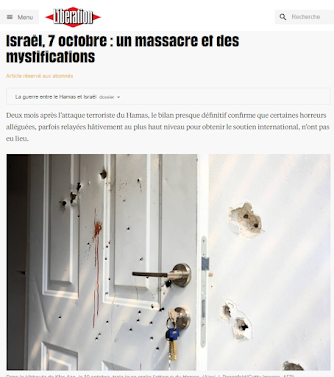
Media review: Libération, accounts of the beheading of children, rape and burning by Hamas fighters are false and aimed at garnering support for revenge against Gaza

    Tuesday, December 12, 2023   No comments

The French newspaper “Libération” published a lengthy investigation into the stories circulated by the Israeli authorities about cutting off the heads of children, raping women, and tearing open the stomachs of pregnant women. The newspaper’s fact-finding team concluded that most of these stories were false and were aimed at inciting international public opinion and gathering support for a revenge operation against Gaza. Here are some excerpts, translated from the French  report:


On October 7, Hamas, and later other Palestinian factions, killed more than 1,200 people, including about 800 civilians, including the elderly, families, women, and children. The newspaper's investigative team returned in detail, on numerous occasions, to these documented and often photographed acts, which Hamas continues to deny, despite countless evidence.

...

However, over the past two months, the investigation team has also noted numerous unconfirmed or inconsistent stories and testimonies. Today, the final results of the attack are almost known. And also for the many civilians who were killed, and the circumstances of their deaths. However, available data confirms that some of the atrocities initially described did not happen, and these false testimonies relate almost exclusively to allegations of child abuse, which were at the heart of the media war that began two months ago and have been relayed for weeks by volunteer rescuers, soldiers or Israeli army officials, but also by the head of state and Israeli diplomacy. It was rich material for the international press, as well as Western political leaders.

 ... 

Did Prime Minister Benjamin Netanyahu, the Foreign Ministry, or even Michal Herzog, wife of President Isaac Herzog, deliberately spread lies, sometimes in diplomatic talks at the highest levels, with the aim of garnering support from international public opinion? October 7 was a real massacre, but it was also the subject of war propaganda.

The lie of forty children and beheadings
 

On Tuesday, October 10, the Israeli army allowed two foreign press journalists to enter Kibbutz Kfar Azza, located less than one kilometer from the Gaza Strip. One of the testimonies stands out: Nicole Zedek, a correspondent for the English-language Hebrew channel i24News, who reported: “One of the commanders here said that at least 40 children were killed,” adding that “some of them were beheaded.” He said he had never seen such atrocities before.

 ...

This statement will be repeated by the media around the world, but also by the Israeli authorities, for several weeks. The next day, the official Twitter account of the State of Israel published a video clip from the i24 channel recalling the Kafr Azza massacre, accompanied by the phrase: “40 children were killed.” The statement then found itself prominently among the videos that flooded Israel's Internet in October denouncing Hamas' crimes.

 ...

In particular, a clip from the Israeli Ministry of Foreign Affairs highlighted the “forty children” who were killed, in imitation of children’s programs, against a backdrop of unicorns and rainbows.

 ...

This assertion is now contradicted by the numbers. As of December 5, the Israeli police had notified the Israel National Insurance Institute, whose statistics serve as today's reference, of the names of 789 identified civilian casualties (excluding security forces), and published 686 of them, and the Foreign Ministry told us that only ten were civilian casualties. Their identities have not been established, and among the 100 unpublished names, a very large number are known thanks to the systematic collection work carried out by numerous media outlets (including Haaretz) and Israeli associations, in particular on the basis of reports submitted by the families of the victims, and as It is highly unlikely that the existence of other young victims remains unknown two months after the events, as internal sources from the Israeli forensic medical institutes that received the bodies confirmed to us that “the official assessments are correct,” a journalist from the Israeli daily Haaretz reported.

 ...

According to medical institutes, only one child was found among the civilians killed on October 7. They are Mila Cohen, 10 months old, who was shot and killed in Be'eri along with her father. But according to our information, there is a second child: Omer Kedem Siman Tov, who died in his burning house in Kibbutz Nir Oz, along with his 5-year-old sisters, after their parents were shot. Omer Kedem Siman Tov appears in the institute's file as 4 years old, but

 ...

Several consistent items consulted by our investigation team, and privately available on the social networks of the deceased family, indicate that he was in fact two years and three months old at the time of his murder, and other than these two cases, no other children were killed on October 7 in The kibbutzim, and there was no “headless” child, contrary to what was widely reported. 

Yossi Landau told several international media outlets that he discovered the body of a pregnant woman with a bullet wound to her head, and her abdomen was cut open to remove the fetus that had been stabbed.

 ...

Haaretz newspaper indicates that Yossi Landau confirmed that the pregnant woman was found dead near House 426, which consists of two apartments and is located in a neighborhood where mainly elderly people live. According to the survivors of the building who were interviewed by the Israeli newspaper, there was no pregnant woman.

 ...

However, the Israeli authorities have highlighted this horrific testimony, for example in a message posted by the Israeli Embassy in the United States on Twitter (now X) and Instagram, on October 27. In a recent column published in the American magazine Newsweek, entitled “‘The silence of international authorities in the face of mass rapes committed by Hamas is a betrayal of all women,’” lawyer and First Lady of Israel, Michelle Herzog, also referred to this act and stated: “A Hamas videotape shows One of the kibbutzim terrorists tortured a pregnant woman and extracted her fetus.”

 ...

Our investigative team was able to view a video being circulated that claims to provide evidence of this abuse, and since this has been specifically corrected by the Anti-Defamation League, a leading US NGO in the fight against anti-Semitism, the images were in fact taken. From a video shared in 2018, which allegedly shows abuses committed by a Mexican cartel and is not there.

 ...

These atrocities, initially described by Landau, were reported verbatim on October 31 to the US Senate by Antony Blinken, US Secretary of State: “A little boy and a little girl, ages 6 and 8, and their parents were around the breakfast table, Where the father’s eye was gouged out in front of his children, the mother’s breast was cut off, the girl’s foot was amputated, and the boy’s fingers were cut off before they were executed...and after that their tormentors sat and ate a meal...this is what this society faces.”

 ...

According to our investigations, no child between the ages of 6 and 11 years old died in Be’eri, according to available reports, and the only family that witnessed the death of two children of different genders in Be’eri is the Hatsroni family, whose circumstances of death, previously mentioned, do not match Landau’s account. It is impossible to know whether the elements reported by the head of the relief organization are a distortion of the facts of an event or an invention.


The goal is to obtain American and international support to take revenge on Gaza

 This campaign, launched in the ears of political leaders and promoted on social media and among journalists, was intended to mobilize, and then consolidate, Israeli and international public support for the violent reprisals in Gaza, and had the side effect of fueling strong denial. of the October 7 crimes on social media, casting doubt on the true accounts of the attack that killed about 800 civilians.


source: https://www.liberation.fr/checknews/israel-7-octobre-un-massacre-et-des-mystifications-20231211_A7QBBETYDRDERFAQINGA66ZAR4/

Tuesday, May 09, 2023

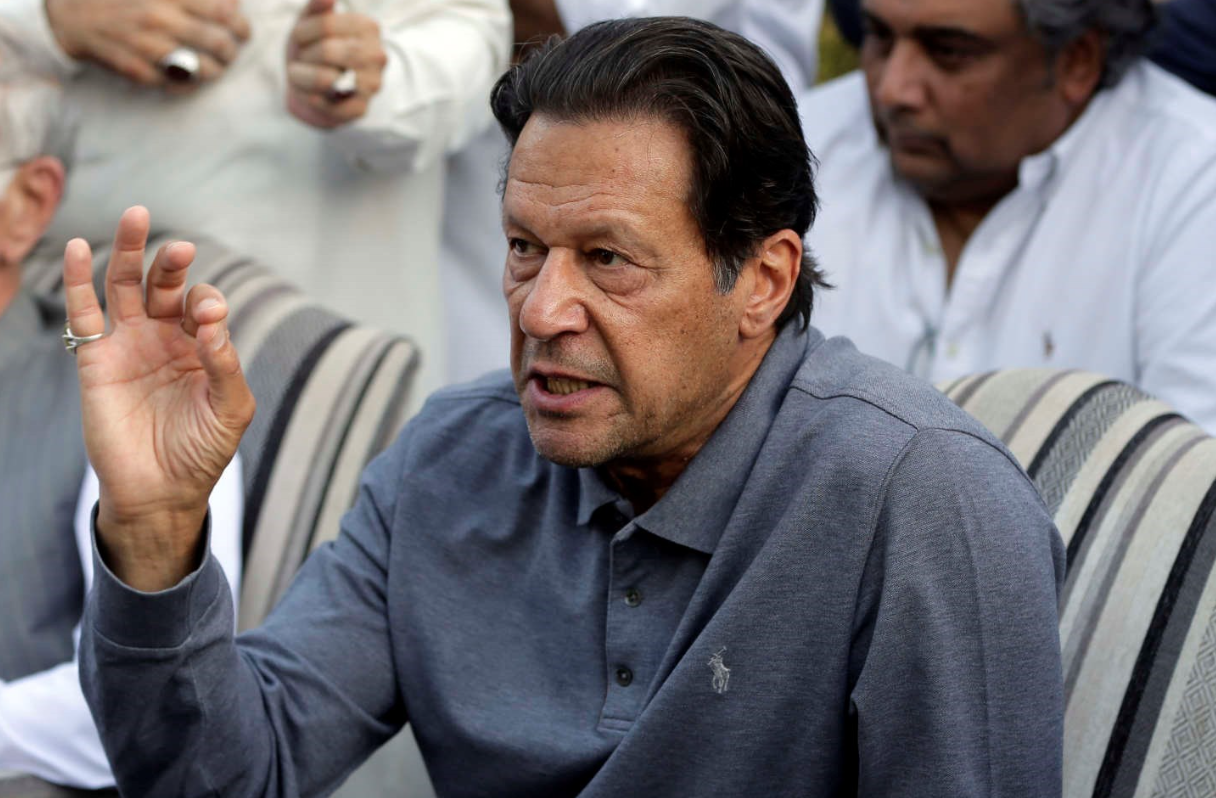
Police arrest former Pakistani Prime Minister Imran Khan

    Tuesday, May 09, 2023   No comments

Pakistani police on Tuesday arrested former Prime Minister Imran Khan in Islamabad on the background of his corruption trial, police said.

A large number of policemen appeared surrounding Imran Khan during his arrest, in an atmosphere of screams and chaos in a dramatic scene, where he was taken and placed in a military vehicle, under a great security alert.

His lawyer said in a video posted on Twitter that he was detained outside the Islamabad High Court, and was "severely injured" in the process.


In turn, the deputy head of the "Tehreek-e-Insaf" party, Fouad Chaudhry, announced that Khan had been kidnapped, and Chaudhry wrote in a tweet on "Twitter": "Former Prime Minister Imran Khan was kidnapped from the court building, and dozens of lawyers and ordinary people were tortured, and transferred Imran Khan to an unknown direction.


At the end of last month, a Pakistani court issued an arrest warrant against Khan on the grounds of the "threat" case against a female judge in a criminal court.


And the media reported that "the court issued its decision due to the repeated absence of Imran Khan from attending the trial session," noting that the decision came after the rejection of a petition submitted by Imran Khan's lawyer to exclude him from attending the trial, due to what he described as "threats on his life."


Khan's supporters confronted the police with stones and petrol bombs, after attempts to arrest him, last week, and 100 police officers were injured.


In March, the Islamabad High Court ruled that former Prime Minister Imran Khan would be granted protection from arrest as lawsuits against him increased.


The court's decision stipulated that Khan could not be detained for at least another week in seven separate cases related to clashes that erupted on March 18 between his supporters and police outside a court in Islamabad, where Khan was due to appear on corruption charges.


Khan was ousted by a no-confidence vote in parliament last April, and more than 100 lawsuits have since been filed against the 70-year-old opposition leader, including charges of terrorism, incitement to violence and graft.


Since his overthrow, Khan faces several legal measures, knowing that he is still very popular, and hopes to return to power in the legislative elections, which are scheduled to be held next October.

Wednesday, February 16, 2022

Federal Supreme Court of Iraq Ruling: Oil and Gas Law is unconstitutional

    Wednesday, February 16, 2022   No comments

On Tuesday, the Federal Supreme Court of Iraq issued several rulings regarding the export of oil in the Kurdistan region of Iraq outside the approval of the federal government.

 The court decided the following:

Ruling that the Oil and Gas Law is unconstitutional and repealed it for violating the provisions of the constitutional articles.

- Obligating the region to hand over oil to the federal government, specifically the Ministry of Oil.

The plaintiff has the right to pursue the nullity of the oil contracts that the regional government concluded with foreign parties regarding oil.

- Obligating the two parties to review all contracts concluded for auditing to ensure the region’s share of the budget.

Charge the defendant with fees and expenses.

The decision was passed by a majority, with only two members dissenting.

It is noteworthy that the Federal Court held, earlier Tuesday, the hearing of the case (59 federal) regarding the export of oil in the Kurdistan region of Iraq outside the approval of the federal government.


Wednesday, July 11, 2018

Is the the presence of and military operations of Russia, the United States and Israel in Syria Legal?

    Wednesday, July 11, 2018   No comments

That question was asked The scientific in the German Bundestag. The answer was released and found that, while Russia's presence may be legal because it was operating per request of the Syrian government, the presence of and operations carried out by others is illegal. 

The 13-page report was released Tuesday as reported by Germany based AWDNEWS. The summary and the report are made available below.


English summary as provided by AWDNEWS:


The Scientific Services of the German Bundestag are the equivalent to the Congressional Research Service in the United States. Members of Parliament can ask the services to give their neutral expert opinions on legal questions and other issues. Opinions by the Scientific Services are held in high regard.

Alexander Neu, a Member of Parliament for the Left Party in Germany, requested an opinion on the legality of the military presence and operations by Russia, the United States and Israel in Syria.

The result (pdf, in German) is quite clear-cut:

- Russia was asked by the recognized government of Syria to help. Its presence in Syria is without doubt legal under International Law.

- U.S. activities in Syria can be seen as two phases:

Regime Change

The provision of arms to insurgents in Syria by the U.S. (and others) was and is illegal. It is a breach of the Prohibition on the Use of Force in international law specifically of the UN Charter Article 2(4):

    All Members shall refrain in their international relations from the threat or use of force against the territorial integrity or political independence of any state, or in any other manner inconsistent with the Purposes of the United Nations.

Fight against ISIS

The U.S. argues that its presence in Syria is in (collective) self-defense under Article 51 of the UN Charter because the Islamic State in Syria threatens to attack the United States. That, in itself, would be insufficient as Syria is a sovereign state. The U.S. therefore additionally claims that the Syrian state is "unwilling or unable" to fight against the Islamic State.

The Scientific Services says that the claim of "unwilling or unable" was already dubious when the U.S. operation started. This for two reasons:

    It is not law or an internationally accepted legal doctrine. (The 120 members of the Non-Aligned Movement (NAM) and others have argued strongly against it.)
    The Syrian government itself was fighting ISIS, but it could not operation in large parts of its territory where the Islamic State had taken control. Some argue that this justified the "unable" argument. But ISIS is largely defeated and it no longer has any significant territorial control.

The already dubious legal case for the presence of U.S. (and other 'coalition' troops in Syria) can thus no longer be made. The U.S. presence in Syria is illegal.

- Israel's attacks on Hizbullah and Iranian units and installations in Syria, as well as against Syria itself, are claimed by Israel to be 'anticipatory self-defense' under UN Charter Article 51. But 'anticipatory self-defense' could only be claimed when attacks against Israel were imminent. That case has not been made. The Israeli attacks are thus 'pre-emptive self defense' which is not an accepted doctrine of International Law.

The service was not asked for an opinion on Turkey's incursion into Syria but it notes that claims of 'self defense', as Turkey makes in its fight against Kurdish entities in Syria, are often abuses for Geo-strategic purposes.
____________

Sunday, June 18, 2017

Facts and Biases: "Mass shootings are terrorism when perpetrated by Muslims"

    Sunday, June 18, 2017   No comments
...
Legally and morally, we see intent as the best way to distinguish terrorism from mass murder. Federal law defines terrorism as certain violent acts “that appear to be intended to intimidate or coerce a civilian population; to influence the policy of a government by intimidation or coercion; or to affect the conduct of a government.”

But because Hodgkinson is dead and did not declare an aim to dethrone the House majority to which his victims belong, we can only speculate about his motives. Like so many other killers in recent years, it’s impossible to know what his specific goals were, because he didn’t tell anyone. We know that these people intended to commit murder, but not why. And if we assume we know — as in the case of Syed Rizwan Farook in San Bernadino or Jared Lee Loughner in Tucson — it’s probably because of our preexisting stereotypes or our partisanship. Mass killings look the most like terrorism when their perpetrators seem the most alien from the Judeo-Christian, white majority. That’s no way to judge a crime. We need a new way to classify these attacks.
...
This discrepancy poses two dangers. First, the assumption that mass shootings are terrorism when perpetrated by Muslims but not by others may lead law enforcement and the public to overlook threats posed by non-Muslims. For instance, civil rights lawyer and former FBI agent Mike German, who infiltrated white supremacist groups, has argued that the domestic threat posed by right-wing extremist groups is as great as, if not greater than, that posed by Arab or Muslim terrorists, and yet has been largely ignored by the FBI. A report by the Government Accountability Office tallied 106 killings perpetrated by right-wing extremists in the United States from Sept. 12, 2001, to the end of 2016, more or less equal to the 119 by Muslim extremists in that time. While the exact number in each category may change slightly depending on how we classify individual attacks, the point is that there’s close to parity in the danger posed by each group.

Second, it’s possible that law enforcement and other decision-makers will acknowledge and respond to this singular focus on Muslims by overcompensating in the opposite manner so as to appear nondiscriminatory. The Fort Hood shooter, for example, had repeatedly drawn complaints from fellow soldiers for appearing to justify terrorist attacks against Americans in the Middle East. The FBI was even aware that Hasan had been in email contact with al-Qaeda provocateur Anwar al-Awlaki. It is one thing to avoid racial or religious stereotyping but another to ignore red flags for fear of being perceived as bigoted, as appears to be the case with Hasan. Yet this tension is inherent in stereotype-based law enforcement.

One first step toward resolving the question of “what is terrorism?” — at least in the colloquial sense — is to stop focusing so much on the perpetrator’s perceived intent and to look more at the effects of the violent act. Today, attackers such as Hodgkinson, Hasan, Rizwan, Malik, Loughner and Roof have one thing clearly in common: Even if it’s not clear why, they want to kill as many people as possible. That should be enough to call them all terrorists.

source
James T. Hodgkinson, the man who shot five people at a Republican baseball practice Wednesday, including a member of Congress, harbored ill will toward President Trump and the GOP. So was Hodgkinson a terrorist?

Followers


Most popular articles


ISR +


Frequently Used Labels and Topics

40 babies beheaded 77 + China A Week in Review Academic Integrity Adana Agreement afghanistan Africa African Union al-Azhar Algeria Aljazeera All Apartheid apostasy Arab League Arab nationalism Arab Spring Arabs in the West Armenia Arts and Cultures Arts and Entertainment Asia Assassinations Assimilation Azerbaijan Bangladesh Belarus Belt and Road Initiative Brazil BRI BRICS Brotherhood CAF Canada Capitalism Caroline Guenez Caspian Sea cCuba censorship Central Asia Charity Chechnya Children Rights China Christianity CIA Civil society Civil War climate colonialism communication communism con·science Conflict conscience Constitutionalism Contras Corruption Coups Covid19 Crimea Crimes against humanity D-8 Dearborn Debt Democracy Despotism Diplomacy discrimination Dissent Dmitry Medvedev Earthquakes Economics Economics and Finance Economy ECOWAS Education and Communication Egypt Elections energy Enlightenment environment equity Erdogan Europe Events Fatima FIFA FIFA World Cup FIFA World Cup Qatar 2020 Flour Massacre Food Football France Freedom freedom of speech G20 G7 Garden of Prosperity Gaza GCC GDP Genocide geopolitics Germany Global Security Global South Globalism globalization Greece Grozny Conference Hamas Health Hegemony Hezbollah hijab Hiroshima History and Civilizations Hormuz Human Rights Huquq Ibadiyya Ibn Khaldun ICC Ideas IGOs Immigration Imperialism In The News india Indonesia inequality inflation INSTC Instrumentalized Human Rights Intelligence Inter International Affairs International Law Iran IranDeal Iraq Iraq War ISIL Islam in America Islam in China Islam in Europe Islam in Russia Islam Today Islamic economics Islamic Jihad Islamic law Islamic Societies Islamism Islamophobia ISR MONTHLY ISR Weekly Bulletin ISR Weekly Review Bulletin Italy Japan Jordan Journalism Kenya Khamenei Kilicdaroglu Kurdistan Latin America Law and Society Lebanon Libya Majoritarianism Malaysia Mali mass killings Mauritania Media Media Bias Media Review Middle East migration Military Affairs Morocco Multipolar World Muslim Ban Muslim Women and Leadership Muslims Muslims in Europe Muslims in West Muslims Today NAM Narratives Nationalism NATO Natural Disasters Nelson Mandela NGOs Nicaragua Nicaragua Cuba Niger Nigeria Normalization North America North Korea Nuclear Deal Nuclear Technology Nuclear War Nusra October 7 Oman OPEC+ Opinion Polls Organisation of Islamic Cooperation - OIC Oslo Accords Pakistan Palestine Peace Philippines Philosophy poerty Poland police brutality Politics and Government Population Transfer Populism Poverty Prison Systems Propaganda Prophet Muhammad prosperity Protests Proxy Wars Public Health Putin Qatar Quran Rachel Corrie Racism Raisi Ramadan Ramadan War Regime Change religion and conflict Religion and Culture Religion and Politics religion and society Resistance Rights Rohingya Genocide Russia Salafism Sanctions Saudi Arabia Science and Technology SCO Sectarianism security Senegal Shahed sharia Sharia-compliant financial products Shia Silk Road Singapore Slavery Soccer socialism Southwest Asia and North Africa Sovereignty Space War Spain Sports Sports and Politics Starvation State Power State Terror Sudan sunnism Supremacism SWANA Syria Ta-Nehisi Coates terrorism Thailand The Koreas Tourism Trade transportation Tunisia Turkey Turkiye U.S. Cruelty U.S. Foreign Policy UAE uk ukraine UN under the Rubble UNGA United States UNSC Uprisings Urban warfare US Foreign Policy US Veto USA Uyghur Venezuela Volga Bulgaria Wadee wahhabism War War and Peace War Crimes War on Iran Wealth and Power Wealth Building West Western Civilization Western Sahara WMDs Women women rights Work Workers World and Communities Xi Yemen Zionism

Search for old news

Find Articles by year, month hierarchy


AdSpace

_______________________________________________

Copyright © Islamic Societies Review. All rights reserved.