Showing posts with label GCC. Show all posts

Friday, March 27, 2026

How Gulf Resource Wealth Fuels Ambition—and Vulnerability

    Friday, March 27, 2026   No comments

 Glass Houses in the Desert

In the geopolitics of the Middle East, few phenomena are as striking as the outsized influence wielded by two small Gulf states: Qatar and the United Arab Emirates. Both nations have leveraged immense wealth derived from the rapid extraction of finite natural resources to project power far beyond their borders. As regional tensions escalate, the very strategies that elevated them are exposing profound vulnerabilities. Their glass towers of influence, built on sand and hydrocarbons, are proving fragile when the desert winds of conflict blow hard.

Qatar's transformation from a modest peninsula emirate into a global diplomatic player rests largely on its vast natural gas reserves. Since the 1990s, Doha has channelled this wealth into a sophisticated strategy of soft power projection, with the Al Jazeera Media Network as its centerpiece. Founded to give Arab audiences a platform free from state-controlled narratives, Al Jazeera quickly became something more: an instrument of Qatari foreign policy, amplifying voices and stories that aligned with Doha's strategic interests.

For decades, the network shaped Arab public opinion, particularly during the Arab Spring, when its coverage of Islamist movements resonated with Qatar's political alignments. But this instrumentalization of media has increasingly drawn scrutiny. In early 2026, Al Jazeera faced a significant credibility test during heightened tensions between Iran and the United States. The channel was accused of sidelining voices supportive of Tehran while platforming analysts who called for targeting Iranian civilians—a stance that sparked widespread criticism across the Arab street.

The controversy forced a visible recalibration. By late March, Al Jazeera began restoring previously muted voices and reducing its focus on Iran-focused content, signaling an attempt to repair its reputation as an impartial platform. Analysts who had made inflammatory remarks defended themselves by claiming their comments were taken out of context, but the episode underscored a broader dilemma: when a media outlet is perceived as an instrument of statecraft rather than journalism, its credibility becomes collateral damage in geopolitical disputes.

As one commentator observed, the contemporary Arab consciousness has moved beyond the era of untouchable icons. For Qatar, the lesson is clear: media influence built on perceived bias can backfire, eroding the very soft power it was meant to generate. When audiences sense that "the opinion and the other opinion" is merely a slogan rather than a principle, trust evaporates—and with it, influence.

Most recent coverage show the trend of selective reporting by aljazeera persists: it shields the Guld states and Qatar rulers.

Noramlly, media organizations bear a fundamental responsibility to provide audiences with complete, contextualized information. When coverage systematically omits facts that conflict with the interests of a network's funders, that responsibility is compromised. Al Jazeera's reporting on former President Trump's recent speech regarding Iran offers a compelling case study in how state-funded media can shape narratives through strategic omission.

According to multiple social media reports and regional coverage, Trump explicitly praised Qatar, Saudi Arabia, and the UAE as "excellent" and "incredible" partners during his remarks at the Future Investment Initiative summit in Miami. He reportedly acknowledged their support for U.S. military attack on Iran—a significant geopolitical development given these states' desire to avoid public association with what many international observers deem an illegal war. Al Jazeera Arabic article summarizing the speech highlighted Trump's criticism of NATO allies while making no mention of his gratitude toward Gulf partners. This selective framing is not incidental; it aligns precisely with Qatar's diplomatic interests in maintaining plausible deniability regarding its regional military posture.

This pattern reflects broader structural realities. Al Jazeera receives the vast majority of its budget from the Qatari government, and while the network asserts editorial independence, former correspondents have publicly cited Qatari influence over coverage decisions. Research from independent media watchdogs notes that Al Jazeera's English-language coverage has routinely engaged in narratives that question U.S. strategic motives while promoting perspectives aligned with Doha's foreign policy. When reporting on Gulf-U.S. coordination against Iran, the network faces an inherent conflict: acknowledging overt Gulf support for American military action would undermine Qatar's carefully cultivated image as a neutral mediator.

The consequences extend beyond a single omitted quote. By emphasizing Trump's NATO criticisms while silencing his Gulf acknowledgments, Al Jazeera's coverage subtly reinforces a narrative that isolates Western alliances while normalizing Gulf states' behind-the-scenes military involvement. This serves Doha's foreign policy objectives but deprives audiences of the full picture necessary for informed judgment about regional power dynamics.

Media bias is rarely about fabrication; it is more often about curation—what to include, what to emphasize, and what to omit. In an era of complex geopolitical conflicts, audiences deserve transparency about the interests shaping their news. When state-funded outlets like Al Jazeera omit facts that inconvenience their patrons, they do not merely report the news; they participate in its construction. Recognizing these patterns is not an attack on any single network, but a necessary step toward demanding journalism that serves truth over patronage.


The United Arab Emirates has pursued a different, more militarized path to regional influence. Like Qatar, the UAE's wealth stems from hydrocarbon extraction—but at a pace that raises serious sustainability concerns. The rapid depletion of finite oil and gas reserves, without adequate investment in post-hydrocarbon economies, risks mortgaging the future for present-day ambition.

Abu Dhabi has deployed this wealth to build an extensive network of military and political influence across the Middle East and Africa. The UAE has been deeply involved in conflicts in Libya, Yemen, Sudan, and Somalia, often backing proxy forces to advance its strategic interests. In Libya, it provided critical air support and equipment to eastern-based factions. In Sudan, it faces repeated allegations—denied by officials—of arming and funding paramilitary groups accused of atrocities. Sudan has even filed a case against the UAE at the International Court of Justice, accusing it of complicity in grave human rights violations.

These interventions have yielded mixed results. While the UAE has secured strategic footholds, such as ports and military bases, its activism has also generated significant backlash. Traditional Gulf partners have grown uncomfortable with Emirati policies that appear to undermine regional stability. In Yemen, Saudi-backed forces actively curtailed advances by UAE-aligned militias, demonstrating that Gulf partnerships are not immune to friction.

Moreover, when Iran's foreign minister accused Gulf states hosting U.S. forces of covertly encouraging attacks on Iranians, it underscored how entangled these small states have become in great-power conflicts. When Iran launched drone strikes against Bahrain, Saudi Arabia, Qatar, and the UAE in early 2026, it highlighted the vulnerability of even the wealthiest Gulf capitals to asymmetric retaliation. Power projection, it turns out, invites counter-pressure.

Glass Houses at the Mercy of Regional Security Fractures

Both Qatar and the UAE have built literal and figurative glass houses—spectacular skylines, global business hubs, and diplomatic networks that project an image of invincibility. These achievements rest on a foundation of regional stability that is increasingly precarious.

Dubai, marketed as the business center of the world, exemplifies this paradox. In early 2026, as tensions with Iran escalated, the emirate faced an unprecedented economic shock: stock markets were suspended, hotel bookings plummeted, and critical port operations halted after missile debris caused fire damage. An estimated tens of billions in wealth that flowed into Dubai in recent years now faced the risk of exodus, with charter jets reportedly sold out as wealthy residents sought safer havens.

The attacks on iconic locations directly challenge the security narrative that attracted global capital. While Dubai's economy is heavily diversified—with oil accounting for a minimal share of GDP—its reputation as a safe, neutral hub depends on perceptions of stability that conflict can quickly erode. When investors weigh risk, glass towers can cast long shadows.

The sustainability question extends beyond economics. Gulf states' rapid extraction of oil and gas, without sufficient investment in renewable alternatives or economic diversification, poses long-term risks. While natural resource rents boost short-term growth, they can exacerbate inequality and delay necessary structural reforms. For nations whose populations are predominantly young, the intergenerational equity implications are profound: wealth generated today may come at the cost of environmental degradation and economic fragility tomorrow.

Both Qatar and the UAE appear to be learning that influence projection carries inherent risks. Al Jazeera's editorial adjustments in early 2026 suggest an awareness that perceived bias can undermine media credibility. Similarly, the UAE's public denials of involvement in sensitive conflicts and its emphasis on humanitarian aid reflect an effort to manage diplomatic fallout.

Adaptation requires more than rhetoric. For Qatar, it means grappling with the tension between state interests and journalistic integrity. Can a media network truly serve as a global beacon of free expression while advancing a single government's agenda? For the UAE, it entails reassessing whether military interventions in distant conflicts truly serve long-term national interests—or simply entangle the country in intractable disputes that drain resources and generate enemies.

The broader lesson for resource-rich small states is that wealth alone cannot guarantee security or influence. When regional order fractures, the very assets that symbolize power—skyscrapers, media networks, overseas bases—can become liabilities. Ambiguity in foreign policy invites escalation; perceived partiality erodes trust; and economic hubs dependent on perceptions of stability are vulnerable to regional shocks.


Qatar and the UAE have achieved remarkable feats: transforming desert outposts into global nodes of finance, media, and diplomacy. Their use of natural resource wealth to punch above their weight is a masterclass in strategic statecraft. But the events of early 2026 reveal the limits of this model.

Media influence built on perceived bias invites backlash. Military interventions in fragile states can generate blowback. Economic hubs dependent on perceptions of stability are vulnerable to regional shocks. And the rapid extraction of finite resources, without sustainable planning, mortgages the future.

The glass houses of the Gulf are not destined to become ruins of the desert. But they will endure only if their builders recognize that true resilience requires more than wealth—it demands legitimacy, sustainability, and a commitment to the stability of the region they seek to lead. In an era of escalating tensions, that lesson may be the most valuable resource of all.

For two small states that have leveraged hydrocarbon wealth to shape the fate of nations, the path forward is clear: influence without accountability is fragile; power without prudence is perilous. The desert remembers what the glass forgets—that foundations matter more than facades, and that lasting influence is built not on extraction, but on trust.


Media review: When Western Powers Abandon the Human Rights Norms They Champion

    Friday, March 27, 2026   No comments


This week's cascade of headlines from Geneva, Washington, and Tehran reads less like routine diplomatic reporting and more like a case study in the unraveling of a foundational post-war promise: that Western democracies would serve as the steadfast guardians of universal human rights and international law. Instead, a disturbing pattern emerges—one where the very nations that built the architecture of global accountability now appear willing to dismantle it, brick by brick, when strategic interests collide with principle. The danger is not merely in individual actions, but in the corrosive incoherence that threatens to render the entire human rights framework meaningless.

The week opened with a stark appeal from UN High Commissioner for Human Rights Volker Turk, who urged the United States to conclude and publicize its investigation into the strike on the Shajareh Tayyebeh elementary school in Minab, Iran. Turk's words carried the weight of visceral horror: "Differences between countries will not be solved by killing schoolchildren." He called for an investigation that is "prompt, impartial, transparent and thorough." Yet, the very need for such a public urging underscores a crisis of trust. When the nation that champions "rules-based order" becomes the subject of urgent UN debates over civilian casualties, the gap between rhetoric and reality yawns wide.

Iranian Foreign Minister Abbas Araghchi, speaking at the same emergency Human Rights Council session, framed the attack not as an isolated incident but as part of a "broader pattern of systematic strikes on civilians and infrastructure." He described the school bombing—which reportedly killed over 175 students and teachers—as a war crime and a crime against humanity. Whether one accepts every characterization, the core question remains: if the principles of distinction and proportionality under International Humanitarian Law are negotiable when applied to adversaries, what legitimacy do they retain anywhere?


The linguistic contortions from Washington this week were particularly revealing. President Donald Trump explicitly stated he would refer to U.S. strikes on Iran as a "military operation," not a "war," because the latter term "needs approval" through democratic processes. This is not mere semantics; it is a deliberate strategy to circumvent constitutional and international legal safeguards designed to prevent unchecked executive warmaking. Similarly, U.S. Secretary of War Pete Hegseth's declaration that America is "negotiating with bombs" reduces diplomacy to coercion, elevating force over law.


This evasion of legal terminology mirrors a broader avoidance of accountability. When asked about Israel's nuclear arsenal—a program shrouded in deliberate ambiguity—Ambassador Danny Danon simply labeled Israel a "stabilising force in the region." This assertion, made while the U.S. and Israel face accusations of targeting civilian infrastructure, highlights a profound double standard: nuclear capabilities are deemed destabilizing when possessed by some nations, but a source of "stability" when held by allies, regardless of transparency or non-proliferation commitments.


The human toll is matched by a cultural one. Reports indicate over 120 cultural sites across Iran, including historic palaces and museums in Tehran, have suffered serious damage. The deliberate targeting of cultural heritage is prohibited under international conventions, yet these strikes proceed with little apparent consequence for the perpetrators. This destruction is not collateral; it is an erosion of shared human history, underscoring how quickly norms dissolve when political will falters.

Perhaps the most symbolic moment of the week came at the UN, where the U.S. and Israel were among only three nations to vote against a resolution condemning slavery as a crime against humanity and calling for reparations. The U.S. deputy ambassador argued that while the slave trade was wrong, there is no "legal right to reparations for historical wrongs that were not illegal under international law at the time." This legalistic argument, deployed to avoid moral responsibility, stands in jarring contrast to the fervent demands for accountability directed at other nations. It signals a selective morality: human rights are universal when invoked against others, but contingent when they implicate Western historical or contemporary conduct.

The cumulative effect of these actions is not lost on observers worldwide. Russian Foreign Minister Sergey Lavrov's condemnation of U.S. rhetoric as "moral depravity" is easily dismissed as geopolitical posturing. But the more damaging critique comes from the erosion of trust among allies and the global South. When Western powers abandon consistency, they do not merely weaken their own moral authority; they empower authoritarian narratives that dismiss human rights as mere tools of Western hegemony.

The greatest danger lies here: the international human rights system is fragile. It depends on the perceived legitimacy and consistent application of its norms by its most powerful architects. When those architects treat international law as a menu—selecting accountability for adversaries while claiming exemption for themselves—they do not just break specific rules. They undermine the very idea that rules matter. This incoherence invites a world where might makes right, where civilian protections are conditional, and where the language of human rights becomes an empty instrument of propaganda.


This week's events should serve as a urgent reckoning for Western capitals. Reaffirming commitment to human rights cannot be a rhetorical exercise reserved for condemning rivals. It requires transparent investigations into civilian harm, adherence to legal definitions of conflict, protection of cultural heritage, and a willingness to confront historical and contemporary injustices with the same vigor applied to others.

The alternative is a downward spiral. As Iranian officials warn that "inaction only invites further violations," they articulate a truth that applies globally: norms unenforced are norms abandoned. The world is watching not just the strikes and the statements, but the consistency of the response. The credibility of the entire human rights project now hinges on whether Western nations choose coherence over convenience, and principle over power. The stakes, as the children of Minab remind us, could not be higher.

Friday, January 30, 2026

The UAE's Precarious Balancing Act

    Friday, January 30, 2026   No comments

Wealth, Power, and the Cost of Ambition

The United Arab Emirates has engineered one of the most remarkable transformations in modern history—morphing from a collection of desert sheikhdoms into a glittering global hub of finance, tourism, and geopolitical influence. Yet beneath the soaring skyscrapers of Dubai and Abu Dhabi lies a more complicated reality: a nation-state where approximately 85% of residents possess no political voice, where foreign policy pivots between great powers with transactional precision, and where regional ambitions increasingly strain alliances once considered unshakable.


The UAE's economic miracle rests upon a demographic paradox. Emirati citizens—ethnic Arabs whose families trace roots to the seven emirates—comprise only 11–15% of the population. The remaining 85–89% are foreign workers, ranging from highly paid Western executives to South Asian laborers who constructed the very towers that define the UAE's skyline. This majority population lives under a kafala (sponsorship) system that legally ties workers to employers, restricts freedom of movement, and denies pathways to citizenship regardless of decades of residence.

Human Rights Watch and Amnesty International have documented systemic abuses: confiscated passports, wage theft, dangerous working conditions, and barriers to unionization. While recent labor reforms have introduced modest improvements—such as allowing job changes without employer permission—fundamental disenfranchisement remains. Migrant workers cannot vote, run for office, or meaningfully influence laws governing their lives. The state justifies this arrangement as necessary for economic management; critics call it a caste system financed by oil wealth, where prosperity for the few depends on the political silencing of the many.

Playing All Sides: A Foreign Policy of Calculated Ambiguity

The UAE has mastered what some analysts call "hedging diplomacy"—cultivating relationships with rival powers simultaneously to maximize leverage and minimize vulnerability. This approach has yielded significant returns but carries growing risks.

Abu Dhabi positions itself as a steadfast U.S. security partner: hosting American military bases, normalizing relations with Israel through the Abraham Accords, and providing counterterrorism intelligence. Yet it simultaneously deepens ties with Washington's strategic competitors. The UAE has become a favored sanctuary for sanctioned Russian oligarchs, with Dubai's luxury real estate market absorbing billions in assets fleeing Western sanctions after Moscow's 2022 invasion of Ukraine. U.S. intelligence sources have alleged Emirati officials shared identities of American intelligence officers with Russian counterparts—a breach that would constitute a profound betrayal of trust.

With China, the relationship runs deeper still. The UAE hosts Chinese surveillance technology firms, collaborates on artificial intelligence development, and welcomed Huawei's 5G infrastructure despite U.S. security warnings. When Washington conditioned a potential F-35 fighter jet sale on guarantees against Chinese espionage, Abu Dhabi responded by purchasing French Rafale jets—a pointed signal of its refusal to choose sides.

This multi-vector strategy extends to regional conflicts. While publicly aligned with Saudi Arabia in Yemen's civil war, the UAE covertly armed the Southern Transitional Council (STC), a separatist force seeking to fracture Yemen—a direct contradiction of Riyadh's objective to preserve Yemeni unity. Similar patterns emerged in Libya, where UAE-backed forces assaulted Tripoli against UN wishes, and in Sudan, where Western intelligence agencies accuse Abu Dhabi of supplying weapons to the Rapid Support Forces amid a campaign of ethnic cleansing.

The Saudi Rift and America's Reckoning

These contradictions may be reaching a breaking point. In late 2025, Saudi Arabia—long the UAE's senior Gulf partner—issued a stark ultimatum: withdraw all military forces from Yemen and cease support for separatists within 24 hours. Riyadh backed its demand with airstrikes on the port of Mukalla, targeting vessels allegedly carrying Emirati weapons. The move signaled an end to Riyadh's tolerance for Abu Dhabi's parallel agenda in Yemen, which Saudi officials now view as an existential threat to their southern border.


For Washington, the Saudi-UAE rupture presents a dilemma. The UAE remains valuable: a stable platform for U.S. forces, a counterweight to Iranian influence, and an investor in American assets. Yet its simultaneous courtship of Moscow and Beijing, its sanctuary for sanctioned oligarchs and organized crime figures like drug lord Daniel Kinahan, and its destabilizing regional interventions increasingly undermine core U.S. interests.

The Biden administration had grown wary of Emirati duplicity. The Trump administration, while embracing Gulf monarchies rhetorically, also confronted UAE-China technology ties. With geopolitical competition intensifying, American patience for "allies" who hedge against U.S. strategic priorities may be wearing thin—especially as Saudi Arabia, under Crown Prince Mohammed bin Salman, asserts itself as the undisputed Gulf leader and aligns more closely with Washington's regional framework.

An Empire of Sand?

The UAE's model—concentrating political power among a tiny citizen elite while leveraging hydrocarbon wealth to purchase global influence—has proven remarkably effective for decades. But its sustainability faces mounting pressures: Saudi assertiveness, American strategic recalibration, and the moral contradiction of a "tolerant" society built on systemic disenfranchisement.


The UAE is not an empire in the classical sense. It commands no formal colonies. Yet its strategy—using capital to shape outcomes in Sudan, Somalia, Yemen, and beyond while denying political rights at home—reflects an imperial mindset: that wealth confers the right to reorder weaker states' destinies without accountability.

Whether this model survives depends on choices Abu Dhabi now faces. It can double down on transactional opportunism, risking isolation as great powers demand clearer allegiances. Or it can undertake genuine reforms—extending labor rights, accepting constraints on destabilizing interventions, and choosing strategic clarity over perpetual hedging.

The world has long excused the UAE's contradictions because of its gleaming airports and financial hubs. But as Yemen fractures, Sudan burns, and great-power competition hardens, the luxury of ambiguity may be ending. The UAE built a nation on sand. Its next challenge is proving that sand can bear the weight of empire—or that it ever should have tried.

Saturday, January 10, 2026

GCC is on the line: How Bahrain Emerged as a New Front in the Growing Saudi-Emirati Rift

    Saturday, January 10, 2026   No comments

Media review: An exclusive report from Darkbox (France)

Confidential sources revealed to Darkbox that Saudi forces, specifically the Peninsula Shield Force, withdrew from Bahrain following a sharp political and security dispute between Saudi Arabia and the Bahraini government.

According to these sources, the withdrawal was neither routine nor planned, but rather a consequence of escalating tensions between Riyadh and Abu Dhabi, with Manama finding itself caught in the middle.

The sources describe this move as highly unusual, given the long-standing Saudi military presence in Bahrain and the Kingdom's traditional role as a key guarantor of Bahrain's security. They say the decision to withdraw the forces came after a breakdown in coordination and trust, resulting from what Saudi officials perceived as Bahrain's alignment with Emirati positions that conflicted with Saudi interests.


Wednesday, October 01, 2025

Trump signs order EO considering any attack on Qatar as security threat to US--Israel’s Strike on Qatar Shakes US Credibility in the Gulf

    Wednesday, October 01, 2025   No comments

The United States has long positioned itself as the primary security guarantor for Gulf states, but that image has been severely shaken following Israel’s unprecedented strike on Doha earlier this month. Despite Qatar’s role as host to the largest US military installation in the Middle East, and despite decades of close security cooperation, Israel—a close American ally—was able to carry out an attack on Qatari soil with no immediate US response.

The incident rattled regional leaders and raised difficult questions: if Washington cannot—or will not—restrain Israel from striking a partner it formally protects, how reliable can its security assurances really be?

In an effort to repair the damage, President Donald Trump this week signed an executive order declaring that “any armed attack on the territory, sovereignty, or critical infrastructure of the State of Qatar” will be treated as a direct threat to the peace and security of the United States. The order commits Washington to take all “lawful and appropriate measures”—including diplomatic, economic, and if necessary, military action—to defend both American and Qatari interests.

The timing was no accident. The decree came just three weeks after Israel’s air strikes targeting Hamas leaders in Qatar, an operation that provoked outrage in Doha and embarrassment in Washington. While Israeli Prime Minister Benjamin Netanyahu has since issued a rare apology to Qatar, the episode left a lingering sense that US security guarantees may be more fragile than Gulf states had assumed.

At stake is not just the bilateral relationship with Qatar, but the broader credibility of the United States as the cornerstone of Gulf security. For years, Washington’s promise of protection has been central to its influence in the region, countering both Iranian power and the growing appeal of alternative security partners such as China and Russia. The failure to prevent or deter the Israeli strike cut to the heart of that credibility.

Complicating matters further is the ongoing war in Gaza. Qatar has played a key mediating role in negotiations, including talks aimed at securing a ceasefire and addressing the humanitarian crisis. If Washington, working through Doha, can help deliver a viable and lasting deal, it could partially repair the trust eroded by Israel’s attack. Such success would reaffirm the US as not only a military protector, but also as a diplomatic broker capable of shaping outcomes in the region.

But the risks are equally stark. If a Gaza deal collapses or fails to halt the bloodshed, the damage to Washington’s standing could be irreparable. Gulf leaders may conclude that the United States lacks both the will and the leverage to restrain its own allies, let alone manage conflicts across the Middle East.

The executive order signed by Trump is therefore more than a symbolic gesture toward Qatar. It is a test of whether American promises still carry weight in a region where credibility is everything—and where one misstep can reshape alliances for decades to come.

Media reaction and analysis:

Israeli Media noted the changed posture and connected it to the Gaza plan. Israel's Channel 12 correspondent and Axios reporter Barak Ravid says the US will 'dramatically upgrade' its commitment to Qatar's security:

  • "As part of the initiative to end the war in Gaza and as compensation to Qatar for the Israeli strike in Doha, President Trump signed a presidential decree on Monday that dramatically upgrades the US commitment to Qatar’s security. This marks an unprecedented security agreement between the US and an Arab state."
  •  "According to the presidential decree, published today, 'The United States will regard any armed attack on the territory, sovereignty, or critical infrastructure of the State of Qatar as a threat to the peace and security of the United States.'
  •  "The decree further states: 'In the event of such an attack, the United States will take all lawful and appropriate measures, including diplomatic, economic, and, if necessary, military, to protect the interests of the United States and the State of Qatar and to restore peace and stability.'

Friday, September 12, 2025

Media review: Israeli Airstrike on Qatar Shakes Gulf States' Confidence in US Protection, Report Says

    Friday, September 12, 2025   No comments

A recent Israeli military strike on Qatar’s capital has triggered a significant crisis of confidence among Gulf Arab states, casting serious doubt on the reliability of American security guarantees, according to a report by The Washington Post.


The attack, which targeted Doha, has reportedly fueled deep-seated anger and a sense of insecurity across the Persian Gulf. Analysts suggest that Israel’s apparent ease in carrying out the strike led many regional powers to a stark conclusion: if a U.S. partner like Qatar can be attacked, then no neighboring American ally is truly safe.

At the core of the growing disillusionment is the perception that the United States was either unable or unwilling to restrain its close ally, Israel, even when its actions directly threatened another American partner. This has fundamentally shaken the long-standing pillar of Gulf security, which has heavily relied on U.S. military and diplomatic backing for decades.

One researcher from the International Institute for Strategic Studies (IISS) noted that the uniquely close relationship between Washington and Jerusalem made this strike "qualitatively different" from previous conflicts. Rather than acting as a deterrent, the U.S. response was perceived as weak, often limited to "pro-forma expressions of dissatisfaction" without imposing any concrete, deterrent measures to stop what is seen as "Israel’s unrestricted military aggression in the region."

The strike has "reinforced the feeling that Washington is an unreliable security partner," the analyst stated.

This incident is not an isolated event but the latest in a years-long erosion of trust. The Post highlights that Gulf confidence in American protection has been declining through both Democratic and Republican administrations. This trend is driven by a perceived U.S. "strategic pivot" towards Asia and the diminished strategic importance of Middle Eastern oil to Washington.

Furthermore, the attack on Doha has undermined a previously held belief among some Gulf leaders that a close personal relationship with a U.S. president could directly influence policy. Hopes that such a bond with former President Donald Trump would shape American actions were decisively dashed by the bombing of Qatar.

The event signals a potential strategic inflection point, forcing Gulf nations to seriously reconsider the foundation of their security architecture and question the dependability of a partnership that has been a cornerstone of regional stability for over half a century.

Tuesday, April 16, 2024

Saudi Arabia UAE--two allies no longer able to solve their problems on their own

    Tuesday, April 16, 2024   No comments

Disagreements in secret come to light with the Saudi complaint to the United Nations due to a border dispute.. “Al Yasat” is showing that the two allies and regional economic powers no longer able to solve their problems on their own.

In a letter addressed to the United Nations, Saudi Arabia accused Abu Dhabi of encroaching on the Kingdom’s borders, through the UAE authorities issuing an Emiri decree in 2019, declaring Al Yasat a “marine protected area.”

The complaint indicated that Saudi Arabia does not recognize any measures or practices taken, or their consequences, by the UAE government in the area off the Saudi coast, the “Al Yasat area,” including the Kingdom’s territorial sea and the area of joint sovereignty on the two islands of Makasib.

The UAE demanded the completion of implementation of Article Five of the agreement demarcating the land and sea borders dated between the two countries in 1974.

Riyadh considered the memorandum official, and also called on the United Nations to circulate it to the members of the United Nations, according to established procedures.

This step, according to Gulf affairs experts, means that both Saudi Arabia and the Emirates are no longer able to solve their problems on their own, or within Gulf frameworks such as the Gulf Cooperation Council or Arab ones such as the Arab League, and that the dispute has reached the United Nations, the highest international body for conflict resolution. The issue of the “Al Yasat” region is not the only controversial issue between the two countries, as there is something bigger than it, according to what experts point out. The dispute over the “Shaybah” oil field is considered one of the most prominent headlines at the core of the border disputes, and the silent struggle between the two countries over influence in Yemen. Both Abu Dhabi and Riyadh were unable to hide it, or solve it through understandings, and it remained like fire under the ashes. The UAE’s support for the Transitional Council in Yemen, its efforts to divide it north and south, and its fight against the Islah Party, are all actions that worry Riyadh, and push it to thwart Emirati projects and stand up to them. Although the conflict has so far been in its silent and hidden context, most odds say that the clash is not coming. A dispute between groups affiliated with both parties in Yemen.

These are some of the forces that are reshaping a critical region in the world, Southwest Asia and North Africa, the center of gravity of human civilizations for thousands of years,


Monday, June 12, 2023

Saudi Arabia seeks closer ties with China, defends criticism from the west, explains ties to China as "Cooperation for prosperity"

    Monday, June 12, 2023   No comments

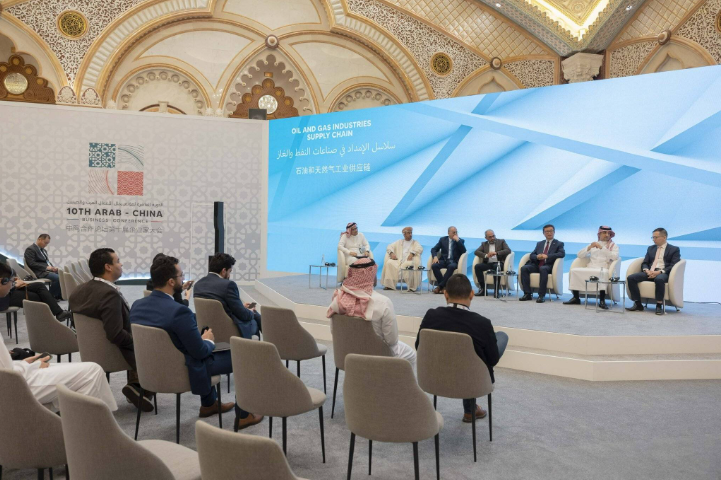
 Saudi Arabia, one of the key partners of the United States in the region, seeks to develop cooperation with China, despite the concerns of Western countries. This was stated by the Minister of Energy of Saudi Arabia, Prince Abdul Aziz bin Salman Al Saud, speaking at the Tenth Conference of Arab and Chinese entrepreneurs in Riyadh.

"Today's reality is that China occupies, has occupied and will continue to occupy a leading position. We should not compete with China, we should cooperate with it," the minister said, whose speech was broadcast by Asharq TV channel. "Cooperation with China is advisable because they have taken the initiative to attract the right manufacturers."

When asked how the minister perceives the criticism that Western countries are subjecting Saudi Arabia to for expanding economic and political ties with China, he said that he "actually ignores it." "Like any business person, you will go where there are appropriate opportunities," he added.

The tenth Conference of Arab and Chinese entrepreneurs is being held on June 11-12 in Riyadh under the slogan "Cooperation for prosperity". The event, organized by the Ministry of Investment of Saudi Arabia, is aimed at strengthening economic cooperation between China and the countries of the Arab world. The conference is attended by more than 3 thousand people - high-ranking officials and representatives of large businesses.


According to the Saudi Press Agency, on the first day of the conference, its participants signed dozens of investment agreements worth more than $ 10 billion. Among them is a $533 million agreement between Amar Al-Oula and Zhonghuan International Group, which involves the construction of an iron ore processing plant in Saudi Arabia, as well as a $500 million agreement between ASK Group and the Chinese National Geological and Mining Company on the development of a copper mining project in the kingdom.


Friday, June 09, 2023

A joint Gulf-American statement issued after the joint ministerial meeting of the strategic partnership between the Gulf Cooperation Council states and the United States

    Friday, June 09, 2023   No comments


A joint Gulf-American statement issued after the joint ministerial meeting of the strategic partnership between the Gulf Cooperation Council states and the United States stressed the need to commit to reaching a political solution in Syria.

The Foreign Ministers of the Cooperation Council and the US Secretary of State, Anthony Blinken, held the meeting on Wednesday evening, June 7, under the chairmanship of the Minister of Foreign Affairs of the Sultanate of Oman, Badr bin Hamad al-Busaidi, who is the chairman of the current session of the meeting.

The ministerial meeting, which was held at the headquarters of the General Secretariat in Riyadh, discussed a package of regional issues, including Syria.

On the Syrian issue: The statement affirmed commitment to reaching a political solution to the Syrian crisis in a way that preserves Syria's unity and sovereignty, and meets the aspirations of its people in line with UN Security Council Resolution No. 2254. The ministers welcomed the Arab efforts to resolve the crisis in a step-for-step manner in accordance with Security Council resolution. 2254, as agreed upon during the Amman Consultative Meeting of the Arab Ministerial Contact Group on Syria on May 1, 2023.

In the joint statement, the ministers reaffirmed their support for the US and coalition forces working to achieve the defeat of ISIS in Syria, and condemned all actions that threaten the safety and security of these forces.

The two sides also stressed the need to create safe conditions for the safe, dignified and voluntary return of refugees and internally displaced persons in accordance with the standards of the United Nations High Commissioner for Refugees, and the importance of providing the necessary support to Syrian refugees and the countries that host them.

The statement welcomed the UN Secretary-General's call to renew the Security Council's mandate for a period of 12 months to operate the cross-border mechanism, and expressed support for the inclusion of all currently open border crossings (Bab al-Hawa, Bab al-Salam and al-Rai) in a Security Council resolution next month.

The two sides also discussed the issue of “arbitrarily detained and missing persons,” as mentioned in the “Oman” statement and Security Council Resolution “2254,” and in coordination with all concerned parties.


The following is the text of the statement:

The foreign ministers of the Cooperation Council for the Arab States of the Gulf held the joint ministerial meeting of the strategic partnership between the countries of the Cooperation Council and the United States of America, chaired by the Minister of Foreign Affairs of the Sultanate of Oman - the current session chairman - Badr bin Hamad bin Hamoud Al-Busaidi, at the headquarters of the General Secretariat in Riyadh, with the participation of: Member of the Council of Ministers and Minister of State at the Ministry of Foreign Affairs of the United Arab Emirates Sheikh Shakhbout bin Nahyan Al Nahyan, Undersecretary of the Ministry of Foreign Affairs for Political Affairs in Bahrain Dr. Sheikh Abdullah bin Ahmed Al Khalifa, Minister of Foreign Affairs of the Kingdom of Saudi Arabia Prince Faisal bin Farhan bin Abdullah, Prime Minister and Minister The Foreign Ministry of the State of Qatar, Sheikh Muhammad bin Abdulrahman Al Thani, the Minister of Foreign Affairs of the State of Kuwait, Sheikh Salem Abdullah Al-Jaber Al-Sabah, the Secretary of State of the United States of America Anthony Blinken, and the Secretary-General of the Cooperation Council for the Arab States of the Gulf, Jassem Muhammad Al-Budaiwi.

On Wednesday, June 7, 2023, the GCC foreign ministers met at the headquarters of the General Secretariat of the Cooperation Council for the Arab States of the Gulf, the Secretary of State of the United States of America Anthony Blinken, and the Secretary-General of the Cooperation Council Jassem Muhammad Al-Budaiwi, to emphasize the strategic importance of the historical relations between the two sides.

The two sides affirmed their joint commitment to build on the achievements of the previous ministerial meetings and the Jeddah Summit held on July 16, 2022, by strengthening consultation, coordination and cooperation in all fields.

The two sides focused on the ambitious and growing strategic partnerships between the United States and the Cooperation Council for the Arab States of the Gulf and its member states, aimed at enhancing peace, security, stability, integration and economic prosperity in the Middle East.

The two sides also stressed the importance of joint efforts to work to reduce escalation in the region, stressing their joint commitment to supporting diplomacy to achieve these goals. The two sides also agreed on the importance of infrastructure projects in enhancing integration and interdependence in the region, and contributing to stability and prosperity at the regional level.

The two sides stressed the importance of supporting navigational rights and freedoms and collective efforts to address threats to the security of ships through the waterways in the region.

The Ministers also stressed the importance of countering terrorism and violent extremism around the world, and welcomed the upcoming Ministerial Meeting of the Global Coalition to Defeat ISIS, which will be held in Riyadh, Saudi Arabia on June 8, 2023.

Secretary Blinken affirmed the United States' permanent commitment to the security of the region, and its awareness of the vital role of this region in the global economy and international trade.

Iran:

The Cooperation Council and the United States of America affirmed their commitment to freedom of navigation and maritime security in the region, and their determination to confront any aggressive or illegal acts at sea or anywhere else that would threaten shipping lanes, international trade and oil installations in the GCC states.

The two sides affirmed their support for the Treaty on the Non-Proliferation of Nuclear Weapons and renewed their call on Iran for full cooperation with the International Atomic Energy Agency.

The Ministers welcomed the decision of the Kingdom of Saudi Arabia and Iran to resume diplomatic relations, stressing the importance of countries in the region adhering to international law, including the United Nations Charter.

Yemen:

The two sides stressed the importance of the ongoing peace efforts led by the United Nations in Yemen after the April 2022 armistice and the calm that resulted from it, and expressed their deep appreciation for the efforts made by the Kingdom of Saudi Arabia, the Sultanate of Oman, the United Nations envoy and the United States envoy in this regard. The two sides expressed their hope to see a comprehensive Yemeni-Yemeni political process leading to a permanent end to the conflict, responding to Yemenis' calls for justice, accountability for human rights violations and abuses, and putting the country on the path to recovery.

The two sides also affirmed their support for Yemen's sovereignty, independence, unity and territorial integrity, and their support for the Presidential Leadership Council in Yemen and urged the Houthis to seize this opportunity and take advantage of the past 14 calmer and more stable months to provide relief to millions of Yemenis.

The ministers stressed the importance of continuing to meet the humanitarian needs of the people in all regions of Yemen and to provide economic and development support throughout the country. The two sides also affirmed their support for the efforts led by the United Nations to confront the environmental and economic threat posed by the Safer oil tanker off the coast of Yemen.

The Palestinian issue and Israel:

The two sides reaffirmed their commitment to reaching a just, lasting and comprehensive peace in the Middle East in accordance with the two-state solution, based on the 1967 borders and any agreement between the two sides on land swaps, in accordance with internationally recognized standards and the Arab Peace Initiative.

The two sides also stressed the need to refrain from all unilateral measures that undermine the two-state solution, raise the level of tension, and preserve the historical status quo in the holy places in Jerusalem, stressing the special role of the Hashemite Kingdom of Jordan in this regard.

The Ministers also expressed their appreciation for Egypt's decisive role in mediating between the armed factions in Gaza and Israel during the recent hostilities. The Ministers also stressed the importance of their support for the Palestinian Authority and the improvement of the daily lifestyle of the Palestinians through humanitarian aid and efforts to support the Palestinian economy. Both sides reaffirmed their support for the Palestinian Authority.

Syrian:

On the Syrian issue, the two sides reaffirmed their commitment to reaching a political solution to the Syrian crisis in a way that preserves Syria's unity and sovereignty, meets the aspirations of its people, and is consistent with international humanitarian law, in line with UN Security Council Resolution No. 2254 (2015). In this regard, the ministers welcomed the Arab efforts to resolve the crisis in a step-by-step manner in accordance with Security Council Resolution 2254, as agreed upon during the Amman consultative meeting of the Arab Ministerial Contact Group on Syria on May 1, 2023.

The Ministers reaffirmed their support for the US and Coalition forces working to defeat ISIS in Syria, and condemned all actions that threaten the safety and security of these forces.

The two sides stressed the need to create safe conditions for the safe, dignified and voluntary return of refugees and internally displaced persons in accordance with the standards of the United Nations High Commissioner for Refugees, and the importance of providing the necessary support to Syrian refugees and the countries that host them. The two sides also reaffirmed their call for a ceasefire, welcomed the UN Secretary-General's call to renew the Security Council's mandate for 12 months to operate the cross-border mechanism, and expressed support for the inclusion of all currently open border crossings (Bab al-Hawa, Bab al-Salam and al-Rai) in a Security Council resolution to be issued in July. Next.

The two sides also discussed the issue of arbitrarily detained and missing persons - as mentioned in the Amman Declaration and Security Council Resolution 2254, and in coordination with all concerned parties.

Iraq:

The two sides praised the positive and growing partnership between the Cooperation Council for the Arab States of the Gulf and Iraq, and welcomed the continuous progress in the electrical interconnection project to link Iraq to the electricity network in the Gulf Cooperation Council countries. The Iraqi people and the region. With the completion of this project, it will provide the energy needed by the Iraqi people, and pave the way for more economic cooperation in the future. The ministers also discussed the importance of civilian-led efforts in Iraq, including economic reforms to ensure that the people of Iraq benefit from the country's natural resources, achieve stability and ensure society recovers from conflict and ISIS violence, and strengthen efforts to prevent terrorist financing and counter ISIS's terrorist narrative, thereby strengthening Iraq's capabilities in the fight against terrorism. The two sides affirmed their support for a secure, stable and fully sovereign Iraq.

Sudan:

The two sides expressed their grave concern about the recent outbreak of fighting in Sudan, and the ministers affirmed the Cooperation Council's support for the diplomatic efforts led by the Kingdom of Saudi Arabia and the United States in Jeddah, to reach an agreement between the Sudanese Armed Forces and the Rapid Support Forces to fully implement a short-term ceasefire agreement, and allow access Humanitarian aid without hindrance. They reaffirmed their support for diplomatic efforts aimed at achieving a permanent cessation of hostilities in Sudan. The two sides also affirmed their conviction that there is no military solution to end the conflict, calling on the Sudanese Armed Forces and the Rapid Support Forces to silence their weapons.

The war in Ukraine:

The Ministers reaffirmed the importance of respecting the principle of sovereignty and international law, including the United Nations Charter, and the obligation to refrain from the use or threat of force against the territorial integrity or political independence of any state. The ministers urged all countries and the international community to intensify their efforts to reach a peaceful solution, end the humanitarian crisis, support refugees, displaced persons and others affected by the war in Ukraine, as well as facilitate the export of grain and other food supplies, and support food security in the affected countries.

The strategic partnership between the Cooperation Council for the Arab States of the Gulf and the United States:

The ministers affirmed their common determination to contribute to achieving regional security and stability within the framework of the strategic partnership between the GCC and the United States. The Ministers commended the outcomes of the meetings of the Joint Working Groups on Integrated Air and Missile Defense, Maritime Security, and Iran, which were held in Riyadh from February 13 to 15, 2023. They commended the deliberations of the Fourth Trade and Investment Dialogue meeting, which was held on March 9, 2023, in Riyadh. They noted the joint military exercises that took place between their armed forces within the framework of the joint naval forces. The Ministers decided to convene the Joint Working Group on Cyber Security later this year. The ministers stressed the importance of continuing the periodic working groups to discuss defense issues, and decided to hold another round of the joint working groups on integrated air and missile defense and maritime security later this year. The ministers will then discuss the possibility of convening working groups on military readiness, training and streamlining the transfer of vital defense capabilities.


Sunday, March 26, 2023

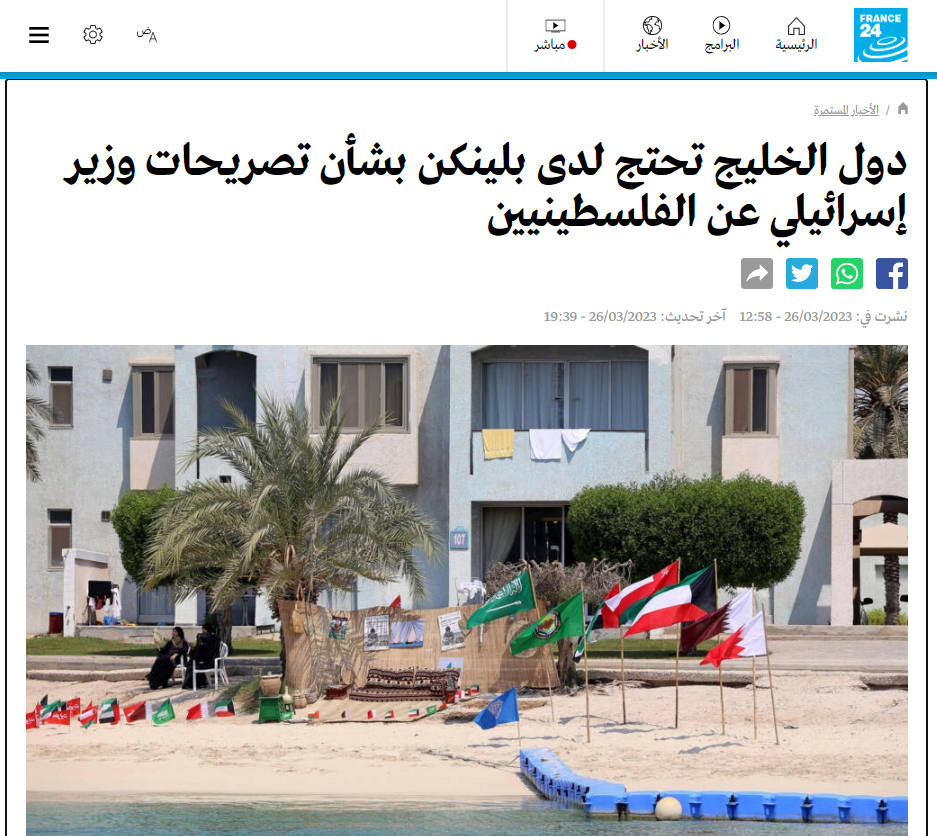
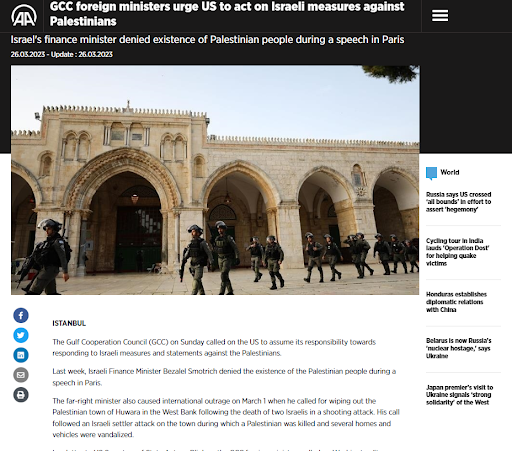
Foreign ministers of the GCC, in a letter to Minister Anthony Blinkkin: "the United States of America to assume its responsibilities in responding to all measures and statements targeting the Palestinian people"

    Sunday, March 26, 2023   No comments

In another setback for the so-called Abrahamic accord, the organization, GCC, that includes two of the States that signed the agreement, sent a letter to the USA protesting Israeli words and practices agains the Palestinians.

In a letter to Minister Anthony Blinkkin, the foreign ministers of the Six-state bloc, in a letter to Minister Anthony Blinkkin, denounced the statements of the Israeli right -wing Israeli Finance Minister of Smottrich about the necessity of "eradicating" the Palestinian town of Hawara, which witnessed the killing of two Israelis by an activist suspected of belonging to Hamas.

In its message published on its website, the Council called on "the United States of America to assume its responsibilities in responding to all measures and statements targeting the Palestinian people."

He also urged the American administration to "play its role to reach a just, comprehensive and lasting solution" to the Palestinian -Israeli conflict.

On Sunday, the UAE strongly condemned the decision of Israel to allow the restoration of settlement in the northern West Bank regions, and put it bids to build new settlement units in the occupied Palestinian territories, according to a statement by the Ministry of Foreign Affairs and International Cooperation reported by the Emirates News Agency.

In a statement, the Ministry affirmed, "The UAE's rejection of all practices that violate international legitimacy decisions, which threaten more escalation and instability in the region."

Saudi Arabia also condemned the Israeli decision, and stated in a statement by the Saudi Foreign Ministry that Riyadh "calls on the international community to carry out its responsibilities to end the Israeli occupation and stop its provocative practices, which would obstruct the paths of political solutions based on the Arab peace initiative and undermine international peace efforts."


Last week, the United States described Smotrich's statements as "insulting" and "dangerous".


She also expressed its "great concern" after the Israeli parliament canceled part of a law that prevents settlers from residing in areas in the occupied West Bank that the Israeli government had evacuated in 2005, considering that the decision was "provocative."


The Gulf Cooperation Council, whose foreign ministers met in Riyadh last week, include six countries, Saudi Arabia, the Emirates, Oman, Bahrain, Qatar and Kuwait. The UAE and Bahrain printed their relations with Israel in 2020 under the "Abraham Agreements" sponsored by the United States.


Saturday, March 18, 2023

China, Iran, Russia hold joint naval drills in Gulf of Oman

    Saturday, March 18, 2023   No comments

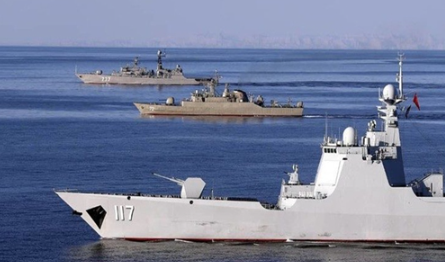
Media review: China's GT, reported today about the navies of China, Iran and Russia holding a joint maritime exercise starting Wednesday in a move to enhance cooperation as well as to safeguard maritime security and regional peace.

Based on the consensus reached by the armed forces of China, Iran and Russia, the navies of the three countries will be holding the Security Belt-2023 joint maritime military exercise from Wednesday to Sunday in the Gulf of Oman, China's Ministry of National Defense (MOD) said in a statement on Wednesday.


The Security Belt-2023 joint naval drill is a development of the two joint naval drills among China, Iran and Russia held in 2019 and 2022, with the Chinese People's Liberation Army (PLA) Navy dispatching the guided missile destroyer Nanning to the exercise, mainly participating in training courses including aerial search, maritime rescue and maritime march past, reads the MOD statement.

  This video of the drills was released by the Russian military today:


Thursday, March 16, 2023

Saudi Arabia will stop oil supplies to countries that set a price ceiling on its oil

    Thursday, March 16, 2023   No comments

In another guesture in support of Russia and dismiss of EU actions, Saudi Arabia announced that it will stop oil supplies to countries that set a price ceiling on its oil

This was stated by the Minister of Energy of the Kingdom, Prince Abdulaziz bin Salman.

In his view, price ceilings set for a country or a group of countries, for oil or any other commodity, will lead to individual or collective responses with serious consequences.

"So if there is a price cap on Saudi oil exports, we will not sell oil to any country that imposes a price cap on our supplies, and we will cut oil production, and I would not be surprised if others do the same," he said. the minister said.

The Saudi Energy Minister, Abdulaziz bin Salman, and the Russian Deputy Prime Minister, Alexander Novak, confirmed during their meeting in Riyadh, today, Thursday, their countries’ commitment to the decision taken by “OPEC +” to reduce oil production by two million barrels per day until the end of 2023.

The Saudi Press Agency, "SPA", stated that bin Salman and Novak discussed the conditions of the global oil market, and the efforts of the "OPEC +" group aimed at "enhancing market stability and balance."

The two sides affirmed their countries' commitment to the decision taken by the "OPEC +" group, last October, to reduce production by two million barrels per day until the end of 2023, and the continuation of cooperation between the two countries, within the framework of the group, to enhance the stability and balance of the global market.


A few days ago, the US Assistant Secretary of State for Economic and Energy Affairs, Jose Fernandez, called on oil-producing countries, including the Organization of Petroleum Exporting Countries (OPEC), to "increase the quantities of crude supplied in the markets."


And in early October 2022, “OPEC +” decided to reduce its production by two million barrels per day, at a level that it has not changed since then.


It is noteworthy that the American "The Intercept" website had previously stated, quoting informed Saudi sources, that Riyadh had pressured to cut oil production twice more than what Russian President Vladimir Putin had requested.


On October 14, a spokesman for the National Security Council at the White House, John Kirby, said that "more than one member" of "OPEC +", without specifying them, disagreed about the size of the cut, but Saudi Arabia forced them to agree to it.


Friday, March 10, 2023

Brokered by Chinese diplomacy, National Security Apparatuses in Iran and Saudi Arabia greenlight the resumption of diplomatic relations between the two countries

    Friday, March 10, 2023   No comments

China’s quiet diplomacy in the Middle East turned a low-level conflict with Iran into a consequential development that could change the trajectory of region.

For months and years, Iraq and Oman have been working hard to bring the two regional powers to a point where they will be able to talk to each other directly. Nothing happened. Within weeks, and since the Chinese president’s visit to Saudi Arabia, China relied on its excellent relations with Iran and exploited Saudi Arabia’s interest in an Asia pivot to bring these countries together. 

Direct and meaningful talks between Iran and Saudi Arabia will have secondary effects on the ongoing conflicts in Syria, Iraq, Yemen, and Afghanistan.

*****

Following Iranian President Ayatollah Ebrahim Raisi's visit to Beijing last February, Admiral Shamkhani began intensive talks with his Saudi counterpart on Monday, in order to finally resolve issues between Tehran and Riyadh.

And he announced in a joint statement that Iran and Saudi Arabia agreed to resume bilateral relations. As it was stated at the conclusion of the completed talks between the two countries, that the Islamic Republic of Iran and the Kingdom of Saudi Arabia agreed to resume diplomatic relations and reopen embassies and representations within two months.


At the conclusion of these talks, a tripartite statement was issued today, Friday, in Beijing, signed by Ali Shamkhani, Secretary of the Supreme National Security Council, Musaed bin Muhammad Al-Aiban, the Saudi Minister of State, Advisor to the Council of Ministers and National Security Adviser, and Fang Yi, a member of the Political Bureau of the Central Committee of the Communist Party and Chairman. Office of the CPC Central Committee on Foreign Affairs and member of the Government Council of the People's China.


The statement said, in response to the worthy initiative of Mr. Xi Jinping, President of the People's Republic of China, to support the strengthening of relations between the Islamic Republic of Iran and the Kingdom of Saudi Arabia, and based on the principle of good neighborliness and in view of his agreement with the presidents of the two countries to host and support dialogue between the Islamic Republic of Iran and the Kingdom of Saudi Arabia, as well as the desire the two countries sought to resolve differences through dialogue and diplomacy based on fraternal ties, and affirming the two countries' adherence to the principles and objectives of the United Nations Charter, the Charter of the Organization of Islamic Cooperation, and international principles and procedures. Musaed bin Mohammed Al-Aiban, Minister of State, Cabinet Member and National Security Adviser, in Beijing, from March 6-10, 2023.


He added, the Islamic Republic of Iran and the Kingdom of Saudi Arabia express their gratitude to the Republic of Iraq and the Sultanate of Oman for hosting the talks between the two sides in the years (2021 to 2022) and the leadership and government of the People's Republic of China for hosting and supporting the talks that took place in this country and the efforts made to make them a success.


He continued, as a result of the completed talks, the Islamic Republic of Iran and the Kingdom of Saudi Arabia agreed to resume diplomatic relations and reopen embassies and representations within two months.


The statement said that the foreign ministers of the two countries will meet to implement this decision and make the necessary arrangements for the exchange of ambassadors.


The two countries affirmed respect for sovereignty and non-interference in each other's internal affairs, within the framework of implementing the security cooperation agreement signed on 4/17/2001 as well as the general economic, trade and investment agreement and technical, scientific, cultural, sports and youth cooperation signed on 5/27/1998.


The statement indicated that the three countries declare their firm determination to employ all efforts to promote peace and security at the regional and international levels.


These developments came just days from the breaking news of a visit by Iran's national security chief to a foreign country. The cryptic news bulletin did not mention the country or offer any other context. It mere stated that:

News sources reported that Admiral Ali Shamkhani held very important talks in a foreign country during the past few days.

And Tasnim International News Agency reported that the Secretary of Iran's Supreme National Security Council held very important talks in a foreign country over the past few days.


According to news sources, the imminent announcement of the results of these talks will cause important developments.


Then came the major announcement:


An Iranian-Saudi agreement to resume diplomatic relations and open embassies

In a joint statement, Iran and Saudi Arabia announced the agreement to resume dialogue and diplomatic relations, and to reopen embassies in the two countries within two months.


According to the joint statement, "the resumption of dialogue between Tehran and Riyadh comes in response to the Chinese president's initiative," during Iranian-Saudi meetings and negotiations that took place between March 6 and 10 in Beijing.


The two countries expressed their appreciation for China's hosting and support for the recent talks, and their gratitude to Iraq and the Sultanate of Oman for hosting the talks between the two sides during the years 2021 and 2022.


According to the statement, Tehran and Riyadh affirmed the principle of respect for sovereignty and non-interference in the internal affairs of the two countries, and the implementation of the security cooperation agreement signed in 2001.


Iran, Saudi Arabia and China announced their intention to use all diplomatic efforts to promote regional and international peace and security.


And Ali Shamkhani, Secretary of the Iranian Supreme National Security Council, stated that he had conducted intensive negotiations with his Saudi counterpart to resolve the outstanding issues between the two countries once and for all.


Shamkhani added that Iranian President Ibrahim Raisi's visit to China led to "new and very serious" negotiations between the delegations of Iran and Saudi Arabia.

He stressed that removing misunderstandings and looking towards the future in relations between Riyadh and Tehran "will certainly lead to strengthening regional security," expressing his appreciation for China's constructive role in supporting the development of relations between countries to enhance the level of international cooperation.

Shamkhani pointed out that the five rounds of negotiations that took place in Iraq and Oman were influential in reaching the final agreement in Beijing, appreciating the efforts of the two countries.

The foreign ministers of Iran and Saudi Arabia will meet to implement this agreement and make the necessary arrangements for the exchange of ambassadors soon.

*****

Since Xi's visit, observers became interested in China's role in the region asking if Will Beijing succeed in playing the role of mediator between Tehran and the Gulf states?


They noted that it is in China's interest to ease tensions between Iran and the Gulf states to ensure energy security and the success of the "Belt and Road" initiative, but it is not easy to succeed in that, as the United States of America will not allow the success of the Chinese initiative to improve relations between Iran and Saudi Arabia.

*****

Before Raisi's visit to China, they noted that the Iranian President Ebrahim Raisi will visit China at the invitation of Chinese President Xi Jinping from February 14 to 16, and will meet his Chinese counterpart, in their second meeting after their first meeting on the sidelines of the Shanghai Organization summit in Uzbekistan last September. . This will be the first visit of an Iranian president to China since his election in 2021, and he will also be the first head of state to visit China in the Chinese New Year.


The Kuwaiti newspaper "Al-Jarida" had published several days ago an article in which it stated that preparations were underway for an upcoming visit by the Iranian president to Beijing. The day after the news was published, Iranian Foreign Ministry spokesman Nasser Kanaani revealed President Raisi's upcoming visit to China.


The visit of the Iranian president to China comes after the statement of the Chinese-Gulf summit, which dealt with the disputed islands between Iran and the United Arab Emirates and the Iranian nuclear agreement, displeased Tehran, which summoned the Chinese ambassador there, and expressed its deep disturbance at what was stated in the summit statement.

In turn, the Chinese ambassador stressed his country's respect for Iran's territorial integrity, and considered that the goal of the Chinese president's visit to Riyadh is to balance relations, support peace and stability in the region, and use dialogue as a tool to solve problems.


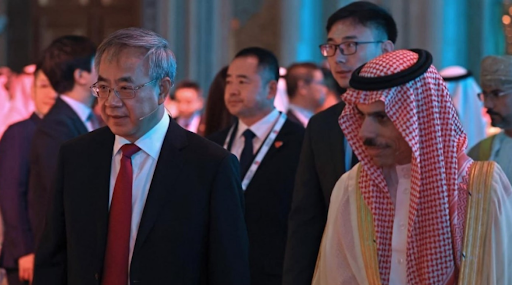
To ease Tehran's anger, Beijing sent Chinese Vice Premier Hu Chunhua to Iran, who, during his meeting with the Iranian president, stressed China's determination to develop its comprehensive strategic partnership with Iran.


And during the month in which the Chinese president visited Saudi Arabia, a Chinese consulate was opened in the Bandar Abbas region, and it voted against removing Iran from the United Nations Women's Committee.


"The resumption of diplomatic relations between Saudi Arabia and Iran is a 'victory' for dialogue and peace," Chinese Foreign Minister Chen Wangyi said on Friday.


The Chinese Foreign Ministry quoted Wang as saying at the conclusion of the dialogue between Saudi Arabia and Iran that the resumption of relations is "great good news" in the current turbulent world.


Wang added that China will continue to play a constructive role in dealing with thorny issues in the world today and will show its "responsibility" as a major country.

Saudi Foreign Minister on the agreement with Iran: Our countries share one destiny and common denominators


Saudi Foreign Minister Faisal bin Farhan said, "The resumption of relations between Riyadh and Tehran stems from our vision based on favoring political solutions."


Bin Farhan added that the countries of the region "are united by one destiny and common denominators, which make it necessary for us to participate together in building a model of prosperity and stability."


For his part, Musaed Al-Aiban, Saudi National Security Adviser, said that Saudi Arabia welcomes the Chinese president's initiative to develop relations between the Kingdom and Iran.


Al-Aiban pointed out that "the Saudi-Iranian agreement is the culmination of the discussions that took place during the current week," stressing that Riyadh was keen to make the agreement with Iran within the framework of fraternal ties, and was also keen to open a new page and adhere to international covenants.


According to the Saudi National Security Adviser, "The Saudi-Iranian agreement is a pillar in the development of relations between countries and the promotion of stability in the region."


As for the Iranian side, the Secretary of the Iranian Supreme National Security Council, Ali Shamkhani, said that the recent visit of the Iranian President, Ebrahim Raisi, to China provided the basis for the formation of new and serious negotiations between the delegations of Iran and the Kingdom of Saudi Arabia.


Shamkhani added that the talks between the two countries were frank, transparent, comprehensive and constructive, indicating that removing misunderstandings and looking to the future in relations between Tehran and Riyadh will lead to the development of regional stability and security, and increase cooperation between the Gulf states and the Islamic world regarding managing existing challenges.

The visit also comes at a time of raging conflict between China and the United States of America, and the US Secretary of State postponing his visit to Beijing after the balloon crisis and the subjection of Iranian and Chinese companies to US sanctions.

US official reaction:

Reacting to the news,  a White House spokesman confirms that Washington is aware of reports about the resumption of diplomatic relations between Iran and Saudi Arabia, and the communications coordinator in the US National Security Council, John Kirby, said: We welcome any efforts that help end the war in Yemen and reduce tension in the Middle East.

As for the American media, the Wall Street Journal considered that the agreement between the two countries represents a "diplomatic victory for Beijing, in a region where the United States has long dominated geopolitics."


Reactions from the region:

The former occupation prime minister, Naftali Bennett, attacked the current prime minister, Benjamin Netanyahu, against the background of the Iran-Saudi agreement, noting that it was "a resounding failure, stemming from the combination of political neglect, general weakness, and an internal conflict in the state."

Bennett pointed out that "the resumption of relations is a dangerous and dangerous development for Israel, and represents a political victory for Iran."

On the official Arab level, the Sultanate of Oman said: "We hope that the resumption of Saudi-Iranian relations will contribute to strengthening the pillars of security and stability in the region and consolidating positive and constructive cooperation that benefits all peoples of the region and the world."


The Iraqi Ministry of Foreign Affairs welcomed the agreement reached between the two countries.


The Foreign Ministry indicated that "the efforts made by the Iraqi government in this context, through Baghdad hosting the dialogue rounds between the two sides, and the solid base it established for the dialogues that followed through the Sultanate of Oman and the People's Republic of China, leading to the moment of agreement, which will be reflected in the integration of relations between the two sides, and give A qualitative impetus in the cooperation of the countries of the region, with the aim of a framework that fulfills the aspirations of all parties and heralds the launch of a new phase.


Followers


Most popular articles


ISR +


Frequently Used Labels and Topics

40 babies beheaded 77 + China A Week in Review Academic Integrity Adana Agreement afghanistan Africa African Union al-Azhar Algeria Aljazeera All Apartheid apostasy Arab League Arab nationalism Arab Spring Arabs in the West Armenia Arts and Cultures Arts and Entertainment Asia Assassinations Assimilation Azerbaijan Bangladesh Belarus Belt and Road Initiative Brazil BRI BRICS Brotherhood CAF Canada Capitalism Caroline Guenez Caspian Sea cCuba censorship Central Asia Charity Chechnya Children Rights China Christianity CIA Civil society Civil War climate colonialism communication communism con·science Conflict conscience Constitutionalism Contras Corruption Coups Covid19 Crimea Crimes against humanity D-8 Dearborn Debt Democracy Despotism Diplomacy discrimination Dissent Dmitry Medvedev Earthquakes Economics Economics and Finance Economy ECOWAS Education and Communication Egypt Elections energy Enlightenment environment equity Erdogan Europe Events Fatima FIFA FIFA World Cup FIFA World Cup Qatar 2020 Flour Massacre Food Football France Freedom freedom of speech G20 G7 Garden of Prosperity Gaza GCC GDP Genocide geopolitics Germany Global Security Global South Globalism globalization Greece Grozny Conference Hamas Health Hegemony Hezbollah hijab Hiroshima History and Civilizations Hormuz Human Rights Huquq Ibadiyya Ibn Khaldun ICC Ideas IGOs Immigration Imperialism In The News india Indonesia inequality inflation INSTC Instrumentalized Human Rights Intelligence Inter International Affairs International Law Iran IranDeal Iraq Iraq War ISIL Islam in America Islam in China Islam in Europe Islam in Russia Islam Today Islamic economics Islamic Jihad Islamic law Islamic Societies Islamism Islamophobia ISR MONTHLY ISR Weekly Bulletin ISR Weekly Review Bulletin Italy Japan Jordan Journalism Kenya Khamenei Kilicdaroglu Kurdistan Latin America Law and Society Lebanon Libya Majoritarianism Malaysia Mali mass killings Mauritania Media Media Bias Media Review Middle East migration Military Affairs Morocco Multipolar World Muslim Ban Muslim Women and Leadership Muslims Muslims in Europe Muslims in West Muslims Today NAM Narratives Nationalism NATO Natural Disasters Nelson Mandela NGOs Nicaragua Nicaragua Cuba Niger Nigeria Normalization North America North Korea Nuclear Deal Nuclear Technology Nuclear War Nusra October 7 Oman OPEC+ Opinion Polls Organisation of Islamic Cooperation - OIC Oslo Accords Pakistan Palestine Peace Philippines Philosophy poerty Poland police brutality Politics and Government Population Transfer Populism Poverty Prison Systems Propaganda Prophet Muhammad prosperity Protests Proxy Wars Public Health Putin Qatar Quran Rachel Corrie Racism Raisi Ramadan Ramadan War Regime Change religion and conflict Religion and Culture Religion and Politics religion and society Resistance Rights Rohingya Genocide Russia Salafism Sanctions Saudi Arabia Science and Technology SCO Sectarianism security Senegal Shahed sharia Sharia-compliant financial products Shia Silk Road Singapore Slavery Soccer socialism Southwest Asia and North Africa Sovereignty Space War Spain Sports Sports and Politics Starvation State Power State Terror Sudan sunnism Supremacism SWANA Syria Ta-Nehisi Coates terrorism Thailand The Koreas Tourism Trade transportation Tunisia Turkey Turkiye U.S. Cruelty U.S. Foreign Policy UAE uk ukraine UN under the Rubble UNGA United States UNSC Uprisings Urban warfare US Foreign Policy US Veto USA Uyghur Venezuela Volga Bulgaria Wadee wahhabism War War and Peace War Crimes War on Iran Wealth and Power Wealth Building West Western Civilization Western Sahara WMDs Women women rights Work Workers World and Communities Xi Yemen Zionism

Search for old news

Find Articles by year, month hierarchy


AdSpace

_______________________________________________

Copyright © Islamic Societies Review. All rights reserved.