Showing posts with label Democracy. Show all posts

Tuesday, July 01, 2025

Media review: How Democracies Fail to Confront Corruption

    Tuesday, July 01, 2025   No comments

 At the Edge of Accountability 

Recently, U.S. President Donald Trump, who himself has faced 88 criminal and civil indictments and was nonetheless elected to a second term, issued a public demand that Israel’s judicial system drop all charges against Prime Minister Benjamin Netanyahu. Trump called the trial a “travesty of justice,” labeling the Israeli legal proceedings a “witch hunt,” and implied that U.S. aid to Israel might be contingent on ending Netanyahu’s prosecution. This unprecedented intervention—an indicted American leader defending an indicted Israeli leader, who is also facing war crimes charges at the International Criminal Court—raises a profound question: How does democracy, if it is to be taken seriously as a system of values and not merely of process, guard against corruption and the rise of authoritarian figures cloaked in democratic legitimacy? This moment is not just politically volatile; it exposes uncomfortable contradictions within how democracies perceive themselves and others.

The indictment of elected leaders in democracies such as Israel and the United States raises difficult and urgent questions about the integrity of democratic systems. When prime ministers or presidents face criminal charges—whether for corruption, abuse of power, or other serious offenses—it is natural to wonder whether democracy has failed to produce ethical and responsible leadership. But while such developments highlight vulnerabilities in democratic practice, they also reveal certain institutional strengths. Democracy does not guarantee virtuous leadership; it guarantees the opportunity for accountability. Whether that opportunity is seized—or manipulated—depends on the strength of institutions and the moral commitment of both leaders and citizens.


One of the core principles of a functioning democracy is that no one, however powerful, is above the law. The fact that legal institutions in places like the United States or Israel can bring charges against sitting or former leaders speaks to the resilience of the rule of law. In authoritarian systems, leaders often operate with impunity; in democracies, they may still face scrutiny and legal consequences. In this respect, the indictment of a head of state can be viewed not as a failure of democracy, but as evidence that democratic institutions are, at least in part, doing their job.

However, this view becomes more complicated when we consider how democracies respond to similar situations in different parts of the world. When elections in the Global South produce leaders with questionable records or populist agendas, Western democracies are quick to dismiss those outcomes as the result of “sham elections” or “corrupt processes.” Yet when similarly compromised figures rise to power within the West—figures under indictment, or credibly accused of serious misconduct—those same governments often insist that the outcome must be respected as the will of the people. They demand deference to the democratic process at home, while undermining or delegitimizing it abroad. This double standard reveals a deeper truth: in many cases, democracy is treated less as a value system than as a political instrument—embraced when convenient, disregarded when not.

Such inconsistencies are damaging not only to international credibility, but to democracy itself. If democratic legitimacy is defined not by values—such as accountability, justice, and equal representation—but by outcomes that serve particular interests, then democracy becomes hollow. The insistence that democracy must be respected when it produces indicted or corrupt leaders in Western nations, while being denied that legitimacy elsewhere, exposes the erosion of democratic ethics. It becomes clear that the principle of democracy is sometimes wielded more as a shield for power than as a reflection of shared values.

Moreover, in deeply polarized societies, even the mechanisms of accountability begin to fracture. Voters may see legal indictments not as a signal of wrongdoing, but as a partisan attack. In such an environment, democratic institutions remain formally intact, but their moral authority is weakened. Leaders who are under investigation—or even convicted—may be rewarded with public support rather than rejection. Far from being disqualified, their defiance becomes a badge of honor. This speaks not only to the failings of political elites, but to a broader cultural crisis in democratic societies: the erosion of civic norms, the rise of partisan loyalty over public ethics, and the loss of a shared commitment to the common good.

While the indictment of elected leaders does not necessarily prove that democracy is broken, it does serve as a warning. It reveals the tension between democratic form and democratic substance—between holding elections and cultivating a culture of accountability and ethical governance. The fact that such tensions are more readily condemned in the Global South than confronted at home suggests that democracy, in the hands of powerful nations, is often invoked more as a geopolitical tool than as a universal standard.

Ultimately, the health of democracy cannot be judged solely by whether elections occur, or whether leaders are indicted. It must be measured by the integrity of institutions, the honesty of public discourse, and the degree to which citizens demand responsibility and justice from those who govern them. Democracy may still provide the tools to hold leaders accountable, but those tools are only effective if people are willing to use them—not selectively, not cynically, but consistently, and in defense of the values democracy is supposed to serve.

Wednesday, March 19, 2025

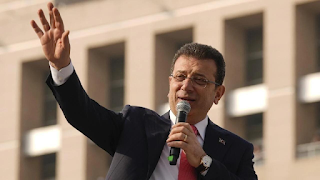
Turkey in Crisis: The Arrest of Ekrem Imamoglu and Its Far-Reaching Consequences

    Wednesday, March 19, 2025   No comments

Turkey is facing a period of heightened political and social unrest following the arrest of Istanbul’s mayor, Ekrem Imamoglu. This event has ignited massive protests, deepened tensions between the government and the opposition, and drawn international scrutiny over the state of democracy and rule of law in Turkey.

Mass Protests and Public Outrage

Thousands of Turkish citizens have taken to the streets in major cities, including Istanbul, Ankara, Trabzon, and Izmir, protesting Imamoglu’s arrest on charges of corruption and alleged connections to terrorist groups. The opposition Republican People's Party (CHP) has condemned the arrest as politically motivated, urging its supporters to mobilize nationwide in defense of democracy. The government, meanwhile, has cracked down on demonstrations, deploying riot police who have used tear gas and rubber bullets to disperse crowds.

A Politically Charged Arrest

Ekrem Imamoglu

Imamoglu, a prominent opposition leader and a key challenger to President Recep Tayyip ErdoÄŸan in the upcoming 2028 elections, was detained following an early morning raid on his home in Istanbul. His arrest coincided with the cancellation of his university degree by Istanbul University, an act perceived by many as part of a broader campaign to discredit him.

Alongside Imamoglu, Turkish authorities have issued arrest warrants for 105 other municipal officials linked to the Istanbul Metropolitan Municipality. The charges against them include corruption, fraud, and alleged ties to the Kurdistan Communities Union (KCK), an organization affiliated with the outlawed Kurdistan Workers' Party (PKK). Critics argue that these accusations are baseless and reflect the government’s increasing use of the judiciary as a tool to silence political opponents.

Government Restrictions and Crackdown on Freedoms

In response to the growing unrest, Turkish authorities have imposed stringent measures, including a four-day ban on protests and public gatherings in Istanbul. Internet access and social media platforms have been restricted, while metro and transportation routes leading to key protest sites, such as Taksim Square, have been shut down. Despite these efforts, demonstrations have persisted, with students and faculty from universities like Boğaziçi, Istanbul Technical University, and Yıldız Technical University joining the movement.

Impact on Turkey’s Economy and International Relations

The arrest of Imamoglu has triggered severe economic consequences, with the Turkish lira losing 12% of its value against the U.S. dollar. The Istanbul stock exchange also experienced a sharp decline, prompting a temporary suspension of trading. Economic analysts warn that these developments could further destabilize an already fragile economy and deter foreign investment.

Internationally, the European Union and other Western allies have voiced concern over Imamoglu’s detention. The Council of Europe issued a strong condemnation, describing the arrest as a move against the will of the Turkish people. European lawmakers and human rights organizations have called on Turkey to uphold democratic principles and the independence of its judiciary.


A Pattern of Political Repression?


Imamoglu’s arrest is the latest in a series of crackdowns against opposition figures, journalists, and activists. The recent imprisonment of Ümit ÖzdaÄŸ, leader of the nationalist Victory Party, further underscores Turkey’s deteriorating human rights record. Many fear that ErdoÄŸan’s government is intensifying its efforts to suppress dissent and consolidate power ahead of the next elections.


An Uncertain Future for Turkey

The arrest of Ekrem Imamoglu marks a pivotal moment in Turkish politics. While the government maintains that the charges against him are legitimate, widespread public outrage and international condemnation suggest otherwise. With increasing economic turmoil, growing discontent, and the erosion of democratic norms, Turkey stands at a crossroads—one that could determine its future as either a democracy or an authoritarian state.

As the situation continues to unfold, all eyes remain on Turkey, watching whether its institutions will uphold justice or succumb further to political influence.

Saturday, May 04, 2024

Current Events: What should the world think when a majority of the people in a country support a Genocidal regime?

    Saturday, May 04, 2024   No comments

How should a nation whose majority support extremists be treated?

It depends.

If such a country is a non-Western nation-state, then that will make the entire country a terrorist country and genociding them by a “civilized” state will be acceptable.

If such a country is a “Western” nation-state, the will of the majority is sacred. That is what seems to be the implication of the extraordinary admission by head of the US State Department, Anthony Blinken.

US State Secretary Anthony Blinken said on 4 May that the genocidal actions undertaken by Israeli Prime Minister Benjamin Netanyahu in Gaza are "a reflection of where a large majority of Israelis are in this moment.”

“This is a complicated government. It’s a balancing act when you have a coalition. And if you’re just looking at the politics of it, that’s something that he has to factor in,” Blinken said at an event in Arizona.

"What’s important to understand is that much of what [Netanyahu is] doing is not simply a reflection of his politics or his policies; it’s actually a reflection of where a large majority of Israelis are in this moment,” the top US diplomat said.

Last month, a survey conducted by the Israel Democracy Institute revealed that three-quarters of Jewish Israelis support Netanyahu's much-anticipated ground invasion of Gaza’s southernmost city, Rafah, where about 1.3 million Palestinians are sheltering after being violently displaced from their homes.

Surveys conducted over recent months have shown a similar trend despite growing pressure to see Netanyahu removed from office.

In January, opinion polls showed that Israelis overwhelmingly agreed that “the best way” to obtain the release of captives held inside Gaza was “military pressure” against Hamas, falling in line with the same rhetoric Netanyahu and his war chief have been repeating daily since 7 October.

Polls have also shown a stern objection to delivering humanitarian aid to Gaza, even if the UN Relief and Works Agency (UNRWA) is “replaced.”

The problem of seeing a majority electing demonstrably authoritarian, supremacist bigots is the true test of the limits and flaws of democracy. In the past, when such processes happened in non-Western  nation-states, it is often blamed on corruption and processes being flawed. Turkey, for example, over 4 decades voted for a conservative party and a conservative leader. The West dismissed these elections, because they simply thought of all Turkish people as backward, incapable of embracing "true democracy". 

However, with rise of extremist politicians through democratic processes, the West is now facing a moment of truth about democracy. In the past, when democracy did not represent any problems at home, Western leaders used it abroad as a political instrument to intimidate and subjugate other nations.

Anti-Genocide student protests go global

    Saturday, May 04, 2024   No comments

By mid-April, students attending wealthy private universities that have tens of billions of dollars in endowments invested in all forms of economic activities wanted their universities to be selective in their investments and divest from companies that produce anything tied to the Gaza Genocide. This happened after the International Court of Justice found that Israel is committing a plausible genocide and ordered it to take specificactions to stop the genocide. Since then protests spread to almost all Western countries, and there are signs that it will spread to poor countries though universities in such countries have no large investments in weapon manufacturing enterprises.

 Universities in France, Canada, Switzerland, Australia and Mexico are witnessing sit-ins and movements demanding an end to the war that broke out seven months ago on the besieged Gaza Strip. In America, the police, who attended in large numbers, broke up the camps set up by pro-Palestinian students at various universities, the most recent of which was the University of California - Los Angeles, where dozens were arrested.

 As the uprising of American university students continues to escalate in intensity, student mobilization is expanding in a number of countries in solidarity with the Gaza Strip, the day after US President Joe Biden called for order to prevail in American universities, while the French police evacuated the building of the Institute of Political Sciences in Paris of unarmed demonstrators. accidents.


On April 18, students who rejected the Israeli war on the Gaza Strip began a sit-in on the campus of Columbia University in New York, demanding that its administration stop its academic cooperation with Israeli universities and withdraw its investments in companies that support the occupation of Palestinian territories.

 With the intervention of police forces and the arrest of dozens of students, the state of anger expanded, and the demonstrations extended to dozens of American universities, including leading universities such as Harvard, George Washington, New York, Yale, the Massachusetts Institute of Technology, and North Carolina.

 Later, the unprecedented student movement in support of Palestine in the United States expanded to universities in countries such as France, Britain, Germany, Canada and India, all of which witnessed demonstrations in support of their American counterparts and demands to stop the war on Gaza and boycott the companies that supply weapons to Israel.

 CNN reported that the administration of the University of California, Riverside reached an agreement with its students to ensure the end of their sit-in camp, after the university pledged transparency and disclosure of investments and academic cooperation programs with external institutions.

 CNN reported that the faculty of the College of Arts and Sciences at Emory University in Georgia will vote in favor of no confidence in the university president, against the backdrop of his calling the police against the protesting students.

 The administration of the University of Chicago in the United States said that there was information “about the presence of physical altercations” on campus, indicating in a statement that in the absence of an agreement with the protesters, the time had come to disperse the crowd.

Students seem to know the consequences of their actions but act, why?

A report in the Times newspaper reviewed the story of Jewish student Iris Hsiang, who was among more than 100 people arrested, in television scenes that credited her with inspiring similar acts of protests on college campuses across the United States.

Hsiang was arrested along with dozens of students at Columbia University for refusing to leave the campus during protests in support of the Palestinians and rejecting the Israeli war on the besieged Gaza Strip.

The student who was suspended from her studies and did not know whether the university would allow her to continue her studies - explained to the newspaper, in a report written by Josie Ensor - the reason for her participation in the pro-Palestinian demonstrations and what prompted her to do so. She said that she was arrested, her hands were tied with ties, and she was placed in a detention cell at the police headquarters all night. .

Hsiang - according to the British newspaper - is now standing outside the gates of the Columbia University campus during the afternoon, because she was prevented from attending classes and accessing the library, dining halls and any other buildings on campus, and was only allowed to remain in her residence as part of the terms of her suspension.

Hsiang has been charged by Columbia University, based on a police indictment, with trespassing, vandalism and “disruptive behavior.” The climate science and human rights student has been suspended from her studies, but she asks indignantly, “How can I trespass on my property at my university?”

Hsiang, who wears a black-and-white keffiyeh as a symbol of solidarity with the Palestinian cause, faces a court hearing later this month and is awaiting the university's decision on whether she will be allowed to continue her studies.

She says that her parents (the mother is Jewish and the father is Asian) are worried about her like all parents, and they support her. She adds, “I grew up in a house where we stood up to injustice, so I formulated the matter to them as follows: What do we want people to do if we were in Gaza and this happened?” Happening to us?

However, the threat of a criminal record and permanent expulsion worries the outstanding student, especially since tuition fees at Columbia University cost $66,000 annually, and she will have to pay another year’s fees if she is forced to repeat her studies after missing crucial classes and exams during the demonstration.

Although a number of professors have reached out to students to offer their support, particularly criticizing the university's handling of the demonstrations, and at least 10 faculty members wearing orange jackets standing hugging each other in Central Park on Monday when the evacuation order was issued, Hsiang is disappointed. “I can't believe it has come to this.”

The newspaper reported that New York City officials ran out of patience due to the protests, and its Mayor Eric Adams called on the parents of the students who entered Hamilton Hall to “come pick up their children” and said that the campus must be a safe place for all students.

But Hsiang rejected the idea that Columbia had become an unsafe place for Jewish students. “I am Jewish and I am afraid to enter campus, but for a different reason. I was arrested for my peaceful protest,” she said. “There is a history of using Jewish identity as a weapon. Because I am Jewish, I support the Palestinians against persecution.” .

The newspaper concluded that Hsiang, even if she was not expelled, would have to repeat the academic year because she missed most of her final exams, although it is up to the individual professor to accept or reject the course work of the arrested protesting students, according to the university.

Hsiang concluded her interview with the newspaper by saying, “I am thinking about my future, but at the same time I am thinking about the students of Gaza, as there are no longer established universities. This will definitely change the course of my life, but I went into it knowing that it was a possibility. If Columbia University continues in this situation "There's not much this university can teach me."

Sunday, April 28, 2024

Journalism: The protests in solidarity with Palestine revealed the flaw in Washington’s policy

    Sunday, April 28, 2024   No comments

The American magazine Foreign Policy published an article by Howard French, the magazine’s main writer and professor of journalism at the Graduate School of Columbia University, in which he says: “The revolution of universities in solidarity with Palestine revealed that the flaw is not in the students, but in the foreign policy of the United States of America towards Israel and the Middle East.” 

The writer in "Foreign Policy" describes the protests in Columbia and other universities as "extremely important," adding: "They in turn inspired a growing series of reactions by university administrators, politicians, and American law enforcement officials, respectively, who sought to reduce the student demonstrations." Or prevent, condemn or, in many cases, violently suppress it.” He added, "What this moment revealed most clearly to me is not the crisis of student culture or higher education in the United States, as some have claimed, but rather a crisis in US foreign policy, and specifically its long-term relationship with Israel." 


"What I have seen inside the university’s gates has generally been a picture of exemplary civility. For nine days now, there has been an orderly encampment of students, most of them chatting relaxedly, some of them with tents, occupying an expanse of lawn in front of Butler Library, the biggest of Columbia’s libraries."  ~ Howard French, Professor of Journalism, Columbia University.

Protesting students teach American society and the world about democracy and citizenship. The writer says that through peaceful protest, students at Columbia University and in an increasing number of other universities are teaching American society, and indeed the entire world, about true democracy and citizenship. This came to mind in conversations I had with students from China and other countries, who marveled at the ability of Columbia students to respond through protest. In the midst of atrocities, they say enough is enough, and they always do so peacefully. 

They say that confronting terror requires more urgency than letter-writing campaigns to members of Congress or waiting patiently to vote in the next election. He adds that Gaza is not the only horror in the world at all, and we can all benefit from the moral urgency and civility of these students. They put pressure where they can on the institutions they belong to, and as students, they are the bedrock of communities. If they cannot convince the US government to do something to stop the war in Gaza and in the West Bank, which is largely ignored, they can at least convince their universities to stop supporting it. 

This is what the divestment demand means: stopping institutional support and investments in the Israeli war effort. Many critics object that this demand is unrealistic and can never succeed. But what is the appropriate response for a citizen? Sitting and folding your hands, for example? 

The writer concludes that the threat facing Zionism in the world today does not come from the students demonstrating in American universities and elsewhere. Rather, he claims that the greatest threat to Zionism does not even come from Hamas. The greatest threat stems from the blurring of any dividing line between Zionism and the crushing of Palestinian lives and hope for the future, says the American writer and academic.


Saturday, February 17, 2024

Pakistan government commissioner admits election fraud; Maulana Fazlur Rehman, head of Pakistani Islamic Scholars Association, admitted that the overthrow of Imran Khan by Army Commander, General Qamar Javed Bajwa

    Saturday, February 17, 2024   No comments

 Today, Saturday, a government commissioner surprised everyone when he publicly admitted that he had falsified the results of the general elections held on February 8, announcing his resignation from his position, and demanding that everyone who participated in the fraud be punished.

Liaquat Ali Chatha, a government commissioner in the city of Rawalpindi (southeast of Islamabad), admitted to falsifying the results of the elections that took place under his supervision in the city of Rawalpindi.

Meanwhile, protest demonstrations swept through many Pakistani cities against what they called the manipulation that occurred in the elections, demanding a recount so that the results are correct, stressing the right of supporters of Imran Khan, founder of the Tehreek-e-Insaf Party, to win more seats.

“I bear responsibility for all these violations,” Chatha said at a press conference in Rawalpindi on Saturday afternoon. "The Chief Election Commissioner and the Chief Justice of the Supreme Court are involved in this matter," he added.

"We made independent candidates who received between 70,000 and 80,000 votes lose by submitting fraudulent ballot papers," he added.


In a handwritten letter, Chatha said he was resigning from his position because he was deeply involved in the "serious crime of rigging the 2024 general elections."


The handwritten letter was addressed to the governor of the Punjab province, the interim prime minister of the province, Mohsin Naqvi, and the secretary general of the province.


In front of the media, Chatha said that he “stabbed the country in the back,” referring to election fraud, so he cannot sleep.


He further said, "I must be punished for the injustice I committed, and others who participated in this injustice must be punished."


Earlier, Chatha said that he was under intense pressure not to announce the fraud to the point that he thought about committing suicide, but he finally decided to present matters to the public.


In response to Chatha's allegations, the Election Commission of Pakistan said it "strongly rejects the accusations leveled against her or her boss."


In a press statement, the election monitoring body said that none of its officials had issued any instructions to Chatha to “change the election results.”


He added, "But the Election Commission will conduct an investigation into the matter as soon as possible."


For his part, interim Punjab Chief Minister Mohsin Naqvi ordered an “impartial investigation” into the allegations leveled by Chatha.


Yesterday, the leader of the Pakistani Islamic Scholars Association, Maulana Fazlur Rehman, detonated a heavy political bomb when he admitted that the overthrow of Imran Khan from power in April 2022 came based on directives from the then Army Commander, General Qamar Javed Bajwa.


Fazlur Rahman explained that he was personally against the move of no confidence in Imran Khan's government, but this position would not have worked in light of the insistence of other parties, most notably the Muslim League led by Nawaz Sharif and the People's Party led by Bilawal Bhutto Zardari.

Fazlur Rehman was the head of the People's Democratic Movement coalition that ousted Imran Khan and the PTI in April 2022 and took power, after which Shahbaz Sharif led a multi-party coalition of the country for 16 months before handing over the reins to the interim government.

Regarding the recent elections, Fazlur Rehman pointed out that it is clear that fraud occurred in the elections, and that the PML-N party is the biggest beneficiary of that.

He said to me, "Parliament has lost its credibility." He added, "Decisions will no longer be made in Parliament, but will be taken in the streets," indicating that there will be protests in the country against the results of the elections, the validity of which is being debated.

Submit your story (pitch an article)

Name

Email *

Message *


Trending Today...


ISR +


Frequently Used Labels and Topics

40 babies beheaded 77 + China A Week in Review Academic Integrity Adana Agreement afghanistan Africa African Union al-Azhar Algeria Aljazeera All Apartheid apostasy Arab League Arab nationalism Arab Spring Arabs in the West Armenia Arts and Cultures Arts and Entertainment Asia Assassinations Assimilation Azerbaijan Bahrain Bangladesh Belarus Belt and Road Initiative Brazil BRI BRICS Brotherhood CAF Canada Capitalism Caroline Guenez Caspian Sea cCuba censorship Central Asia Charity Chechnya Children Rights China Christianity CIA Civil society Civil War climate colonialism communication communism con·science Conflict conscience Constitutionalism Contras Corruption Coups Covid19 Crimea Crimes against humanity D-8 Dearborn Debt Democracy Despotism Diplomacy discrimination Dissent Dmitry Medvedev Earthquakes Economics Economics and Finance Economy ECOWAS Education and Communication Egypt Elections energy Enlightenment environment Epstein equity Erdogan ethics Europe Events Fatima FIFA FIFA World Cup FIFA World Cup Qatar 2020 Flour Massacre Food Football France Freedom freedom of speech G20 G7 Garden of Prosperity Gaza GCC GDP Genocide geopolitics Germany Global Security Global South Globalism globalization Greece Grozny Conference Hamas Health Hegemony Hezbollah hijab Hiroshima History and Civilizations Hormuz hum Human Rights Huquq Ibadism Ibadiyya Ibn Khaldun ICC Ideas IGOs Immigration Imperialism In The News india Indonesia inequality inflation INSTC Instrumentalized Human Rights Intelligence Inter International Affairs International Law Iran IranDeal Iraq Iraq War ISIL Islam in America Islam in China Islam in Europe Islam in Russia Islam Today Islamic economics Islamic Jihad Islamic law Islamic Societies Islamism Islamophobia ISR MONTHLY ISR Weekly Bulletin ISR Weekly Review Bulletin Italy Japan Jordan Journalism Kenya Khamenei Kilicdaroglu Kurdistan Latin America Law and Society Lebanon Libya Majoritarianism Malaysia Mali mass killings Mauritania Mecca Pact Media Media Bias Media Review Middle East migration Military Affairs Morocco Multipolar World Muslim Ban Muslim Women and Leadership Muslims Muslims in Europe Muslims in the USA Muslims in West Muslims Today NAM Narratives Nationalism NATO Natural Disasters Nelson Mandela NGOs Nicaragua Nicaragua Cuba Niger Nigeria Normalization North America North Korea Nuclear Deal Nuclear Technology Nuclear War Nusra October 7 Oman OPEC+ Opinion Polls Organisation of Islamic Cooperation - OIC Oslo Accords Pakistan Palestine Peace Philippines Philosophy poerty Poland police brutality Politics and Government Population Transfer Populism Poverty Prison Systems Propaganda Prophet Muhammad prosperity Protests Proxy Wars Public Health Putin Qatar Quran Rachel Corrie Racism Raisi Ramadan Ramadan War Regime Change religion and conflict Religion and Culture Religion and Politics religion and society Resistance Rights Rohingya Genocide rule of law Russia Salafism Sanctions Saudi Arabia Science and Technology SCO Sectarianism Secularism security Senegal Shahed sharia Sharia-compliant financial products Shia Silk Road Singapore Sistani Slavery Soccer socialism Southwest Asia and North Africa Sovereignty Space War Spain Sports Sports and Politics Starvation State Power State Terror Sudan Sunni Axis sunnism Supremacism SWANA Syria Ta-Nehisi Coates terrorism Thailand The Koreas Tourism Trade transportation Tunisia Turkey Turkiye U.S. Cruelty U.S. Foreign Policy UAE uk ukraine UN under the Rubble UNGA United Arab Emirates United States UNSC Uprisings Urban warfare US Foreign Policy US Veto US-Iran MoU USA Uyghur Venezuela Volga Bulgaria Wadee wahhabism War War and Peace War Crimes War on Iran Wealth and Power Wealth Building West Western Civilization Western Sahara WMDs Women women rights Work Workers World and Communities Xi Yemen Zionism

Search for old news

Find Articles by year, month hierarchy


WEEKLY AdSpace 3

_______________________________________________

Copyright © Islamic Societies Review. All rights reserved.